
This summer broke records. Searing temperatures were set across Europe, London hit 39 degrees Celsius, Berlin 40 and Paris 42.
The sticky summer was a reminder of the impact of climate change. Unless drastic action is taken, temperatures seen in recent weeks will become increasingly common.
Filing to find sustainable ways to heating and cooling our cities, offices and homes when temperatures soar – or indeed plummet in winter – could lead to more Co2 being produced as more people turn to AC units or turn up their thermostats.
But experts say there’s another way. Rethink our built environment.
Increasingly, architects are already turning to passive cooling methods that could offer solutions to keeping the heat down in summer. Better insulation is offering more efficient heating in winter.
More is needed.
This week on Beyond the Headlines, we spoke to David Shipworth, Professor of Energy and the Built Environment at University College London. He told us about how we can make heating and cooling more effective, why it’s growing in importance and how we can rethink our urban environment to make extreme weather events more manageable without costing the earth.
We also spoke to Karim El Jisr who has been part building and now lives in a future-proofed community.
In the deserts of Dubai, Sustainable City is a development that at its core tries to offer a way of living that has less impact on the planet.
Houses are energy efficient, insulated and angled away from the sun. Much of the community’s power is self-generated, food is grown on its own urban farm.
-

Hannah Khan, 11, plays at a park in Sustainable City that is made of recyclable material. Reem Mohammed/The National -

An image of Sustainable City. Antonie Robertson/The National) -
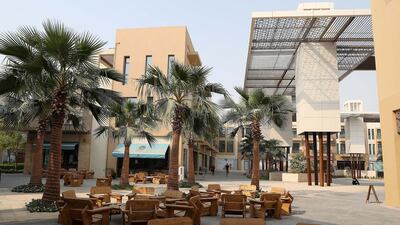
View of the Sustainable Plaza at the Sustainable City on Alqudrah street in Dubai. Pawan Singh / The National -
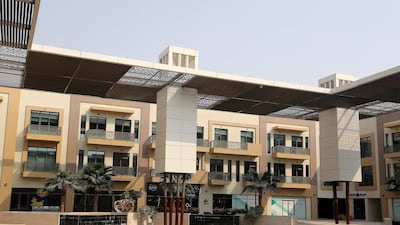
Sustainable Plaza at the Sustainable City on Alqudrah Street in Dubai, a mini city that could offer a glimpse of the future. Pawan Singh / The National -

Domes used for urban farming at Dubai's Sustainable City, a green residential development that is much more than the sum of its high-tech energy solutions. Pawan Singh / The National -

The community is positioned as the most eco-friendly community in Dubai. Antonie Robertson/The National -

The large wooden deck in the garden. Antonie Robertson / The National -

A home in Sustainable City. Antonie Robertson/The National -

Plants growing inside the urban farming area at Sustainable City. Pawan Singh / The National -

Stephen Ritz, an American science teacher and founder of the green Bronx machine, a classroom concept that teaches children how to grow food and the benefits of good nutrition. Chris Whiteoak / The National -

Inside the urban farming area in the Sustainable City on Alqudrah street in Dubai. Pawan Singh / The National -

Georges Beaudoin, right, International Operations Manager of Agricool that aims to grow strawberries in a shipping container in Sustainable City. Reem Mohammed/The National -
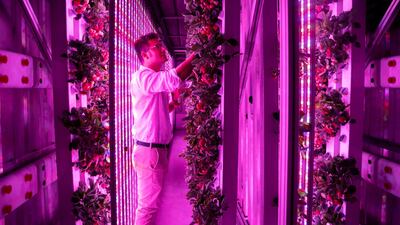
Agricool is a French start-up that grows fruits and vegetables inside shipping containers, where they grow without pesticide, minimum water and nutrition intake, no GMOs, and are harvested the day they are bought. Photo by Reem Mohammed/The National


Sustainable City can help residents beat the summer heats of Dubai, where temperatures are regularly above 40 degrees in summer, without just turning up the AC.
So Karim talks us through his community and how it could be a blueprint for the future of urban design.
If you’ve not listened to last week’s Beyond the Headlines, we looked at Oman’s miraculous carbon capture rocks that could help the world tackle and even reverse rising Co2 levels.
Check out the link below to hear more.

