

Children of refugees are disproportionately affected by lockdown in Germany, Chancellor Angela Merkel said.
A major report on migration and integration in the country set out the added challenges faced by young people from a migrant background.
Ms Merkel said children from immigrant families are in a “much more difficult situation” when “their parents don’t speak German at home”, because repeated closures of schools led to widespread teaching from home.
There are fears that such children are at a much greater risk of falling behind in their education.
The chancellor was speaking on the release of a report by the Expert Commission on Integration Skills, published after a two-year investigation.
It said children from immigrant families are disadvantaged and in some cases already lagging behind their peers at a very young age.
The report highlighted children’s socio-economic background as one reason for the discrepancy, because the average working-class child tends to be less successful at school.
More importantly, it said, is that because children of migrants and refugees are likely to have relatively weaker German language skills “they have greater difficulties in following and participating in lessons”.
“This is especially true for newly immigrated children and adolescents who do not speak German at all or hardly at all; however, it also affects many children and adolescents born in Germany with immigrant parents,” the report said.
Experts said the government therefore needed to focus on understanding the language needs of adult migrants and refugees who have just arrived in the country.
The report said that “language development takes place first in the family” and identified widespread disparities in family homes.
“It is not a matter of prescribing to parents which language this should be done in. What is important is the quality of the language spoken and that the family communicates in a way that promotes the cognitive and social development of the children,” it said.
However, it also underlined that if young children do not speak German in the family “it is of pivotal importance that they attend a child day-care facility and thus gain early access to the German language so that they can learn it well and language development takes place in a co-ordinated bilingual or multilingual manner”.
-
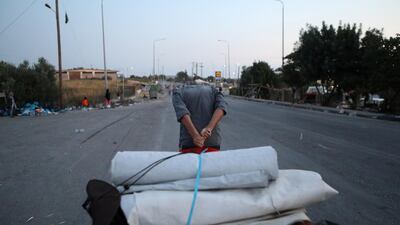
A man drags his belongings as refugees and migrants from the destroyed Moria camp walk towards a new temporary camp, on the island of Lesbos, Greece. Reuters -
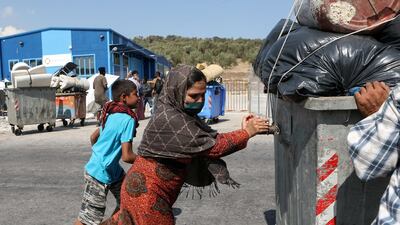
Refugees and migrants who were sheltered near the destroyed Moria camp, carry their belongings as they prepare to move to a new temporary camp, on the island of Lesbos, Greece. Reuters -
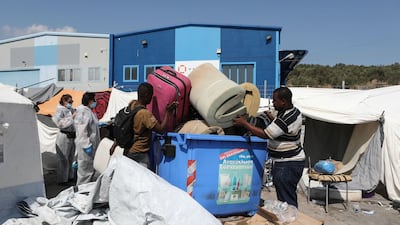
Refugees and migrants who were sheltered near the destroyed Moria camp, carry their belongings as they prepare to move to a new temporary camp, on the island of Lesbos, Greece. Reuters -

An aerial view of the new temporary camp near Kara Tepe on Lesbos island, Greece, Another 2,000 refugees and migrants were settled into the new temporary hosting facility at Kara Tepe. EPA -
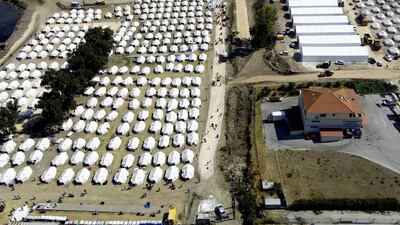
An aerial view of the new temporary camp near Kara Tepe on Lesbos island, Greece, 18 September 2020. Another 2,000 refugees and migrants were settled into the new temporary hosting facility at Kara Tepe. EPA -
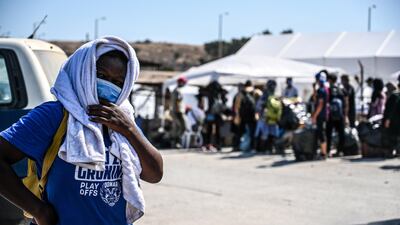
Asylum seekers wait with their belongings as refugees and migrants from the destroyed Moria camp wait to enter into the new temporary camp near Kara Tepe on Lesbos island, Greece. EPA -
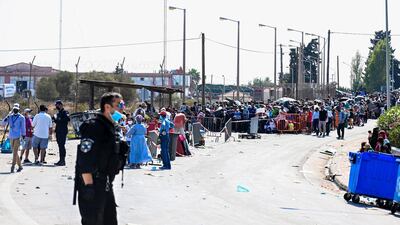
Asylum seekers wait in a line with their belongings as refugees and migrants from the destroyed Moria camp wait to enter into the new temporary camp near Kara Tepe on Lesbos island, Greece. EPA


The report commission began its work in early 2019 when it was asked to work out how Germany could better integrate children from a migrant background.
It said that the “development of language competence in German forms the cornerstone for social cohesion and also plays a central role for individual chances of success”.
Since the European migrant crisis that began in 2014, Germany has welcomed more than 1.7 million refugees and asylum seekers.
This influx led to questions about successful integration into German society at a time when populist and nationalist political parties gained strength in the country and further afield in Europe.

