
As the world commemorates the centenary of the end of the First World War, few people in Turkey will be marking Armistice Day on Sunday despite the impact it has had on the Turkish national consciousness.
Observing the end to hostilities in 1918 is a yearly event for most countries touched by the conflict, but in Turkey it is absorbed among a string of events that led to the fall of the 600-year-old Ottoman Empire and the creation of the modern Turkish Republic – not least the bloody four-year independence struggle that followed the war.
"For most Turks the First World War was an Ottoman war but the War of Independence was the first war we fought as Turks," political analyst Murat Yildiz told The National.
However, the absence of countrywide ceremonies belies the way that the aftermath of defeat shaped public attitudes towards the West and even neighbours in the Middle East – a phenomenon known as "Sevres syndrome", after the post-war treaty to carve up Anatolia that never came into being.
“It boiled up through the 19th century and culminated with the question of who were the culprits who forced the dissolution of the empire,” said Prof Ahmet Evin, a senior scholar at Sabanci University’s Istanbul Policy Centre.
“The whole narrative was based on the idea that the glorious empire was lost because of the animosity, political machinations and power projection of the outsiders – the West.”
The end of the First World War saw the Ottomans stripped of their possessions outside Anatolia as Britain and France divided up Arab lands to the south in accordance with the secret Sykes-Picot deal.
The allies occupied Istanbul and planned to carve up western and southern Anatolia into spheres of influence for France, Greece, Italy and Britain.
But the War of Independence scotched these plans and modern Turkey came into existence.
According to a study by the British Council, Turkey’s “collective memory of this period is coloured by these events”.
In a 2014 survey, the council found nine out of 10 Turks felt the country was still affected by the consequences of the First World War and nearly half said the war “contributes strongly to my country’s identity”.
More than half said the conflict and its outcomes “have a lasting impact on my country’s international relations and how it is viewed by other countries today”.
These sentiments are often presented through conspiratorial opinions in Turkish newspapers or by politicians when they refer to plots by “imperialists” to undermine Turkey. They are encapsulated in the popular adage “the Turk has no friend but the Turk”.
In a televised address two weeks after a failed 2016 military coup, President Recep Tayyip Erdogan blamed the attempt on “foreign powers” and said the “scenario was written outside of Turkey”.
A few months later, as Turkish forces were engaged in a military incursion in Syria, he raised the spectre of efforts to divide Turkey a century earlier. “At this critical time when there are attempts to restructure the world and our region, if we stop we will find ourselves facing Sevres conditions,” he warned.
This summer, when the lira suffered a drastic fall, leading politicians accused unidentified foreigners of waging “economic war” on Turkey.
The dredging up of century-old enmities is not confined to the West. The Arab Revolt of 1916 – often characterised as a “stab in the back” for the Ottomans – has provided Turkey with ammunition to chastise its southern neighbours when the situation suits.
Perhaps the most sensitive issue arising from the war for Turks is the mass killing of Ottoman Armenians in eastern Anatolia in 1915.
Some historians claim up to 1.5 million Armenians died while being force-marched to Syria and have labelled it as genocide.
Turkey disputes the description of events and the number of deaths and has reacted angrily to any foreign recognition of genocide.
When Pope Francis and German MPs called the deaths genocide, Ankara recalled its ambassadors to the Vatican and Berlin. In a reference to Germany’s record in the Second World War, a spokesman for Mr Erdogan said: “Having committed the largest genocide in modern history, Germany resorts to lies about Ottoman Armenians to relieve itself of guilt.”
_____________
Read more on the First World War
Pictures: 20 photos from the world at war
-
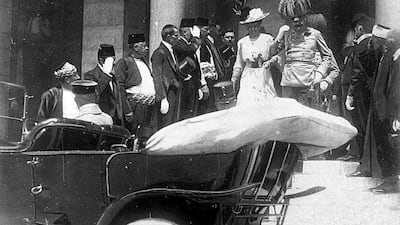
The Archduke of Austria Franz Ferdinand, center right, and his wife Sophie walk to their a car in Sarajevo minutes before their assassination, on June 28, 1914. All by AP Photos -
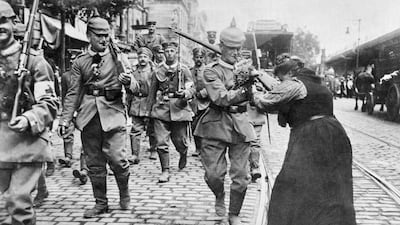
Prussian soldiers leaving Berlin for the front are given flowers by a woman. -
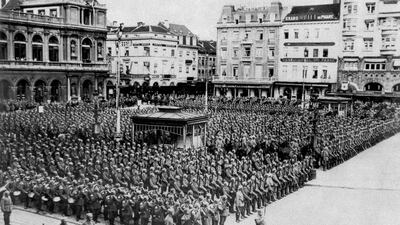
German troops stand in formation during the occupation of Brussels. -
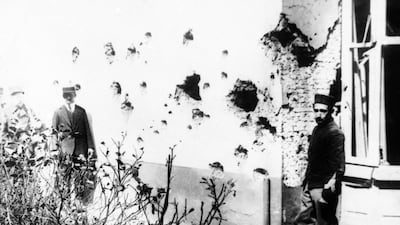
A man stands next to a building damaged by shrapnel from bombs dropped from a Zeppelin in Antwerp, Belgium. -
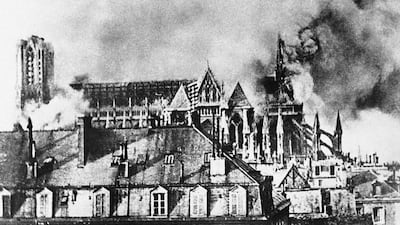
The Cathedral of Reims, France smokes after bombardment. -
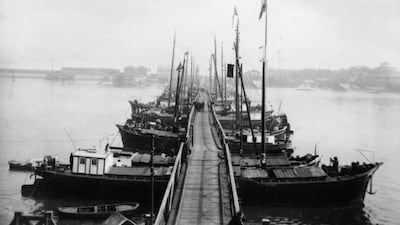
Small boats create a pontoon bridge over the Scheldt River in Antwerp, Belgium, for residents and troops escaping the German Army. -
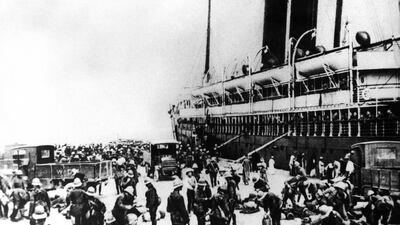
Australian troops arrive in Alexandria, Egypt, en route to the battlefield on the Gallipoli Peninsula. -
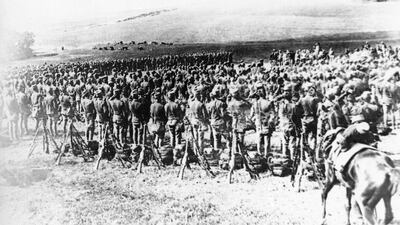
Troops are mobilized on the bank of the Danube River across from Belgrade. -
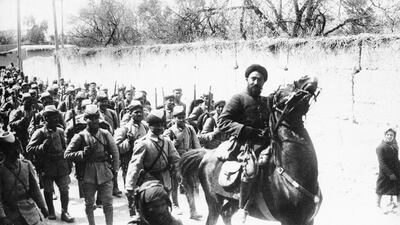
Turkish soldiers at a military review in Damascus, Syria. -
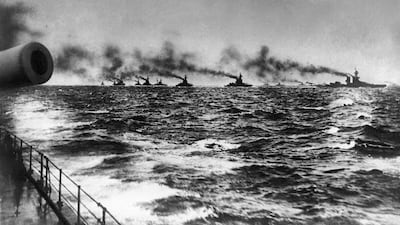
The British Grand Fleet under admiral John Jellicoe are on their way to meet the Imperial German Navy's fleet for the Battle of Jutland in the North Sea. -
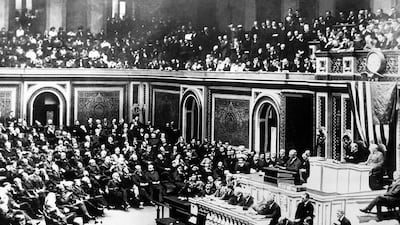
US President Woodrow Wilson delivers a speech to the joint session of Congress, in Washington, DC, United States, on April 2, 1917. -

The first 5,000 American soldiers to reach England march across historic Westminster Bridge in London, UK. -
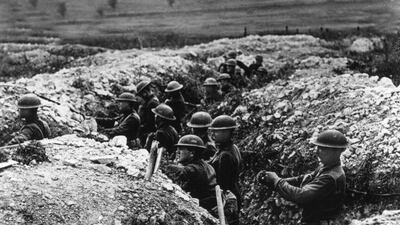
United States Army troops stand in the trenches in France. -
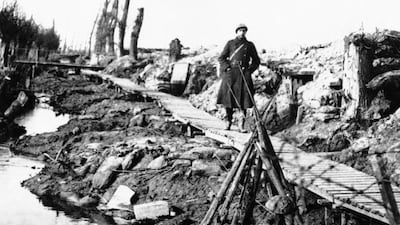
A soldier walks along wooden planks placed over the mud of Flanders' Fields near the Yperlee Canal near Ypres, Belgium. -
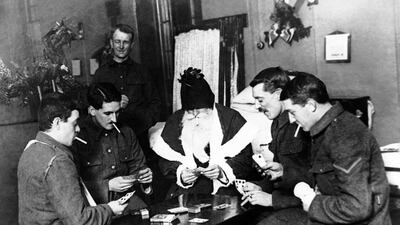
Wounded World War One soldiers play a game at a London hospital. -
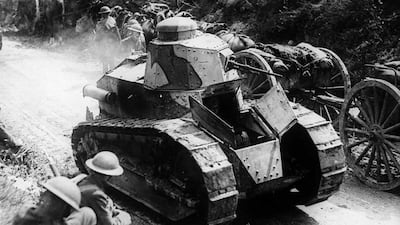
Two soldiers are passed by tanks on their way to support French troops in Juvigny, France. -
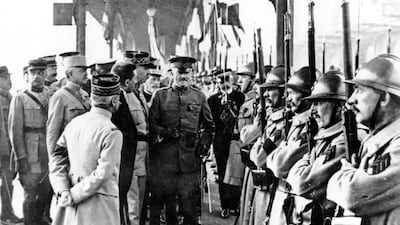
US Army General John J. Pershing, center, inspects French troops at Boulogne, France, on June 13, 1917. -
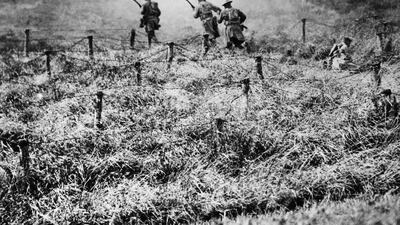
US troops advance on a path through a barbed wire entanglement near Beauqueanes, Somme, France. -
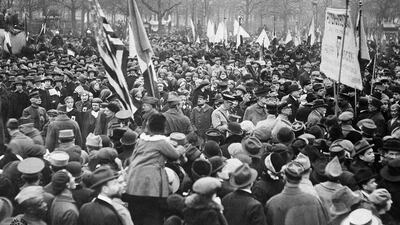
People in the streets of Paris, France, celebrate the signing of the Armistice. -
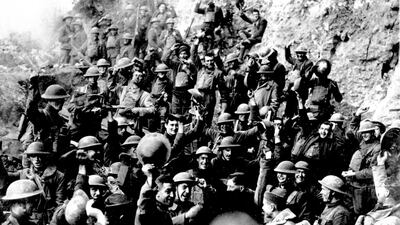
American troops, near St. Mihiel, France, cheer after hearing the news that the Armistice has been signed.


My Uncle Jack died with his Pals at the Somme. It shattered and then galvanised Tyneside
Forgotten Muslim heroes of Great War immortalised in London exhibition
Tower of London glows to mark centenary of the end of First World War - in pictures
How the First World War shaped the borders of the Middle East

