


Nestled by the A131 dual carriageway in Essex is a new service station, the opening of which this week was hailed as a stepping stone to the future of motoring in Britain.
The reason? There was not a petrol pump in sight. Instead, 36 electric cars are able to recharge their batteries simultaneously, with electricity generated from solar-power canopies.
From day one, Teslas and Minis can roll in, their drivers able to pop into the shops while their cars remain plugged in.
The site, set up by green energy company Gridserve, is the UK’s first electric forecourt and it plans to unveil more than 100 over the next five years.
It is just one example of many innovative companies wanting to ride the green wave, as the world tries to rapidly come to grips with the climate emergency and necessity of moving to a greener economy.
This weekend, Prime Minister Boris Johnson hosts a Climate Action Summit on the fifth anniversary of the Paris Agreement, when the global community took perhaps its greatest step in turning to a sustainable way of living.
A climate agreement backed plans to limit global warming to 1.5-2°C above pre-industrial levels and it is hoped that this weekend countries will lay out in great detail ambitious targets to reduce emissions.
It was hoped the Paris agreement would spur countries into action. Some have enacted laws that set net-zero targets ranging from 2045 to 2060.
But while experts have welcomed the developments of the past five years, they warn that they are not even close to enough.
Questions remain if lofty aims are to be translated into tangible change and action.
-
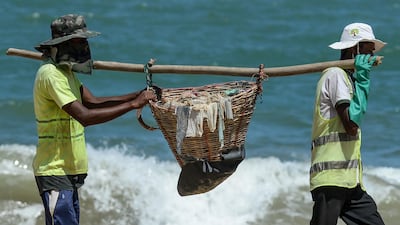
Municipal workers take part in a beach clean-up on the United Nations' World Environment Day at Mount Lavinia on the outskirts of Colombo. AFP -
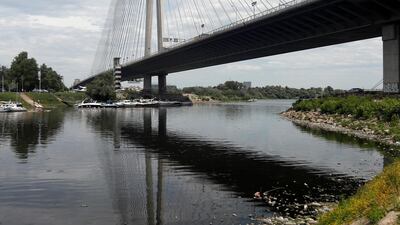
Dumped plastic bottles and barrels on the bank of the river Sava on World Environment Day, in Belgrade, Serbia. AP -

This handout photograph taken and released by the released shows workers pumping out pollutions of a large diesel spill in the Ambarnaya River outside Norilsk, Russia. AFP -
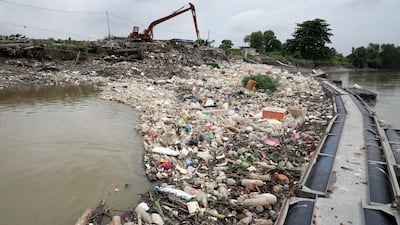
Waste collected by a log boom is seen on a river during World Environment Day, in Klang, Malaysia. REUTERS -

Gary Stokes, founder of the environmental group Oceans Asia, poses with discarded face masks he found on a beach in the residential area of Discovery Bay on the outlying Lantau island in Hong Kong. AFP -
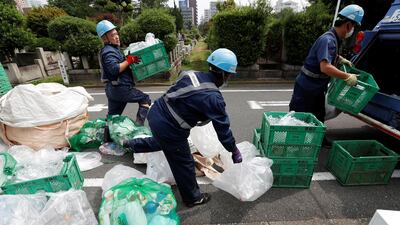
Workers collect recyclable garbage including cans, plastic trays and plastic or glass bottles on the street in Tokyo, Japan. REUTERS -

A volunteer collects garbage on the beach during an event to mark the World Environment Day in Colombo, Sri Lanka. REUTERS -
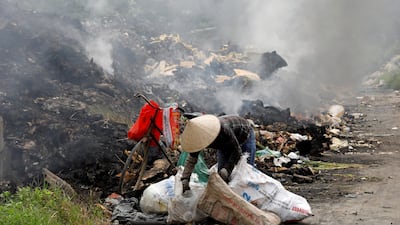
A woman collects recyclable items from electronic equipment at a garbage dump near a rice field in Vinh Phuc province, Vietnam. REUTERS -
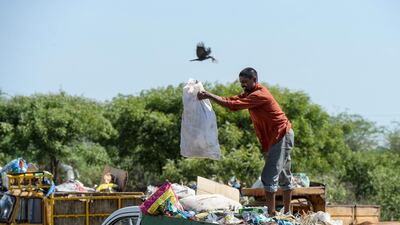
A man unloads waste materials at a garbage dump site on the outskirts of Hyderabad on the United Nations' World Environment Day. AFP


A damning UN report released on Wednesday shows that greenhouse emissions reached a new high in 2019, while 2020 brought wildfires, intense storms and droughts.
The Covid-19 pandemic and ensuing economic shutdown did lead to cleaner air but in reality, the long-term effects are likely to be almost nil.
Dr Alison Doig, of the Energy and Climate Intelligence Unit, says that political momentum is good but policymakers must understand that change must happen immediately.
If there is not greater movement now, temperatures will rise above the target at some point, something that the most at-risk parts of the world, such as Bangladesh and Nigeria’s largest city Lagos, cannot afford, Dr Doig said.
“Ultimately, the next 10 years are going to be critical for staying below the 1.5°C target, absolutely critical," she said..
“That means all these long-term net-zero aims by 2050, 2060 in China, they all need to have these short-term targets for 2030 that ramp up pressure."
Last week, the British government announced its new target of reducing emissions by at least 68 per cent by 2030, compared to 1990 levels, partly to encourage others to “raise the bar” at this week’s climate summit and the Cop26 climate conference in Glasgow next year.
But some say the targets are not ambitious enough.
E3G, a climate think tank that supports a quicker path to a low-carbon future, said these were steps the right direction while warning that the UK was not on track to meet its existing targets, let alone new ones.
Alex Scott, a senior policy adviser at E3G, hoped it would prompt change from countries making slow progress.
“Those who have shied away from climate action, such as Australia, Brazil and Russia, now have nowhere to hide," Ms Scott said.
"It’s time for these countries to realise the game is up and set stretching climate targets of their own, or risk being left behind in a global race to dominate the net-zero markets of the future."
On Wednesday, the UK Climate Change Committee said that for the government to meet its net-zero goals, polluting emissions must fall by 78 per cent of 1990 levels by 2035.
It said the 2020s was the “decisive decade” for action and progress on climate change, calling for every car, van and replacement boilers to be zero-carbon by the early 2030s.
Dr Doig said there has been some global progress since the Paris Agreement – for instance, the move towards wind and solar power.
“But the pace of change, the emissions reductions are just not happening at the speed that is needed," she said. "The conditions are right but the pace has to increase rapidly.”
Dr Doig said the climate reduction had to be delivered now for its effects to be felt in the future, through the way homes are insulated and in farming and transport.
“All of these things are going to have to start changing right away so that we start to bring the emissions down right away," she said.
"The longer we delay, the harder keeping below 1.5°C will be. It’s as simple as that.
"So these targets have to be actually starting to deliver now, not leave it to the next half of the decade on someone else’s watch.”
-
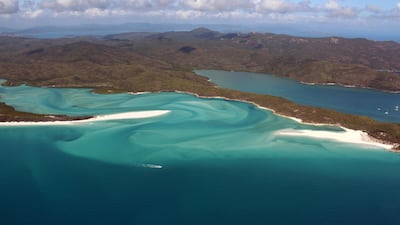
An aerial view of the Great Barrier Reef off the coast of the Whitsunday Islands, along the central coast of Queensland. AFP -
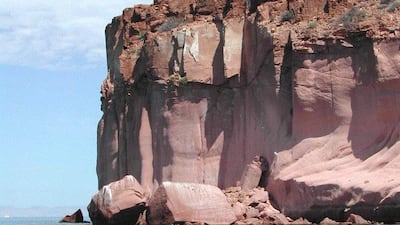
Islands and Protected Areas of the Gulf of California. © UNESCO -
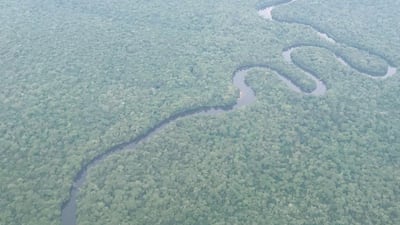
Salonga National Park. © UNESCO -
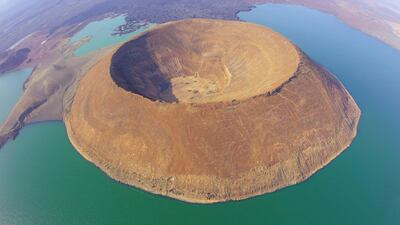
Lake Turkana is situatated in the Great Rift Valley in Kenya. It is the world's largest desert lake and the world's largest alkaline lake. Rocks in the surrounding area are predominantly volcanic. Getty Images -

Elephants stand in tall grass in the Garamba National Park in north-eastern Democratic Republic of Congo. AFP -

Mount Nimba Strict Nature Reserve. © UNESCO -
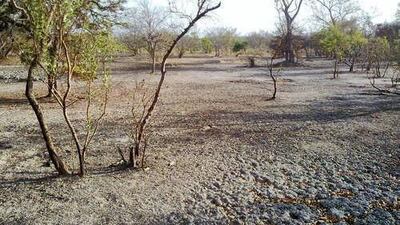
Niokolo-Koba National Park. © UNESCO -

Dja Faunal Reserve in Cameroon. © UNESCO -
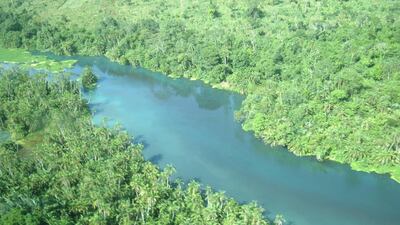
Virunga National Park. © UNESCO -

Zebras and Wildebeast graze in Selous Game Reserve, southern Tanzania. AFP -

Aïr and Ténéré Natural Reserves in Niger. Alamy -
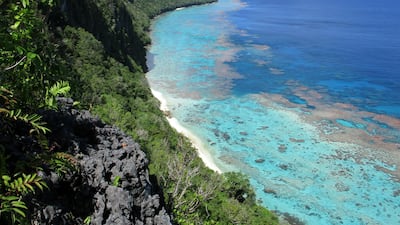
East Rennell (Solomon Islands). © UNESCO -
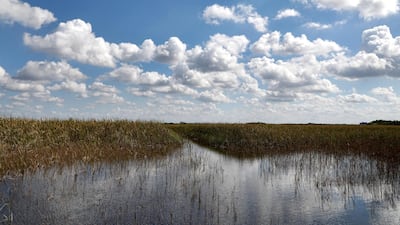
Clouds are reflected in the Florida Everglade. AFP -
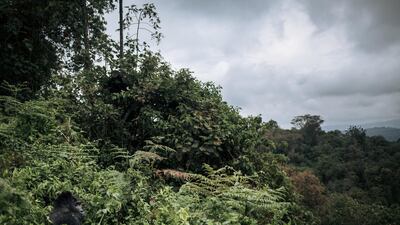
A male Grauer's gorilla, a critically endangered species, rests in the forest of Kahuzi-Biega National Park in northeastern Democratic Republic of Congo. AFP -
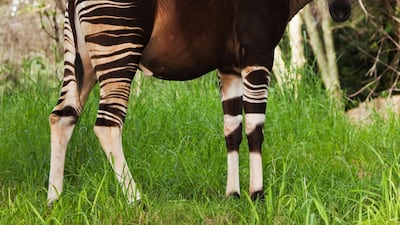
Okapi Wildlife Reserve, Democratic Republic of Congo. Alamy -
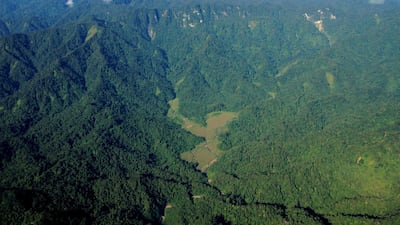
Aerial view of rainforest Leuser Mountain National Park which is one of the national parks listed in UNESCO as a World Heritage Site, the Tropical Rainforest Heritage of Sumatra in Aceh, Indonesia. Getty Images -
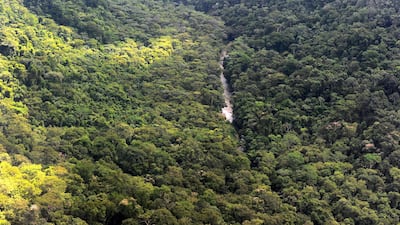
Aerial view of the Rio Platano biosphere reserve in La Mosquitia region, Honduras. AFP


The UN has asked business leaders to commit to targets that would fall into line with limiting the temperature rise to 1.5°C above pre-industrial levels.
Some firms have begun to deliver although how quickly others will catch on is unclear.
As noted by UN Secretary General Antonio Guterres, by early next year countries comprising 65 per cent of carbon dioxide emissions will have made commitments to carbon neutrality.
“We must turn this momentum into a movement,” he said, a view echoed by Dr Doig.
“The message is, it’s great to have this political momentum but we need to start delivering,” she said.
Lockdown causes record drop in carbon dioxide emissions
The Covid-19 pandemic which has devastated lives and economies may have had a positive effect on the environment.
Restrictions saw fossil carbon dioxide emissions plummet by an estimated 2.4 billion tonnes in 2020 – a record fall according to researchers at the University of East Anglia, University of Exeter and the Global Carbon Project.
It is considerably larger than previous significant decreases and means that in 2020, fossil carbon dioxide emissions are predicted to be about 34 billion tonnes of carbon dioxide, 7 per cent lower than in 2019.
A sharp drop in the use of transport is the biggest reason for the chance. Journeys on surface transport fell by about half at the height of the lockdowns.
By December 2020, emissions from road transport and aviation were still below their 2019 levels, by about 10 per cent and 40 per cent, because of continuing restrictions.
Bentley – the luxury car maker with green intensions
Bentley is best known as a luxury car maker, with models such as the Bentayga notorious for burning through petrol quickly while pumping out high emissions.
But it is now one of the leading high-level makers forging a greener path.
Last month, chief executive Adrian Hallmark said that by 2030, all of its cars would be entirely electric, as he pledged to get rid of combustion engines.
"We are not only working on one electric car but a full family of electric cars,” Mr Hallmark said.
Last year, Bentley's headquarters in Crewe became the UK’s first carbon-neutral automotive factory.
About 10,000 solar panels have been installed at the site, with 100 per cent of electricity generated by solar energy or bought as green electricity.
Gridserve – from 'sun to wheel'
Meanwhile, back at the new Gridserve non-petrol station in Essex, up to 36 cars can access 350 kilowatts of charging power in two hours – enough for more than 320 kilometres of travel.
"It’s our collective responsibility to prevent greenhouse gas emissions rising further, and electric vehicles powered by clean energy represent a large part of the solution," said Gridserve chief executive Toddington Harper.

