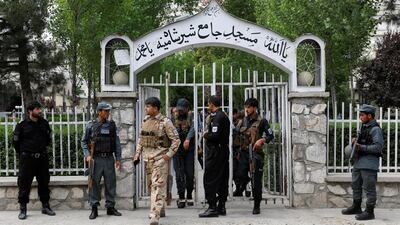
The Taliban have killed or wounded more than 400 Afghan security staff in the past week, the interior ministry said on Sunday, accusing the insurgents of increasing attacks before planned peace talks.
Violence had dropped across much of Afghanistan since the Taliban announced a three-day ceasefire on May 24 to mark the Eid Al Fitr holiday, but officials have accused the insurgents of stepping up attacks in the past few days.
“In the past one week, the Taliban carried out 222 attacks against the Afghan security forces, resulting in the death and injury of 422” people, interior ministry spokesman Tareq Arian said at a press conference.
He accused the Taliban of attacking religious scholars to put “psychological pressure” on the Afghan government.
Bomb attacks on mosques in Kabul that killed two prayer leaders this month were the work of the insurgents, Mr Arian said.
“This has been the goal of the Taliban, to target religious scholars, especially in the past two weeks,” Mr Arian said.
He accused the militants of being an “umbrella group for other terrorist networks”.
Four people, including a prayer leader, were killed on Friday when a blast ripped through a mosque in Kabul during a service.
-
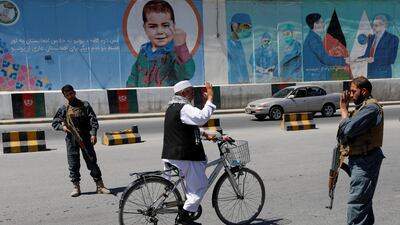
Afghan policemen stand guard at a check point during Eid Al Fitr, a Muslim festival marking the end of Ramadan. REUTERS -
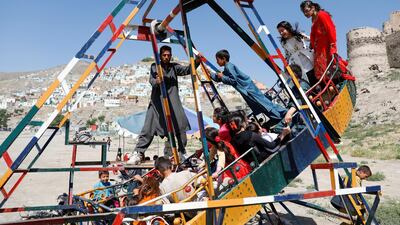
Children play during Eid Al Fitr. Reuters -
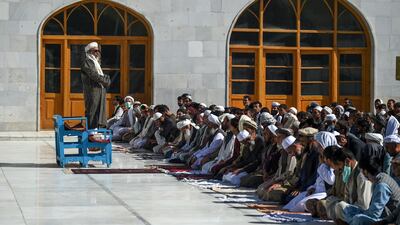
A religious scholar speaks as Muslim devotees offer prayers at the start of the Eid Al Fitr. AFP -
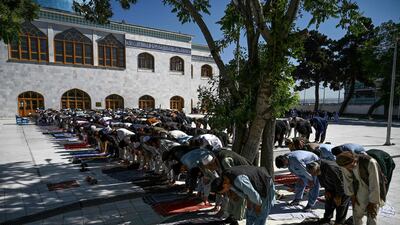
A religious scholar speaks as Muslim devotees offer prayers at the start of the Eid Al Fitr. AFP -
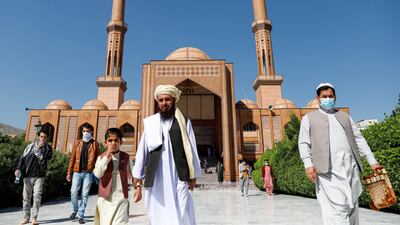
Afghans leave after prayers during Eid Al Fitr at a mosque in Kabul. REUTERS -
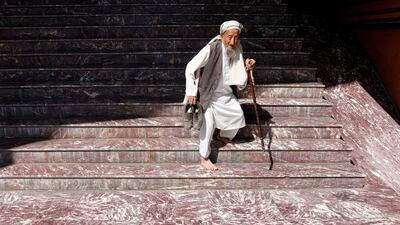
An Afghan man leaves after prayers during Eid Al-Fitr at a mosque in Kabul, Afghanistan. REUTERS -
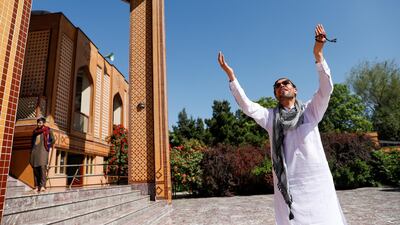
An Afghan man gestures after the prayers during Eid Al Fitr at a mosque in Kabul, Afghanistan. REUTERS -
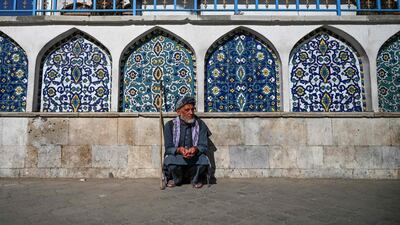
A man sits outside the Pul-e Khishti mosque at the start of the Eid Al Fitr festival in Kabul on May 24, 2020. AFP -

A health worker checks the body temperature of a Muslim devotee as a preventive measure against the Covid-19 coronavirus at the start of the Eid Al Fitr at Wazir Akbar Khan mosque in Kabul. AFP -
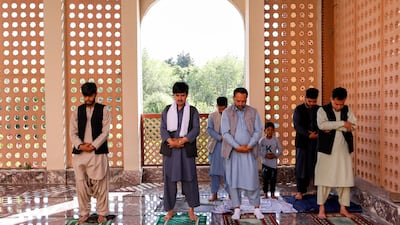
Afghan men take part in prayers during Eid Al Fitr at a mosque. REUTERS -

Afghans leave after prayers during Eid Al Fitr at a mosque in Kabul. REUTERS -

A security officer stops motorists at a checkpoint on a road at the start of the Eid Al Fitr festival. AFP -

Muslims offer prayers at the start of the Eid Al Fitr at the Wazir Akbar Khan mosque in Kabul on May 24, 2020. AFP -
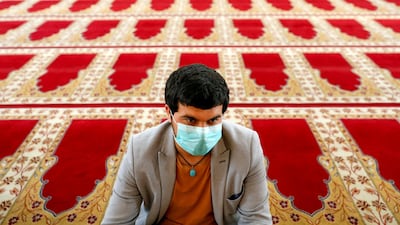
An Afghan man wearing a protective face mask takes part in prayers during Eid Al Fitr. Reuters -
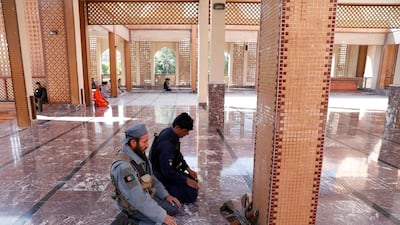
Afghan policemen take part in prayers during Eid Al Fitr in Kabul, Afghanistan May 24, 2020. REUTERS -
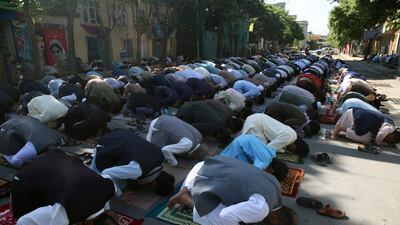
Men offer Eid Al Fitr prayers outside a mosque in Kabul. AP -
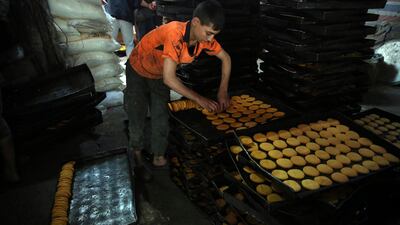
An Afghan boy prepares sweets at a traditional bakery for Eid Al Fitr holiday to mark the end of Ramadan. AP -
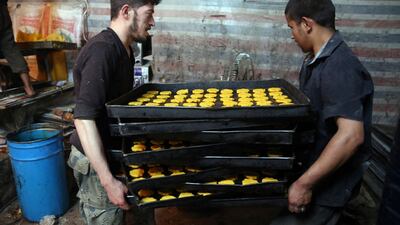
Afghan men prepare sweets at a traditional bakery for Eid Al Fitr holiday to mark the end of Ramadan. AP -

Afghan men prepare sweets at a traditional bakery for Eid Al Fitr holiday to mark the end of Ramadan. AP


No group claimed that assault, which occurred about a week after an ISIS-claimed attack at a mosque on the edge of Kabul’s heavily fortified Green Zone killed a prominent prayer leader.
The Taliban condemned both attacks.
After initially reporting a drop in overall violence following the ceasefire, National Security Council spokesman Javid Faisal on Sunday said the Taliban “have not reduced, but rather increased their attacks across the country”.
The council on Saturday also charged that the insurgents had killed 89 civilians and wounded 150 in the past two weeks.
The accusations come after the government and Taliban signalled that they were getting closer to launching long-delayed peace talks.
President Ashraf Ghani has vowed to complete a Taliban prisoner release, a condition for beginning the negotiations with the insurgents aimed at ending almost two decades of war.
The Taliban have largely refrained from launching major attacks on Afghan cities since February, when they signed a deal with Washington meant to pave the way for the talks.
But seven police officers were killed when their checkpoint was attacked in central Afghanistan on Friday, officials said, blaming the Taliban for the assault.
The attack happened late on Friday in the district of Pasaband, in Ghor province, said district police chief Fakhruddin, who goes by one name.
“They killed seven police officers and wounded one. One policeman is missing,” he said.
The suspected Taliban attackers had seized guns and ammunition, he said.
The attack was confirmed by the deputy governor of Ghor, Habibullah Radmanish, who also blamed the insurgent group.
No one has claimed responsibility for the attack.

