


As India begins to recover from a devastating second wave of coronavirus infections, thousands of Covid-19 patients in the country developed the deadly "black fungus" infection.
India has had about 12,000 cases and more than 300 deaths from black fungus in the past few months, with several states affected.
Other countries have reportedly recorded many Covid-linked black fungus cases including Pakistan and Russia.
On May 25, Bangladesh reported its first death caused by black fungus.
A disease as unpleasant as it sounds, black fungus, or mucormycosis, is a fungal disorder that forces surgeons in some cases to remove patients’ eyes and jawbones to stem the infection.
Until this year, there had been only a few dozen published mucormycosis cases linked to Covid-19 worldwide, but in India alone recent case numbers run into the thousands.
A recent scientific paper said a combination of a severe Covid-19 outbreak and uncontrolled diabetes – a key risk factor – created “the perfect storm for mucormycosis”.
Here we outline what mucormycosis is and why so many people are being infected and even dying.
What is mucormycosis?
This group of infections is caused by spores of fungi known as mucormycetes. Common in soil and decaying organic matter, including leaves, fruit, vegetables and manure, they are usually harmless, but their airborne spores can cause illness in individuals with weak immune systems.
Symptoms include headache, fever, blocked nose, chest pain, breathing difficulties and, if the infection spreads to them, pain and pressure around the eyes and blurred or double vision.
Patients may cough up blood and develop a blackish discolouration over the bridge of the nose, with a process of tissue death or necrosis occurring. This occurs when too little blood flows to the tissue.
Figures from the US Centres for Disease Control and Prevention indicate that slightly more than half of people with the disease die.
Fortunately, the condition is not thought to spread from person to person.

How common is it?
The condition is rare in developed nations, with the CDC quoting a US study that found an annual rate of 1.7 cases per million people. But it occurs much more frequently in some developing nations.
“In my whole career, I’ve seen probably two or three cases,” said Dr Andrew Freedman, an infectious diseases specialist at Cardiff University in the UK.
“It’s exceedingly rare in the UK but it’s a lot more common in developing countries ... it’s certainly more common in patients with diabetes and in organ transplant patients.”
Figures published in March this year, before the worst of India's second Covid-19 wave, suggested that the country of 1.37 billion accounted for 71 per cent of cases worldwide.
Apart from India, Pakistan and Russia reported cases of the deadly disease.
Russia confirmed reports of black fungus among Covid-19 patients on May 17, but authorities said the situation was under control.
Why did numbers surge during India’s wave of Covid-19 cases?
People with Covid-19 are sometimes given steroids to reduce lung inflammation, but these drugs weaken the immune system and so increase the risk of mucormycete infection.
“Steroids ... are commonly used to treat severe Covid, and they predispose to rare infections, like fungal infections,” Dr Freedman said.
Particularly if steroids are used in excess, the fungus may be able to multiply and cause an infection.
That steroids can increase blood-sugar levels in some people with diabetes, which is common in India, is also thought to be a factor, with more than eight in 10 black fungus cases happening in diabetics. A frequent scenario is for the disease to develop in diabetics recovering from Covid-19 at home.

The disease is more common after a prolonged stay in intensive care, leading to concerns that contaminated oxygen cylinders, pipes and humidifiers in hospitals are causing infections.
Uncertainty persists, however, because there a5re reports from India that mucormycosis has been seen in individuals who have not been treated with steroids or given oxygen.
How is it treated?
Early treatment is important to stem the infection and prevent it from spreading. In advisory notes, the Indian Council of Medical Research and India’s Ministry of Health and Family Welfare tell clinicians to “not lose crucial time to initiate treatment”.
Black fungus is often treated by intravenous injections of anti-fungal medication for at least four weeks.
Surgery may be required to cut away dead tissue and prevent the infection spreading. Drastic measures are often called for, such as removing an eye to stop the fungus reaching the brain, or cutting out part of the jaw or the skull. Some patients now face a life where they will struggle to talk or eat normally because parts of their mouth were cut away.
Doctors are told to reduce and then discontinue steroid treatment in affected patients, and to stop giving other drugs that affect the immune system.
With India's coronavirus case numbers dropping by more than 20 per cent a week, doctors will be hoping that the prevalence of black fungus decreases too.
India's devastating second wave of the coronavirus – in pictures
-
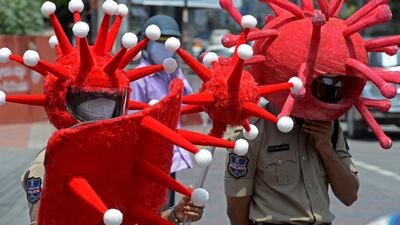
Police at a traffic intersection wearing headgear themed on the Covid-19 coronavirus urge people to adopt safety protocols during an awareness drive in Hyderabad. AFP -
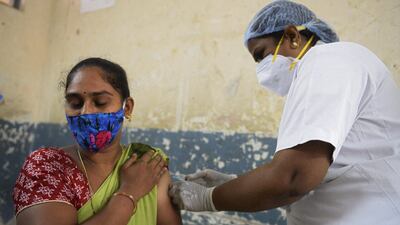
A health worker inoculates a woman with a dose of the Covishield vaccine against Covid-19 during a special vaccination programme at a government school in Hyderabad. AFP -
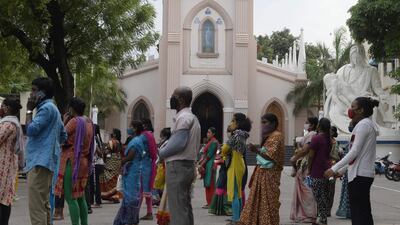
People wait to receive food during a lockdown imposed against the spread of Covid-19, at Saint Marys Basilica in Secunderabad, the twin city of Hyderabad. AFP -
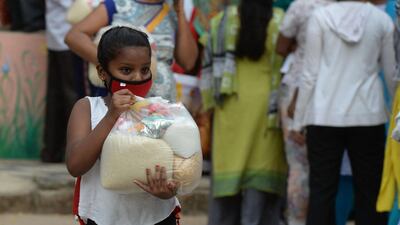
A girl carries food distributed for people in need during a coronavirus lockdown, at Saint Marys Basilica in Secunderabad, India. AFP -
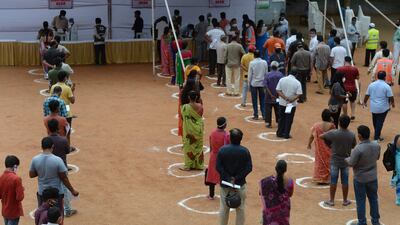
Circles on the ground delimit physical distancing as people wait to register for a special vaccination programme against Covid-19 at a government school in Hyderabad. AFP -
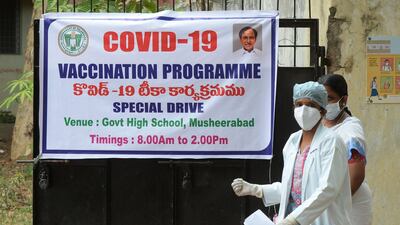
A doctor passes a banner in Hyderabad announcing a special vaccination programme against Covid-19. AFP -
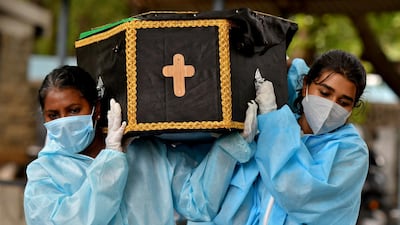
Volunteers Akshaya, 22, right, a law student, and Esther Mary, 41, a lecturer, carry the body of a Covid-19 victim for burial at a cemetery in Bengaluru, India. Reuters -
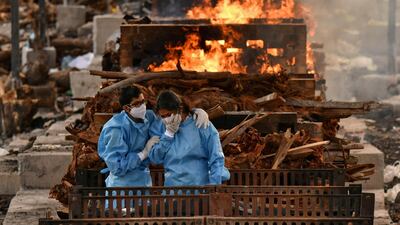
Family members of Vijay Raju, who died because of Covid-19, at his cremation in Giddenahalli village on the outskirts of Bengaluru, India. Reuters -
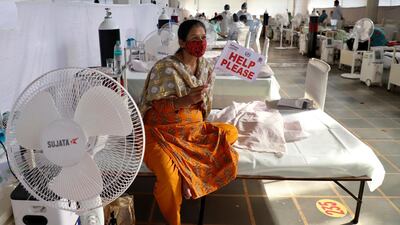
A patient receiving treatment at a free Covid-19 centre in New Delhi displays a placard asking for help from volunteers. The centre is run by a Sikh voluntary organisation. AP Photo -
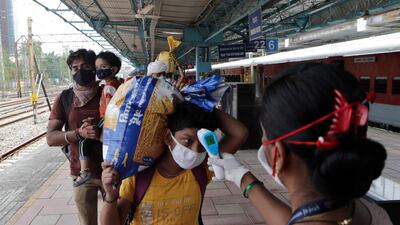
A health worker checks the body temperature of a traveller at a train station in Mumbai, India. AP Photo -

People maintain physical distancing protocols while waiting to register for a vaccination programme against Covid-19 in Hyderabad. AFP



