


Health experts said India could become the next hotspot of the coronavirus outbreak, and that the spread of the virus across the densely populated nation is “inevitable”.
The country has confirmed 147 cases of Covid-19 and three deaths since the first case was detected in January, triggering a series of government bans in recent weeks, including curbing international travel, shutting schools and universities, and banning gatherings across the nation of 1.3 billion.
The unprecedented bans led to the closure of the Taj Mahal until April to stem the onset of community transmission locally of a virus that has infected close to 200,000 people worldwide and led to almost 8,000 deaths.
But experts say that the second most populous country has already entered the “second stage” of the contagion, with cases reported from “clusters” across the nation as it lags to conduct widespread testing and enforce social distancing in densely populated cities and towns with patchy healthcare systems.
“It will behave the same way it has behaved in China. It will follow the same pattern. We are clearly in the second stage,” Balram Bhargava, director general of the Indian Council of Medical Research, said about the “inevitable” spread of the virus.
Countries across the world have witnessed a rapid spread of the coronavirus in local communities after a relatively slow start.
The World Health Organisation on Tuesday also said the situation was evolving rapidly in the region and there was a need for “aggressive action” to slow the spread.
"India is certainly in the early stages of the epidemic, so both the number of cases and fatalities are likely to rise," Dhruv S Kazi, Associate Director at the Richard A and Susan F Smith Center for Outcomes Research in the US, told The National.
India is only testing “high-risk” individuals who returned from affected countries and their “contacts”, such as family members and friends.
About 5,900 individuals have tested so far, with random sample testing for only 10 people with flu-like symptoms. Results have taken up to two days. But the small number of confirmed cases has bewildered many experts, who say a large number of cases are probably undetected or asymptomatic.
South Korea has tested more than 4,800 people per million and Italy about 1,000 but India has tested only about five per million.
Authorities in recent days have shored up the number of testing facilities and promised about 100 labs would be part of the testing network by the end of the week.
“In the absence of more systematic and large-scale testing, it is challenging to exactly quantify the state of the epidemic in India,” Mr Kazi said.
-

Medical staff cheer themselves up before going into an ICU ward for COVID-19 coronavirus patients at the Red Cross Hospital in Wuhan in China's central Hubei province. AFP -
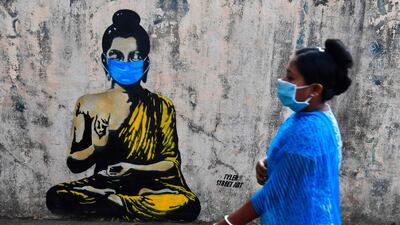
A resident wearing a facemask amid concerns over the spread of the COVID-19 coronavirus walks past a graffiti of Buddha wearing facemask, in Mumbai. AFP -
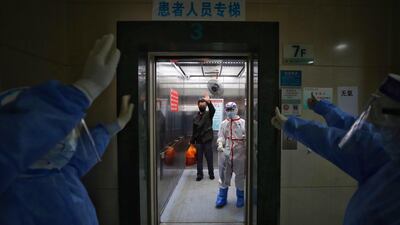
Medical staff wave goodbye to a recovered COVID-19 coronavirus patient at the Red Cross Hospital in Wuhan in China's central Hubei province. AFP -
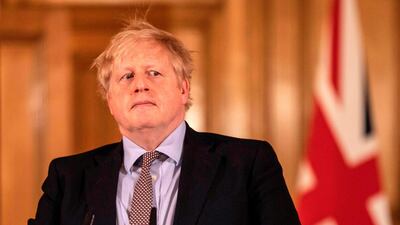
Prime Minister Boris Johnson gives a press conference on the ongoing situation in London. AFP -

A train stands at a near-empty platform of a subway station at Alexanderplatz square in Berlin, as tourist activities came to a halt. AFP -

French President Emmanuel Macron is seen on a television screen as he speaks during an address to the nation in Paris. AFP -
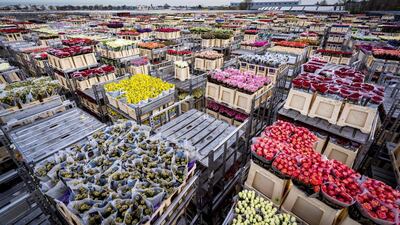
Flowers are stored prior to their destruction at the flower auction in Aalsmeer after a severe drop in demand. Auctions are struggling with low prices and the need to destroy the products. AFP -
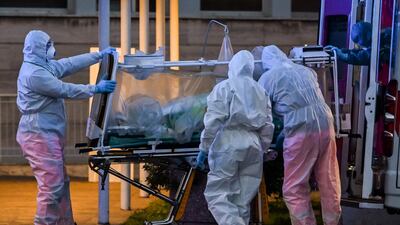
Medical workers in overalls move a patient under intensive care into the newly built Columbus Covid 2 temporary hospital to fight the new coronavirus infection at the Gemelli hospital in Rome. AFP -

A customer is seen next to empty bread shelves as South Africans queue at a local supermarket to stock up on general products. AFP -

Traders work during the opening bell at the New York Stock Exchange (NYSE) at Wall Street in New York City. Trading on Wall Street was halted immediately after the opening bell Monday, as stocks posted steep losses following emergency moves by the Federal Reserve to try to avert a recession. AFP -
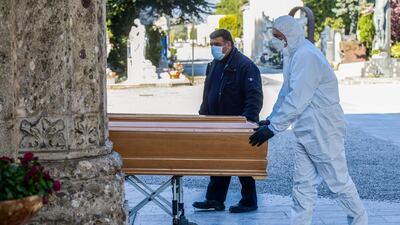
An undertaker wearing a face mask and overalls unloads a coffin out of a hearse at the Monumental cemetery of Bergamo, Lombardy, as burials of people who died of the new coronavirus are being conducted at a rate of one every half hour. AFP -

The Oculus at the World Trade Center's transportation hub is sparsely occupied in New York. AP Photo


The government has yet to authorise private hospitals and laboratories to conduct tests under the 1896 British-era law, designed to tackle the plague.
India also has one of the highest density population ratios in the world, with 420 people per square kilometre compared to China’s 148, which is the world’s most populous nation.
Maharashtra, one of the largest Indian states with a population of 110 million, has had 41 positive cases and one death in less than a week.
Experts say a complete lockdown of the country along the lines of China and Italy will be impossible.
Many private corporates have asked staff to work from home but hundreds of millions work in India’s huge informal sector, making it impossible to enforce a prolonged lockdown.
Even the living conditions of low economic families in urban and rural areas makes the situation dangerous for transmission of the infection in a country that has the most people with pre-existing respiratory and cardiac diseases, and a dismal healthcare system.
The country has 23 million tuberculosis cases and is home to 77 million diabetic patients.
All the three Covid-19 deaths were cases of comorbidity, where more than one condition affects the patient’s decline in health, the government said.
Gautam Menon, a professor at Ashoka University in the northern state of Haryana, said universally there is a strong correlation in Covid-19 mortality with such conditions, making India a powder keg.
"The state of our healthcare, especially outside major cities, also leaves much to be desired," Mr Menon told The National.
Government figures say there are 23,582 government hospitals with 710,761 beds in the country, this means a single state-run hospital will accommodate every 55,591 people on average and a single hospital bed for every 1,844 people.
The country spends slightly above 3.5 per cent of its GDP on health care.
It has a shortage of doctors as well, with one doctor for every 1,457 people, which is lower than the World Health Organisation’s goal of one per 1,000.
“The only alternative is to push social distancing as much as possible,” Mr Menon said.
But the country is also gripped by a massive misinformation and rumour challenge peddled through millions of smartphones and social media platforms, some from government agencies.
India’s traditional medicines ministry, Ayush, in January issued guidelines advocating homeopathy to boost immunity before nullifying the order after public criticism.
On Sunday, dozens of Hindus hosted a cow urine-drinking party and announced that the liquid remedy was an elixir. A state politician had asked people to drink cow urine to beat the virus.
Social media platforms including WhatsApp and Facebook became flooded with “instructions" to prevent coronavirus by drinking water with lemon and turmeric, and avoiding meat.
Experts say countries across the world have used strict hygiene practices to control the spread and any deviation from the standard protocol would make it worse.
“It’s certainly dangerous insofar as people might be encouraged to violate simple precautions such as hand-washing, social distancing and self-quarantining if disease is suspected,” Mr Menon said.

