• A man looks at mink furs at an open air market in Li county, Hebei province, China. Reuters
    A man looks at mink furs at an open air market in Li county, Hebei province, China. Reuters
  • Mink furs hang from a scooter at an open air market in Li county, Hebei province, China. Reuters
    Mink furs hang from a scooter at an open air market in Li county, Hebei province, China. Reuters
  • Mink fur traders wait for customers at an open air market in Li county, Hebei province, China. Reuters
    Mink fur traders wait for customers at an open air market in Li county, Hebei province, China. Reuters
  • Mink furs on display at an open air market in Li county, Hebei province, China. Reuters
    Mink furs on display at an open air market in Li county, Hebei province, China. Reuters
  • A customer tries on a mink fur coat at a shopping mall in Shangcun, Hebei Province, China. Reuters
    A customer tries on a mink fur coat at a shopping mall in Shangcun, Hebei Province, China. Reuters
  • A man works at a mink fur clothing factory in Shangcun, Hebei Province, China. Reuters
    A man works at a mink fur clothing factory in Shangcun, Hebei Province, China. Reuters
  • A man carries mink furs at an open air market in Li county, Hebei province, China. Reuters
    A man carries mink furs at an open air market in Li county, Hebei province, China. Reuters
  • Danish authorities dispose of dead mink in a military area near Holstebro in Denmark after a mass cull over fears the animals could spread a mutated form of novel coronavirus to humans. Dagbladet Holstebro Struer/Jysk Fynske Medier/ Ritzau Scanpix via Reuters
    Danish authorities dispose of dead mink in a military area near Holstebro in Denmark after a mass cull over fears the animals could spread a mutated form of novel coronavirus to humans. Dagbladet Holstebro Struer/Jysk Fynske Medier/ Ritzau Scanpix via Reuters

China's mink breeders cash in after coronavirus forces Europe culls


  • English
  • Arabic


As millions of mink are culled in Europe because of fears they could spread the coronavirus, struggling Chinese suppliers are defying calls to ban their business and taking advantage of a surge in global prices for the prized fur.

Chinese mink farmers, hit by a ban on wildlife trade early in the pandemic, are breeding the animals again, while traders have increased prices by as much as a third as supplies tighten.

Authorities in Denmark, the world's biggest exporter of mink fur, began culling an estimated 15 to 17 million animals in early November after some tested positive for a mutated form of the coronavirus, raising concerns that vaccine-resistant strains could recirculate in human beings.

Before the culls, China was the second-biggest producer of mink.

Beijing has shown a zero-tolerance approach to new infection risks, tracking imported frozen meat and seafood and locking down communities whenever new transmissions occur.

But it has taken little action against its mink farms, which researchers say number about 8,000 and hold about five million animals.

In the village of Shangcun, about 180 kilometres south of Beijing, fur traders said their business was safe and would thrive as producers sought replacement pelts for coats that cost at least $10,000.

"I don't worry about getting the virus from mink fur because I'm sure the Chinese government will do all the necessary checks," said Wang Zhanhui, a shop owner.

Animal welfare groups around the world called for a ban on fur farming and said the pandemic proved intensive captive breeding was not only cruel but hazardous to human health.

"When it comes to public health risks, these farms and markets are much like the live animal market in Wuhan where the coronavirus is widely believed to have originated," said Jason Baker, senior vice president at People for the Ethical Treatment of Animals.

"Filthy fur farms are packed with sick, stressed and injured animals and are breeding grounds for disease."

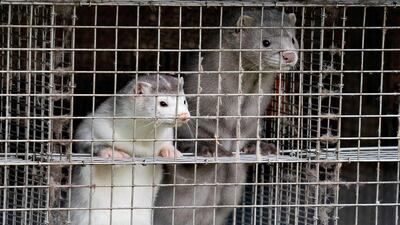
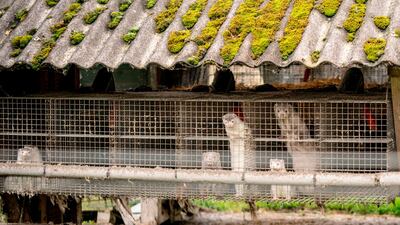
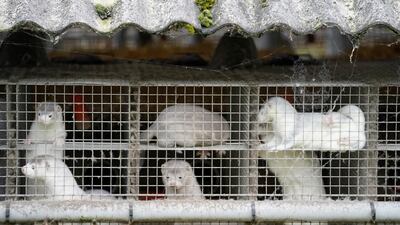
  • Minks are seen at a farm in Gjol, northern Denmark. AFP
    Minks are seen at a farm in Gjol, northern Denmark. AFP
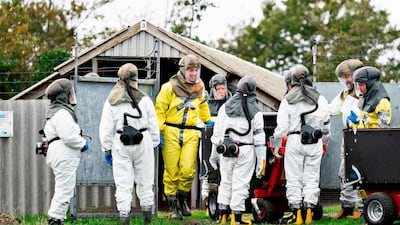
  • Employees from the Danish Veterinary and Food Administration and the Danish Emergency Management Agency work to kill minks in Gjol, Denmark. AFP
    Employees from the Danish Veterinary and Food Administration and the Danish Emergency Management Agency work to kill minks in Gjol, Denmark. AFP
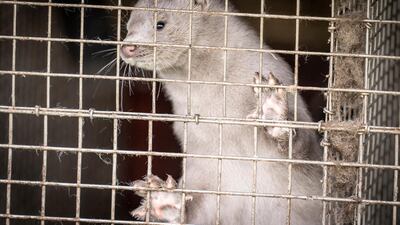
  • A minks at a fur farm in Gjoel in North Jutland, Denmark. EPA
    A minks at a fur farm in Gjoel in North Jutland, Denmark. EPA
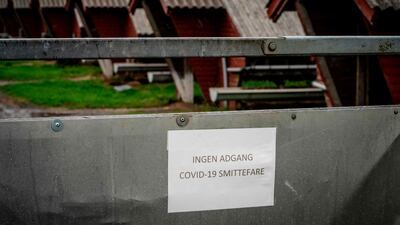
  • A sign in Danish language reads "No access - risk of Covid-19 infection" at a minks farm in Hjorring, in North Jutland, Denmark. AFP
    A sign in Danish language reads "No access - risk of Covid-19 infection" at a minks farm in Hjorring, in North Jutland, Denmark. AFP
  • Minks in a fur farm in Gjoel in North Jutland, Denmark. EPA
    Minks in a fur farm in Gjoel in North Jutland, Denmark. EPA
  • Minks are seen at a farm in Gjol, northern Denmark. AFP
    Minks are seen at a farm in Gjol, northern Denmark. AFP
  • Employees from the Danish Veterinary and Food Administration and the Danish Emergency Management Agency in protective equipment started to kill the minks at a fur farm in Gjoel, Denmark. EPA
    Employees from the Danish Veterinary and Food Administration and the Danish Emergency Management Agency in protective equipment started to kill the minks at a fur farm in Gjoel, Denmark. EPA
  • Minks in a farm in Gjoel in North Jutland, Denmark. EPA
    Minks in a farm in Gjoel in North Jutland, Denmark. EPA

Studies also suggest mink are particularly prone to coronavirus infection and could transmit the virus to humans.

"If the objective is to reduce transmission, then yes, having these mink farms is a big risk because it makes it much more difficult to manage the epidemic and creates such big reservoirs of susceptible hosts," said Francois Balloux, a geneticist with University College London. He is also co-author of a paper on Covid-19 transmission in mink.

Authorities stepped up checks and offered free coronavirus tests at some bigger breeding centres. Beijing is not expected to crack down on an industry that earns an estimated $50 billion per year in China alone.

The Ministry of Agriculture and Rural Affairs did not respond to requests for comment.

Chinese mink suppliers and traders who struggled in recent years because of declining overseas demand are already benefiting from increasing prices.

"It felt great," said Wang He, a trader and breeder Shangcun.

His earnings increased by 30 to 50 per cent when the price of mink fur jumped after Denmark ordered its cull.

Chinese demand remains strong, with rising wealth and little in the way of animal rights activism.

But the coronavirus outbreak triggered a blanket ban on all wildlife trading in China, forcing some smaller breeders out of business and causing panic, according to an industry association.

In April, the government said mink, arctic foxes and raccoons would be classified as "special livestock" rather than wildlife and would be exempt from the ban.

There are now signs the market is responding to the culls in Denmark, a country that accounted for about 40 per cent of worldwide production.

Many Chinese farmers were considering abandoning the business altogether, said Zhao Yangang, a mink trader.

"They were preparing to stop rearing but now the markets started to move like this they've started breeding again," he said.

China is well aware of the health risks of intensive mink farming, which is known to be a source of infectious diseases such as rabies and distemper.

Most larger breeding centres are subject to rigorous vaccination and hygiene regimes.

Mr Wang said that after the Danish cull was announced, China began administering free Covid-19 tests for captive mink.

They came to my farm in Dalian and tested minks from five spots in the farm

"They came to my farm in Dalian and tested mink from five spots in the farm," he said.

But a wider policy is not expected because fur farming has been a relatively cheap way for local governments to alleviate poverty in rural communities and rust belt regions and it provides earning opportunities for laid-off industrial workers.

But experts say the health risks posed by mink cannot be separated from the conditions in which animals are kept.

"Mink are susceptible but we should not forget the conditions they are housed in," said Mr Balloux.

"There are very large populations in cages, living on top of one another, and the numbers are insane."


RESULT

Aston Villa 1
Samatta (41')
Manchester City 2
Aguero (20')
Rodri (30')

Living in...

This article is part of a guide on where to live in the UAE. Our reporters will profile some of the country’s most desirable districts, provide an estimate of rental prices and introduce you to some of the residents who call each area home.

World record transfers

1. Kylian Mbappe - to Real Madrid in 2017/18 - €180 million (Dh770.4m - if a deal goes through)
2. Paul Pogba - to Manchester United in 2016/17 - €105m
3. Gareth Bale - to Real Madrid in 2013/14 - €101m
4. Cristiano Ronaldo - to Real Madrid in 2009/10 - €94m
5. Gonzalo Higuain - to Juventus in 2016/17 - €90m
6. Neymar - to Barcelona in 2013/14 - €88.2m
7. Romelu Lukaku - to Manchester United in 2017/18 - €84.7m
8. Luis Suarez - to Barcelona in 2014/15 - €81.72m
9. Angel di Maria - to Manchester United in 2014/15 - €75m
10. James Rodriguez - to Real Madrid in 2014/15 - €75m

Company Profile:

Name: The Protein Bakeshop

Date of start: 2013

Founders: Rashi Chowdhary and Saad Umerani

Based: Dubai

Size, number of employees: 12

Funding/investors:  $400,000 (2018) 

Mercer, the investment consulting arm of US services company Marsh & McLennan, expects its wealth division to at least double its assets under management (AUM) in the Middle East as wealth in the region continues to grow despite economic headwinds, a company official said.

Mercer Wealth, which globally has $160 billion in AUM, plans to boost its AUM in the region to $2-$3bn in the next 2-3 years from the present $1bn, said Yasir AbuShaban, a Dubai-based principal with Mercer Wealth.

Within the next two to three years, we are looking at reaching $2 to $3 billion as a conservative estimate and we do see an opportunity to do so,” said Mr AbuShaban.

Mercer does not directly make investments, but allocates clients’ money they have discretion to, to professional asset managers. They also provide advice to clients.

“We have buying power. We can negotiate on their (client’s) behalf with asset managers to provide them lower fees than they otherwise would have to get on their own,” he added.

Mercer Wealth’s clients include sovereign wealth funds, family offices, and insurance companies among others.

From its office in Dubai, Mercer also looks after Africa, India and Turkey, where they also see opportunity for growth.

Wealth creation in Middle East and Africa (MEA) grew 8.5 per cent to $8.1 trillion last year from $7.5tn in 2015, higher than last year’s global average of 6 per cent and the second-highest growth in a region after Asia-Pacific which grew 9.9 per cent, according to consultancy Boston Consulting Group (BCG). In the region, where wealth grew just 1.9 per cent in 2015 compared with 2014, a pickup in oil prices has helped in wealth generation.

BCG is forecasting MEA wealth will rise to $12tn by 2021, growing at an annual average of 8 per cent.

Drivers of wealth generation in the region will be split evenly between new wealth creation and growth of performance of existing assets, according to BCG.

Another general trend in the region is clients’ looking for a comprehensive approach to investing, according to Mr AbuShaban.

“Institutional investors or some of the families are seeing a slowdown in the available capital they have to invest and in that sense they are looking at optimizing the way they manage their portfolios and making sure they are not investing haphazardly and different parts of their investment are working together,” said Mr AbuShaban.

Some clients also have a higher appetite for risk, given the low interest-rate environment that does not provide enough yield for some institutional investors. These clients are keen to invest in illiquid assets, such as private equity and infrastructure.

“What we have seen is a desire for higher returns in what has been a low-return environment specifically in various fixed income or bonds,” he said.

“In this environment, we have seen a de facto increase in the risk that clients are taking in things like illiquid investments, private equity investments, infrastructure and private debt, those kind of investments were higher illiquidity results in incrementally higher returns.”

The Abu Dhabi Investment Authority, one of the largest sovereign wealth funds, said in its 2016 report that has gradually increased its exposure in direct private equity and private credit transactions, mainly in Asian markets and especially in China and India. The authority’s private equity department focused on structured equities owing to “their defensive characteristics.”

Set-jetting on the Emerald Isle

Other shows filmed in Ireland include: Vikings (County Wicklow), The Fall (Belfast), Line of Duty (Belfast), Penny Dreadful (Dublin), Ripper Street (Dublin), Krypton (Belfast)

Lexus LX700h specs

Engine: 3.4-litre twin-turbo V6 plus supplementary electric motor

Power: 464hp at 5,200rpm

Torque: 790Nm from 2,000-3,600rpm

Transmission: 10-speed auto

Fuel consumption: 11.7L/100km

On sale: Now

Price: From Dh590,000

the pledge

I pledge to uphold the duty of tolerance

I pledge to take a first stand against hate and injustice

I pledge to respect and accept people whose abilities, beliefs and culture are different from my own

I pledge to wish for others what I wish for myself

I pledge to live in harmony with my community

I pledge to always be open to dialogue and forgiveness

I pledge to do my part to create peace for all

I pledge to exercise benevolence and choose kindness in all my dealings with my community

I pledge to always stand up for these values: Zayed's values for tolerance and human fraternity

The more serious side of specialty coffee

While the taste of beans and freshness of roast is paramount to the specialty coffee scene, so is sustainability and workers’ rights.

The bulk of genuine specialty coffee companies aim to improve on these elements in every stage of production via direct relationships with farmers. For instance, Mokha 1450 on Al Wasl Road strives to work predominantly with women-owned and -operated coffee organisations, including female farmers in the Sabree mountains of Yemen.

Because, as the boutique’s owner, Garfield Kerr, points out: “women represent over 90 per cent of the coffee value chain, but are woefully underrepresented in less than 10 per cent of ownership and management throughout the global coffee industry.”

One of the UAE’s largest suppliers of green (meaning not-yet-roasted) beans, Raw Coffee, is a founding member of the Partnership of Gender Equity, which aims to empower female coffee farmers and harvesters.

Also, globally, many companies have found the perfect way to recycle old coffee grounds: they create the perfect fertile soil in which to grow mushrooms. 

Financial considerations before buying a property

Buyers should try to pay as much in cash as possible for a property, limiting the mortgage value to as little as they can afford. This means they not only pay less in interest but their monthly costs are also reduced. Ideally, the monthly mortgage payment should not exceed 20 per cent of the purchaser’s total household income, says Carol Glynn, founder of Conscious Finance Coaching.

“If it’s a rental property, plan for the property to have periods when it does not have a tenant. Ensure you have enough cash set aside to pay the mortgage and other costs during these periods, ideally at least six months,” she says. 

Also, shop around for the best mortgage interest rate. Understand the terms and conditions, especially what happens after any introductory periods, Ms Glynn adds.

Using a good mortgage broker is worth the investment to obtain the best rate available for a buyer’s needs and circumstances. A good mortgage broker will help the buyer understand the terms and conditions of the mortgage and make the purchasing process efficient and easier. 

While you're here