


The UN's migration agency said tens of thousands of sub-Saharan migrants could be in danger after it appealed for €100 million ($121.5m) to protect those who have traversed the well-trodden but dangerous route to Europe, as funding for a joint initiative with the EU that supported those at risk draws to a close.
The International Organisation for Migration said the requested funds would support those stranded in North Africa while giving them help in returning and reintegrating to their home countries in West and Central Africa in 2021.
It will also bolster search-and-rescue operations in the Sahara and offer humanitarian assistance when migrants disembark in Europe after crossing the Mediterranean Sea in flimsy boats.
The EU-IOM Joint Initiative, launched in 2016, brought together the two bodies and 26 African countries to assists tens of thousands of vulnerable adults and children.
The IOM said it had helped 77,000 people who requested assistance in voluntarily returning home, while also providing economic and mental health support for about 68,000.
"Through the [initiative], we have been able to assist over 100,000 migrants who might otherwise have been left in conditions of great peril: in detention centres; stranded and left for dead in deserts; or living in extremely difficult environments conducive to trafficking and smuggling, with no safe alternatives to better their lives and those of their families," said the IOM's director general Antonio Vitorino.
“We are also worried that the advances made in terms of regional and international co-operation on improved migration management would be jeopardised,” he said.
Christopher Gascon, the IOM's director for West and Central Africa, said that dangerous routes to Europe were "constantly opening or being reactivated". He cited the surge in departures to the Canary Islands as an example, a route on which more than 500 migrants died in 2020.
-
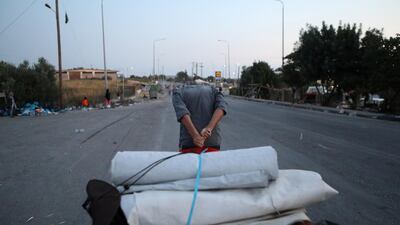
A man drags his belongings as refugees and migrants from the destroyed Moria camp walk towards a new temporary camp, on the island of Lesbos, Greece. Reuters -
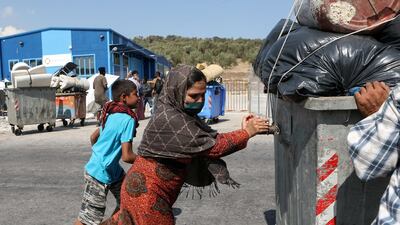
Refugees and migrants who were sheltered near the destroyed Moria camp, carry their belongings as they prepare to move to a new temporary camp, on the island of Lesbos, Greece. Reuters -
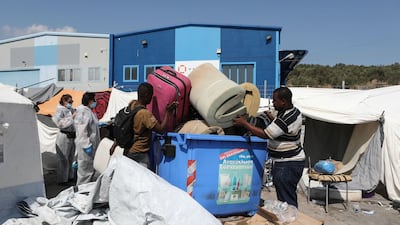
Refugees and migrants who were sheltered near the destroyed Moria camp, carry their belongings as they prepare to move to a new temporary camp, on the island of Lesbos, Greece. Reuters -

An aerial view of the new temporary camp near Kara Tepe on Lesbos island, Greece, Another 2,000 refugees and migrants were settled into the new temporary hosting facility at Kara Tepe. EPA -
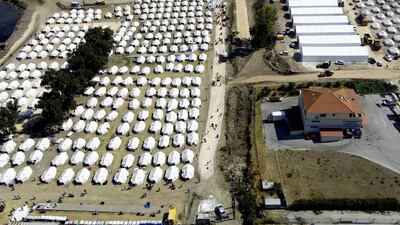
An aerial view of the new temporary camp near Kara Tepe on Lesbos island, Greece, 18 September 2020. Another 2,000 refugees and migrants were settled into the new temporary hosting facility at Kara Tepe. EPA -
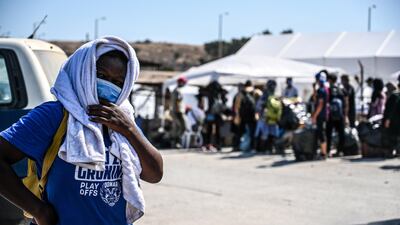
Asylum seekers wait with their belongings as refugees and migrants from the destroyed Moria camp wait to enter into the new temporary camp near Kara Tepe on Lesbos island, Greece. EPA -
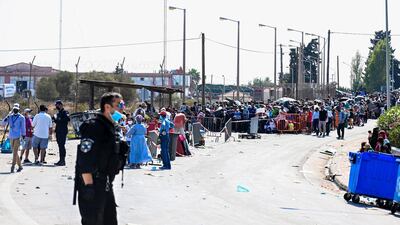
Asylum seekers wait in a line with their belongings as refugees and migrants from the destroyed Moria camp wait to enter into the new temporary camp near Kara Tepe on Lesbos island, Greece. EPA


“Many migrants do not have the financial, logistical and administrative means to return home when they want to end their journey. Often, the only option left for them is to try the dangerous Mediterranean crossing,” he said.
Migrants in Libya, the key staging post for departures to Europe, are at risk of a wide array of abuses including murder, sexual assault, forced labour and arbitrary detention in appalling – often informal – jails.

