


In Hanging Gardens, Iraqi filmmaker Ahmed Yassin Aldaradji applies the name of the enigmatic and lush ancient wonder to a landfill in Baghdad, laying the grounds to a grisly and emotive metaphor for contemporary Iraq.
There are no blossoming flowers, imported plants or burbling waterfalls in these gardens. Instead, mountains of rubbish loom, buzzing with pests, flies and tragedies. Discarded personal belongings have been mixed with rubbish, and even babies, with umbilical cords still attached, are buried in bin bags. There is one connective tissue between the ancient gardens and the landfill, however. The Neo-Babylonian King Nebuchadnezzar II assumedly forced slaves and prisoners of war to build the lush dream, and the landfill, Aldaradji says, which could be seen as a by-product of the US in Iraq.
“It is an American hanging garden,” he says.
In the midst of this sullen landscape is Asaad, a 12-year-old — portrayed by Hussain Muhammad Jalil — scavenging the landfill for metal and plastic he can sell with his brother, Taha, played by Wissam Diyaa. In the midst of the litter, the boy comes across a human-size doll, presumably brought in and left behind by soldiers. Asaad names the doll Salwa and decides to keep and care for it, bathing it and trying to keep it from prying eyes.

Soon, however, his secret is revealed, and he is in the crossfire of those who want to take Salwa for themselves, those who seek to commercialise from it, as well as those who want to obliterate it.
The doll becomes representative of a child’s yearning for normality as well as a reflection of the many calamities that Baghdad has endured in the past few decades, from dictatorial rule and US occupation to sectarian war and economic hardship.
Hanging Gardens made its regional debut at the Red Sea International Film Festival, where it was awarded the prize for best film.
Aldaradji was long dismayed by how Iraq had become a backdrop for Hollywood’s romanticisation of warfare and US military, but it was a specific film that drove him to make Hanging Gardens. That was 2014 film American Sniper, directed by Clint Eastwood and starring Bradley Cooper.

“It hurt me as an Iraqi watching an American sniper promoted as a hero,” Aldaradji says. “It was disgusting how they sexualised war and promoting killing Iraqis. I think we, as Iraqis, failed to tell our own story. All the films made about Iraq have been made by western people coming to Iraq and looking at it from their perspective. I went back and worked really hard to have an authentic story — a story that can be told by Iraqis and how Iraq is socially viewed post-2003.”
The doll on which much of the story pivots, Aldaradji says, was inspired by his own encounter with one when he was younger. Iraq had just come under the US invasion in 2003, which also signalled the end of the sanctions that had stifled the country and its citizens since 1991.
“We were teenagers,” he says. “We didn’t know what was going on in the world. Iraq was a big prison, and the rest of the world was moving, being educated. Civilisation was moving while time stopped in Iraq. We didn’t have access to anything."
Aldaradji says he wanted the doll to also represent how women are sidelined in Iraqi society. The glaring absence of women in the film serves to make the symbol all the more potent.
“I am the brother of seven sisters in a very conservative family,” he says. “I’ve seen how hard it is to be a woman in this society. Hanging Gardens, in a way, talks about that imbalance and how women are isolated.”
Aldaradji says female representation on screen may be slim but the bulk of those behind the camera were women, from producers May Odeh, Huda Al Kadhimi to the score composer Suad Bushnaq and Margaret Glover, who co-wrote the screenplay with Aldaradji and produced the film.

While American Sniper and the Hollywood portrayal of Iraq was a driving force for Aldaradji to make the film, a certain measure of madness and boldness was also necessary to see it through. Those were brought in by his experiences of being held hostage by various sectarian groups as well as a prisoner of the US military.
“I was kidnapped twice in Iraq during the sectarian war,” he says. “I was kidnapped by Sunni and Shia groups. Both parties were fighting each other, and I was kidnapped by both parties. I was also arrested as an American prisoner for 10 days for holding a camera and filming in Iraq. I have bullets that are still in my leg. I’ve seen it all. We really paid a heavy price as Iraqis for freedom. We paid with chaos and the mass corruption. One of the kidnapping times, we were executed mentally. Somebody was loading his Kalashnikov and we were about to die, we thought. That was it. I survived. It wasn’t my time. After that, I decided I wasn’t going to wait till tomorrow ...because who knows until when I’m going to live.”

It’s this same determination that has Aldaradji bracing for the Iraqi premiere of Hanging Gardens, come what may.
“I’m ready to defend every single frame in the film,” he says. “This is how I see things. This is how I believe things. This is reality. All I’ve done is reflect it. There’s a scene where they find a baby’s corpse in the landfill and cremate it. These things are happening every single day in Iraq. I can’t be just a witness in this crime, I have to have my say.”
-
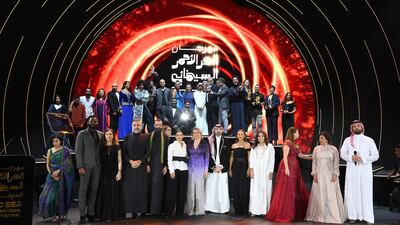
Attendees and winners on stage at the Closing Night Gala Awards at the Red Sea International Film Festival in Jeddah. All photos: Getty Images -
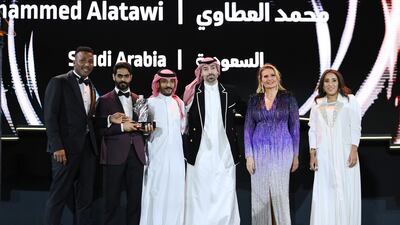
From left, Obaid Alwadaani; a guest; Ra’ed Alshammari; Mohammed Al Turki, chief executive of Red Sea International Film Festival; Yousra and Jomana AlRashid -
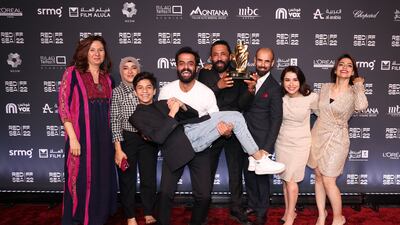
May Odeh, Hussein Mohamad, director Ahmed Yassin Al Daradji, Nida Manzoor and guests celebrate their award for Best Film for Hanging Gardens -
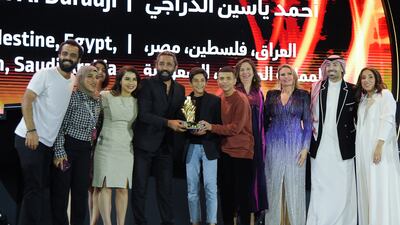
Hussein Mohamad, director Ahmed Yassin Al Daradji, May Odeh, Mohammed Al Turki, Jomana AlRashid with other guests, celebrate the Best Film win for Hanging Gardens -
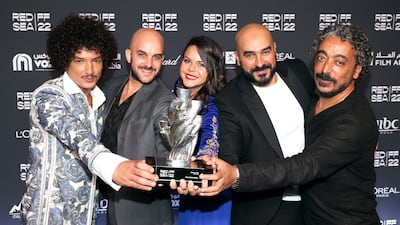
From left, Ahmed Zitouni, director Damien Ounouri, Imen Nel, Tahar Zaoui and Fouad Trifi with the award for Best Actress presented to Adila Bendimerad -
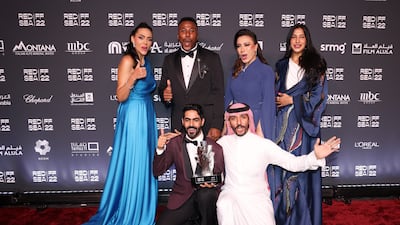
Obaid Alwadaani and Ra’ed Alshammari with the cast and crew with the Red Sea Competition jury prize for for Within Sand -
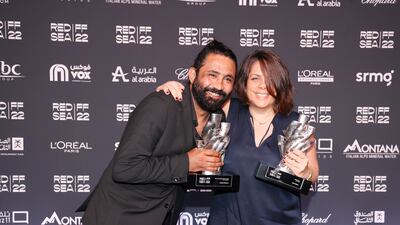
'Hanging Gardens' director Ahmed Yassin Al Daradji with a guest -
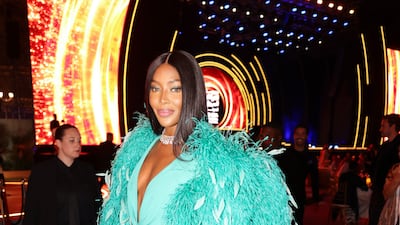
Naomi Campbell at the event -

From left, Ozzy Agu, a guest, Joana Hadjithomas and Shahad Ameen -

From left, Ahmed Zitouni, Damien Ounouri and Imen Nel -
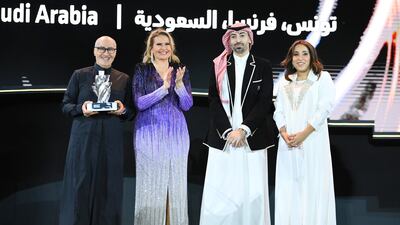
Antoine Khalife, Yousra, Mohammed Al Turki and Jomana AlRashid -
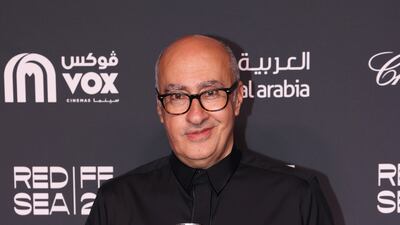
Antoine Khalife, director of Arab programs and film classics at the Red Sea International Film Festival, picked up the award for Best Director on behalf of Lotfy Nathan -

Ra’ed Alshammari celebrates the Red Sea Competition jury prize win for Within Sand -
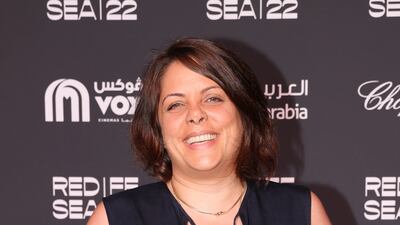
A guest at the event -
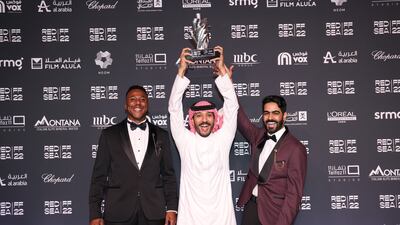
Obaid Alwadaani, guest and Ra’ed Alshammari with a guest at the event -
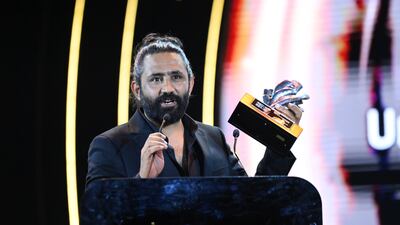
Director Ahmed Yassin Al Daradji was awarded the prize for Best Cinematic Achievement at the Closing Night Gala Awards -
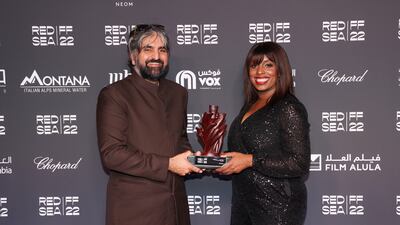
Kaleem Aftab and Charlene Deleon-Jones with the Film AlUla Audience Award, given to director He Shuming for Ajoomma in the Best Film category -

Celine Daemen won the Virtual Reality award -
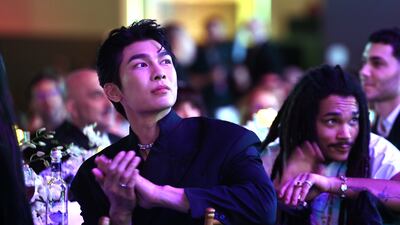
Thai actor Suppasit Jongcheveevat at the event -
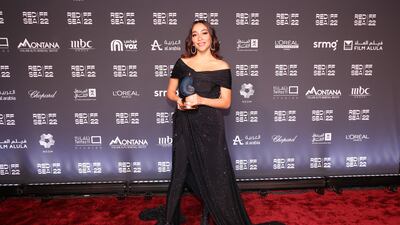
Actress Sarah Taibah at the event -
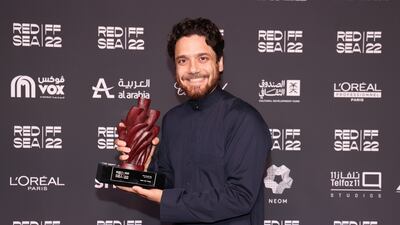
Zeyad Alhusaini attends -

Director Reza Jamali, centre, was awarded the prize for Best Screenplay for A Childless Village -

Suede Brooks attends -

Sherif Mounir and Mike Tyson at the event -
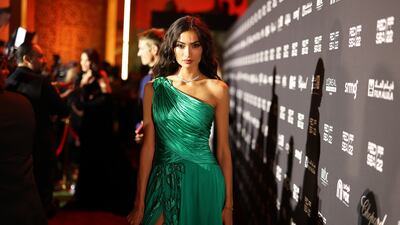
Kelly Gale at the event -

Jawahine Zentar, right, won the Gold Yusr for Short Competition for the feature On my Father's Grave -
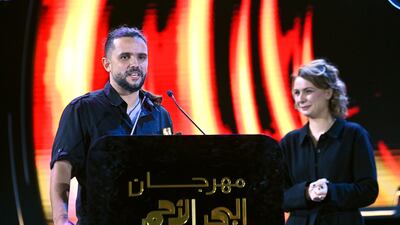
Pedro Harres won the Gold Yusr Red Sea Virtual Reality for From the Main Square -
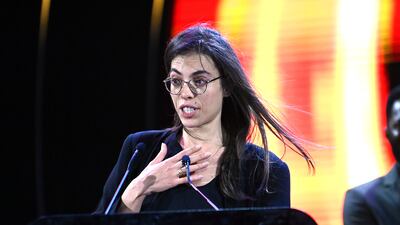
Jawahine Zentar -
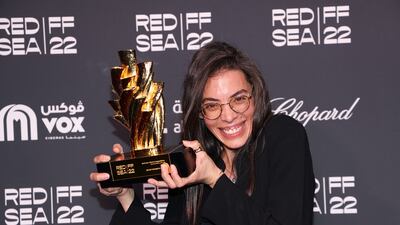
Jawahine Zentar celebrates her win



