

A devastating disease that has been killing horses in Africa for hundreds of years could be held at bay in Sudan thanks to a vaccine made in Dubai.
The jab against African horse sickness (AHS), developed by Dubai’s Central Veterinary Research Laboratory (CVRL), is set to be used in Sudan from next week.
A longstanding problem in the North African country, AHS causes horses immense suffering and has a notable economic impact on poorer communities reliant on the animals.
The CVRL has sent 500 doses to Sudan, which will be used on racing and showjumping horses, according to Yousif Nageeb, from the Sudanese Horse Racing Federation.
Horse racing has a long tradition in Sudan and equines are especially important to some ethnic groups in the country’s western Darfur region.
But donations are needed to fund a wider vaccination programme of horses used in the country’s poorer communities, said Mr Nageeb.
“We’re looking for a sponsor to help us vaccinate all our equines, because there are poor people from Darfur and, even in the remote areas, horses are very essential for their life,” he said.
“We’ve had this pandemic for a long time and we’re losing lots of horses every year, from foals to fillies. Even the top ones we’re losing them because of African horse sickness.”
The CVRL's vaccine has been used in Kenya for several years and Dr Ulrich Wernery, the centre’s scientific director, said it has been credited with reducing the disease’s prevalence there.
“The amount of outbreaks has reduced dramatically in Kenya in many years because, we think, of the use of the vaccine,” said Dr Wernery.
How does the disease affect horses?

AHS is caused by an Orbivirus comprising nine serotypes (forms that produce a distinct response from the immune system) transmitted between animals by blood-sucking midges.
Described by Dr Wernery as “a dreadful disease”, it kills as many as 90 per cent of the horses it infects, about half of mules and around 10 per cent of donkeys. Zebras can also be infected but do not fall ill.
Clinical signs include difficulty breathing and a frothy discharge from the nose and mouth, oedema (watery fluid accumulation) of the head, congestion of the lungs and heart failure.
First identified almost 800 years ago, AHS remains endemic in sub-Saharan Africa and has also killed hundreds of thousands of horses during outbreaks in South Asia.
Worryingly, the disease was detected in south-east Asia for the first time last year, killing hundreds of horses, and the CVRL hopes its vaccine could be deployed there too.
AHS has never been detected in the Emirates, but the centre keeps frozen vaccine stocks in case of an emergency, which could happen as the midge is present.
“We get horses in the UAE and Dubai from all over the world, including from South Africa, where they regularly have outbreaks,” said Dr Wernery.
How is the vaccine made?
The CVRL vaccine contains an inactivated version of the AHS virus, mirroring some widely used Covid-19 vaccines, including those from Sinovac and Sinopharm, made using inactivated coronavirus particles.
With these vaccines, virus particles are grown under controlled conditions and inactivated by heat or chemicals so that they can no longer multiply or cause disease.
Production of the vaccine was supported, Dr Wernery said, by Sheikh Mohammed bin Rashid, Vice President and Ruler of Dubai, and Dr Ali Al Hashimi, the CVRL’s director general.
“We were very fortunate to isolate all nine AHS serotypes from Kenyan horse fatalities and it took 18 years to have them all,” said Dr Joseph.
“And since our vaccine contains all nine serotypes, the vaccine preparation is extensive.”
In another echo of coronavirus vaccines, CVRL’s shot is given as two injections at separate times to ensure maximum immunity, followed by an annual booster.
A different AHS vaccine developed in South Africa uses attenuated virus particles, which are weakened but can still replicate, but in rare cases attenuated viruses can become virulent again, which Dr Wernery said was a drawback of the South African vaccine.
However, he added that the South African vaccine had prevented many outbreaks and an ideal scenario was to use it alongside their shot to maximise protection.
Endangered animals in the UAE: in pictures
-
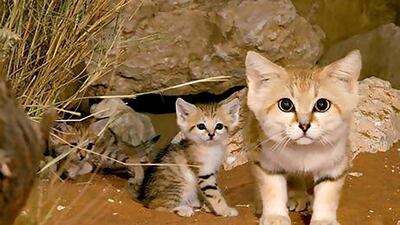
The sand dune cat (Felis margarita) is a nocturnal creature that lives in shallow burrows and hunts rodents. Research published in 2005 indicated that only 250 remained in Abu Dhabi emirate. Courtesy, Al Ain Zoo -

The Arabian leopard is currently listed as critically endangered. Pawan Singh / The National -
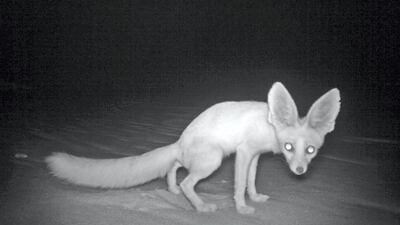
This is the first sighting of the rare Rüppell's fox (Vulpes rueppellii) in 13 years. Environment Agency – Abu Dhabi -
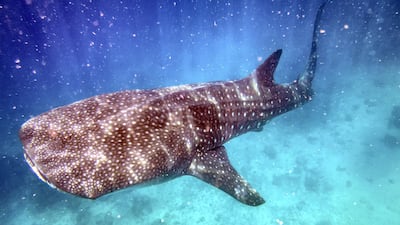
Whale sharks are known as jinbe zame in Japanese, inspiring their newly discovered residents' name.. Getty Images -
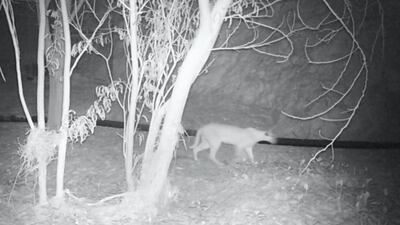
Arabian Caracal (Caracal caracal) - IUCN status: least concern - thought to be extinct, the environment agency captured daytime and nighttime footage of the creature for the first time since 1984. Courtesy EAD -
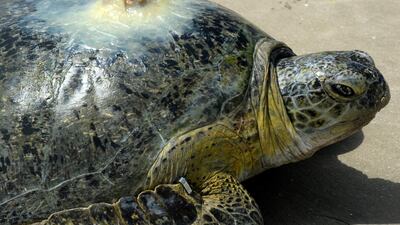
Green turtle (Chelonia mydas) - IUCN status: Endangered - The UAE is one of 140 countries where the green turtle is a native species; numbers have fallen worldwide - Two years ago Emirates Wildlife Society – WWF launched Gulf Green Turtle Conservation. Courtesy Paul Velasco/EWS-WWF -
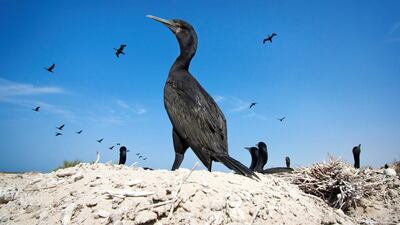
Socotra cormorant (Phalacrocorax nigrogularis) - IUCN status: Vulnerable - Found on islands of the coast of several Gulf states, including the UAE - Threatened by development and oil spills, the species has a total population of less than half a million. Courtesy- Rob Gubiani -
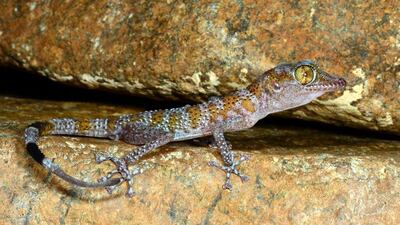
Emirati leaf-toed gecko (Asaccus caudivolvulus) - IUCN status: Least concern - Only found in mountainous regions of north-eastern UAE and northern Oman - More recent research suggests it actually consists of three species, one of which is unique to the UAE – making it the country's only endemic vertebrate – and threatened by development. Photo Courtesy: Johannes Els. -
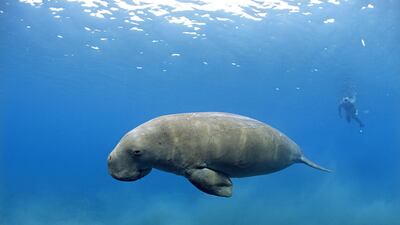
Sea cow (Dugong dugon) - IUCN status: Vulnerable - Locally, boat strikes and fishing net entanglement is a threat, although there are major conservation efforts - The population in UAE waters is thought to be several thousand -
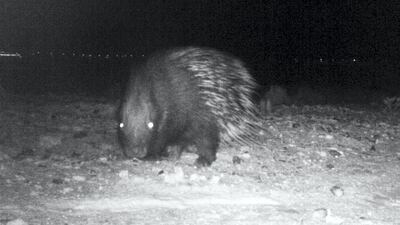
The Crested Porcupine, a rodent thought to be extinct in the UAE, was recorded by camera traps in Abu Dhabi. Environment Agency – Abu Dhabi -
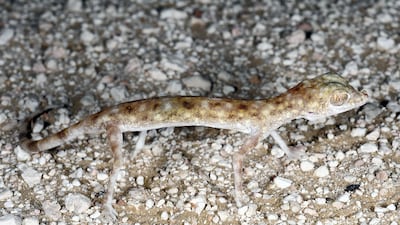
Gulf sand gecko (Pseudoceramodactylus khobarensis) - IUCN status: Least concern - Found widely in the Arabian peninsula, especially in the UAE - This species is not endangered but its population is declining, and in the UAE it faces threats from the development of coastal sabkha habitat. Photo courtesy-Salvador Carranza) -
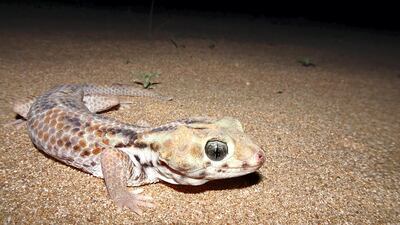
Keyserling's wonder gecko (Teratoscincus keyserlingii) - IUCN status: Not yet evaluated - Although this species is also found in Iran, the UAE population is the only one in Arabia - Heavily threatened by development, it could be driven to extinction locally, although the Mohamed bin Zayed Species. Pritpal Soorae / Environment Agency Abu Dhabi -

Hammerhead shark (Sphyrna mokarran) - IUCN status: Endangered - Widely distributed, but threatened by fishing for its fins and as accidental bycatch - Numbers have plummeted by four-fifths over the last quarter of a century. Image by © Norbert Wu/Science Faction/Corbis -
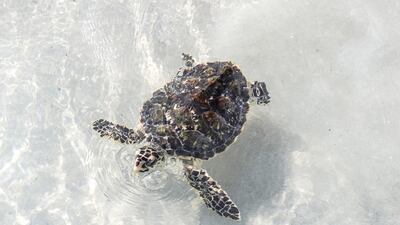
Hawksbill turtles, rated as Critically endangered on the International Union for Conservation of Nature Red List of Threatened Species, have begun laying their eggs on a beach in Dubai. Antonie Robertson / The National -
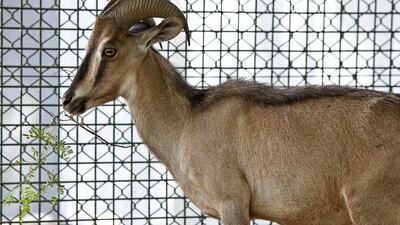
Arabian tahr (Arabitragus jayakari) - IUCN status: Endangered - Restricted to mountainous regions of north-eastern UAE and northern Oman - Worldwide population is probably below 5,000. ANTONIE ROBERTSON / The National -
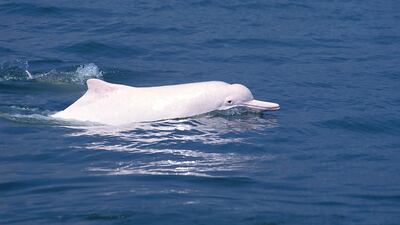
Indian Ocean humpback dolphin (Sousa plumbea) - IUCN status: Endangered - Often become entangled in fishing nets - A recent census found 701 individuals, so the waters off Abu Dhabi have the world's largest single population. Roland Seitre / Minden -
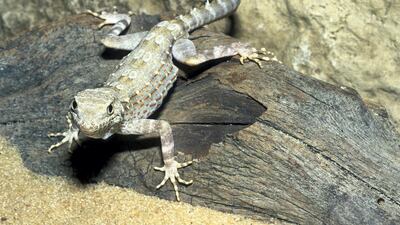
The semaphore gecko is one of several species we have learned a great deal about in recent years. Getty Images -
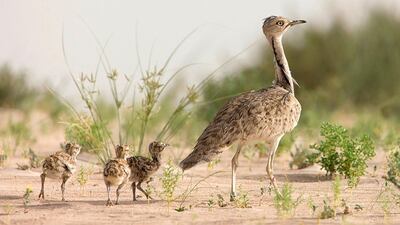
The Houbara bustard is classified as a vulnerable species by the International Union for Conservation of Nature. Courtesy International Fund For Houbara Conservation -
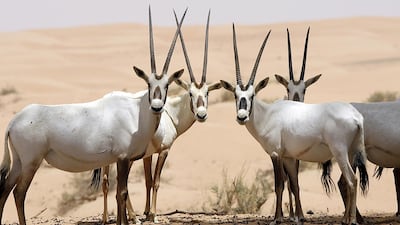
Arabian oryx (Oryx leucoryx) - IUCN status: Vulnerable - Formerly listed as endangered, the UAE's reintroduction programme has helped to increase numbers - The wild population is about 1,200, just over half of which are UAE reintroduced individuals. Mike Young / The National -
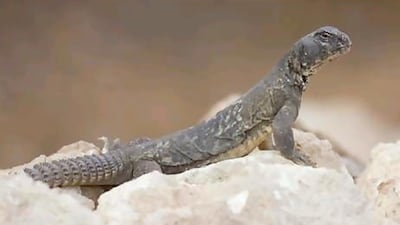
Egyptian spiny-tailed lizard (Uromastyx aegyptia) - IUCN status: Vulnerable - Found in much of the Middle East in gravelly and stony areas, but numbers have declined - Two sub-species exist in the UAE, where it is threatened by habitat loss -
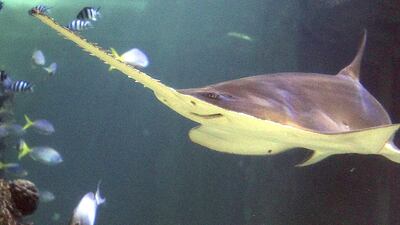
Green sawfish (Pristis zijsron) - IUCN status: Critically endangered - The largest sawfish, it can reach up to seven metres in length - This coastal species has declined across its range and has become extinct from some countries. AP Photo -
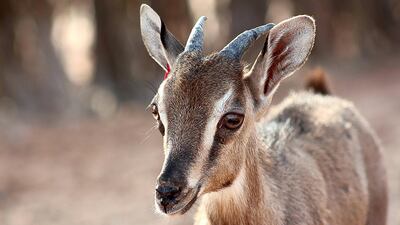
The Arabian tahr has been categorised as an endangered species, with a global population of less than 5,000. Courtesy TDIC -
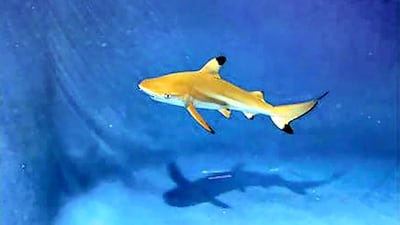
Blacktip reef shark (Carcharhinus melanopterus) - IUCN status: Near threatened - Populations have suffered because of fishing - This species was spotted this year off the UAE's east coast



