


Companies across the Gulf are moving towards a hybrid business model made up of full-time employees and freelance talent, a survey suggests.
Most large companies already use specialist contract employees for specific work.
But HR managers are now moving towards a more strategic, long-term use of freelancers, known as a "blended workforce".
In part, this is due to the onset of Covid-19, said Abbas Ali, senior vice president of Tasc Outsourcing, the staffing agency that conducted the research.
Tasc Outsourcing polled more than 180 senior professionals at businesses across the region to put together a picture of emerging workplace trends.
“A wide range of businesses are discovering they can still increase their top line by using a mix of short-term contractors or employees,” said Mr Ali.
“It is this awareness among GCC organisations that you can grow your business according to project needs, that has them inclined towards the blended workforce model.
“Take any of the big conglomerates in the region across the industries and we can see how they have a mix of full-time employees, and contract employees and freelancers."
The shift towards working from home changed management attitudes, and as a consequence companies are transforming their digital set-up.
This in turn is "helping organisations create a diverse pool of talent, of which a good portion is now remote", Mr Ali said.
Benefits of a blended workforce

There are many benefits to hiring part-time employees, according to the HR professionals and managers questioned for the survey.
Nearly two thirds said that increasing or reducing the workforce quickly was a benefit, while 62 per cent said contract employees gave them access to a highly skilled talent pool with niche experience.
More than half said it lowered overhead costs and facilitated a flexible and agile workforce.
A third said it increased productivity.
At present, recruiters say that most companies in the UAE tend to only reach out to contract employees when they have an urgent need.
"A lot of our service industry clients will use manpower supply companies for short to medium term appointments," said Gary Segesdy, director of Big Fish Recruitment.
"This can be in volume for blue-collar personnel where they require a quick turnaround around for a contract win or mobilisation.
“Or they may take on a more senior commercial or technical individual with a specific skill set for a fixed-term contract to bridge a gap on a specific project or assignment.”
This is changing, however, as the tie between a job and a visa for foreign workers weakens across the GCC.
In the past, it was not permitted by law for professionals to work for several different employers, or for organisations to hire contractors for a short period without visa expense.
Now, growing numbers of regional governments are creating initiatives, usually through free zones, to allow people to operate as contract employees.
This is a particular trend in the Emirates, Mr Ali said.
“The UAE government has made it easy for freelancers and remote-working employees to contribute to the growth of businesses in the region," he said.
“We now live in a borderless world, and quick inter-country or intra-country deployment of talent tremendously helps the growth of businesses.
“All these measures show the government’s intent to facilitate the adoption of a blended workforce, and it’s only going to increase as UAE continues to digitally transform itself.”
Downsides of a blended workforce

While freelance employees might be the answer for conglomerates and SME's in the UAE, the lack of permanence when it comes to contract work means it only offers a short-term solution, Mr Segesdy said.
“For the majority of people that we speak to, what they really want is a permanent role with a stable company, offering them a long-term job security for the future,” he said.
The Tasc Outsourcing report also illustrates that employers can experience difficulties when managing a blended workforce.
Nearly half (49 per cent) of those surveyed mentioned concerns over a lack of accountability and 42 per cent said they struggled with contract employees not adhering to brand values and culture.
Just under a third (30 per cent) spoke of a lack of trust between contract and full-time employees.
Despite these potential hurdles, Mr Ali is convinced the workforces of the future will be a mix of personnel.
"A blended workforce model simply adds that extra spice by attracting the right talent for projects," he said.
When 'blended' means a mix of working from home and office days

Meanwhile, home working could be here to stay, according to experts, who predict that people will work only some of the time from the office once the Covid-19 pandemic is over.
Many people in the UAE got their first taste of remote working a year ago because of the onset of the Covid-19 pandemic.
Some have since returned to the office, but employees said they wanted to continue working from home, at least some of the time.
A report conducted by Boston Consulting Group and Bayt.com found 86 per cent of people in the UAE would like to continue working from home for all, or at least part, of the time, compared with to 89 per cent globally.
And almost a third in the UAE, 31 per cent, said they wanted to work at home on a full-time basis, compared to 24 per cent globally.
Under half, 43 per cent, of respondents are still working from home at least part time, compared to 51 per cent worldwide.
“The fact that the vast majority of respondents have indicated their wishes for remote working to remain to some degree illustrates their high satisfaction with the newfound flexibility and efficiency,” said Christopher Daniel, managing director and partner at BCG Middle East.
Recruiters said companies are also open to the idea of a blended arrangement, when people spend some time in the office and some time at home.
“You have seen a lot of companies which have downsized, so a lot of companies have almost halved their office space,” said David Mackenzie, founder of Mackenzie Jones Middle East.
“And they have encouraged people to work from home. If you look at some of our banks in DIFC they are only on 30 per cent rotation.”
However, he said some people are “desperate for human contact” and water-cooler conversations with their colleagues again.
"The sharing of information just over a coffee, for example," Mr Mackenzie said.
“So I think what the future is going forward this year is going to be blended working, so it will be two or three days a week working from home, then two days from work.
“But in sales or roles that are collaborative, they will probably want to come into the office more because that’s how they get their work fix in many ways.”
In pictures: Expo 2020 jobs on offer
-

Want a job at Expo 2020? Here's a guide to 10 roles in the country pavilions, with estimated salaries. All figures are from recruiters and most roles listed are working for governments and countries, not with the Dubai Expo authority itself. Acrobats and musicians are usually freelance, and charge by event. Leslie Pableo for The National -

1. Tour guides - Dh8,000 - Dh12,000. Expo 2020 Dubai jobs & salary guide (salaries are estimated and per month). Courtesy: Expo 2020 -

2. Pavilion operation manager - Dh15,000 - Dh25,000 (depends on the size of the pavilion). Expo 2020 Dubai jobs & salary guide (salaries are estimated and per month). Chris Whiteoak / The National -
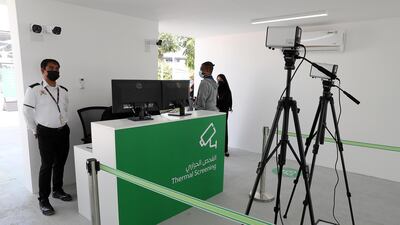
3. Receptionist and lounge staff - Dh6,000 plus accommodation. Expo 2020 Dubai jobs & salary guide (salaries are estimated and per month). Pawan Singh / The National -

4. Media officer - Dh10,000 - Dh15,000. Expo 2020 Dubai jobs & salary guide (salaries are estimated and per month). Getty Images -
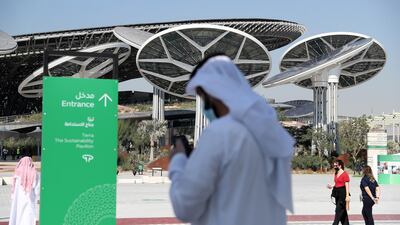
5. Protocol and events officer - Dh15,000 - Dh20,000. Expo 2020 Dubai jobs & salary guide (salaries are estimated and per month). Pawan Singh / The National -

6. Housekeeping manager - Dh15,000 - Dh30,000 - depends on the size of the pavilion - some have 300 cleaners (salaries are estimated and per month). Victor Besa/The National -

7. Hospitality - Dh2,000 plus accommodation (salaries are estimated and per month). Silvia Razgova / The National -

8. Events chef - Dh18,000 - Dh25,000 (salaries are estimated and per month). Courtesy: Luxembourg Expo 2020 Dubai -

9. Events manager - Dh15,000 - Dh25,000 (salaries are estimated and per month). Alamy Stock Photo -
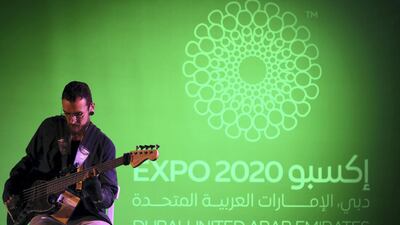
10. Acrobats, stage performers and musicians - freelance and paid per event, depending on skill level and success. Leslie Pableo for The National



