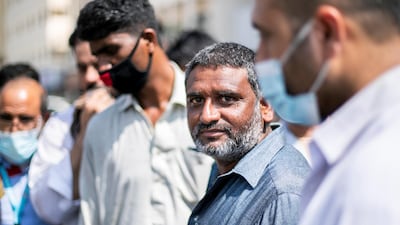
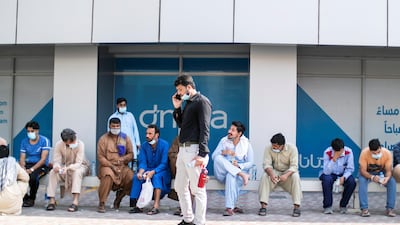
• Unemployed Indian workers are repatriated from Dubai with help from a Sikh motorcycle group that teamed up with a gurudwara or shrine in Jebel Ali. Courtesy: Guru Nanak Darbar Gurudwara Dubai
    Unemployed Indian workers are repatriated from Dubai with help from a Sikh motorcycle group that teamed up with a gurudwara or shrine in Jebel Ali. Courtesy: Guru Nanak Darbar Gurudwara Dubai
  • Workers are repatriated to India after losing their jobs across the UAE due to coronavirus. They were helped home by Sikh community groups in Dubai. Courtesy: Guru Nanak Darbar Gurudwara Dubai
    Workers are repatriated to India after losing their jobs across the UAE due to coronavirus. They were helped home by Sikh community groups in Dubai. Courtesy: Guru Nanak Darbar Gurudwara Dubai
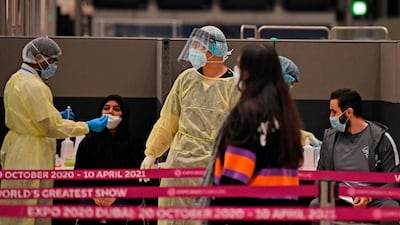
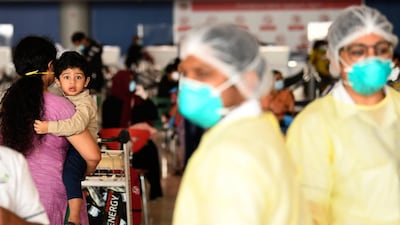
  • Unemployed workers undergo medical tests before leaving Dubai for India on repatriation flights. Courtesy: Guru Nanak Darbar Gurudwara Dubai
    Unemployed workers undergo medical tests before leaving Dubai for India on repatriation flights. Courtesy: Guru Nanak Darbar Gurudwara Dubai
  • Members of the Sikh Khalsa Motorcycle Team Dubai help repatriate unemployed workers to India. Courtesy: Guru Nanak Darbar Gurudwara Dubai
    Members of the Sikh Khalsa Motorcycle Team Dubai help repatriate unemployed workers to India. Courtesy: Guru Nanak Darbar Gurudwara Dubai
  • Hundreds of unemployed Indian workers have been repatriated with the help of Sikh community groups in Dubai. Courtesy: Guru Nanak Darbar Gurudwara Dubai
    Hundreds of unemployed Indian workers have been repatriated with the help of Sikh community groups in Dubai. Courtesy: Guru Nanak Darbar Gurudwara Dubai
  • Thousands of unemployed workers from across the UAE are repatriated to northern Indian cities with the help of a Sikh motorcycle group and a gurudwara or shrine in Jebel Ali. Courtesy: Guru Nanak Darbar Gurudwara Dubai
    Thousands of unemployed workers from across the UAE are repatriated to northern Indian cities with the help of a Sikh motorcycle group and a gurudwara or shrine in Jebel Ali. Courtesy: Guru Nanak Darbar Gurudwara Dubai

UAE-India air corridor extended as expats leave and others return


  • English
  • Arabic

An air travel agreement opening up commercial flights between the UAE and India was extended until the end of the year.

The Indian consulate in Dubai said there was "healthy growth" in travel between the nations as Covid-19 restrictions gradually ease.

The UAE-India "air bubble" – established in July – allows for direct commercial travel between the two countries but does not include transit passengers flying to other destinations

Under the partnership, Indian citizens who live in the UAE can fly home for holidays as well as to repatriate, while any Indian citizen holding any form of UAE visa can travel from their home country to the Emirates.

Officials said the agreement, which was to have expired at the end of October, will continue for at least the remainder of 2020.

There is a constant increase in air travel between the two countries

"We are witnessing healthy growth in travel between India and the UAE," Neeraj Agrawal, a spokesman at the Indian consulate in Dubai, told The National.

“Right now, we are not witnessing a distressed situation where people are leaving.

“It’s not like it was in May, June and July.

“We have a figure of 650,000 people who have travelled to India but we can’t say that these are people leaving the UAE because now this is normal traffic, the dynamics have changed.”

Mr Agrawal said the demand for travel to the UAE from India have risen since flights resumed on July 12.

“It’s the festival season so people are coming to visit family and also for holidays,” said Mr Agrawal.

“There is a constant increase in air travel between the two countries and as of today there is more than 12,000 seat capacity each way.”

Embassy officials confirmed a further 240,000 Indians had travelled to the UAE since the bi-lateral travel agreement was signed.

The Indian consulate in Dubai said more than 650,000 people have travelled to India since May 7.

But those records do not reflect specifics of the number of residents who went back temporarily, for medical treatment or annual leave, and had returned to the UAE.

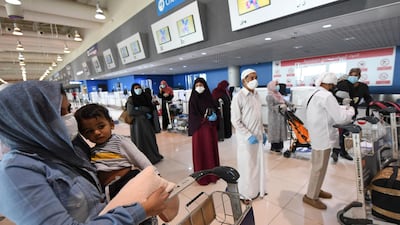
  • Nearly 400,000 Indians have left the UAE for India since repatriation flights started in May. AFP
    Nearly 400,000 Indians have left the UAE for India since repatriation flights started in May. AFP
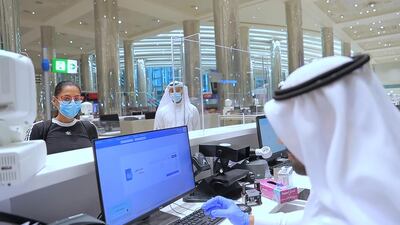
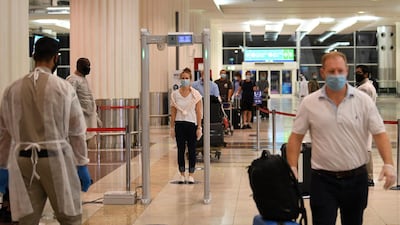
  • An immigration official checks documents of passenger at Dubai Airport. Wam
    An immigration official checks documents of passenger at Dubai Airport. Wam
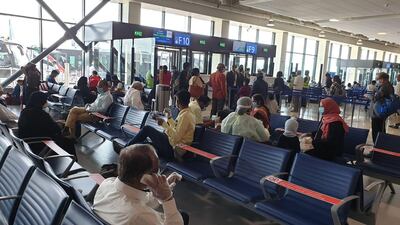
  • Passengers at Dubai International Airport wait for their flight to Calicut in Kerala. Courtesy: Indian Consulate
    Passengers at Dubai International Airport wait for their flight to Calicut in Kerala. Courtesy: Indian Consulate
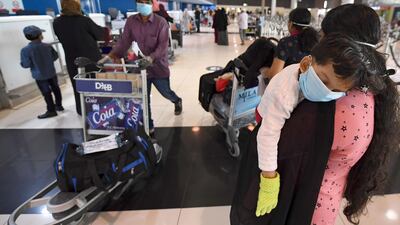
  • An Indian woman carries a child as she waits at the Dubai International Airport before leaving the country on a flight home on May 7. Karim Sahib / AFP
    An Indian woman carries a child as she waits at the Dubai International Airport before leaving the country on a flight home on May 7. Karim Sahib / AFP
  • Health workers check passengers who arrived on an Emirates Airlines flight from London at Dubai International Airport amid the coronavirus Covid-19 pandemic. AFP
    Health workers check passengers who arrived on an Emirates Airlines flight from London at Dubai International Airport amid the coronavirus Covid-19 pandemic. AFP
  • Health workers check passengers who arrived on an Emirates Airlines flight from London at Dubai International Airport amid the coronavirus pandemic. AFP
    Health workers check passengers who arrived on an Emirates Airlines flight from London at Dubai International Airport amid the coronavirus pandemic. AFP
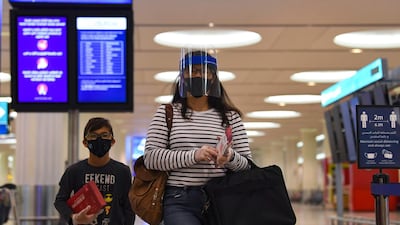
  • Passengers of an Emirates airlines flight, departing to the Australian city of Sydney, wear protective gear at Dubai International Airport on May 22. Karim Sahib / AFP
    Passengers of an Emirates airlines flight, departing to the Australian city of Sydney, wear protective gear at Dubai International Airport on May 22. Karim Sahib / AFP
  • Passengers of an Emirates airlines flight line up to be checked by health workers at the Dubai International Airport. Karim Sahib / AFP
    Passengers of an Emirates airlines flight line up to be checked by health workers at the Dubai International Airport. Karim Sahib / AFP
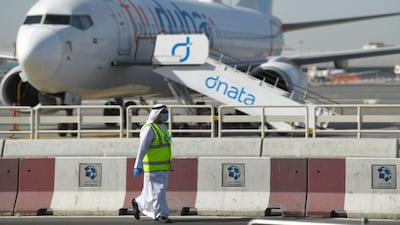
  • Travellers walk through Dubai International Airport to board a repatriation flight. Karim Sahib / AFP
    Travellers walk through Dubai International Airport to board a repatriation flight. Karim Sahib / AFP
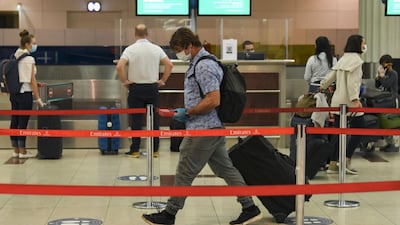
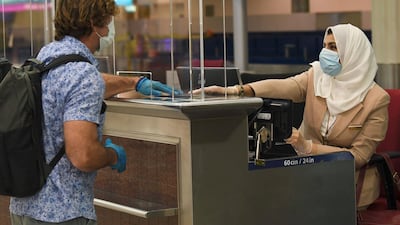
  • A passenger of an Emirates airlines flight checks in at Dubai International Airport. Karim Sahib / AFP
    A passenger of an Emirates airlines flight checks in at Dubai International Airport. Karim Sahib / AFP

International air travel shut down in March to slow the spread of the coronavirus pandemic. India began Vande Bharat or Salute India flights to repatriate citizens in May.

The Indian consulate and embassy then asked citizens to register with details of their reasons for travel and the city they needed to reach.

The elderly, pregnant women and people who had lost jobs were given priority when flights began on May 7.

In a huge repatriation programme of the largest diaspora in the UAE, thousands of flights were operated by the government-run Air India and private airlines.

About 630,000 people registered on the Indian government website to travel home.

Mandatory registrations were shut two months ago after the air corridor agreement began.

Thousands of Filipinos return home

Philippines consul general in Dubai reported about 50,000 nationals had returned home following a resumption of flight schedules out of the UAE.

Of those, the Philippine Consulate provided free tickets and assistance to more than 2,600 nationals, either made redundant or with little option but to return home.

Before Covid-19 forced many to reconsider their futures, roughly 700,000 Philippine nationals were estimated to live in the UAE.

Consul General Paul Cortes said some workers were asked by employers to go on furlough, while Filipino tourists stranded by grounded airlines also received embassy help to fly home.

The majority returned on commercial flights operated by Emirates Airline, Philippine Airlines and Cebu Pacific, while others took three special repatriation flights in June and August.

Air tickets worth Dh5.2 million were funded by the Assistance to Nationals department of the Philippine Department of Foreign Affairs.

On landing in Manila, workers were tested by the coastguard for Covid-19, with hotel expenses for those forced into quarantine paid by the Overseas Workers Welfare Administration.

  • Consul general Ahmed Amjad Ali speaks to journalists and residents during the campaign to repatriate Pakistani expats. Reem Mohammed / The National
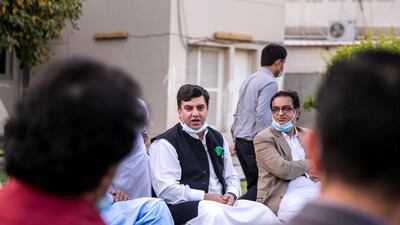
    Consul general Ahmed Amjad Ali speaks to journalists and residents during the campaign to repatriate Pakistani expats. Reem Mohammed / The National
  • Journalists and community leaders are briefed in the garden of the consulate. About 60,000 expats were flown home on special PIA, Emirates and flydubai services in recent weeks. Reem Mohammed / The National
    Journalists and community leaders are briefed in the garden of the consulate. About 60,000 expats were flown home on special PIA, Emirates and flydubai services in recent weeks. Reem Mohammed / The National
  • Among those return home, on two special flydubai services, were almost 400 Pakistani prisoners who were released from Dubai's main jail. AFP
    Among those return home, on two special flydubai services, were almost 400 Pakistani prisoners who were released from Dubai's main jail. AFP
  • Health workers look on as Pakistani citizens check in at Dubai International Airport before leaving the country on a repatriation flight on April 4. Karim Sahib / AFP
    Health workers look on as Pakistani citizens check in at Dubai International Airport before leaving the country on a repatriation flight on April 4. Karim Sahib / AFP
  • Pakistan consul general Ahmed Ali speaks to travellers at Dubai International Airport on May 15. Courtesy: Pakistan Consulate
    Pakistan consul general Ahmed Ali speaks to travellers at Dubai International Airport on May 15. Courtesy: Pakistan Consulate
  • Mohammed Akhtar queues outside the Dnata flight centre in Deira, Dubai on June 21. He was trying to buy a ticket back home for the funeral of his son, who was killed in a car accident. Reem Mohammed / The National
    Mohammed Akhtar queues outside the Dnata flight centre in Deira, Dubai on June 21. He was trying to buy a ticket back home for the funeral of his son, who was killed in a car accident. Reem Mohammed / The National
  • Pakistanis originally required consular approval to buy tickets home, which has now been dropped. Reem Mohammed / The National
    Pakistanis originally required consular approval to buy tickets home, which has now been dropped. Reem Mohammed / The National
  • About 80,000 to 90,000 Pakistanis applied to return home, with 60,000 travelling on government-arranged flights. Reem Mohammed / The National
    About 80,000 to 90,000 Pakistanis applied to return home, with 60,000 travelling on government-arranged flights. Reem Mohammed / The National

Embassies in the UAE reported a further 80,000 Pakistanis and 20,000 Bangladeshis had also left the country, but many could now return as employment prospects recover.

Last month a group of 545 Pakistanis and about 150 to 200 Indian citizens were stopped at Dubai International Airport for failing to meet visit visa requirements.

Those arriving on a tourist visa must have a return airline ticket, a minimum of Dh2,000 to support their stay, hotel reservation or address and contact of the relative they are staying with.

Ten tax points to be aware of in 2026

1. Domestic VAT refund amendments: request your refund within five years

If a business does not apply for the refund on time, they lose their credit.

2. E-invoicing in the UAE

Businesses should continue preparing for the implementation of e-invoicing in the UAE, with 2026 a preparation and transition period ahead of phased mandatory adoption. 

3. More tax audits

Tax authorities are increasingly using data already available across multiple filings to identify audit risks. 

4. More beneficial VAT and excise tax penalty regime

Tax disputes are expected to become more frequent and more structured, with clearer administrative objection and appeal processes. The UAE has adopted a new penalty regime for VAT and excise disputes, which now mirrors the penalty regime for corporate tax.

5. Greater emphasis on statutory audit

There is a greater need for the accuracy of financial statements. The International Financial Reporting Standards standards need to be strictly adhered to and, as a result, the quality of the audits will need to increase.

6. Further transfer pricing enforcement

Transfer pricing enforcement, which refers to the practice of establishing prices for internal transactions between related entities, is expected to broaden in scope. The UAE will shortly open the possibility to negotiate advance pricing agreements, or essentially rulings for transfer pricing purposes. 

7. Limited time periods for audits

Recent amendments also introduce a default five-year limitation period for tax audits and assessments, subject to specific statutory exceptions. While the standard audit and assessment period is five years, this may be extended to up to 15 years in cases involving fraud or tax evasion. 

8. Pillar 2 implementation 

Many multinational groups will begin to feel the practical effect of the Domestic Minimum Top-Up Tax (DMTT), the UAE's implementation of the OECD’s global minimum tax under Pillar 2. While the rules apply for financial years starting on or after January 1, 2025, it is 2026 that marks the transition to an operational phase.

9. Reduced compliance obligations for imported goods and services

Businesses that apply the reverse-charge mechanism for VAT purposes in the UAE may benefit from reduced compliance obligations. 

10. Substance and CbC reporting focus

Tax authorities are expected to continue strengthening the enforcement of economic substance and Country-by-Country (CbC) reporting frameworks. In the UAE, these regimes are increasingly being used as risk-assessment tools, providing tax authorities with a comprehensive view of multinational groups’ global footprints and enabling them to assess whether profits are aligned with real economic activity. 

Contributed by Thomas Vanhee and Hend Rashwan, Aurifer

What are the influencer academy modules?
  1. Mastery of audio-visual content creation. 
  2. Cinematography, shots and movement.
  3. All aspects of post-production.
  4. Emerging technologies and VFX with AI and CGI.
  5. Understanding of marketing objectives and audience engagement.
  6. Tourism industry knowledge.
  7. Professional ethics.
SQUAD

Ali Khaseif, Fahad Al Dhanhani, Adel Al Hosani, Mohammed Al Shamsi, Bandar Al Ahbabi, Mohammed Barghash, Salem Rashid, Khalifa Al Hammadi, Shaheen Abdulrahman, Hassan Al Mahrami, Walid Abbas, Mahmoud Khamis, Yousef Jaber, Saeed Ahmed, Majed Sorour, Majed Hassan, Ali Salmeen, Abdullah Ramadan, Khalil Al Hammadi, Fabio De Lima, Khalfan Mubarak, Tahnoun Al Zaabi, Ali Saleh, Caio Canedo, Muhammed Jumah, Ali Mabkhout, Sebastian Tagliabue, Zayed Al Ameri