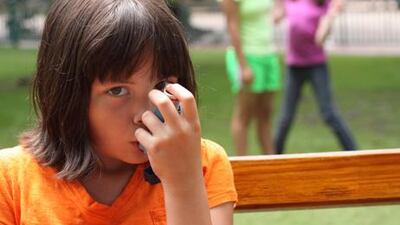
Treating Covid-19 patients at home with a commonly used inhaled steroid called budesonide can speed up their recovery, according to UK trial results on Monday.
Doctors said could change the way the disease is treated around the world.
Researchers behind the trial, known as PRINCIPLE, said the findings were only an interim analysis at this stage but could lead doctors to prescribe budesonide inhalers to Covid-19 patients who were not unwell enough to be admitted to hospital.
“For the first time we have high-quality evidence of an effective treatment that can be rolled out across the community for people who are at most risk of developing more severe illness from Covid-19,” said Prof Richard Hobbs of the University of Oxford, who co-led the trial.
“This is a significant milestone for this pandemic,” he said.
Which drug is used in the treatment?
The corticosteroid budesonide, which is used to treat common types of lung disease such as asthma and chronic obstructive pulmonary disease. Invented in the 1970s, it is cheap, safe and can be prescribed by family doctors to be taken at home through an inhaler.
How does it work ?
Corticosteroids are known to combat over-reaction of the disease-fighting immune system, a key threat to Covid patients.
One such drug, dexamethasone, has already made headlines as the first to cut the death rate among the most seriously ill Covid patients.
Budesonide appears to be capable of combating the disease in its earliest stages. Researchers suspect that the drug is not only anti-inflammatory, but also attacks the virus itself and hinders its entry into healthy cells.
What were the key results ?
More than 1,700 people who tested positive for the coronavirus were involved in the study, all of whom were at higher risk of admission to hospital, being either at least 65 years old, or 50 to 65 with proven co-morbidities such as diabetes or cancer.
The 751 people randomly chosen to receive the drug typically reported recovering from Covid in 11 days, about three days faster than the 1,028 who took the standard approach of staying in bed and taking paracetamol.
Those using the inhaler treatment stayed well once recovered and may also be substantially less likely to end up in hospital.
But the team behind the study, based at the University of Oxford, stress that the life-saving effects of the drug will only become clear following further analysis.
-

People wait outside a Nike Town shop on Oxford Street in London, on the first morning of reopening after England’s latest lockdown. AP Photo -
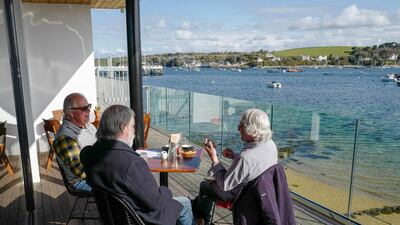
Diners enjoy an alfresco breakfast on the terrace at the Indidog brasserie, as outdoor hospitality restarts in Falmouth. Getty Images -

People run in as Thorpe Park reopens. Reuters -

Members of Aquabatix, a synchronised swimming team practice at Clissold leisure centre in north London. AFP -

A man chooses a book at the Literary and Philosophical Society of Newcastle upon Tyne, as it reopens its doors to socially distanced customers. Reuters -

Members of the public look at Rothschild's giraffes in their enclosure at Chester Zoo. AFP -

People swim in the indoor swimming pool at the re-opened The Pods sports and fitness centre in Scunthorpe, north east England. AFP -
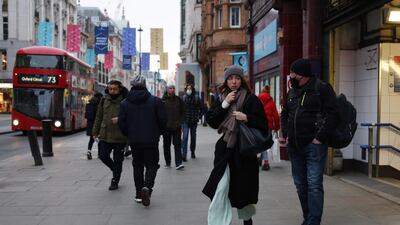
People exit Oxford Street tube station as England takes a significant step in easing lockdown restrictions, with non-essential retail, beauty services, gyms and outdoor entertainment venues among the businesses allowed to reopen. Getty Images -

Members of the public ride on the Depth Charge water slide ride at Thorpe Park theme park in Chertsey. AFP -

Secret Spa hairstylist Nas Ganev cuts the hair of Amy Pallister, 27, just after midnight, at her home in Balham, south London. AP Photo -
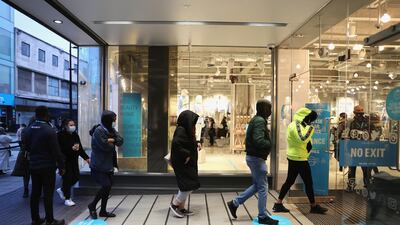
Customers at a Primark shop in Birmingham, central England. Reuters -
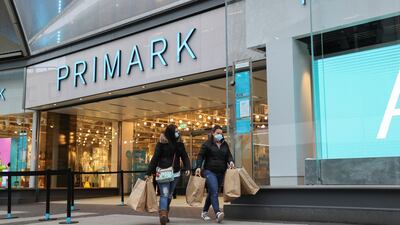
Customers with shopping bags visit Primark in Birmingham. Reuters -

People attend a strength and conditioning class at Ultimate Fitness Gym in Wallsend, north-east England. Reuters -
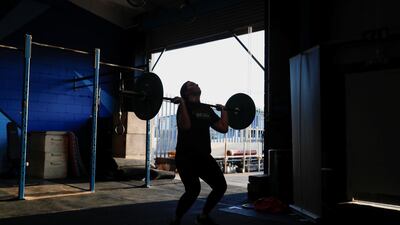
A person trains at Ultimate Fitness Gym in Wallsend. Reuters -
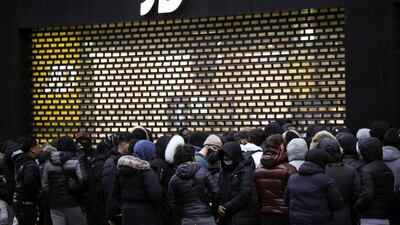
People queue outside a shop on Oxford Street, London. Reuters -
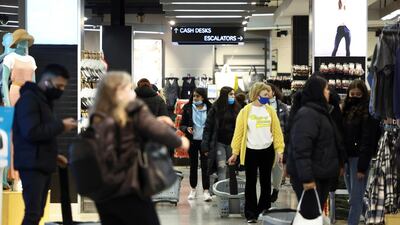
Customers browse inside a shop on Oxford Street, London. Reuters -
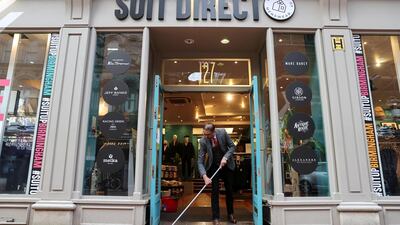
A worker sweeps a shop to prepare for its reopening in Birmingham. Reuters


How reliable is the evidence ?
The results have yet to be published in a refereed journal. But both the design of the study and its outcomes have already been vetted by a team of independent experts.
A bigger concern is that the people in the trial knew if they were getting the drug, and also decided when they had recovered from infection.
This raises the possibility of a so-called placebo effect, with people benefiting simply because they knew they are getting the new drug treatment.
When will the new treatment be approved for use?
The final result from the study are expected later this year, after which the UK authorities will make a decision about whether to approve this new use for budesonide.
That the drug is already widely used and its side effects well understood is likely to accelerate the decision.
What impact could it have worldwide?
The team stress there is no evidence the drug can protect against getting Covid in the first place. Even so, said Professor Chris Butler – joint chief investigator and himself a recovered Covid patient – a drug that speeds recovery will be welcomed by vulnerable patients experiencing the misery of early-stage infection.
“We therefore anticipate that medical practitioners around the world caring for people with Covid-19 in the community may wish to consider this evidence when making treatment decisions.”
Robert Matthews is visiting professor of science at Aston University, Birmingham, UK

