


The United Nations will soon open a space affairs office in the UAE, making the nation a global hub for fostering international progress in space-related activities.
The office will be based in Abu Dhabi and will focus on a variety of key areas and address challenges in space, including the growing issue of debris and large constellations of satellites.
The office will also work to ensure countries involved in space activities are achieving the United Nation’s Sustainable Development Goals.
The UAE Space Agency signed the agreement remotely with the United Nations Office for Outer Space Affairs (Unoosa) on June 10 but the announcement was only made on Monday.
"The UAE Space Agency is pleased to collaborate with Unoosa in the effort to ensure sustainable development in outer space so that all of humanity can continue to benefit from its uses for peaceful purposes and socioeconomic benefit now and in the long term,” said Mohammed Al Ahbabi, director-general of the UAE Space Agency.

Scientists and researchers have increasingly voiced their concerns about the growing threat of space debris.
More than 80 countries have launched satellites since 1957 and more than 2,500 are currently operational.
US space agency Nasa calls the low Earth orbit as the ‘space junk yard’ because of the large amounts of satellite and rocket pieces that have fallen after disintegration. It has said more than 500,000 pieces of man-made debris are currently floating in space.
"The problem with too much space debris is that it increases the chance of collision in space," Hassan Al Hariri, chief executive of the Dubai Astronomy Group, told The National.
“It doesn’t pose an immediate threat to human beings, but it does require a lot of monitoring so that no one is randomly launching satellites. This helps reduce the risk of danger.”
-
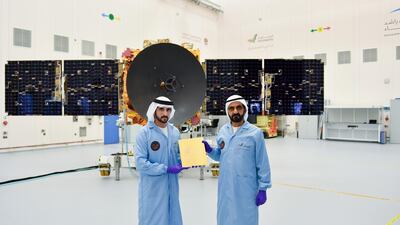
Sheikh Mohammed bin Rashid, Vice President and Ruler of Dubai, and Sheikh Hamdan bin Mohammed, Crown Prince of Dubai, witness the installation of the final piece of the Hope Probe which will be launched to Mars in Jul. All photos by Wam -
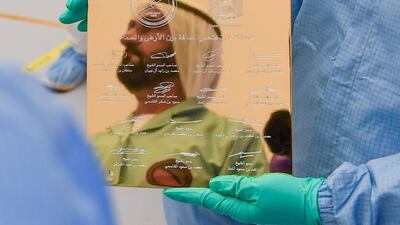
Sheikh Mohammed bin Rashid's image is reflected on the last component of the Hope Probe that contains the signatures of UAE rulers and crown princes. -

Sheikh Mohammed bin Rashid was ceremonially handed the last component of the Hope Probe during an event held to mark its installation. -

Sheikh Mohammed bin Rashid at the Mohammed bin Rashid Space Centre. -
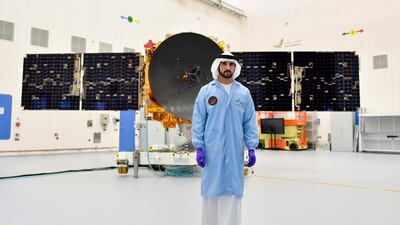
Sheikh Hamdan bin Mohammed bin Rashid at Mohammed bin Rashid Space Centre. -
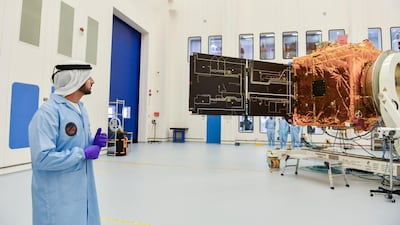
Sheikh Hamdan bin Mohammed bin Rashid looks at the Hope Probe at Mohammed bin Rashid Space Centre. -
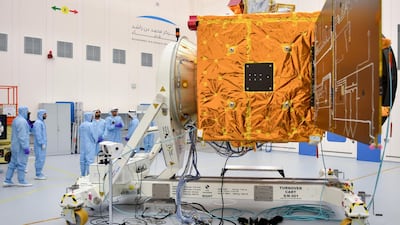
Hope Probe is a testament to the capabilities of the youth of the UAE. The project, which represents a historic achievement for the nation, also sends a message of hope to youth in the Arab world. -
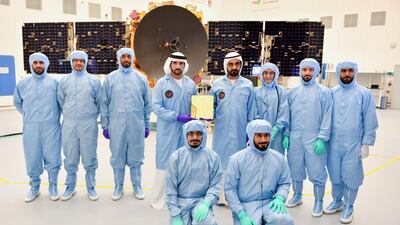
Sheikh Mohammed bin Rashid and Sheikh Hamdan bin Mohammed pose for a photograph with the Emirati Hope Probe team. -
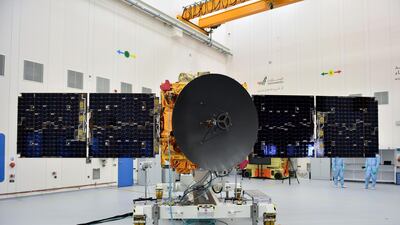
The Hope Probe, built at the Mohammed bin Rashid Space Centre in Dubai, is due to be launched into space in July. -
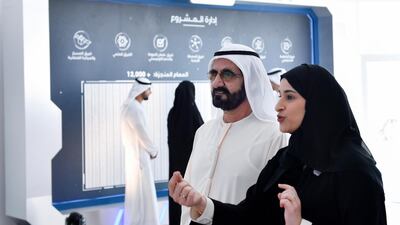
Sheikh Mohammed was briefed by the Hope Probe team at the Mohammed bin Rashid Space Centre headquarters about the final technical and logistical preparations and testing procedures ahead of the Hope Probe’s launch in July. -
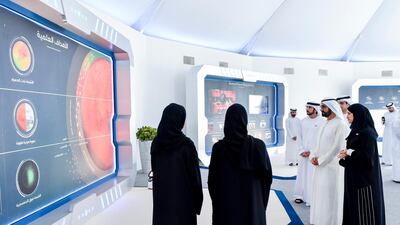
Project officials explained the roles of the six key sub-teams working on the Hope Probe project. -
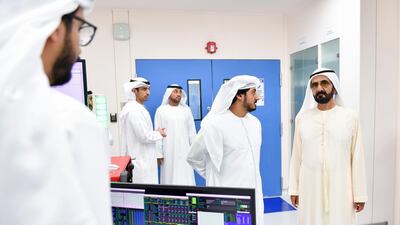
Project officials explained the roles of the six key sub-teams working on the Hope Probe project. -
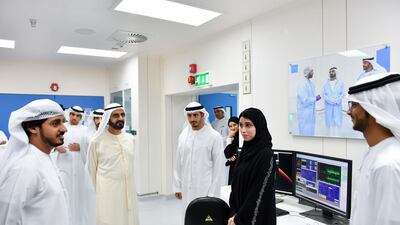
Project officials explained the roles of the six key sub-teams working on the Hope Probe project. -
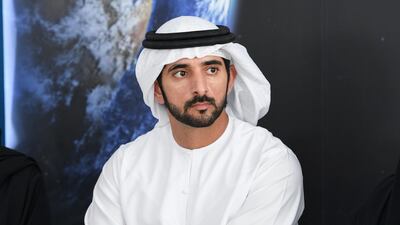
Sheikh Hamdan bin Mohammed listens on the final preparations for the Hope Probe ahead of its launch to Mars in July. -
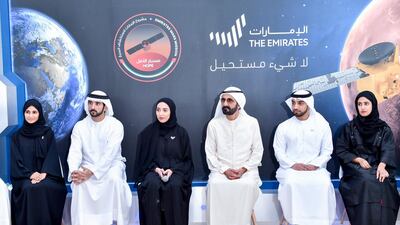
Sheikh Mohammed bin Rashid and Sheikh Hamdan bin Mohammed are briefed on the final preparations for the Hope Probe ahead of its launch to Mars in July.


Last year, India’s space agency was criticised by Nasa after purposely destroying its own satellite during a test, causing enough space debris that could have posed a risk to the International Space Station.
In May, the core of China’s Long March 5B rocket, weighing nearly 18 tonnes, crashed in the Atlantic Ocean – becoming the largest piece of space debris to fall back to Earth since 1991.
Last year, UAE’s space agency launched the UAE Meteor Monitoring Network to keep track of any space debris falling into the country.
This issue will be among the priorities for the Unoosa office.
"Through this agreement, Unoosa and the UAE take a big step towards establishing a new international hub for space sustainability," said Simonetta Di Pippo, director of Unoosa.
"With space technology accelerating sustainable development around the world and global investment in the space environment increasing, now is the time to strengthen global dialogue on space sustainability issues.
"Governments, private sector and academia’s support and investment in space activities needs to be reinforced more than ever.
"This office will further highlight the UAE’s role in developing policies and programmes in the space sector. And, with its steadfast commitment to the Sustainable Development Goals and significant achievements in the space sector, the UAE is the perfect partner for this ambitious plan.”
The collaboration between the agency and Unoosa aims to create dialogue, research and trend-analysis, as well as reinforce best practices in terms of maintaining a sustainable space environment.

