• The operations control room at the Mohammed bin Rashid Space Centre, where Emirati personnel track and communicate with UAE's Mars Hope probe. Antonie Robertson / The National
    The operations control room at the Mohammed bin Rashid Space Centre, where Emirati personnel track and communicate with UAE's Mars Hope probe. Antonie Robertson / The National
  • Zakareyya Al Shamsi, the deputy manager of mission operations, explains how the team is constantly tracking the probe. Antonie Robertson / The National
    Zakareyya Al Shamsi, the deputy manager of mission operations, explains how the team is constantly tracking the probe. Antonie Robertson / The National
  • Mohammad Al Balooshi, flight controller, sends the 'go/no-go' instructions to the person responsible for issuing commands to the probe. Antonie Robertson / The National
    Mohammad Al Balooshi, flight controller, sends the 'go/no-go' instructions to the person responsible for issuing commands to the probe. Antonie Robertson / The National
  • Mr Al Shamsi explains how they track the UAE's Hope probe. Antonie Robertson / The National
    Mr Al Shamsi explains how they track the UAE's Hope probe. Antonie Robertson / The National
  • The UAE's Hope probe lifted off from Japan's Tanegashima Space Centre on July 20, 1.58am UAE time. AFP
    The UAE's Hope probe lifted off from Japan's Tanegashima Space Centre on July 20, 1.58am UAE time. AFP
  • The final version of the spacecraft has two solar panels that help power its systems. Photo: Emirates Mars Mission
    The final version of the spacecraft has two solar panels that help power its systems. Photo: Emirates Mars Mission
  • The UAE team watch the launch of the Mars Hope probe at the Tanegashima Space Centre.
    The UAE team watch the launch of the Mars Hope probe at the Tanegashima Space Centre.
  • Omran Sharaf is the project director for the Emirates' Hope space probe to Mars. AP
    Omran Sharaf is the project director for the Emirates' Hope space probe to Mars. AP

UAE Mars Mission: inside the Dubai control centre tracking the Hope probe


Sarwat Nasir
  • English
  • Arabic

It has been a week since the UAE’s Hope spacecraft began its journey to Mars and, in that time, it has travelled 2.47 million kilometres.

The carrier rocket lifted off at 1.58am on July 20, and the ground control centre at the Mohammed bin Rashid Space Centre became a hive of activity.

A team of more than 15 Emiratis is stationed in the ­engineering operations room and mission operation centre in Dubai, tracking the movement of and communicating with the spacecraft.

The National was given a tour of the site yesterday and learnt how the team ensures Hope is on course for the Red Planet on its seven-month journey.

“Right now, the spacecraft’s distance from Mars is 56,924,547 kilometres,” said Zakareyya Al Shamsi, the deputy manager of mission operations.

“Everything is going very smoothly so far, and we are very impressed with the progress. Each time we receive telemetry from the spacecraft, we feel really happy.”

The Arab world’s first mission to Mars, Hope will study the Red Planet’s weather and send data to Earth.

The mission is in its early operation phase, which means ground control is making sure the probe is on track for Mars.

US space agency Nasa’s Deep Space Network is making the communication possible through antennae at Goldstone in California, Madrid in Spain, and Canberra, Australia. This helps maintain 24-hour coverage as the Earth rotates.

Mohammad Al Balooshi, the flight controller, works the 12-hour-long prime shift and is in constant touch with the Deep Space Network staff.

“They receive the telemetry first and send it over to us,” he said. “If there is any problem, we can ask them to put us in emergency contact with the spacecraft.

“But everything has been going very smoothly so far.”

Mr Al Balooshi directs the person who sends the commands to the probe. Plans are discussed and approved in a daily meeting.

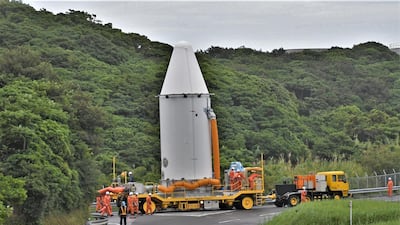
  • The Hope probe was placed inside this payload fairing last week and was transferred to building where the rocket is kept. Courtesy: Shoma Watanbe
    The Hope probe was placed inside this payload fairing last week and was transferred to building where the rocket is kept. Courtesy: Shoma Watanbe
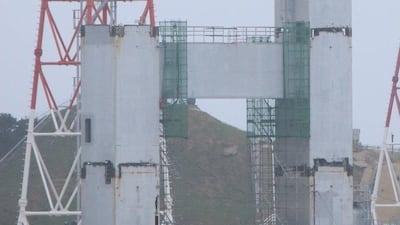
  • The launch pad is ready to receive the H-IIA rocket, which will deliver the Hope probe to space. It will take 30 to 40-minutes for the rocket to be transported to the launch pad. Courtesy: Yoshiaki Sakita
    The launch pad is ready to receive the H-IIA rocket, which will deliver the Hope probe to space. It will take 30 to 40-minutes for the rocket to be transported to the launch pad. Courtesy: Yoshiaki Sakita
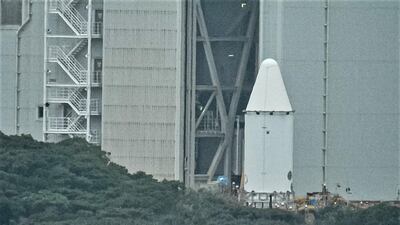
  • The payload fairing, which is holding the spacecraft, has been mounted on top of the rocket. The structure is meant to protect the probe from dynamic pressure and aerodynamic heating it experiences during its launch into an atmosphere. Courtesy: Shoma Watanbe
    The payload fairing, which is holding the spacecraft, has been mounted on top of the rocket. The structure is meant to protect the probe from dynamic pressure and aerodynamic heating it experiences during its launch into an atmosphere. Courtesy: Shoma Watanbe
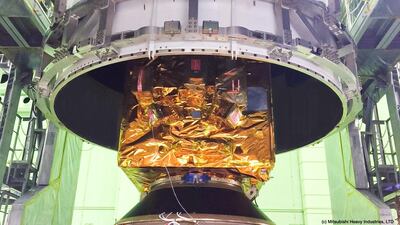
  • The probe was already fuelled with 800kgs of hydrogen for its seven-month-long journey to Mars. Courtesy: Emirates Mars Mission
    The probe was already fuelled with 800kgs of hydrogen for its seven-month-long journey to Mars. Courtesy: Emirates Mars Mission
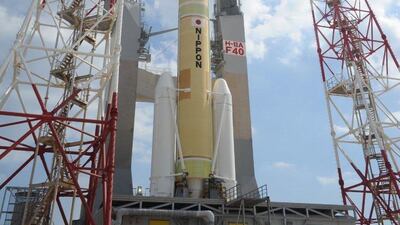
  • The H-IIA rocket that will carry the Hope probe into space. Dubai Twitter account
    The H-IIA rocket that will carry the Hope probe into space. Dubai Twitter account
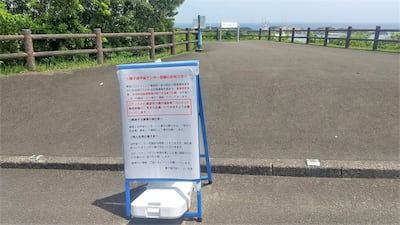
  • All launch viewing events in Tanegashima have been suspended as part of the Covid-19 safety measures. Signs have been up in all of popular spots, asking the public to keep a 3km distance from the Tanegashima Space Centre on launch day. Courtesy: Yoshiaki Sakita
    All launch viewing events in Tanegashima have been suspended as part of the Covid-19 safety measures. Signs have been up in all of popular spots, asking the public to keep a 3km distance from the Tanegashima Space Centre on launch day. Courtesy: Yoshiaki Sakita
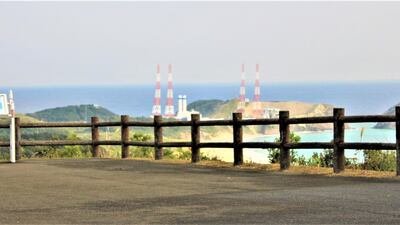
  • The most popular launch viewing site is the Rocket Hill. It is a five-minute drive from the main building of the Tangashima Space Centre and offers a clear view of the launch. It remains closed to the public. The National
    The most popular launch viewing site is the Rocket Hill. It is a five-minute drive from the main building of the Tangashima Space Centre and offers a clear view of the launch. It remains closed to the public. The National
  • The free bus tour and exhibition at the Tanegashima Space Centre has also been suspended in efforts to contain the Covid-19 spread. Signs were placed outside of the centre, alerting the public. Courtesy: Yoshiaki Sakita
    The free bus tour and exhibition at the Tanegashima Space Centre has also been suspended in efforts to contain the Covid-19 spread. Signs were placed outside of the centre, alerting the public. Courtesy: Yoshiaki Sakita
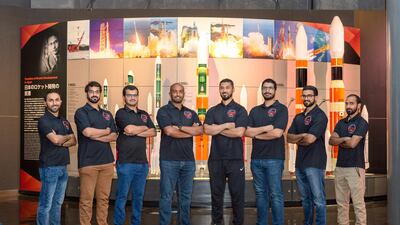
  • Engineers at the launch site in Tanegashima island, Japan. Courtesy: Emirates Mars Mission
    Engineers at the launch site in Tanegashima island, Japan. Courtesy: Emirates Mars Mission
  • The completed Hope spacecraft. It will study the lower and upper atmosphere of Mars. Courtesy: Emirates Mars Mission
    The completed Hope spacecraft. It will study the lower and upper atmosphere of Mars. Courtesy: Emirates Mars Mission

Hamad Al Hazami, command controller, is tasked with sending commands to the spacecraft. He adjusts its trajectory and positioning. One wrong move and Hope could go off track.

“In case human errors occur, we have contingency plans in place,” said Mr Al Hazami.

Once the team receives telemetry from the probe – which mainly shows the craft’s location and the status of its subsystems – commands to adjust trajectory can be sent.

The team also ensures that the spacecraft’s two solar panels, which supply its power, are facing the Sun.

However, this is done with caution because intense energy from the Sun can damage Hope’s subsystems and the three main scientific instruments it carries to study the atmosphere of Mars.

Monitors around ground control watch Hope, with green or red lights to indicate the spacecraft’s status.

"It's all green, so, that's great," said Mr Al Shamsi.

A device called a star tracker is used to plot the little craft’s position by the stars, helping Hope to its destination.

Although it is smooth ­sailing right now and telemetry is ­received within a second, the mission will move on to a more complicated stage in 13 days.

It will shift into the cruising phase, where contact with the spacecraft will take place twice a week in bursts of six or seven hours.

The team is expecting a delay in receiving the telemetry because the probe has moved farther from Earth.

The three scientific instruments – an exploration imager, ultraviolet spectrometer and an infrared spectrometer – will be tested at this stage.

“We are only carrying out small tests right now because we don’t want to put too much load on the spacecraft,” Mr Al Shamsi said.

“It has a long journey, and we will be taking things step by step. Once it reaches the cruising stage, we will start with more tests.”

Once it gets close to Mars, the probe will have to reduce its speed from 120,000kph to 14,000kph to prepare for orbit. Only India has managed to successfully put a probe into Mars orbit at the first attempt. That was in 2013. The task is extremely difficult and 50 per cent of Mars missions end in failure.

However, failures occurred decades ago, when space ­exploration was in its infancy and the advanced technology available for such missions ­today was on the drawing board. Now, Nasa has several rovers on Mars and probes ­orbiting it.

“Similar to the launch day, the orbit insertion is going to be a critical day,” Mr Al Shamsi said.

There will be a 20-minute delay in receiving telemetry from the probe once it reaches Mars.

The spacecraft will then move into its “science orbit”, where it will stay for two Earth years to collect data.


DUBAI CARNIVAL RESULTS

6.30pm Handicap US$135,000 (Turf) 2,410m

Winner Dubai Future, Harry Bentley (jockey), Saeed bin Suroor (trainer).

7.05pm UAE 1000 Guineas Listed $250,000 (Dirt) 1,600m

Winner Dubai Love, Patrick Cosgrave, Saeed bin Suroor.

7.40pm Dubai Dash Listed $175,000 (T) 1,000m

Winner: Equilateral, James Doyle, Charles Hills.

8.15pm Al Bastakiya Trial Conditions $100,000 (D) 1.900m

Winner Laser Show, Kevin Stott, Saeed bin Suroor.

8.50pm Al Fahidi Fort Group Two $250,000 (T) 1,400m

Winner Glorious Journey, James Doyle, Charlie Appleby.

9.25pm Handicap $135,000 (D) 2,000m

Winner George Villiers, Tadhg O’Shea, Satish Seemar.

In numbers

- Number of children under five will fall from 681 million in 2017 to 401m in 2100

- Over-80s will rise from 141m in 2017 to 866m in 2100

- Nigeria will become the world’s second most populous country with 791m by 2100, behind India

- China will fall dramatically from a peak of 2.4 billion in 2024 to 732 million by 2100

- an average of 2.1 children per woman is required to sustain population growth

Benefits of first-time home buyers' scheme
  • Priority access to new homes from participating developers
  • Discounts on sales price of off-plan units
  • Flexible payment plans from developers
  • Mortgages with better interest rates, faster approval times and reduced fees
  • DLD registration fee can be paid through banks or credit cards at zero interest rates
How to protect yourself when air quality drops

Install an air filter in your home.

Close your windows and turn on the AC.

Shower or bath after being outside.

Wear a face mask.

Stay indoors when conditions are particularly poor.

If driving, turn your engine off when stationary.

Paatal Lok season two

Directors: Avinash Arun, Prosit Roy 

Stars: Jaideep Ahlawat, Ishwak Singh, Lc Sekhose, Merenla Imsong

Rating: 4.5/5

SOUTH%20KOREA%20SQUAD
%3Cp%3E%0D%3Cstrong%3EGoalkeepers%3A%20%3C%2Fstrong%3EKim%20Seung-gyu%2C%20Jo%20Hyeon-woo%2C%20Song%20Bum-keun%0D%3Cbr%3E%3Cstrong%3EDefenders%3A%20%3C%2Fstrong%3EKim%20Young-gwon%2C%20Kim%20Min-jae%2C%20Jung%20Seung-hyun%2C%20Kim%20Ju-sung%2C%20Kim%20Ji-soo%2C%20Seol%20Young-woo%2C%20Kim%20Tae-hwan%2C%20Lee%20Ki-je%2C%20Kim%20Jin-su%0D%3Cbr%3E%3Cstrong%3EMidfielders%3A%20%3C%2Fstrong%3EPark%20Yong-woo%2C%20Hwang%20In-beom%2C%20Hong%20Hyun-seok%2C%20Lee%20Soon-min%2C%20Lee%20Jae-sung%2C%20Lee%20Kang-in%2C%20Son%20Heung-min%20(captain)%2C%20Jeong%20Woo-yeong%2C%20Moon%20Seon-min%2C%20Park%20Jin-seob%2C%20Yang%20Hyun-jun%0D%3Cbr%3E%3Cstrong%3EStrikers%3A%20%3C%2Fstrong%3EHwang%20Hee-chan%2C%20Cho%20Gue-sung%2C%20Oh%20Hyeon-gyu%3C%2Fp%3E%0A
The schedule

December 5 - 23: Shooting competition, Al Dhafra Shooting Club

December 9 - 24: Handicrafts competition, from 4pm until 10pm, Heritage Souq

December 11 - 20: Dates competition, from 4pm

December 12 - 20: Sour milk competition

December 13: Falcon beauty competition

December 14 and 20: Saluki races

December 15: Arabian horse races, from 4pm

December 16 - 19: Falconry competition

December 18: Camel milk competition, from 7.30 - 9.30 am

December 20 and 21: Sheep beauty competition, from 10am

December 22: The best herd of 30 camels