• Global Village in Dubai is bathed in red light ahead of the Hope probe's arrival in Martian orbit on Tuesday evening. Pictures by AP / EPA / Dubai Media Office
    Global Village in Dubai is bathed in red light ahead of the Hope probe's arrival in Martian orbit on Tuesday evening. Pictures by AP / EPA / Dubai Media Office
  • Emirates Palace is lit up on Friday night
    Emirates Palace is lit up on Friday night
  • The Dubai Frame in Downtown Dubai
    The Dubai Frame in Downtown Dubai
  • Dubai Canal'a waterfall is illuminated. EPA
    Dubai Canal'a waterfall is illuminated. EPA
  • A slow exposure with zoom effect picture shows Dubai Canal illuminated. EPA
    A slow exposure with zoom effect picture shows Dubai Canal illuminated. EPA
  • Residents watch the light show in Business Bay. AP
    Residents watch the light show in Business Bay. AP
  • W Abu Dhabi Yas Island pictured from across the marina
    W Abu Dhabi Yas Island pictured from across the marina
  • The Museum of the Future in Dubai. EPA
    The Museum of the Future in Dubai. EPA
  • Some of Sharjah's most impressive public landmarks were part of the show
    Some of Sharjah's most impressive public landmarks were part of the show
  • Ajman Museum pictured this weekend
    Ajman Museum pictured this weekend
  • The Gate building at Dubai International Financial Centre
    The Gate building at Dubai International Financial Centre
  • The Burj Al Arab in Dubai
    The Burj Al Arab in Dubai
  • Fujairah fort is pictured at the weekend
    Fujairah fort is pictured at the weekend
  • Fujairah mall is bathed in red
    Fujairah mall is bathed in red
  • A stairway in Sharjah turns red ahead of the arrival of the Hope Probe.
    A stairway in Sharjah turns red ahead of the arrival of the Hope Probe.
  • Ferrari World Abu Dhabi turns red ahead of the arrival of the Hope Probe.
    Ferrari World Abu Dhabi turns red ahead of the arrival of the Hope Probe.
  • RAK municipality building
    RAK municipality building
  • Roads and bridges in Sharjah
    Roads and bridges in Sharjah
  • National Museum of Ras Al Khaimah
    National Museum of Ras Al Khaimah
  • Dubai's Burj Khalifa, the world's tallest skyscraper, showing a countdown to February 9 and the probe's arrival in Mars' orbit. Image: AFP
    Dubai's Burj Khalifa, the world's tallest skyscraper, showing a countdown to February 9 and the probe's arrival in Mars' orbit. Image: AFP
  • A view of Bluewaters Island and the Ain Dubai Ferris wheel. Image: AFP
    A view of Bluewaters Island and the Ain Dubai Ferris wheel. Image: AFP

Here's how UAE's Hope probe will enter Martian orbit


Sarwat Nasir
  • English
  • Arabic

Mission control in Dubai has uploaded its final commands into the Hope probe before the spacecraft tries to enter Mars’ orbit on Tuesday.

The probe will carry out procedures autonomously so it is captured by the Red Planet’s gravity.

Engineers at mission control say they are feeling anxious but confident as the mission’s most complex stage approaches.

With only a 50 per cent success rate, there is no guarantee the orbit entry attempt will succeed.

The National explains the automated sequence Hope will perform on February 9.

Start those thrusters

At 7.30pm Gulf Standard Time, the Mars orbit insertion process will begin. The spacecraft will fire its six Delta V thrusters to slow itself down from 120,000 kilometres per hour to 18,000kph. The deceleration is essential for entering orbit, or it will miss its opportunity.

There is a communication delay of 11 minutes between Hope and mission control, so engineers will not know until 7.42pm whether the burn has begun.

The engines will fire for 27 minutes. When the burn ends, at 7.57pm, the spacecraft will have, hopefully, entered Martian orbit.

But the signal confirming entry should be received at mission control by 8.08pm.

Loss of signal

If mission control do not receive the signal, it means Hope has moved behind Mars and communication has been lost.

That temporary blackout period, known as occultation, could last between 15 and 20 minutes.

Prior to signal loss, and despite the communication delay, mission control could still be monitoring the progress of the burn, giving at least a slight indication of the spacecraft’s health.

But a full evaluation can be made only after communication is restored.

What are the risks?

There are three pairs of thrusters. If one pair fails, the spacecraft is programmed to automatically readjust and keep going.

If any more malfunction, the mission will fail.

The thrusters have been used throughout Hope’s journey to Mars to correct its course but this will be the first time they are used for that long.

Hope was loaded with 800 kilograms of hydrazine fuel, half of which will be used during orbit insertion.

Where is the spacecraft now?

Hope began its journey on July 20, 2020, when it was launched from Tanegashima Space Centre, Japan.

Of the 493.5 million kilometres it is meant to travel, Hope has less than 3.38 million kilometres remaining until it reaches Mars.

It will use gravity to slingshot itself around the planet and be captured in its orbit.

Where can I watch Hope reach Mars?

It will be streamed live on the Emirates Mars Mission website.

'The National' visits Dubai’s mission control - in pictures 

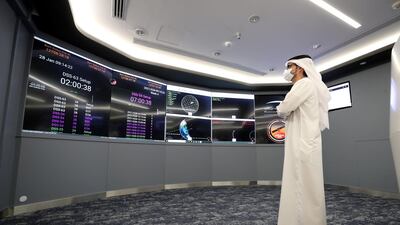
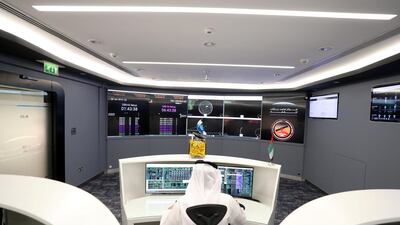
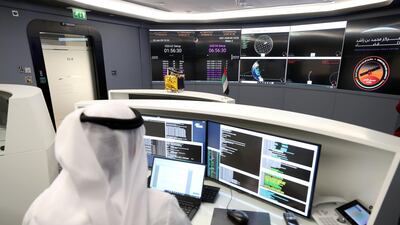
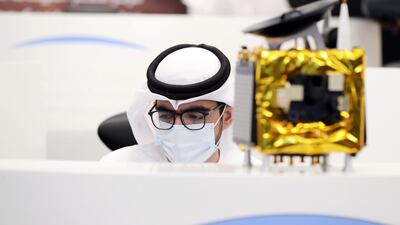
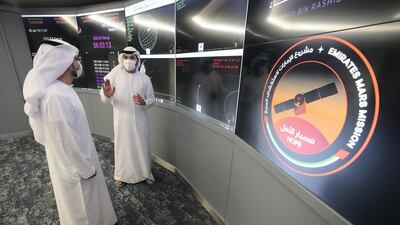
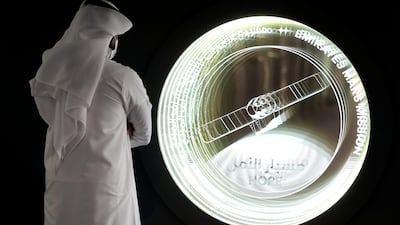
  • 'The National' visited mission control at Dubai's Mohammed bin Rashid Space Centre to learn how engineers are preparing for Hope probe's Mars orbit insertion, set for February 9. All photos by Chris Whiteoak / The National
    'The National' visited mission control at Dubai's Mohammed bin Rashid Space Centre to learn how engineers are preparing for Hope probe's Mars orbit insertion, set for February 9. All photos by Chris Whiteoak / The National
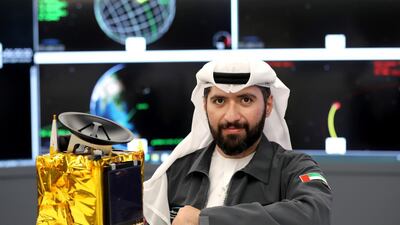
  • Omar Abdelrahman Hussain, mission design and navigation lead, said mission team will mostly be observers on the day. There is an 11-minute communication delay because of the distance between the two planets, so live commands will not be sent
    Omar Abdelrahman Hussain, mission design and navigation lead, said mission team will mostly be observers on the day. There is an 11-minute communication delay because of the distance between the two planets, so live commands will not be sent
  • The Hope probe is close to completing a distance of 493.5 million kilometres. It launched on July 20, 2020 aboard a Japanese rocket and will study the upper and lower atmosphere of the Red Planet. Emirates Mars Mission
    The Hope probe is close to completing a distance of 493.5 million kilometres. It launched on July 20, 2020 aboard a Japanese rocket and will study the upper and lower atmosphere of the Red Planet. Emirates Mars Mission
  • Pre-programmed manoeuvers have been set into the spacecraft so it can perform an automated entry into orbit
    Pre-programmed manoeuvers have been set into the spacecraft so it can perform an automated entry into orbit
  • The programming includes firing the probe's six thrusters for 28 minutes to slow it down from about 100,000 kph to 18,000 kph to get captured into Mars' orbit
    The programming includes firing the probe's six thrusters for 28 minutes to slow it down from about 100,000 kph to 18,000 kph to get captured into Mars' orbit
  • There will also be a brief period when communication is lost when the spacecraft travels behind Mars, blocking the signal. Engineers will do a full evaluation of how orbit entry went once contact is restored
    There will also be a brief period when communication is lost when the spacecraft travels behind Mars, blocking the signal. Engineers will do a full evaluation of how orbit entry went once contact is restored
  • Khalid Mohammad Badri, instrument science engineer, said the scientific instruments aboard the spacecraft will remain safe during orbit entry and will be tested after completion of this critical stage
    Khalid Mohammad Badri, instrument science engineer, said the scientific instruments aboard the spacecraft will remain safe during orbit entry and will be tested after completion of this critical stage
  • All communication with the probe has been made possible through Nasa's Deep Space Network. Their massive ground radio arrays in California, Spain and Australia are the first to send and receive telemetry from the spacecraft. The antenna in Madrid will be the first to know how orbit entry went
    All communication with the probe has been made possible through Nasa's Deep Space Network. Their massive ground radio arrays in California, Spain and Australia are the first to send and receive telemetry from the spacecraft. The antenna in Madrid will be the first to know how orbit entry went
  • Mahmood Abdulaziz AlNasser, mission operations control development lead, said the team remains confident the orbit entry will go as planned. This stage is equally challenging as the rocket launch stage
    Mahmood Abdulaziz AlNasser, mission operations control development lead, said the team remains confident the orbit entry will go as planned. This stage is equally challenging as the rocket launch stage
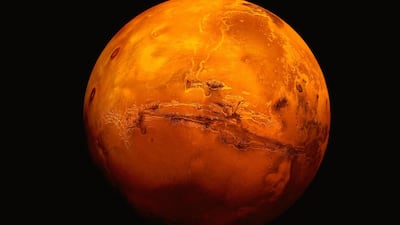
  • The probe will spend 40 hours in the capture orbit and then be transferred into the science orbit, where it will spend two years gathering data on the planet's dynamic weather conditions. It is the first time a spacecraft will be positioned so high above the Red Planet, allowing it to capture different weather patterns throughout a single day. Nasa
    The probe will spend 40 hours in the capture orbit and then be transferred into the science orbit, where it will spend two years gathering data on the planet's dynamic weather conditions. It is the first time a spacecraft will be positioned so high above the Red Planet, allowing it to capture different weather patterns throughout a single day. Nasa
  • If orbit entry is successful, the UAE will become the fifth nation worlwide to reach Mars
    If orbit entry is successful, the UAE will become the fifth nation worlwide to reach Mars