• WASP-12b is a planet that will be destroyed by its parent star in 10 million years. The star is so hot that it is tearing apart the planet’s atmosphere, with the extreme gravity causing giant tidal forces that are stretching the planet into the shape of an egg. All photos: Nasa
    WASP-12b is a planet that will be destroyed by its parent star in 10 million years. The star is so hot that it is tearing apart the planet’s atmosphere, with the extreme gravity causing giant tidal forces that are stretching the planet into the shape of an egg. All photos: Nasa
  • AU Microscopii b is constantly blasted with deadly X-rays and other radiation from its star. The gas giant exoplanet takes 8.5 days to complete one orbit around its star. It was discovered in 2020.
    AU Microscopii b is constantly blasted with deadly X-rays and other radiation from its star. The gas giant exoplanet takes 8.5 days to complete one orbit around its star. It was discovered in 2020.
  • KELT-9b was discovered in 2017 and has a mass nearly three times bigger than Jupiter, but is only half as dense as the planet. It has a dayside temperature of more than 4,315°C and orbits a star (pictured) that is almost twice as large and hot as the Sun, which blasts the planet with high levels of ultraviolet radiation.
    KELT-9b was discovered in 2017 and has a mass nearly three times bigger than Jupiter, but is only half as dense as the planet. It has a dayside temperature of more than 4,315°C and orbits a star (pictured) that is almost twice as large and hot as the Sun, which blasts the planet with high levels of ultraviolet radiation.
  • Kepler 16b is a rocky planet that orbits two stars. It lies in a habitable zone, where liquid water could exist.
    Kepler 16b is a rocky planet that orbits two stars. It lies in a habitable zone, where liquid water could exist.
  • PSR B1257+12 b was discovered in 1994 and is described by scientists as “one of the creepiest ones”. It orbits a pulsar – a rapidly rotating neutron star, which is the dense core of a massive star that exploded. The planet, like any other the orbits a pulsar, is inhospitable and is bombarded with constant radiation from its star.
    PSR B1257+12 b was discovered in 1994 and is described by scientists as “one of the creepiest ones”. It orbits a pulsar – a rapidly rotating neutron star, which is the dense core of a massive star that exploded. The planet, like any other the orbits a pulsar, is inhospitable and is bombarded with constant radiation from its star.
  • GJ 504 b is four times the size of Jupiter and is 57 light-years away from Earth. Nasa reports that this world is still glowing from the heat of its formation and its colour would appear as a dull magenta.
    GJ 504 b is four times the size of Jupiter and is 57 light-years away from Earth. Nasa reports that this world is still glowing from the heat of its formation and its colour would appear as a dull magenta.
  • TYC 8998-760-1 b is a brown dwarf that was formed so recently, its powerful glow can be detected by ground-based telescope. Nasa classifies this planet as a brown dwarf, meaning it is considered neither a star or a planet, and somewhere in between.
    TYC 8998-760-1 b is a brown dwarf that was formed so recently, its powerful glow can be detected by ground-based telescope. Nasa classifies this planet as a brown dwarf, meaning it is considered neither a star or a planet, and somewhere in between.
  • 55 Cancri e is a lava planet. Its surface is uninhabitable as it is covered in molten lava. The sky in this world sparkles when the surface lava reflects on the dark side of the planet. Only one side of the planet faces the star, the other is completely dark.
    55 Cancri e is a lava planet. Its surface is uninhabitable as it is covered in molten lava. The sky in this world sparkles when the surface lava reflects on the dark side of the planet. Only one side of the planet faces the star, the other is completely dark.
  • TOI-849 b was discovered in 2020. The planet’s atmosphere is being stripped away because it is so close to its parent star. It is 40 times the mass of Earth and has little or no atmosphere. Surface temperature on the planet is about 1,500°C.
    TOI-849 b was discovered in 2020. The planet’s atmosphere is being stripped away because it is so close to its parent star. It is 40 times the mass of Earth and has little or no atmosphere. Surface temperature on the planet is about 1,500°C.
  • Kepler-10b is another lava world, which orbits too closely to its star. Daytime temperatures on this planet are more than 1,371°C – hotter than the lava on Earth.
    Kepler-10b is another lava world, which orbits too closely to its star. Daytime temperatures on this planet are more than 1,371°C – hotter than the lava on Earth.

Exoplanets: 10 terrifying worlds in our galaxy


Sarwat Nasir
  • English
  • Arabic

Scientists have tried for decades to find planets that are similar to Earth.

And the requirements are pretty demanding: it would need to orbit a Sun-like star, but be at a safe distance – and just happen to have all the right ingredients for us to survive.

So far, Nasa has discovered of 4,401 exoplanets, planets beyond the solar system.

A few are believed to be Earth-like, while others have strange atmospheres or orbit deadly stars.

Every day is a bad day on this planet

Since the first exoplanets were discovered in the 1990s, scientists have found planets with extreme temperatures, covered in molten seas, ones that are filled with water or ice, and worlds that have the density of Styrofoam.

"Now we live in a universe of exoplanets. The count of confirmed planets is in the thousands and rising – that's from only a small sampling of the galaxy as a whole," Nasa said.

“The count could rise to the tens of thousands within a decade, as we increase the number, and observing power, of robotic telescopes lofted into space.”

The Kepler space telescope and Hubble made most of these discoveries.

But an astronomical revolution is expected with the launch of the James Webb Space Telescope in October, the world's most advanced space observatory. It will help astronomers study what the universe looked like millions of years ago.

The National highlights 10 strange worlds in the Milky Way galaxy discovered so far.

WASP-12 b: the ultimate Frankenstein creation

This planet will be destroyed by its parent star in 10 million years.

The star is so hot that it is tearing apart the planet’s atmosphere and the extreme gravity causes giant tidal forces that are stretching the planet into the shape of an egg.

Temperature on this planet is about 2,210°C.

Nasa calls this planet “the ultimate Frankenstein creation”.

"Relatively soon (10 million years – a fleeting moment in space time) this planet will be completely devoured by its hungry star. If you enjoy watching the world fall to pieces, then this planet is for you," the space agency said.

AU Microscopii b: tormented with deadly X-rays

This planet is constantly blasted with deadly X-rays and other radiation from its star.

"Located less than 32 light years from Earth, AU Microscopii is among the youngest planetary systems ever observed by astronomers, and its star throws vicious temper tantrums," Nasa said.

“This devilish young system holds planet AU Mic b captive inside a looming disc of ghostly dust and ceaselessly torments it with deadly blasts of X-rays and other radiation, thwarting any chance of life.”

The gas giant exoplanet takes 8.5 days to complete one orbit around its star. It was discovered in 2020.

KELT-9 b: scorching temperatures

Discovered in 2017, this exoplanet has a mass nearly three times greater than that of Jupiter, but is only half as dense as the planet.

It has a dayside temperature of more than 4,315°C and orbits a star that is almost twice as large and hot as the Sun, which blasts the planet with high levels of ultraviolet radiation.

The planet takes 1.5 days to complete an orbit around its star.

Kepler 16 b: planet with a cool star

Composed mostly of rock, this planet was the first one discovered by the Kepler telescope to orbit two stars.

It is about the size of Saturn and lies in a habitable zone, where liquid water could exist, according to Nasa.

Discovered in 2011, the planet orbits stars that are cooler than the Sun.

One year on the planet is 228.8 days.

PSR B1257+12 b: ‘creepy’

Discovered in 1994, this planet is described by scientists as “one of the creepiest ones”.

It orbits a pulsar – a rapidly rotating neutron star, which is the dense core of a massive star that exploded.

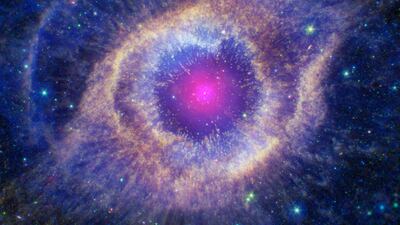
  • Helix Nebula is a phase when a star like the Sun runs out of fuel, it expands and its outer layers puff off, and then the core of the star shrinks. All photos: Nasa
    Helix Nebula is a phase when a star like the Sun runs out of fuel, it expands and its outer layers puff off, and then the core of the star shrinks. All photos: Nasa
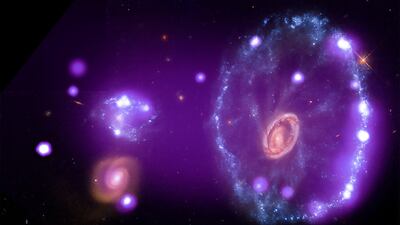
  • This Cartwheel Galaxy resembles a bull's eye, which is appropriate because its appearance is partly due to a smaller galaxy that passed through the middle of this object.
    This Cartwheel Galaxy resembles a bull's eye, which is appropriate because its appearance is partly due to a smaller galaxy that passed through the middle of this object.
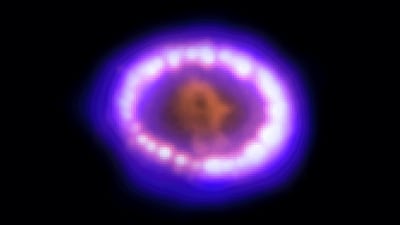
  • On February 24, 1987, observers in the southern hemisphere saw a new object in a nearby galaxy called the Large Magellanic Cloud. This was one of the brightest supernova explosions in centuries and soon became known as Supernova 1987A.
    On February 24, 1987, observers in the southern hemisphere saw a new object in a nearby galaxy called the Large Magellanic Cloud. This was one of the brightest supernova explosions in centuries and soon became known as Supernova 1987A.
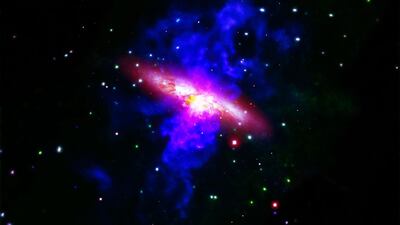
  • Messier 82, or M82, is a galaxy that is oriented edge-on to Earth. This gives astronomers an interesting view of what happens as this galaxy undergoes bursts of star formations.
    Messier 82, or M82, is a galaxy that is oriented edge-on to Earth. This gives astronomers an interesting view of what happens as this galaxy undergoes bursts of star formations.
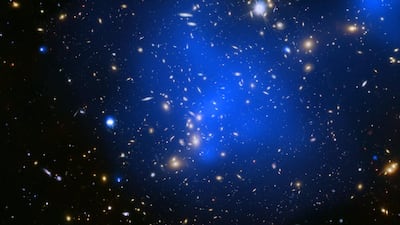
  • Galaxy clusters are the largest objects in the universe held together by gravity. They contain enormous amounts of superheated gas, with temperatures of tens of millions of degrees, which glow brightly in X-rays and can be observed across millions of light years between galaxies.
    Galaxy clusters are the largest objects in the universe held together by gravity. They contain enormous amounts of superheated gas, with temperatures of tens of millions of degrees, which glow brightly in X-rays and can be observed across millions of light years between galaxies.
  • What will be the next star in our Milky Way galaxy to explode as a supernova? Astronomers aren't certain, but one candidate is in Eta Carinae, a volatile system containing two massive stars that closely orbit each other.
    What will be the next star in our Milky Way galaxy to explode as a supernova? Astronomers aren't certain, but one candidate is in Eta Carinae, a volatile system containing two massive stars that closely orbit each other.

The planet, like any other that orbits a pulsar, is inhospitable and is bombarded with constant radiation from its star.

It completes one orbit around its star in 25.3 days.

GJ 504 b: the glowing planet

Four times bigger than Jupiter, this planet is 57 light years from Earth.

Nasa reports that this world is still glowing from the heat of its formation and its colour would appear as a dull magenta.

It is one of the lowest-mass exoplanets yet discovered and has a temperature of about 237°C.

The planet orbits a star that is about 160 million years old.

It takes 259.9 years for the planet to complete one full circle around its star.

TYC 8998-760-1 b: a mysterious world

This planet formed so recently its powerful glow can be detected by ground-based telescope.

Its star is about 17 million years old, which is considered young in astronomy.

Nasa classifies this planet as a brown dwarf, meaning it is considered neither a star nor a planet.

Brown dwarfs are mysterious worlds, with many unanswered questions about their properties and appearance, the space agency said.

“They're too massive to be planets, but not quite massive enough to be stars.”

Temperature on the planet's surface reaches about 1,400°C . Its companion planet, TYC 8998-760-1 c, was discovered in 2020.

It completes one orbit around its star in 2,063.1 years.

55 Cancri e: a lava planet

This lava world orbits a star that is similar to the Sun.

However, the planet’s surface is uninhabitable because it is covered in molten lava. The sky in this world sparkles when the surface lava reflects on the dark side of the planet. Only one side of the planet faces the star, the other is completely dark.

Discovered in 2004, the planet completes one full orbit around its star in 0.7 days.

TOI-849 b: ‘every day is a bad day on this planet’

Discovered in 2020, this planet’s atmosphere is being stripped away because it is so close to its parent star.

It is 40 times the mass of Earth and has little or no atmosphere.

"Every day is a bad day on planet TOI 849 b. About half the mass of our own Saturn, this planet orbits a Sun-like star more than 700 light years from Earth," Nasa said.

“It hugs its star so tightly that a year – one trip around the star – takes less than a day.”

Surface temperature on the planet is about 1,500°C.

Kepler-10 b: hotter than lava on Earth

This is another lava world that orbits too closely to its star.

Daytime temperature on this planet is more than 1,371°C – hotter than the lava on Earth.

It is a rocky planet 1.4 times the size of our planet.

30 remarkable images of the UAE from space 

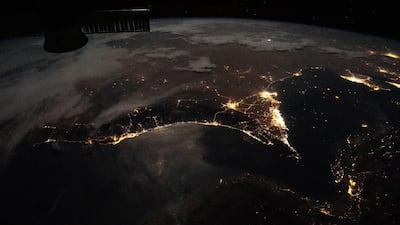
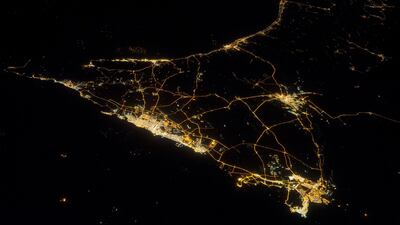
  • The UAE (centre-right) is well-lit during the night and is very visible from space. This image was captured from the International Space Station. Nasa
    The UAE (centre-right) is well-lit during the night and is very visible from space. This image was captured from the International Space Station. Nasa
  • Nasa astronaut Jessica Meir shared this image of Abu Dhabi two months after Emirati astronaut Hazza Al Mansouri returned to Earth from the space station. Jessica Meir Twitter
    Nasa astronaut Jessica Meir shared this image of Abu Dhabi two months after Emirati astronaut Hazza Al Mansouri returned to Earth from the space station. Jessica Meir Twitter
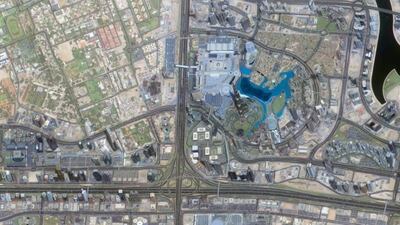
  • A stunning image of Downtown Dubai taken in 2012 by the Pleiades satellite. The Burj Khalifa is visible. European Space Agency
    A stunning image of Downtown Dubai taken in 2012 by the Pleiades satellite. The Burj Khalifa is visible. European Space Agency
  • The largest mosque in Sharjah captured by Emirati satellite KhaliafSat. Mohammed bin Rashid Space Centre
    The largest mosque in Sharjah captured by Emirati satellite KhaliafSat. Mohammed bin Rashid Space Centre
  • An image of Al Ain in 1984, when there was not a lot of greenery. Abu Dhabi emirate is now considered a green oasis with a major focus in agriculture. Nasa's Earth Observatory
    An image of Al Ain in 1984, when there was not a lot of greenery. Abu Dhabi emirate is now considered a green oasis with a major focus in agriculture. Nasa's Earth Observatory
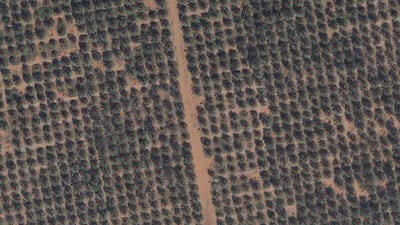
  • The Mohammed bin Rashid Space Centre counted 45,000 palm trees in Al Ain. The satellite images are helping to monitor the quantity and health of thousands of trees. MBRSC
    The Mohammed bin Rashid Space Centre counted 45,000 palm trees in Al Ain. The satellite images are helping to monitor the quantity and health of thousands of trees. MBRSC
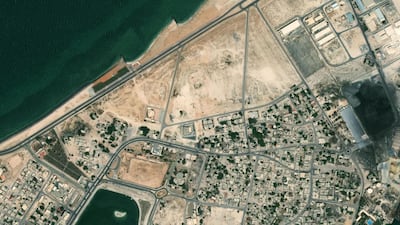
  • Umm Al Quwain, one of the seven emirates of the UAE, seen from space. The emirate is on a peninsula and has many attractive sites, including ancient forts. Zoom Earth
    Umm Al Quwain, one of the seven emirates of the UAE, seen from space. The emirate is on a peninsula and has many attractive sites, including ancient forts. Zoom Earth
  • The Corniche Park in Umm Al Quwain (top) and Municipal Park on the bottom side of the image. Zoom Earth
    The Corniche Park in Umm Al Quwain (top) and Municipal Park on the bottom side of the image. Zoom Earth
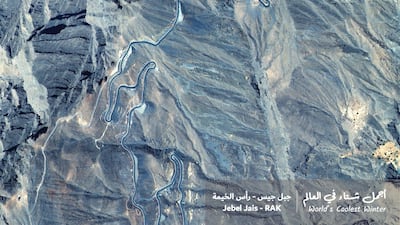
  • KhalifaSat captured Jebel Jais, the highest summit in the UAE which is about 2,000 metres above sea level. It also has the world’s longest zipline. MBRSC
    KhalifaSat captured Jebel Jais, the highest summit in the UAE which is about 2,000 metres above sea level. It also has the world’s longest zipline. MBRSC
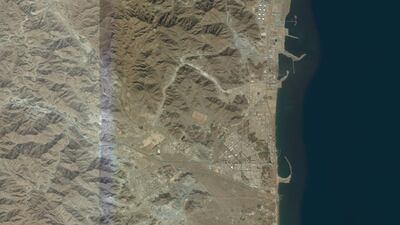
  • Fujairah is on the east coast of the UAE and is known for its beaches and the Hajar mountains. The mountainous areas are visible in this image, as well as the Fujairah International Airport and the Port Fujairah on the top right. Zoom Earth
    Fujairah is on the east coast of the UAE and is known for its beaches and the Hajar mountains. The mountainous areas are visible in this image, as well as the Fujairah International Airport and the Port Fujairah on the top right. Zoom Earth
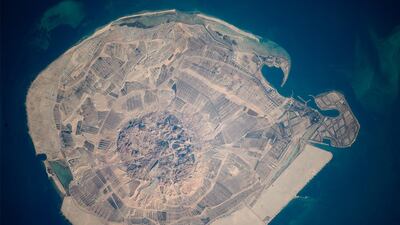
  • Abu Dhabi’s Sir Bani Yas Island captured from space in 2010. The island is a major tourist attract with a mix of wildlife, archaeological sites and luxury hotel retreats. Nasa
    Abu Dhabi’s Sir Bani Yas Island captured from space in 2010. The island is a major tourist attract with a mix of wildlife, archaeological sites and luxury hotel retreats. Nasa
  • Dubai seen from the International Space Station. Nasa
    Dubai seen from the International Space Station. Nasa
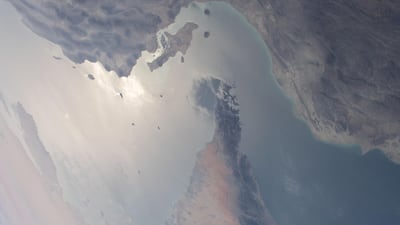
  • The Strait of Hormuz separates the UAE and Iran. Nasa
    The Strait of Hormuz separates the UAE and Iran. Nasa
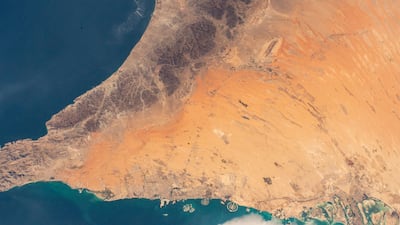
  • The UAE captured from space in 2013. Nasa’s Earth Observatory
    The UAE captured from space in 2013. Nasa’s Earth Observatory
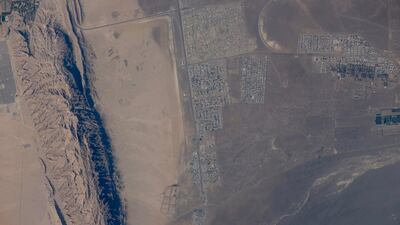
  • Hazza Al Mansouri took this photo of Umm Ghafa in Al Ain from the space station in 2019. It is the village where his colleague and reserve astronaut Sultan Al Neyadi grew up. Sultan Al Neyadi twitter
    Hazza Al Mansouri took this photo of Umm Ghafa in Al Ain from the space station in 2019. It is the village where his colleague and reserve astronaut Sultan Al Neyadi grew up. Sultan Al Neyadi twitter
  • The Dubai Expo site captured by KhalifaSat in 2019. The much-anticipated event is set to begin on October 1, 2021. MBRSC
    The Dubai Expo site captured by KhalifaSat in 2019. The much-anticipated event is set to begin on October 1, 2021. MBRSC
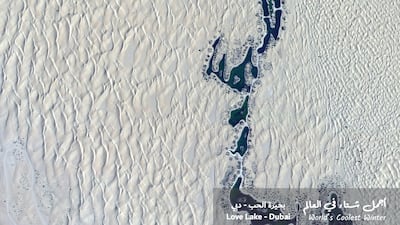
  • The man-made Love Lake in Dubai’s Al Qudra desert. MBRSC
    The man-made Love Lake in Dubai’s Al Qudra desert. MBRSC
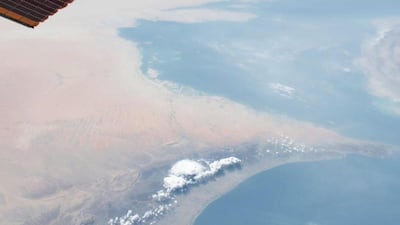
  • Dust blows over the Arabian Gulf in 2013. The UAE is on the right side of this image and Saudi Arabia is on the left. Nasa’s Earth Observatory
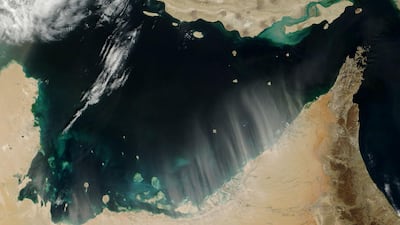
    Dust blows over the Arabian Gulf in 2013. The UAE is on the right side of this image and Saudi Arabia is on the left. Nasa’s Earth Observatory
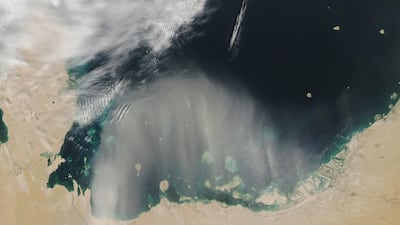
  • A dust plume over the UAE in 2009. Nasa
    A dust plume over the UAE in 2009. Nasa
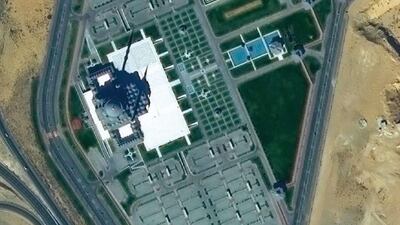
  • The Sheikh Khalifa bin Zayed Al Nahyan Mosque in Al Ain captured by KhalifaSat. It features a magnificent dome, which measures 86 metres in diameter. MBRSC
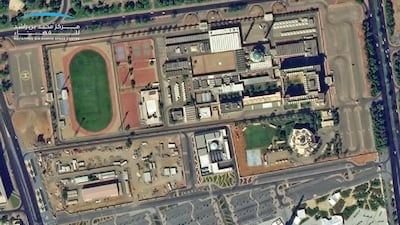
    The Sheikh Khalifa bin Zayed Al Nahyan Mosque in Al Ain captured by KhalifaSat. It features a magnificent dome, which measures 86 metres in diameter. MBRSC
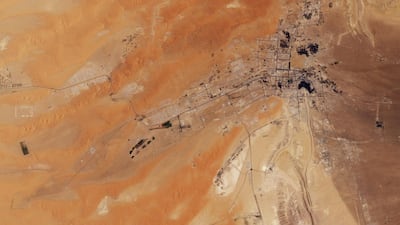
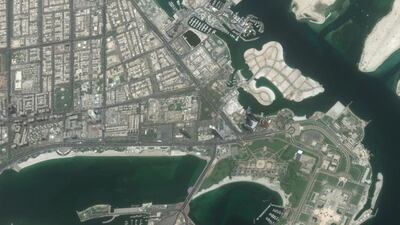
  • The Copernicus Sentinel 2 mission captured this striking view of Abu Dhabi from space. The dark green patch of land is the Mangrove National Park. Ferrari World can be seen in the centre-right of the image. European Space Agency
    The Copernicus Sentinel 2 mission captured this striking view of Abu Dhabi from space. The dark green patch of land is the Mangrove National Park. Ferrari World can be seen in the centre-right of the image. European Space Agency
  • An incredible view of the UAE captured by Hazza Al Mansouri in 2019. Hazza Al Mansouri twitter
    An incredible view of the UAE captured by Hazza Al Mansouri in 2019. Hazza Al Mansouri twitter
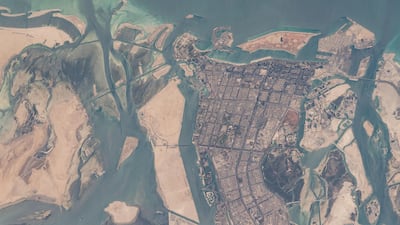
  • An image of Abu Dhabi taken from the International Space Station as it orbited 423 kilometres above Oman. Nasa
    An image of Abu Dhabi taken from the International Space Station as it orbited 423 kilometres above Oman. Nasa
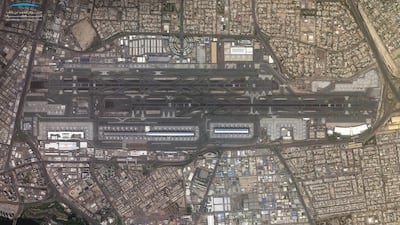
  • Planes can be seen parked at Dubai International Airport during the Coronavirus Pandemic in May 2020, when travel was restricted. MBRSC
    Planes can be seen parked at Dubai International Airport during the Coronavirus Pandemic in May 2020, when travel was restricted. MBRSC
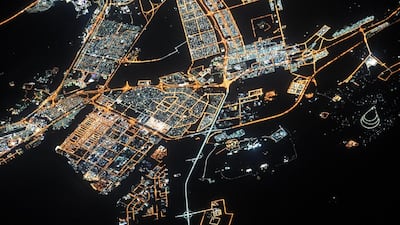
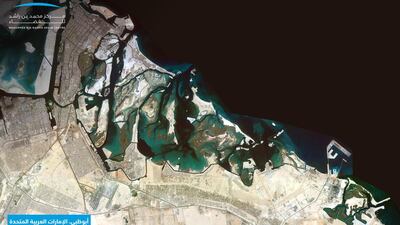
  • KhalifaSat captured this stunning image of Abu Dhabi in 2020. MBRSC
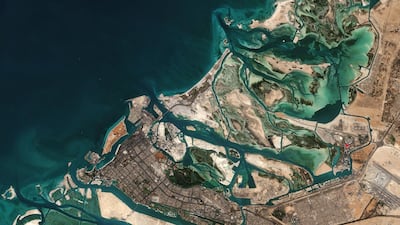
    KhalifaSat captured this stunning image of Abu Dhabi in 2020. MBRSC
  • Another view of the UAE’s capital city of Abu Dhabi from space. MBRSC
    Another view of the UAE’s capital city of Abu Dhabi from space. MBRSC
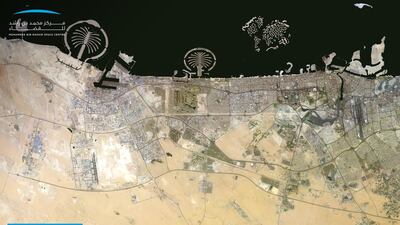
  • One of the most recent photos of Dubai taken in 2020 from space, showing the Palm Jumeirah, Palm Jebel Ali and the World Islands. MBRSC
    One of the most recent photos of Dubai taken in 2020 from space, showing the Palm Jumeirah, Palm Jebel Ali and the World Islands. MBRSC
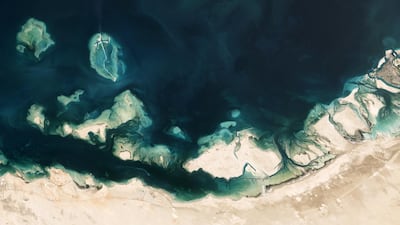
  • Mangroves, salt domes, salt flats and coral reefs on the south-west coast of the UAE, near Abu Dhabi, captured in 2001. Nasa’s Earth Observatory
    Mangroves, salt domes, salt flats and coral reefs on the south-west coast of the UAE, near Abu Dhabi, captured in 2001. Nasa’s Earth Observatory
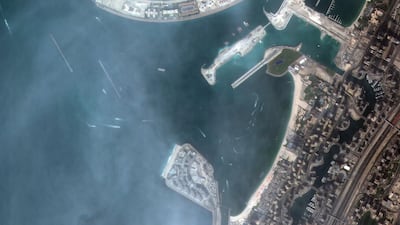
  • The first image captured by KhalifaSat in 2018. It is the Palm Jumeirah in Dubai. MBRSC
    The first image captured by KhalifaSat in 2018. It is the Palm Jumeirah in Dubai. MBRSC
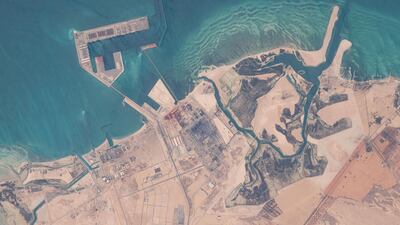
  • A manufacturing site on the Arabian Gulf coast of the UAE, near Abu Dhabi. Nasa
    A manufacturing site on the Arabian Gulf coast of the UAE, near Abu Dhabi. Nasa
Race 3

Produced: Salman Khan Films and Tips Films
Director: Remo D’Souza
Cast: Salman Khan, Anil Kapoor, Jacqueline Fernandez, Bobby Deol, Daisy Shah, Saqib Salem
Rating: 2.5 stars

Story%20behind%20the%20UAE%20flag
%3Cp%3EThe%20UAE%20flag%20was%20first%20unveiled%20on%20December%202%2C%201971%2C%20the%20day%20the%20UAE%20was%20formed.%C2%A0%3C%2Fp%3E%0A%3Cp%3EIt%20was%20designed%20by%20Abdullah%20Mohammed%20Al%20Maainah%2C%2019%2C%20an%20Emirati%20from%20Abu%20Dhabi.%C2%A0%3C%2Fp%3E%0A%3Cp%3EMr%20Al%20Maainah%20said%20in%20an%20interview%20with%20%3Cem%3EThe%20National%3C%2Fem%3E%20in%202011%20he%20chose%20the%20colours%20for%20local%20reasons.%C2%A0%3C%2Fp%3E%0A%3Cp%3EThe%20black%20represents%20the%20oil%20riches%20that%20transformed%20the%20UAE%2C%20green%20stands%20for%20fertility%20and%20the%20red%20and%20white%20colours%20were%20drawn%20from%20those%20found%20in%20existing%20emirate%20flags.%3C%2Fp%3E%0A

MATCH INFO

Syria v Australia
2018 World Cup qualifying: Asia fourth round play-off first leg
Venue: Hang Jebat Stadium (Malacca, Malayisa)
Kick-off: Thursday, 4.30pm (UAE)
Watch: beIN Sports HD

* Second leg in Australia scheduled for October 10

COMPANY%20PROFILE
%3Cp%3E%3Cstrong%3ECompany%20name%3A%3C%2Fstrong%3E%20Co%20Chocolat%3C%2Fp%3E%0A%3Cp%3E%3Cstrong%3EStarted%3A%3C%2Fstrong%3E%202017%3C%2Fp%3E%0A%3Cp%3E%3Cstrong%3EFounders%3A%3C%2Fstrong%3E%20Iman%20and%20Luchie%20Suguitan%3C%2Fp%3E%0A%3Cp%3E%3Cstrong%3EBased%3A%3C%2Fstrong%3E%20Dubai%2C%20UAE%3C%2Fp%3E%0A%3Cp%3E%3Cstrong%3EIndustry%3A%3C%2Fstrong%3E%20Food%3C%2Fp%3E%0A%3Cp%3E%3Cstrong%3EFunding%3A%3C%2Fstrong%3E%20%241%20million-plus%3C%2Fp%3E%0A%3Cp%3E%3Cstrong%3EInvestors%3A%3C%2Fstrong%3E%20Fahad%20bin%20Juma%2C%20self-funding%2C%20family%20and%20friends%3C%2Fp%3E%0A

Russia's Muslim Heartlands

Dominic Rubin, Oxford

Our family matters legal consultant

Name: Hassan Mohsen Elhais

Position: legal consultant with Al Rowaad Advocates and Legal Consultants.

Avatar: Fire and Ash

Director: James Cameron

Starring: Sam Worthington, Sigourney Weaver, Zoe Saldana

Rating: 4.5/5

Dengue%20fever%20symptoms
%3Cul%3E%0A%3Cli%3EHigh%20fever%3C%2Fli%3E%0A%3Cli%3EIntense%20pain%20behind%20your%20eyes%3C%2Fli%3E%0A%3Cli%3ESevere%20headache%3C%2Fli%3E%0A%3Cli%3EMuscle%20and%20joint%20pains%3C%2Fli%3E%0A%3Cli%3ENausea%3C%2Fli%3E%0A%3Cli%3EVomiting%3C%2Fli%3E%0A%3Cli%3ESwollen%20glands%3C%2Fli%3E%0A%3Cli%3ERash%3C%2Fli%3E%0A%3C%2Ful%3E%0A%3Cp%3EIf%20symptoms%20occur%2C%20they%20usually%20last%20for%20two-seven%20days%3C%2Fp%3E%0A