


One year ago, Fawaz Bello was confined to his small apartment in Naif as authorities carried out a mass Covid-19 testing and cleaning drive in one of Dubai's oldest districts.
The densely populated area was put under a strict four-week-long lockdown from March 31 to April 26 to curb the spread of the virus.
Today, almost a year after since the 24-hour movement restrictions were lifted, Mr Bello can reflect on the challenges faced by the neighbourhood and look forward to better times.
Mr Bello, 37, was among thousands who were affected by the lockdown in Naif and the adjacent Al Ras.
“Last year, it was very tough,” said Mr Bello, from Nigeria.
“We couldn’t go out but for good reasons so authorities could sanitise the area and test everyone.”
The National visited Naif to see how businesses and residents were faring.
Life is getting back to normal

Before the pandemic struck, tourists flocked to the neighbourhood for a flavour of old Dubai and to haggle for a bargain in the many shops which provide its unique character.
In the Covid-19 age, as with much of the rest of the world, the scene is more muted with the narrow streets of Naif now populated mostly by its residents.
“There are a lot of businesses here that have closed down and there aren’t as many tourists as there used to be,” said Mr Bello, who lives and works in the area, earning Dh3,000 per month at a logistics firm.
“But the situation is still better now as compared to how it was one year ago when the lockdown was in place.
“Back then, I had to use my savings to send my family back home money because I wasn’t being paid on time. I spent a lot of time reading the Quran because it was also Ramadan during the lockdown, which was one of the good things for me.
“Now, I feel like life is 60 per cent back to normal for me. I am able to go out and move around freely. We are much safer here as compared to some other parts of the world during these tough times.”
Some business owners who spoke to The National said the return of more tourists in the area would help boost sales, while others that have been in the district for decades said they were "comfortable in the current situation".
Shop owner thankful for loyal customers

Amanullah Khan runs a small shoe repairing shop that has been operating in Dubai since 1971.
His father moved from Pakistan to the UAE decades ago to start the business, which Mr Khan said was thriving before the Coronavirus outbreak, but is still “doing well” at the moment.
“Last year, there was obviously no business. Everything was closed,” he said.
“But, now, things are slowly starting to get better. Our business has a good reputation and we have a lot of loyal customers who live in the neighbourhood.”
Mohammed Akram, 47, owns a small boat, which he uses to offer customers a sightseeing trip.
“I bought this boat four months before the virus hit,” he said. “Then, when we heard the lockdown was about to happen, I was able to get a flight back to Pakistan just a day before everything closed.”
Mr Akram said he earned Dh9,000 in the first four months of business, but business has slowed of late.
Traders optimistic for future

Moidu Parlot, 58, opened his shop in Naif only four months ago, but has lived there for several years and currently shares a one-bedroom apartment with seven people.
“I was working as a warehouse manager before, but was fired after the virus started. I was in India when the lockdown here happened,” he said.
“I opened this shop a few months ago. Business will be better when tourists start coming again, but, for now, we have to hope a lot of residents here would help increase our sales.”
Across the road from streets packed with hundreds of shops, there is a waterway where large dhow and small abra owners operate their businesses.
While some dhow owners are doing well after introducing attractive deals on dinner cruises, others, including small boat operators, are waiting for business to pick up.
Life in lockdown in Naif and Al Ras in 2020:
-

Crowds line the streets as a parade of police cars and taxis enter Al Ras and Naif on Sunday night. Officials played the national anthem and thanked residents for their cooperation after an almost month-long lockdown. The National -

Residents have been confined to their homes for 24-hours per day since March 31. The densely populated area, in which a dozen or more people often share an apartment, was judged by the authorities to be high risk -
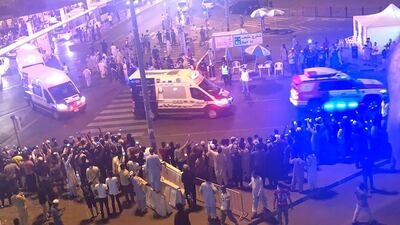
A parade of emergency service vehicles enters the area as residents are allowed to leave their homes on Sunday night -

Mounted police on the streets as barricades are lifted -
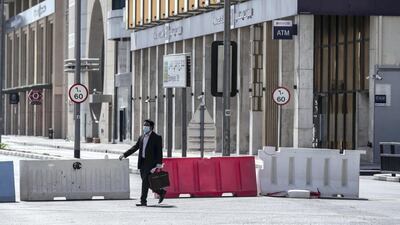
A pedestrian walks past barricades on Baniyas Road just hours before the 24-hour stay-home order was lifted in Al Ras and Naif on Sunday night. All photos by Antonie Robertson / The National -
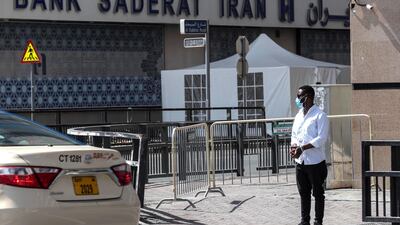
Dubai's Al Ras neighbourhood was on lockdown for almost a month -
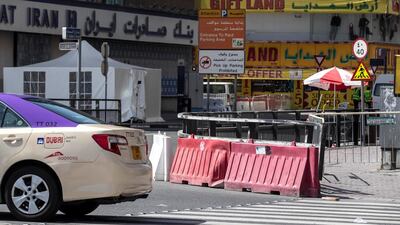
About 6,000 residents were tested in the area and officials have not diagnosed a new case in two days -
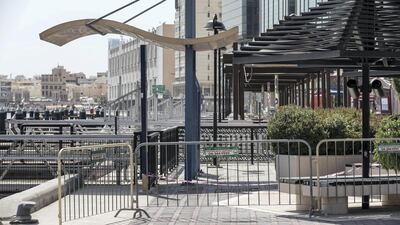
The area is normally bustling with tourists in April -
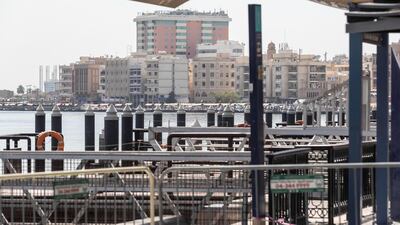
The nearby cruise ship terminal that welcomes almost a million passengers each year has been closed for two months -

Baniyas Street is normally one of the busiest in the old town -
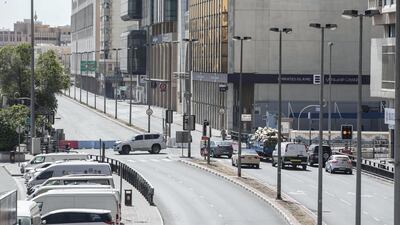
Barricades were lifted later on Sunday night allowing residents to leave their homes following a 24-hour stay-home order for the past month -
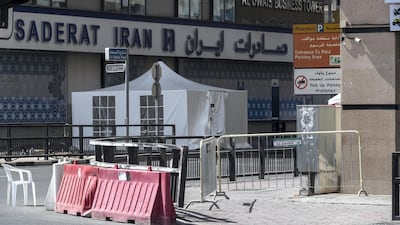
Residents can leave the area for essential shopping and exercise but must be at home from 10pm to 6am -

Abandoned cars on Baniyas road near the cordoned entrance to the quarantined area



