The UAE's currency was introduced on May 20, 1973, a little more than two years after the country was formed.
Prior to the dirham, the rupee, dinar and even the Maria Theresa silver thaler were used.
In this weekly series, The National breaks down the historical and cultural significance of the designs for each of the dirham denominations.
Dh100
Always a welcome presence in your wallet, the Dh100 note was the highest denomination in general circulation when it was introduced in 1973.
The original note was green, and superficially resembled today's Dh10. Mixing the two up would be an unfortunate mistake to make.

The design on the English language face was a charming scene of Khor Fakkan on the Gulf of Oman, with a dhow and buildings that include a mosque and the fish market.
Although almost completely surrounded by Fujairah, Khor Fakkan is part of Sharjah, which also features on the Dh1 note and was the only emirate to be included twice on the original issue.
Design changes in 1982 meant the Dh100 note became the familiar pink or pale red (depending on your point of view) that we see today.
On the Arabic face is Al Fahidi Fort in Dubai, once the home of the emirate's Ruler and now the Dubai Museum. The reverse is the World Trade Centre, once the tallest building in the Middle East and still a symbol of Dubai's extraordinary progress in barely half a century.
If you have recently made a large withdrawal from a bank, take a closer look at your Dh100 notes and you may find the second version.
This was released in 2018 to mark the Year of Zayed and the 100th anniversary of the Founding Father's birth. The World Trade Centre on the English side is replaced with an image of Sheikh Zayed Bridge in Abu Dhabi, and on the reverse is the official symbol of the Year Of Zayed with his portrait.
The inspiration behind the design of the UAE's currency
-
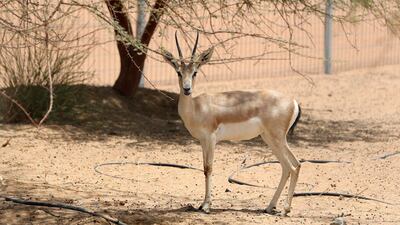
An Arabian sand gazelle at the Mleiha Archaeological Centre in Sharjah. The gazelle is native to the region and can be found on the 25 fils coin. Chris Whiteoak / The National -
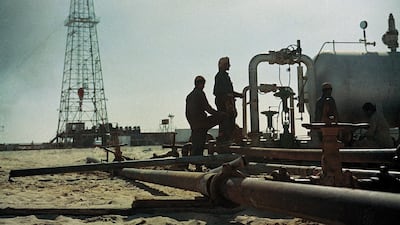
The Murban 2 oil well in Abu Dhabi, pictured in 1956. The discovery of oil transformed the emirate and eventually the UAE. Three oil derricks are featured on the 50 fils coin. Adnoc -
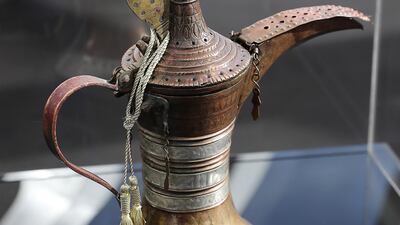
A dallah belonging to Sheikh Zayed in the early 20th century on display during the Majlis Zayed Exhibition in Abu Dhabi. The traditional coffee pot, a symbol of Emirati hospitality, appears on the Dh1 coin. Pawan Singh / The National -

One of the entrances to the Central Market, also known as the Blue Souq, in Sharjah. The market was built in 1979 and is adorned with Islamic designs. It can be seen on the Arabic side of the Dh5. Amy Leang / The National -
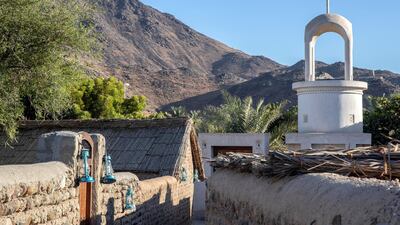
Salem Al Mutawa Mosque is one of the oldest two in the UAE. About 200 years old, it can be seen on the English side of the Dh5 along with the Khor Fakkan coastline. Antonie Robertson / The National -
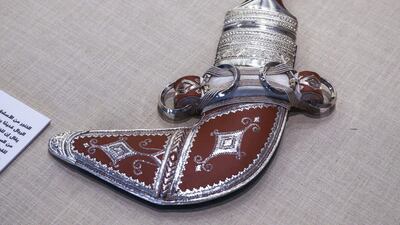
The khanjar is a curved ceremonial dagger worn by men in the UAE and Oman. An illustration of the knife can be seen on the Arabic side of the Dh10. Victor Besa / The National -
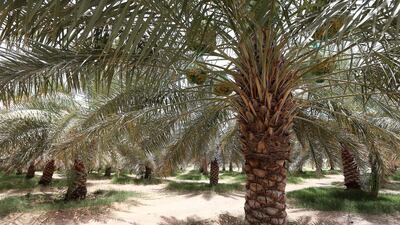
Date palm tree at Al Dahra farm in Al Ain. A date tree and farm are the main illustrations on the Dh10 note. Pawan Singh / The National -
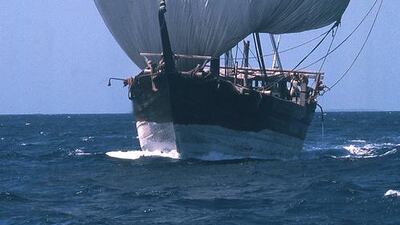
An Arabian dhow at sea in 1973. The vessel features prominently on the Dh20 note. Marion Kaplan -
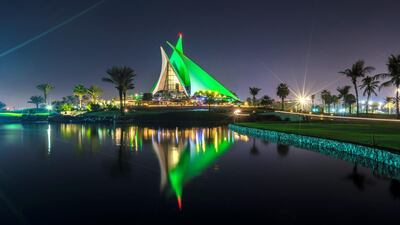
Dubai Creek Golf & Yacht Club opened in 1993 and can be seen on the Arabic side of the Dh20 note. Tourism Ireland -
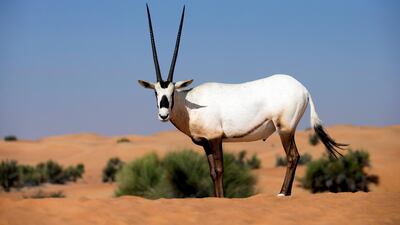
An Arabian oryx at Al Maha Desert Resort in Dubai. The species was endangered but conservation efforts, led by Sheikh Zayed, helped it to flourish. It can be seen on the Dh50 note. Gerry O’Leary -
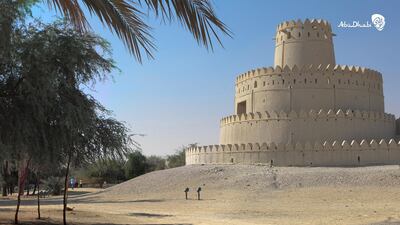
Completed in 1898 on the orders of Sheikh Zayed the First, Al Jahili Fort in Al Ain is one of the country’s largest. It appears on the English-language side of the Dh50 note. Abu Dhabi Culture and Tourism -
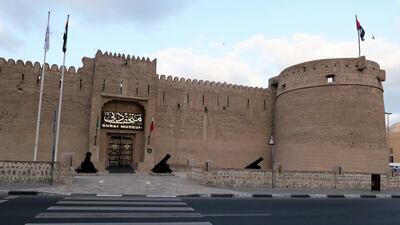
Al Fahidi Fort in Dubai was built in 1787. Since then, it has had many uses, even functioning as a prison for outlaws for a time. It can be found on the Arabic face of the Dh100 note. Pawan Singh / The National -
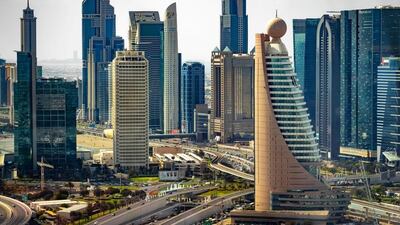
Dubai World Trade Centre (the grey, rectangular building to the middle left) was opened by Queen Elizabeth II in 1979. The tallest building in the UAE until 1999, it appears on the Dh100 banknote. Alamy -

Established in 1980, the UAE Central Bank was preceded by the Currency Board, which issued the country’s first independent currency: the dirham. The headquarters now features on the Dh200 note. Sammy Dallal / The National -
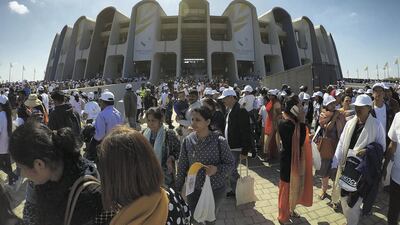
Worshippers leave the stadium at Zayed Sports City, Abu Dhabi, after Pope Francis led a holy Mass there in 2019. The building opened in 1979 and is featured on the Dh200 banknote. Pawan Singh / The National -
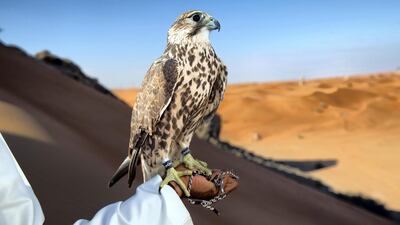
Falcons feature on each of the dirham notes, but the beloved bird takes centre stage on the Arabic side of the Dh500. Getty -
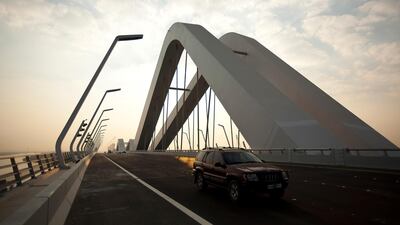
Sheikh Zayed Bridge was designed by renowned Iraqi architect Zaha Hadid. It was opened in 2010, becoming the third gateway from Abu Dhabi island to the greater emirate. During the Year of Zayed in 2019, a special Dh100 note, which is still in circulation, was printed depicting the bridge. Andrew Henderson / The National -
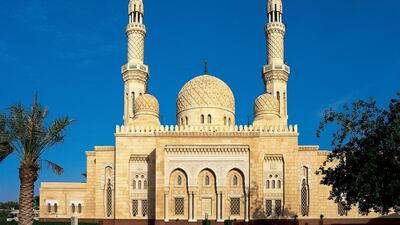
Jumeirah Mosque in Dubai opened in 1979. One of two mosques open to non-Muslims, it is a distinctive feature of the Dh500 note. Getty -
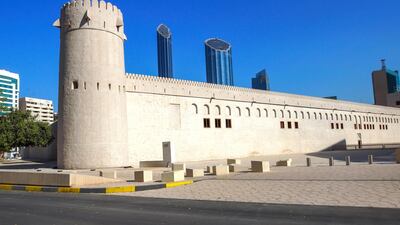
Qasr Al Hosn, the birthplace of Sheikh Zayed, is on the Arabic side of the Dh1,000 note. Victor Besa / The National -
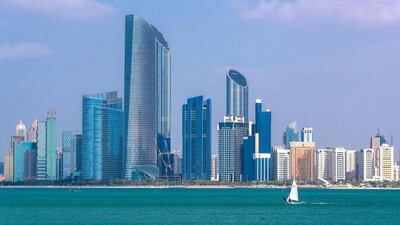
Abu Dhabi’s skyline has changed dramatically since the dirham was launched. The UAE’s capital is featured on the Dh1,000 note. Chris Whiteoak / The National
Ferrari 12Cilindri specs
Engine: naturally aspirated 6.5-liter V12
Power: 819hp
Torque: 678Nm at 7,250rpm
Price: From Dh1,700,000
Available: Now
While you're here
Gavin Esler: Coronavirus offers stinging rebuke to protectionists
Kareem Shaheen: Pandemics can save us from waging wars
Sholto Byrnes: Why the climate change clash will get nastier
While you're here
Diriyah%20project%20at%20a%20glance
From Zero
Artist: Linkin Park
Label: Warner Records
Number of tracks: 11
Rating: 4/5
Top investing tips for UAE residents in 2021
Build an emergency fund: Make sure you have enough cash to cover six months of expenses as a buffer against unexpected problems before you begin investing, advises Steve Cronin, the founder of DeadSimpleSaving.com.
Think long-term: When you invest, you need to have a long-term mindset, so don’t worry about momentary ups and downs in the stock market.
Invest worldwide: Diversify your investments globally, ideally by way of a global stock index fund.
Is your money tied up: Avoid anything where you cannot get your money back in full within a month at any time without any penalty.
Skip past the promises: “If an investment product is offering more than 10 per cent return per year, it is either extremely risky or a scam,” Mr Cronin says.
Choose plans with low fees: Make sure that any funds you buy do not charge more than 1 per cent in fees, Mr Cronin says. “If you invest by yourself, you can easily stay below this figure.” Managed funds and commissionable investments often come with higher fees.
Be sceptical about recommendations: If someone suggests an investment to you, ask if they stand to gain, advises Mr Cronin. “If they are receiving commission, they are unlikely to recommend an investment that’s best for you.”
Get financially independent: Mr Cronin advises UAE residents to pursue financial independence. Start with a Google search and improve your knowledge via expat investing websites or Facebook groups such as SimplyFI.
World record transfers
1. Kylian Mbappe - to Real Madrid in 2017/18 - €180 million (Dh770.4m - if a deal goes through)
2. Paul Pogba - to Manchester United in 2016/17 - €105m
3. Gareth Bale - to Real Madrid in 2013/14 - €101m
4. Cristiano Ronaldo - to Real Madrid in 2009/10 - €94m
5. Gonzalo Higuain - to Juventus in 2016/17 - €90m
6. Neymar - to Barcelona in 2013/14 - €88.2m
7. Romelu Lukaku - to Manchester United in 2017/18 - €84.7m
8. Luis Suarez - to Barcelona in 2014/15 - €81.72m
9. Angel di Maria - to Manchester United in 2014/15 - €75m
10. James Rodriguez - to Real Madrid in 2014/15 - €75m
Milestones on the road to union
1970
October 26: Bahrain withdraws from a proposal to create a federation of nine with the seven Trucial States and Qatar.
December: Ahmed Al Suwaidi visits New York to discuss potential UN membership.
1971
March 1: Alex Douglas Hume, Conservative foreign secretary confirms that Britain will leave the Gulf and “strongly supports” the creation of a Union of Arab Emirates.
July 12: Historic meeting at which Sheikh Zayed and Sheikh Rashid make a binding agreement to create what will become the UAE.
July 18: It is announced that the UAE will be formed from six emirates, with a proposed constitution signed. RAK is not yet part of the agreement.
August 6: The fifth anniversary of Sheikh Zayed becoming Ruler of Abu Dhabi, with official celebrations deferred until later in the year.
August 15: Bahrain becomes independent.
September 3: Qatar becomes independent.
November 23-25: Meeting with Sheikh Zayed and Sheikh Rashid and senior British officials to fix December 2 as date of creation of the UAE.
November 29: At 5.30pm Iranian forces seize the Greater and Lesser Tunbs by force.
November 30: Despite a power sharing agreement, Tehran takes full control of Abu Musa.
November 31: UK officials visit all six participating Emirates to formally end the Trucial States treaties
December 2: 11am, Dubai. New Supreme Council formally elects Sheikh Zayed as President. Treaty of Friendship signed with the UK. 11.30am. Flag raising ceremony at Union House and Al Manhal Palace in Abu Dhabi witnessed by Sheikh Khalifa, then Crown Prince of Abu Dhabi.
December 6: Arab League formally admits the UAE. The first British Ambassador presents his credentials to Sheikh Zayed.
December 9: UAE joins the United Nations.
New UK refugee system
- A new “core protection” for refugees moving from permanent to a more basic, temporary protection
- Shortened leave to remain - refugees will receive 30 months instead of five years
- A longer path to settlement with no indefinite settled status until a refugee has spent 20 years in Britain
- To encourage refugees to integrate the government will encourage them to out of the core protection route wherever possible.
- Under core protection there will be no automatic right to family reunion
- Refugees will have a reduced right to public funds
GOLF’S RAHMBO
- 5 wins in 22 months as pro
- Three wins in past 10 starts
- 45 pro starts worldwide: 5 wins, 17 top 5s
- Ranked 551th in world on debut, now No 4 (was No 2 earlier this year)
- 5th player in last 30 years to win 3 European Tour and 2 PGA Tour titles before age 24 (Woods, Garcia, McIlroy, Spieth)
RESULT
West Brom 2 Liverpool 2
West Brom: Livermore (79'), Rondón (88' )
Liverpool: Ings (4'), Salah (72')
While you're here
Who has lived at The Bishops Avenue?
- George Sainsbury of the supermarket dynasty, sugar magnate William Park Lyle and actress Dame Gracie Fields were residents in the 1930s when the street was only known as ‘Millionaires’ Row’.
- Then came the international super rich, including the last king of Greece, Constantine II, the Sultan of Brunei and Indian steel magnate Lakshmi Mittal who was at one point ranked the third richest person in the world.
- Turkish tycoon Halis Torprak sold his mansion for £50m in 2008 after spending just two days there. The House of Saud sold 10 properties on the road in 2013 for almost £80m.
- Other residents have included Iraqi businessman Nemir Kirdar, singer Ariana Grande, holiday camp impresario Sir Billy Butlin, businessman Asil Nadir, Paul McCartney’s former wife Heather Mills.
Hunting park to luxury living
- Land was originally the Bishop of London's hunting park, hence the name
- The road was laid out in the mid 19th Century, meandering through woodland and farmland
- Its earliest houses at the turn of the 20th Century were substantial detached properties with extensive grounds
ENGLAND%20SQUAD
PETER%20PAN%20%26%20WENDY
Avatar: Fire and Ash
Director: James Cameron
Starring: Sam Worthington, Sigourney Weaver, Zoe Saldana
Rating: 4.5/5
While you're here
Gavin Esler: The Good Friday Agreement teaches us some important lessons
Damien McElroy: Boris must listen to Churchill's comments on Irish divisions
Janine di Giovanni: Track 2 diplomacy key to lasting peace in 21st century
Why are asylum seekers being housed in hotels?
The number of asylum applications in the UK has reached a new record high, driven by those illegally entering the country in small boats crossing the English Channel.
A total of 111,084 people applied for asylum in the UK in the year to June 2025, the highest number for any 12-month period since current records began in 2001.
Asylum seekers and their families can be housed in temporary accommodation while their claim is assessed.
The Home Office provides the accommodation, meaning asylum seekers cannot choose where they live.
When there is not enough housing, the Home Office can move people to hotels or large sites like former military bases.


