

When Bassem Itani won more than Dh100,000 in the Emirates Loto in July he had grands plans for how to spend his fortune.
But when a huge explosion tore through Beirut last month, the father-of-two knew he had an opportunity to bring hope out of tragedy.
He swiftly turned his attention to family members caught up in the devastating blast which left scores of people dead and thousands more injured.
“I didn’t think twice about helping my family in Lebanon when disaster struck last month,” said the 55-year-old architect.
-
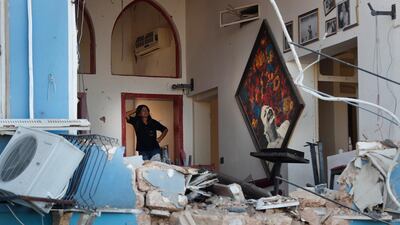
A woman stands inside a damaged restaurant. AP Photo -
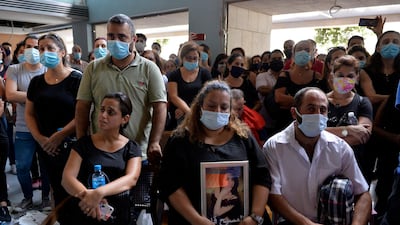
People and employees attend a mass over the victims who were killed in the blast, at the Al-Roum hospital at Ashrafieh area in Beirut. EPA -
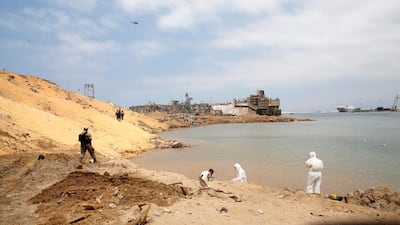
Workers are pictured at the devastated site of the explosion at the port of Beirut. EPA -
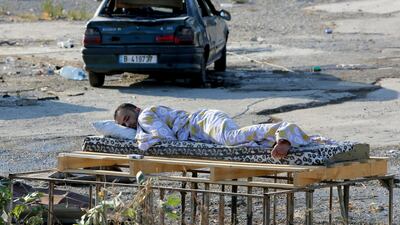
A man sleeps near a damaged car near the site of Tuesday's blast in Beirut's port area. REUTERS -
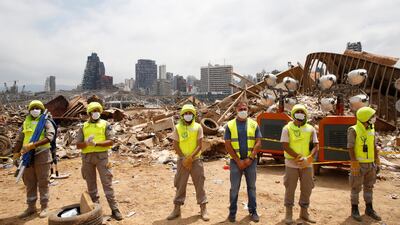
Workers line at the devastated site of the explosion at the port of Beirut. EPA -
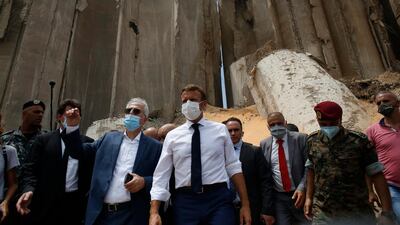
French President Emmanuel Macron visits the devastated site of the explosion at the port of Beirut. EPA -
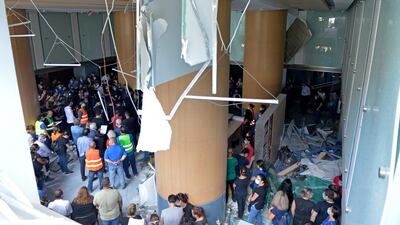
People and employees attend a mass over the victims who were killed in the blast, at the Al-Roum hospital at Ashrafieh area in Beirut. EPA -
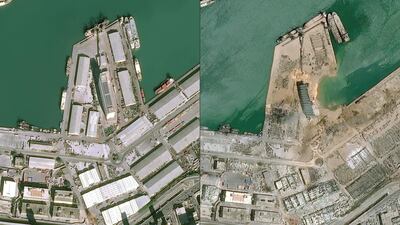
A view of the port of Beirut on January 25, 2020, left, and on August 5, 2020, a day after the explosion. AFP -

Bride Israa Seblani poses for a picture in the same place where she was taking her wedding photos at the moment of the explosion. Reuters -
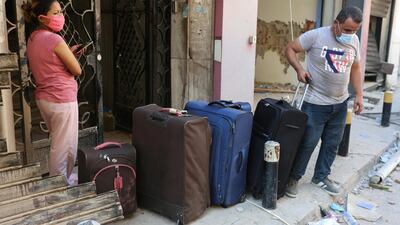
People stand with their belongings as they leave their damaged homes. Reuters -
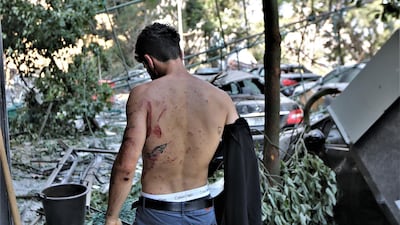
A Lebanese man shows injuries on his back after the massive explosion in Beirut. EPA -
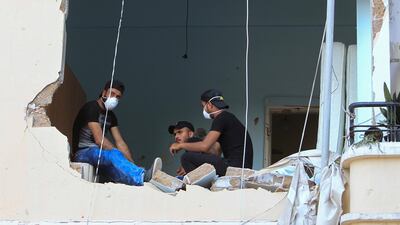
Men are seen sitting inside a damaged home, following Tuesday's blast in Beirut's port area. Reuters -
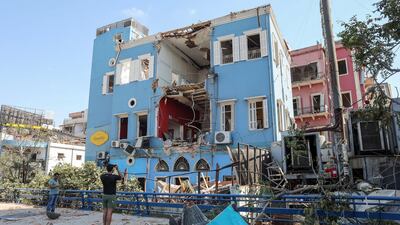
A pedestrian takes photos of a badly damaged building in Beirut. Bloomberg -
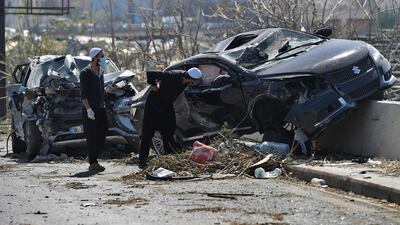
Lebanese Druze clerics check damaged cars. AP Photo -

A statue representing the Lebanese expatriate is seen in front of a building that was damaged by the explosion. AP Photo -
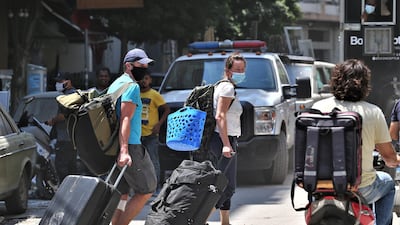
People walk with their belongings in the area of Mar Mikhael and Gemayzeh. EPA -
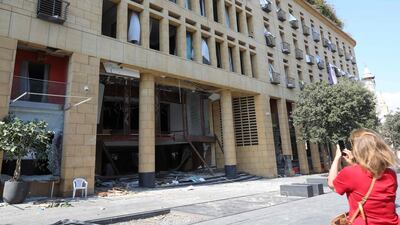
The curtains in the rooms of the Le Gray hotel in the Lebanese capital Beirut swaying in the wind. AFP -
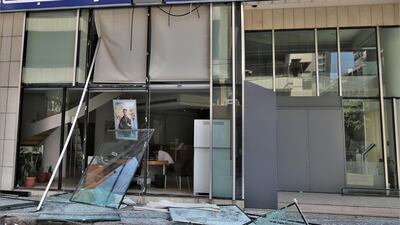
A view of a damaged Fransa Bank. EPA -
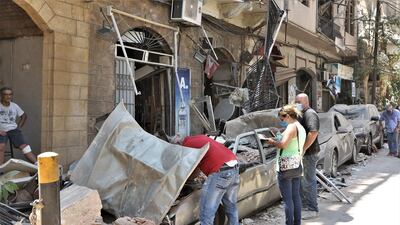
People check damaged vehicles. EPA -
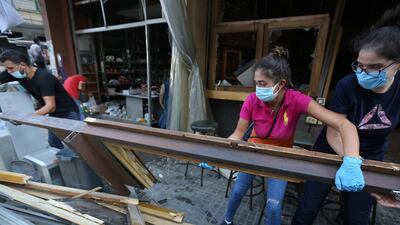
Volunteers clean the streets amid the wreckage. Reuters -
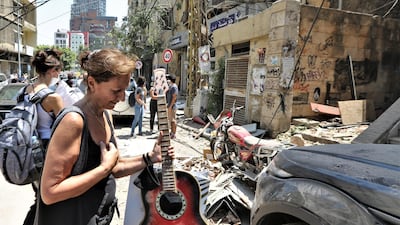
People carry belongings after evacuating their damaged housing units at area of Mar Mikhael and Gemayzeh. EPA -
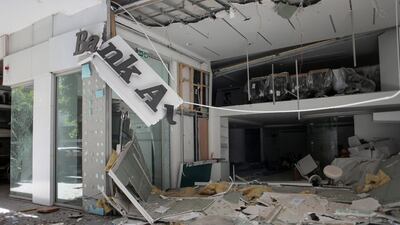
A destroyed Bank Audi SAL branch stands in Beirut. Bloomberg -
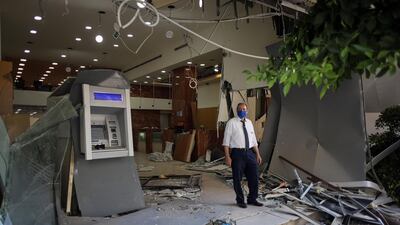
A worker wearing a protective face mask stands at the entrance to a destroyed Fransabank SAL branch in Beirut. Bloomberg -
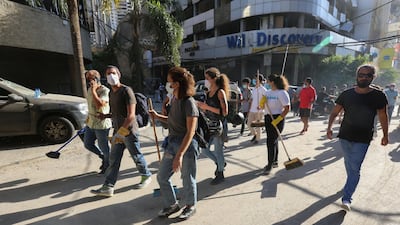
Volunteers carry brooms as they walk to clean the streets. Reuters -
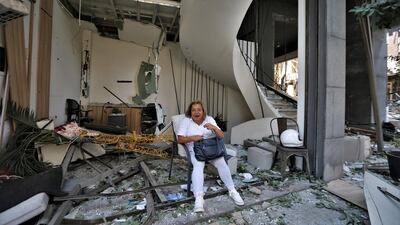
A woman sits in front of a damaged building. EPA -

A general view of the Beirut port area after the massive explosion. EPA -
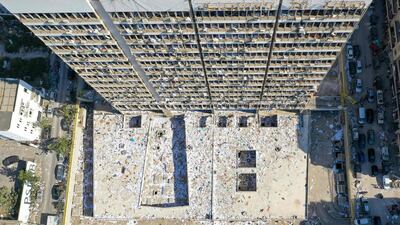
An aerial view shows the massive damage done to the Electricity of Lebanon building. AFP -
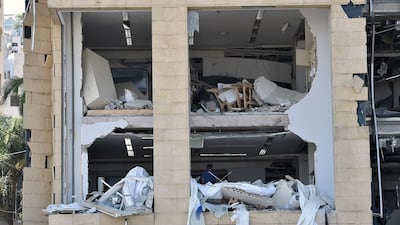
A view of the damaged building of the Lebanese fashion designer Zuhair Murad. EPA -
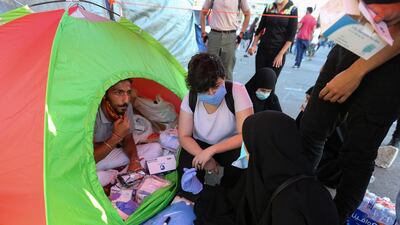
Volunteers gather aid supplies to be distributed for those affected by Tuesday's blast. Reuters -
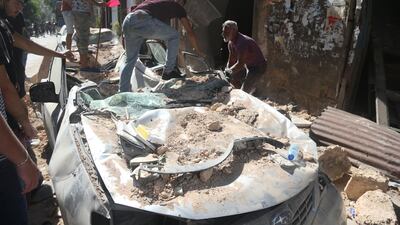
Lebanese men clears rubble, one day after the explosion at the Beirut Port, in the Gemayzeh area. EPA -
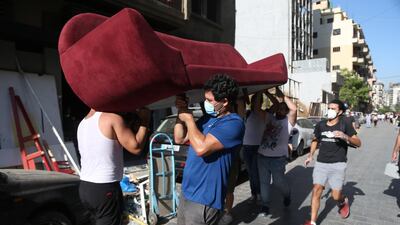
Lebanese youth salvage a velvet sofa from a destroyed apartment in the Gemayzeh area of Beirut. EPA -
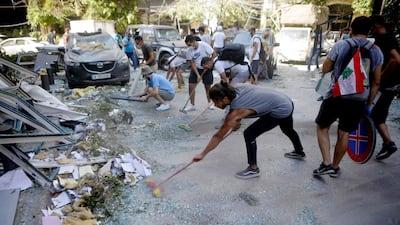
Lebanese activists take part in a campaign to clean the damaged neighbourhood of Mar Mikhael. AFP -
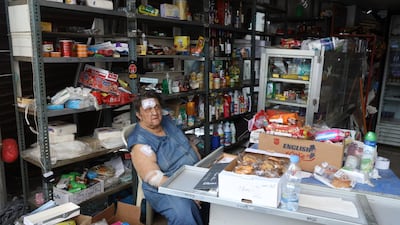
An injured Lebanese shop owner sits at her desk selling her wares. EPA


“The devastation that was caused is still so upsetting to see; like many in this region who have sent relief home, I hope my support goes far in helping my family to rebuild their lives.”
Mr Itani, who holds Canadian citizenship, has been living in the UAE for 17 years.
As well as allocating some of his winnings to support relief efforts in Lebanon, he will use part of his Dh111,111 cash prize to pay for his children's school and college fees.
“Maybe if I’d have won Emirates Loto at a time when there wasn’t a pandemic causing such disruption, I could have taken a world tour.
“I guess my own savings and plans can wait. Family will always come first.”
Nonetheless, Mr Itani said he plans to continue playing with Emirates Loto and hopefully make win more draws in the future.
“Emirates Loto has been really good to me,” he said. “I plan to keep playing when the draws return and if I ever win again I will continue to be good to the world in the same way the world has been good to me.”
Emirates Loto is a weekly digital draw that was launched in April, but has been suspended since July on order for a system upgrade to be completed. It is expected to relaunch soon.
The Emirates Loto is a fatwa-approved, collectable scheme with the option to enter a weekly live draw.
People can buy the collectable cards and then decide whether they wish to enter the draw free of charge. Customers can also choose not to receive the card and donate a portion of the purchase price to charity.

