

A new coronavirus variant has been identified in the UK in two people who recently travelled to the Caribbean island of Antigua.
The strain shares some traits with other coronavirus variants but would not be categorised as “concerning” for now, Public Health England said.
It was designated a new variant on March 4 after it was found in the south-east of England in two people who travelled back from the Caribbean.
Variants are mutant versions of the SARS-CoV-2 virus that causes Covid-19, which has already killed more than 2.7 million people since the pandemic began a year ago.
Although scientists say that such mutations are inevitable, Covid-19 variants of concern, such as those first identified in England, South Africa and Brazil, have worrying changes that give the virus advantages. These can be increased transmissibility or an ability to beat the protection offered by vaccines.
Public Health England also said that four more cases of the Brazil variant were identified in England.
That brings the total number identified in Britain to 10, the organisation said, adding that they all had links to direct travel from Brazil or to a previously confirmed case that had travelled to Brazil.
Meanwhile, the Kent coronavirus variant first found a few months ago in Britain is now "taking over" and causing 98 per cent of all cases in the UK, the scientist leading the country's variant-tracking research said on Thursday.
Prof Sharon Peacock said the UK variant, known as B117, also appears to be gaining a firm grip in many of the 100 or so other countries it has spread to in the past few months.
"It's around 50 per cent more transmissible - hence its success in really taking over the country," said Prof Peacock, director of the Covid-19 Genomics UK consortium of scientists monitoring coronavirus.
"We now know that it has spread across the UK and causes nearly all of the cases of Covid-19 - about 98 per cent," she told an online briefing for Britain's Royal Society of Medicine.
"It appears to be the case that the other variants are not getting a foothold in this country."
The B117 variant, first detected in September last year, has 23 mutations in its genetic code - a relatively high number of changes - and is thought by experts to be 40 - 70 per cent more transmissible than previously dominant variants.
-
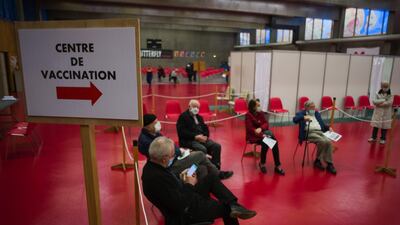
Elderly visitors wait to receive a dose of the Covid-19 vaccine at the vaccination center in the Jean Pierre Rives sports stadium in Paris, France. Bloomberg -

Musician Samuel Palomino plays the viola during a Mozart mini-concert for Covid-19 patients at the Nurse Isabel Zendal Hospital in Madrid, Spain. AP Photo -

An employee helps customers at a Saturn electronic store as the coronavirus lockdown measures are eased in Berlin, Germany. Reuters -
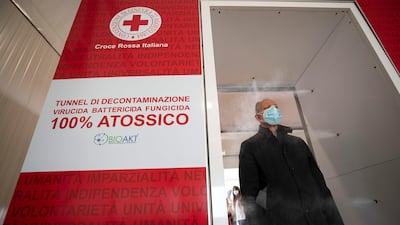
A man is disinfected as he enters an Italian Red Cross vaccination centre set up at Piazza dei Cinquecento, in Rome, Italy. EPA -

Students gather to protest against isolation in Brussels, Belgium. EPA -
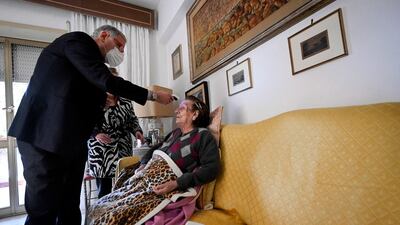
A family doctor administers a vaccine to his 100 year old patient named Amelia in Rome, Italy. EPA -
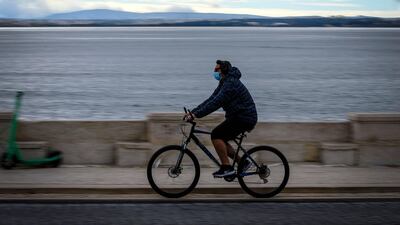
A man rides a bicycle in a quiet Lisbon, Portugal. Portugal will start to ease restrictions due to a decrease in coronavirus cases. AFP -
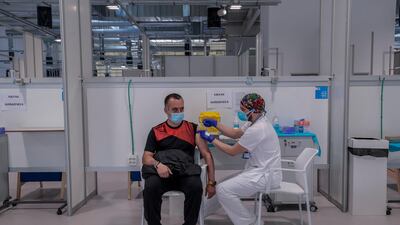
A man receives the AstraZeneca vaccine at the Nurse Isabel Zendal Hospital in Madrid, Spain. AP Photo


Prof Peacock also noted data released on Wednesday from a UK study which found that B117 has "significantly higher" mortality, with death rates among those infected being 30 to 100 per cent greater than among those infected with previous variants.
"There is a small increase in the likelihood of death from the variant," she said.
B117 has spread to about 100 countries.
Prof Peacock said evidence from the UK suggests it is likely to become dominant elsewhere, too.

