• A protester holds a flare in Trafalgar Square during a coronavirus anti-lockdown protest, in London. AP Photo
    A protester holds a flare in Trafalgar Square during a coronavirus anti-lockdown protest, in London. AP Photo
  • Protesters gather in Trafalgar Square during a coronavirus anti-lockdown protest in London. AP Photo
    Protesters gather in Trafalgar Square during a coronavirus anti-lockdown protest in London. AP Photo
  • Police officers stand guard as anti-lockdown protesters take part in a march in London. Reuters
    Police officers stand guard as anti-lockdown protesters take part in a march in London. Reuters
  • Anti-lockdown protesters take part in a march in London. Reuters
    Anti-lockdown protesters take part in a march in London. Reuters
  • Protesters are seen during a Unite for Freedom march in London. Getty Images
    Protesters are seen during a Unite for Freedom march in London. Getty Images
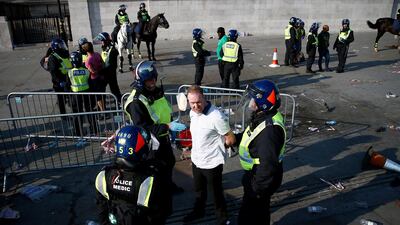
  • Anti-lockdown protesters clash with police during a demonstration against lockdown measures in Westminster, London. EPA
    Anti-lockdown protesters clash with police during a demonstration against lockdown measures in Westminster, London. EPA
  • An anti-lockdown protester is lead away by police after being restrained during a demonstration against lockdown measures in Westminster, London. EPA
    An anti-lockdown protester is lead away by police after being restrained during a demonstration against lockdown measures in Westminster, London. EPA
  • Anti-lockdown protesters clash with police during a demonstration against lockdown measures in Westminster, London. EPA
    Anti-lockdown protesters clash with police during a demonstration against lockdown measures in Westminster, London. EPA
  • Protesters are seen dancing in Parliament Square during a Unite for Freedom march in London. Getty Images
    Protesters are seen dancing in Parliament Square during a Unite for Freedom march in London. Getty Images
  • Protesters are seen during a Unite for Freedom march in London. Getty Images
    Protesters are seen during a Unite for Freedom march in London. Getty Images
  • A protester wearing a tin foil hat is seen in Parliament Square during a Unite for Freedom march in London. Getty Images
    A protester wearing a tin foil hat is seen in Parliament Square during a Unite for Freedom march in London. Getty Images
  • Protesters march past Downing Street during a Unite for Freedom march in London. Getty Images
    Protesters march past Downing Street during a Unite for Freedom march in London. Getty Images
  • Anti-lockdown protesters clash with police during a demonstration against lockdown measures in Westminster, London. EPA
    Anti-lockdown protesters clash with police during a demonstration against lockdown measures in Westminster, London. EPA
  • A protester holds a sign reading 'Defend Freedom' during a Unite for Freedom march outside New Scotland Yard in London. Getty Images
    A protester holds a sign reading 'Defend Freedom' during a Unite for Freedom march outside New Scotland Yard in London. Getty Images

UK government’s Eat Out to Help Out initiative may have ‘substantially worsened’ outbreak


  • English
  • Arabic

Britain’s Eat Out to Help Out programme, hailed as an economic cure for its ailing restaurant industry, may have substantially worsened the pandemic, research showed.

The government spent £500 million ($647.1m) subsidising the cost of restaurant meals and non-alcoholic drinks by as much as 50 per cent in August, even after evidence showed Covid-19 could easily spread in hospitality settings, a study for the University of Warwick found.

Areas with higher take-up saw a notable increase in new Covid-19 infection clusters within a week of the scheme starting

The programme succeeded in filling tables and getting cash into the hands of hospitality businesses, but may be responsible for 8 per cent to 17 per cent of all coronavirus cases in the UK during the summer.

It may have also led to an increase in asymptomatic infections that may have driven an explosive second wave of the pandemic, said Thiemo Fetzer, an associate professor of economics and a visiting fellow at the London School of Economics.

“Areas with higher take-up saw both a notable increase in new Covid-19 infection clusters within a week of the scheme starting and again a deceleration in infections within two weeks of the programme ending,” Prof Fetzer wrote in the 52-page paper, which was released on Thursday.

The programme began on August 3 and ended on August 31, two months before Prime Minister Boris Johnson became Europe’s latest leader to retreat from a no-lockdown pledge. On Saturday, he ordered a one-month stay-at-home policy for all of England, beginning November 5, to curb surging Covid-19 cases.

Restaurant visits more than doubled in the last week of Eat Out to Help Out, compared with the same period a year earlier.

Diners were encouraged by a discount of as much as £10 per person to eat at tens of thousands of participating restaurants on Mondays, Tuesdays and Wednesdays, when patronage typically ebbs. Subsidies on almost 100 million meals valued at about £1 billion were claimed during the programme’s four-week period, preliminary data show. Prof Fetzer estimated the cost to taxpayers to be about £500 million.

He found areas that had more participating restaurants had a notable increase in the emergence of infection clusters about a week after the programme started, with patterns of movement corroborated by Google mobility data and aggregate data from restaurant booking sites. Wet weather appeared to deter diners, corresponding with a reduction in Covid-19 incidence.

The UK had a sharp rise in Covid-19 cases at the same time as the programme was operating, said Toby Phillips, a public policy researcher at the University of Oxford.

"This overwhelmed testing capacity and caused some regions to reimpose restrictions," Mr Phillips said in an article for The Conversation in September.

“It’s impossible to know what caused this. People were also coming back from summer holidays and spending more time with friends.”

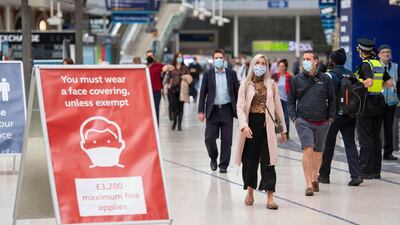
  • Commuters at Waterloo station in London. British Prime Minister Boris Johnson appealed for resolve and a “spirit of togetherness” through the winter as he unveiled new restrictions. AP Photo
    Commuters at Waterloo station in London. British Prime Minister Boris Johnson appealed for resolve and a “spirit of togetherness” through the winter as he unveiled new restrictions. AP Photo
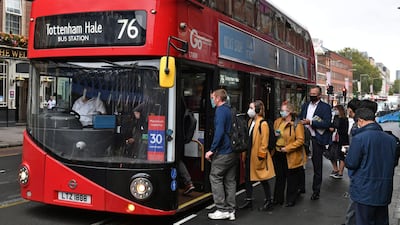
  • People board a bus outside Waterloo station in London. AP Photo
    People board a bus outside Waterloo station in London. AP Photo
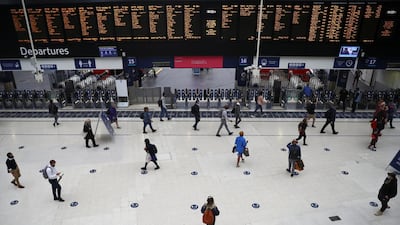
  • People wearing protective face masks make their way through Waterloo station during the morning rush hour on Wednesday morning. Reuters
    People wearing protective face masks make their way through Waterloo station during the morning rush hour on Wednesday morning. Reuters
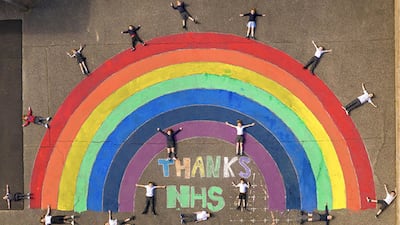
  • Children of keyworkers at Sheringham Primary School, Norfolk created this huge rainbow for the NHS on their playground. Some of the children's parents are nurses who have been working on the Covid ward at the Norfolk & Norwich University Hospital
    Children of keyworkers at Sheringham Primary School, Norfolk created this huge rainbow for the NHS on their playground. Some of the children's parents are nurses who have been working on the Covid ward at the Norfolk & Norwich University Hospital
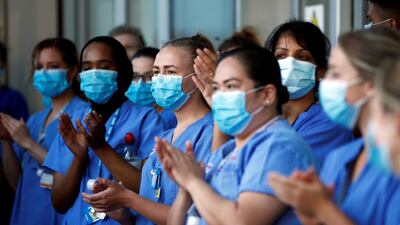
  • NHS workers react at the Royal London Hospital during the last day of the Clap for our Carers campaign in support of the NHS, following the outbreak of the coronavirus disease. Reuters
    NHS workers react at the Royal London Hospital during the last day of the Clap for our Carers campaign in support of the NHS, following the outbreak of the coronavirus disease. Reuters
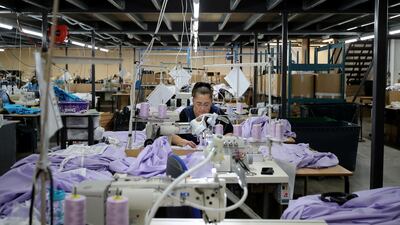
  • Employees make NHS uniforms at a factory in Dukinfield, Britain. The coronavirus pandemic has made the need to address the rapidly ageing workforce more urgent. Reuters
    Employees make NHS uniforms at a factory in Dukinfield, Britain. The coronavirus pandemic has made the need to address the rapidly ageing workforce more urgent. Reuters
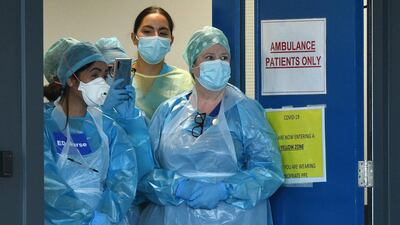
  • NHS workers wearing personal protective equipment as UK releases latest coronavirus data. Oli SCARFF / AFP
    NHS workers wearing personal protective equipment as UK releases latest coronavirus data. Oli SCARFF / AFP
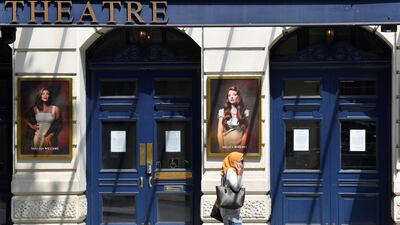
  • A woman wearing a protective face mask walks past a closed theatre, as the spread of the coronavirus disease (COVID-19) continues in London. Reuters
    A woman wearing a protective face mask walks past a closed theatre, as the spread of the coronavirus disease (COVID-19) continues in London. Reuters
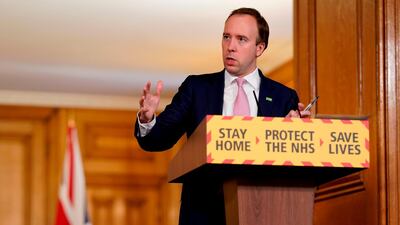
  • Britain's Health Secretary Matt Hancock launches review into how coronavirus affects ethnic minorities. AFP
    Britain's Health Secretary Matt Hancock launches review into how coronavirus affects ethnic minorities. AFP
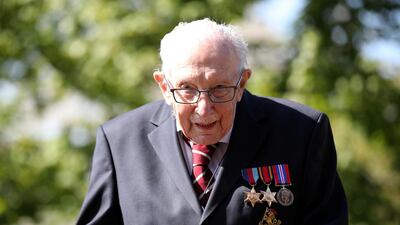
  • Captain Sir Tom Moore beat his original target of raising £1,000. Reuters
    Captain Sir Tom Moore beat his original target of raising £1,000. Reuters
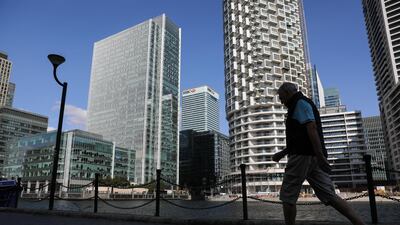
  • A pedestrian passes the HSBC Holdings Plc headquarters office building, centre, in the Canary Wharf business, financial and shopping district of London, UK Bloomberg
    A pedestrian passes the HSBC Holdings Plc headquarters office building, centre, in the Canary Wharf business, financial and shopping district of London, UK Bloomberg
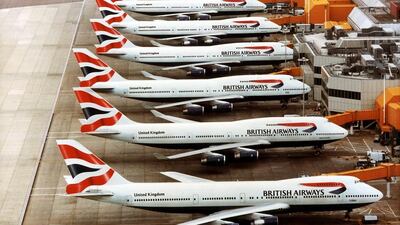
  • British Airways will retire its Boeing 747 fleet immediately due to a drop in demand from the coronavirus pandemic. Courtesy British Airways
    British Airways will retire its Boeing 747 fleet immediately due to a drop in demand from the coronavirus pandemic. Courtesy British Airways
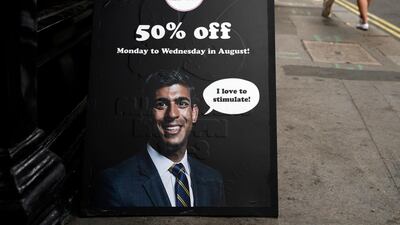
  • The UK Chancellor of the Exchequer Rishi Sunak's 'Eat Out to Help Out' scheme has been successful. EPA
    The UK Chancellor of the Exchequer Rishi Sunak's 'Eat Out to Help Out' scheme has been successful. EPA
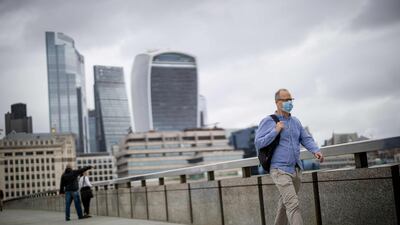
  • A man wearing a facemask walks across London Bridge. The OECD area economy contracted a record 9.8% in the second quarter of 2020. AFP
    A man wearing a facemask walks across London Bridge. The OECD area economy contracted a record 9.8% in the second quarter of 2020. AFP
  • Stay-at-home orders wiped out 20 per cent of the British economy in the first half of 2020. AFP
    Stay-at-home orders wiped out 20 per cent of the British economy in the first half of 2020. AFP
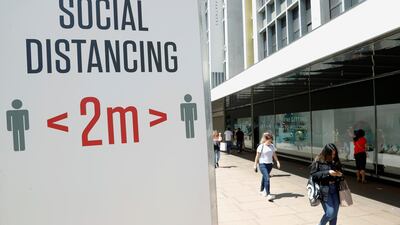
  • A social distancing sign in Oxford Street, London, usually one of the country's busiest shopping streets. Reuters
    A social distancing sign in Oxford Street, London, usually one of the country's busiest shopping streets. Reuters
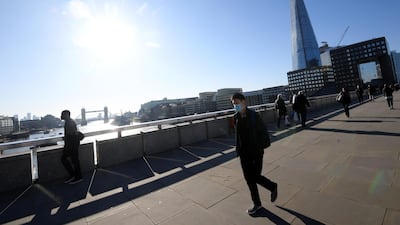
  • Commuters walk over London bridge during the morning rush hour, as the spread of the coronavirus disease (COVID-19) continues, in London. Reuters
    Commuters walk over London bridge during the morning rush hour, as the spread of the coronavirus disease (COVID-19) continues, in London. Reuters
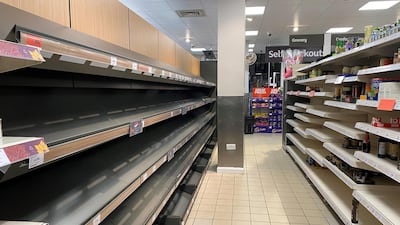
  • Empty shelves from a Sainsbury's supermarket in London, UK, as shoppers in the British capital stockpile goods in advance of strict lockdown measures to fight coronavirus. Emma Sky for The National
    Empty shelves from a Sainsbury's supermarket in London, UK, as shoppers in the British capital stockpile goods in advance of strict lockdown measures to fight coronavirus. Emma Sky for The National
  • The UK is still under a virtual lockdown. Reuters
    The UK is still under a virtual lockdown. Reuters
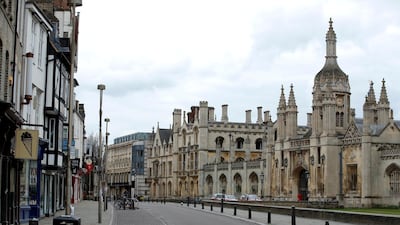
  • Deserted streets in Cambridge amid the UK's coronavirus lockdown. Reuters
    Deserted streets in Cambridge amid the UK's coronavirus lockdown. Reuters
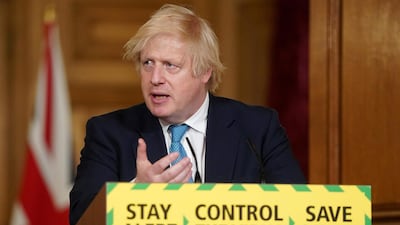
  • Minsters have condemned UK Prime Minister Boris Johnson's decision to abolish the Department for International Development on Tuesday. AFP
    Minsters have condemned UK Prime Minister Boris Johnson's decision to abolish the Department for International Development on Tuesday. AFP
  • People queue at a walk in Covid-19 testing centre in Bolton, England. Fears about rising infection rates among younger people across the UK has forced the government into tighter lockdown restrictions. Getty
    People queue at a walk in Covid-19 testing centre in Bolton, England. Fears about rising infection rates among younger people across the UK has forced the government into tighter lockdown restrictions. Getty
  • Cars queue for Covid-19 drive-in testing centre in Bolton, England. Fears about rising infection rates among younger people across the UK has forced the government into tighter lockdown restrictions. Getty
    Cars queue for Covid-19 drive-in testing centre in Bolton, England. Fears about rising infection rates among younger people across the UK has forced the government into tighter lockdown restrictions. Getty
  • A person is detained during a demonstration in Trafalgar Square against the lockdown imposed by the government, following the outbreak of the coronavirus disease (COVID-19), in London,. Reuters
    A person is detained during a demonstration in Trafalgar Square against the lockdown imposed by the government, following the outbreak of the coronavirus disease (COVID-19), in London,. Reuters

Still, the rapid acceleration in the proportion of detected positive cases at the start of September is consistent with cases where infection occurred in mid-August, he said.

“It’s certainly worth considering the effect of a £10 discount at the pub. And the effect of concentrating people’s outings on just three days of the week.”