• Ramadan decorations go up in Sustainable City, Dubai. Chris Whiteoak / The National
    Ramadan decorations go up in Sustainable City, Dubai. Chris Whiteoak / The National
  • Morning prayers on the first day of Ramadan in the UAE at the Al Salam Masjid in Al Barsha, Dubai. Antonie Robertson / The National
    Morning prayers on the first day of Ramadan in the UAE at the Al Salam Masjid in Al Barsha, Dubai. Antonie Robertson / The National
  • Worshippers pray at the Al Salam Masjid in Al Barsha, Dubai, on the first day of Ramadan. Antonie Robertson / The National
    Worshippers pray at the Al Salam Masjid in Al Barsha, Dubai, on the first day of Ramadan. Antonie Robertson / The National
  • Morning prayers take place on the first day of Ramadan at the Al Salam Masjid in Al Barsha, Dubai, UAE. Antonie Robertson / The National
    Morning prayers take place on the first day of Ramadan at the Al Salam Masjid in Al Barsha, Dubai, UAE. Antonie Robertson / The National
  • The sun sets over a mosque on the last evening before Ramadan in Dubai. Chris Whiteoak / The National
    The sun sets over a mosque on the last evening before Ramadan in Dubai. Chris Whiteoak / The National
  • A gentleman puts up Ramadan lights in Sustainable City, Dubai. Chris Whiteoak / The National
    A gentleman puts up Ramadan lights in Sustainable City, Dubai. Chris Whiteoak / The National
  • Ramadan decorations at Mall of the Emirates in Dubai. Pawan Singh / The National
    Ramadan decorations at Mall of the Emirates in Dubai. Pawan Singh / The National
  • Burj Khalifa, the world's tallest tower, is silhouetted in the background of a mosque's minaret in Dubai in the United Arab Emirates, ahead of Ramadan. AFP
    Burj Khalifa, the world's tallest tower, is silhouetted in the background of a mosque's minaret in Dubai in the United Arab Emirates, ahead of Ramadan. AFP
  • Ramadan decorations at Mall of the Emirates in Dubai. Pawan Singh / The National
    Ramadan decorations at Mall of the Emirates in Dubai. Pawan Singh / The National
  • People shopping for Ramadan at Mall of the Emirates in Dubai. Pawan Singh / The National
    People shopping for Ramadan at Mall of the Emirates in Dubai. Pawan Singh / The National
  • Emirati youths walk past a large lit decoration in the shape of a crescent moon bearing calligraphic text in Arabic reading "Ramadan Mubarak", at the City Walk district of Dubai at the start of the first night of the Muslim holy fasting month of Ramadan. AFP
    Emirati youths walk past a large lit decoration in the shape of a crescent moon bearing calligraphic text in Arabic reading "Ramadan Mubarak", at the City Walk district of Dubai at the start of the first night of the Muslim holy fasting month of Ramadan. AFP
  • A view of a decoration showing a crescent moon inlaid inside a five-pointed star bearing calligraphic text in Arabic reading "Ramadan Mubarak", placed along a fence in the City Walk district of Dubai, with the Burj Khalikfa skyscraper in the background. AFP
    A view of a decoration showing a crescent moon inlaid inside a five-pointed star bearing calligraphic text in Arabic reading "Ramadan Mubarak", placed along a fence in the City Walk district of Dubai, with the Burj Khalikfa skyscraper in the background. AFP
  • A vendor sets up a display at a spice shop at a market in Dubai in the UAE for Ramadan. AFP
    A vendor sets up a display at a spice shop at a market in Dubai in the UAE for Ramadan. AFP
  • A vendor sets up a display at a spice shop at a market in Dubai in the UAE for Ramadan. AFP
    A vendor sets up a display at a spice shop at a market in Dubai in the UAE for Ramadan. AFP
  • People shop at a supermarket in Dubai in the UAE shop to prepare for Ramadan. AFP
    People shop at a supermarket in Dubai in the UAE shop to prepare for Ramadan. AFP
  • A view of decorations shaped as animals put in place in the Seef district of Dubai for Ramadan. AFP
    A view of decorations shaped as animals put in place in the Seef district of Dubai for Ramadan. AFP
  • Ramadan decorations outside a house in Dubai. April 13, 2021. Chris Whiteoak / The National
    Ramadan decorations outside a house in Dubai. April 13, 2021. Chris Whiteoak / The National
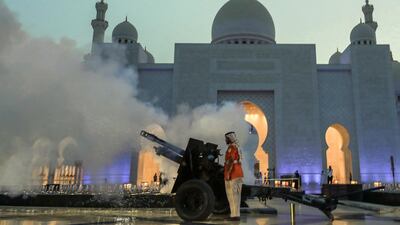
  • A cannon is fired at Sheikh Zayed Grand Mosque, Abu Dhabi, to mark the beginning of iftar in 2021. Victor Besa / The National
    A cannon is fired at Sheikh Zayed Grand Mosque, Abu Dhabi, to mark the beginning of iftar in 2021. Victor Besa / The National
  • A cannon is loaded in preparation of firing to notify the end of the fast near the Burj Khalifa in Dubai on the first day of Ramadan, April 13, 2021. Chris Whiteoak / The National
    A cannon is loaded in preparation of firing to notify the end of the fast near the Burj Khalifa in Dubai on the first day of Ramadan, April 13, 2021. Chris Whiteoak / The National
  • A man prepares a cannon to fire near the Burj Khalifa in Dubai on the first day of Ramadan to break the fast. Tuesday, April 13, 2021. Chris Whiteoak / The National
    A man prepares a cannon to fire near the Burj Khalifa in Dubai on the first day of Ramadan to break the fast. Tuesday, April 13, 2021. Chris Whiteoak / The National
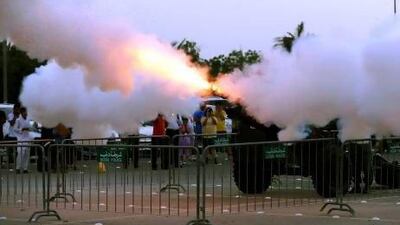
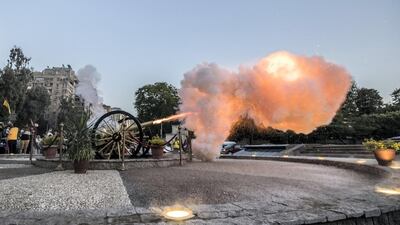
  • A cannon fires near the Burj Khalifa in Dubai on the first day of Ramadan to break the fast. Tuesday, April 13, 2021. Chris Whiteoak / The National
    A cannon fires near the Burj Khalifa in Dubai on the first day of Ramadan to break the fast. Tuesday, April 13, 2021. Chris Whiteoak / The National
  • Evening prayer at the end of the first day of fasting of the holy month of Ramadan in the UAE at the Al Farooq Omar Bin Al Khattab Mosque. Antonie Robertson / The National
    Evening prayer at the end of the first day of fasting of the holy month of Ramadan in the UAE at the Al Farooq Omar Bin Al Khattab Mosque. Antonie Robertson / The National

Ramadan 2021: four ways to fast in a safe and healthy way


  • English
  • Arabic

During Ramadan, Muslims fast from dawn until sunset. This year brings new challenges because the length of the day increases as the holy month progresses.

For many, fasting can be a challenge and people must address issues ranging from how to exercise while fasting to how to control conditions such as diabetes.

Over-indulging at iftar and suhoor can be tempting but can cause weight gain. But by following simple guidelines, it is possible to fast safely and look after your health.

Dr Farhana bin Lootah, an internal medical consultant at Imperial College London Diabetes Centre, part of Mubadala Health, outlines how to navigate the holy month in a healthy way.

Preparing to fast for people with diabetes

More than one in six people in the UAE have diabetes and it is a factor in more than two thirds of deaths of people under 60. People with diabetes need to take a few extra precautions while fasting but, provided they have been medically cleared to fast, there is no reason they should not be able to do so healthily.

1. Consult a doctor

Some people with diabetes are advised not to fast, so you will need to ask your doctor whether it is safe for you.

2. Space out your meals

Resist the urge to eat continuously from iftar until just before fajr. It is a good idea to pace your mealtimes during the non-fasting hours. At iftar, break your fast with a light snack such as water and dates, then about an hour later, eat a full meal. In the morning, just before fajr, eat suhoor.

3. Choose food wisely

Eat protein with each meal because it increases your feeling of being full. Your dietician can help to calculate your protein requirement. It is advisable to include fruit, vegetables and yoghurt in your meals and healthy fats such as avocado, olive oil, and fish. Opt for complex carbohydrates such as wholegrain bread, nuts and brown rice.

4. Rehydrate well

Drink plenty of fluids (sugar-free), particularly water, to avoid dehydration.

5. Plan to incorporate moderate exercise into your day

Moderate physical activity every day is a healthy option. Walking is one of the most recommended activities for patients. Avoid excessive exercise when fasting.

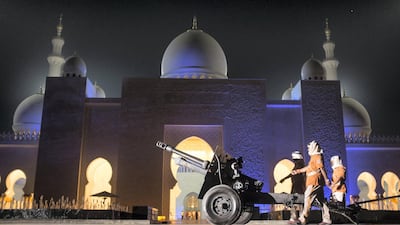
  • A cannon at Sheikh Zayed Grand Mosque in Abu Dhabi is fired to mark the end of the day's fasting. Victor Besa / The National
    A cannon at Sheikh Zayed Grand Mosque in Abu Dhabi is fired to mark the end of the day's fasting. Victor Besa / The National
  • The cannon in front of Sheikh Zayed Grand Mosque is fired daily during Ramadan to signal the sunset, which is when people can break their fast. Reem Mohammed / The National
    The cannon in front of Sheikh Zayed Grand Mosque is fired daily during Ramadan to signal the sunset, which is when people can break their fast. Reem Mohammed / The National
  • The force has been following the custom since the early 1960s in Dubai. EPA
    The force has been following the custom since the early 1960s in Dubai. EPA
  • As the first day of Ramadan came to a close yesterday, Dubai Police followed a long tradition by firing their cannon to signal the end of fasting. Satish Kumar / The National
    As the first day of Ramadan came to a close yesterday, Dubai Police followed a long tradition by firing their cannon to signal the end of fasting. Satish Kumar / The National
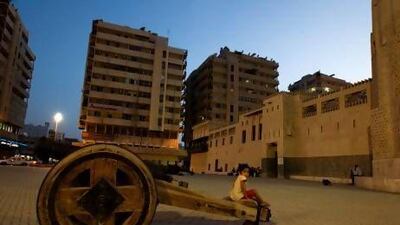
  • An old cannon stands outside Al Hisn Fort in Al Shuwaiheen, an old neighbourhood in Sharjah. The fort was built in the 1820s by Sheikh Sultan bin Saqr Al Qasimi. It is now open to the public as a museum. Sarah Dea / The National
    An old cannon stands outside Al Hisn Fort in Al Shuwaiheen, an old neighbourhood in Sharjah. The fort was built in the 1820s by Sheikh Sultan bin Saqr Al Qasimi. It is now open to the public as a museum. Sarah Dea / The National
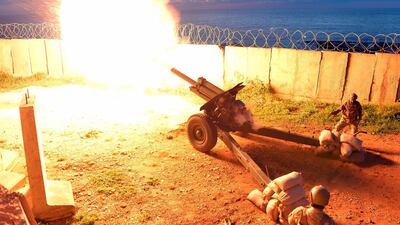
  • Lebanese military fire a blank from a cannon a day prior to Ramadan to announce the holy month in Beirut, Lebanon, in April 2021. EPA
    Lebanese military fire a blank from a cannon a day prior to Ramadan to announce the holy month in Beirut, Lebanon, in April 2021. EPA
  • A Ramadan cannon is fired to mark the breaking of the fasting during the Muslim holy month of Ramadan at Giza district in the Egyptian capital Cairo on May 11, 2020. AFP
    A Ramadan cannon is fired to mark the breaking of the fasting during the Muslim holy month of Ramadan at Giza district in the Egyptian capital Cairo on May 11, 2020. AFP

Ramadan and weight management

While it sounds counterintuitive, some people put on weight when fasting.

Dr Farhana advises that food eaten at iftar and suhoor be simple and not differ very much from your normal diet. It should contain foods from all the major food groups.

Some foods should be avoided, such as processed, fast-burning foods that contain refined carbohydrates, such as sugar and white flour; deep-fried foods, for example pakoras, samosas and fried dumplings; foods high in sugar and fat, including sweets such as gulab jamun, rasgulla and balushahi; and high-fat cooked foods, for example, parathas, oily curries and greasy pastries.

Instead make or choose healthier options such as baked samosas; chapattis made without oil; baked or grilled meat; homemade pastry; and milk-based sweets and puddings. Water is the most important fluid to replenish your thirst during Ramadan.

"Unfortunately, some people do not drink enough water and have only small amounts at iftar and then forget to drink water until the next day," Dr Farhana said. It's also helpful to avoid caffeine-based drinks, especially fizzy drinks. Caffeine is a diuretic and can stimulate faster water loss.

Our bodies have trouble coping with a sudden, high intake of food if we overindulge at iftar, leading to indigestion and heartburn, Dr Farhana said. Other common digestive problems include bloating, constipation, nausea and vomiting. Generally, problems occur when people try to eat too much too soon.

“It’s important not to try to consume the amount of food normally eaten during an entire day in just six to eight hours. Focus on eating gradually, beginning with fluids and non-fatty, low-calorie food."

Dr Farhana bin Lootah, an internal medical consultant at Imperial College London Diabetes Centre.

Ramadan and exercise 

It is important to incorporate regular exercise into your routine.

“As simple as it may sound, a brisk walk for 30 minutes a day, five times a week, greatly reduces the chance of developing diabetes."

Dr Farhana said the benefits of regular exercise include better blood glucose control, increased insulin sensitivity and weight management. Other benefits include lowered blood pressure, decreased risk of heart disease and stronger muscles and bones.

She suggested that people take some moderate exercise just before they break their fast at iftar, and again just before going to bed, as well as right before suhoor.

Returning to normal eating

It is important for everyone who fasts, especially for patients with diabetes, to reintroduce foods in a controlled and disciplined manner once Ramadan is over.

"Returning to a normal diet after Ramadan may be a shock to your body and could trigger undesirable side effects if not managed properly," Dr Farhana said.

To avoid this, Dr Farhana advises starting with small meals and chewing foods slowly to encourage proper digestion. “Practise the 80/20 rule: that is, eat slowly and only until you feel 80 per cent full. By eating slowly, you are allowing your brain to register the food in your stomach, which in turn leads to increased satiety levels and prevents over-consumption of food.” As many people choose to continue fasting for six days of Shawwal after Eid, she advises them to continue with the healthy eating tips they practised during Ramadan.


GAC GS8 Specs

Engine: 2.0-litre 4cyl turbo

Power: 248hp at 5,200rpm

Torque: 400Nm at 1,750-4,000rpm

Transmission: 8-speed auto

Fuel consumption: 9.1L/100km

On sale: Now

Price: From Dh149,900

Most%20polluted%20cities%20in%20the%20Middle%20East
%3Cp%3E1.%20Baghdad%2C%20Iraq%3Cbr%3E2.%20Manama%2C%20Bahrain%3Cbr%3E3.%20Dhahran%2C%20Saudi%20Arabia%3Cbr%3E4.%20Kuwait%20City%2C%20Kuwait%3Cbr%3E5.%20Ras%20Al%20Khaimah%2C%20UAE%3Cbr%3E6.%20Ash%20Shihaniyah%2C%20Qatar%3Cbr%3E7.%20Abu%20Dhabi%2C%20UAE%3Cbr%3E8.%20Cairo%2C%20Egypt%3Cbr%3E9.%20Riyadh%2C%20Saudi%20Arabia%3Cbr%3E10.%20Dubai%2C%20UAE%3C%2Fp%3E%0A%3Cp%3E%3Cem%3ESource%3A%202022%20World%20Air%20Quality%20Report%3C%2Fem%3E%3C%2Fp%3E%0A
MOST%20POLLUTED%20COUNTRIES%20IN%20THE%20WORLD
%3Cp%3E1.%20Chad%3Cbr%3E2.%20Iraq%3Cbr%3E3.%20Pakistan%3Cbr%3E4.%20Bahrain%3Cbr%3E5.%20Bangladesh%3Cbr%3E6.%20Burkina%20Faso%3Cbr%3E7.%20Kuwait%3Cbr%3E8.%20India%3Cbr%3E9.%20Egypt%3Cbr%3E10.%20Tajikistan%3Cbr%3E%3Cbr%3E%3Cem%3ESource%3A%202022%20World%20Air%20Quality%20Report%3C%2Fem%3E%3C%2Fp%3E%0A
%20Ramez%20Gab%20Min%20El%20Akher
%3Cp%3E%3Cstrong%3ECreator%3A%3C%2Fstrong%3E%20Ramez%20Galal%3C%2Fp%3E%0A%3Cp%3E%3Cstrong%3EStarring%3A%3C%2Fstrong%3E%20Ramez%20Galal%3C%2Fp%3E%0A%3Cp%3E%3Cstrong%3EStreaming%20on%3A%20%3C%2Fstrong%3EMBC%20Shahid%3C%2Fp%3E%0A%3Cp%3E%3Cstrong%3ERating%3A%20%3C%2Fstrong%3E2.5%2F5%3C%2Fp%3E%0A
Long read

Mageed Yahia, director of WFP in UAE: Coronavirus knows no borders, and neither should the response

'Shakuntala Devi'

Starring: Vidya Balan, Sanya Malhotra

Director: Anu Menon

Rating: Three out of five stars

How to protect yourself when air quality drops

Install an air filter in your home.

Close your windows and turn on the AC.

Shower or bath after being outside.

Wear a face mask.

Stay indoors when conditions are particularly poor.

If driving, turn your engine off when stationary.

Israel Palestine on Swedish TV 1958-1989

Director: Goran Hugo Olsson

Rating: 5/5

Tonight's Chat on The National

Tonight's Chat is a series of online conversations on The National. The series features a diverse range of celebrities, politicians and business leaders from around the Arab world.

Tonight’s Chat host Ricardo Karam is a renowned author and broadcaster with a decades-long career in TV. He has previously interviewed Bill Gates, Carlos Ghosn, Andre Agassi and the late Zaha Hadid, among others. Karam is also the founder of Takreem.

Intellectually curious and thought-provoking, Tonight’s Chat moves the conversation forward.

Facebook | Our website | Instagram

How to help

Send “thenational” to the following numbers or call the hotline on: 0502955999
2289 – Dh10
2252 – Dh 50
6025 – Dh20
6027 – Dh 100
6026 – Dh 200