

Russia’s sovereign wealth fund announced a manufacturing deal with an Indian pharmaceutical company to produce up to 200 million doses a year doses of the Sputnik V vaccine.
The tie-up between the Russian Direct Investment Fund and Virchow Biotech Private Limited on Monday comes after similar announcements by three other pharma companies in India.
The deal will make India, the world’s largest vaccine maker, one of the biggest producers of Sputnik V outside of Russia with more than half a billion doses a year.
Based in Hyderabad, southern India, Virchow Biotech will also help with RDIF’s global supply of Sputnik.
“Virchow’s proven capabilities in large scale drug substance manufacturing should help meet the global demand for this vaccine,” Dr Tummuru Murali, managing director of Virchow Biotech, said in a statement released by RDIF.
Commercial production will begin after the technology transfer is complete in the second quarter of this year.
“Vaccine partnerships are the only way to overcome the pandemic. The world continues its fight against coronavirus and we see a growing interest in Sputnik V vaccine,” Kirill Dmitriev, RDIF’s chief executive said.
“The agreement with Virchow Biotech is an important step to facilitate the full-scale local production of the vaccine in India and to supply our international partners globally.”
Mauritius on Monday became the 55th country to approve Sputnik V for use, after it was registered under the country's emergency use authorisation procedure.
Interest in the vaccine soared after data published in The Lancet medical journal showed the two-shot dose to be 91.6 per cent effective against Covid-19.
-
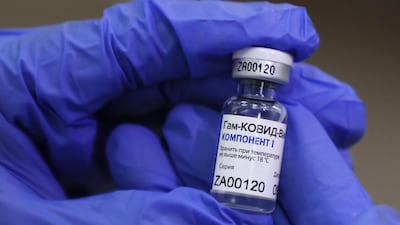
A Russian medic holds a dose of Sputnik V vaccine. The UAE clinical trials into the Russian Sputnik V vaccine have moved into the final monitoring phase. EPA -
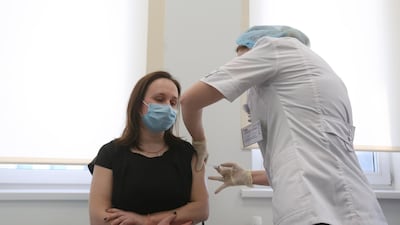
The next step in the UAE trial involves monitoring volunteers’ immune response over 180 days. Bloomberg -
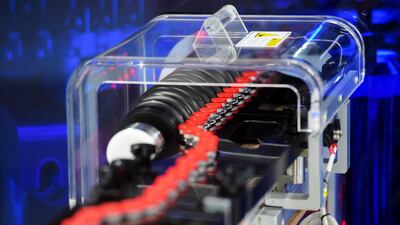
In the UAE 1,000 trial volunteers have received their second dose.The vaccine is produced at Russia's biotech company Biocad in Strelna outside Saint Petersburg. AFP -
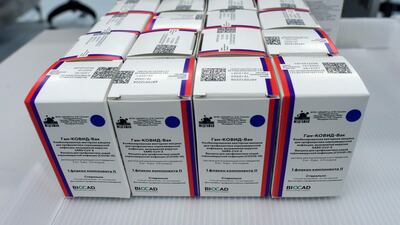
Recent interim results from Phase III of clinical trials into the Sputnik V have shown a high efficacy of 91.6%. AFP -
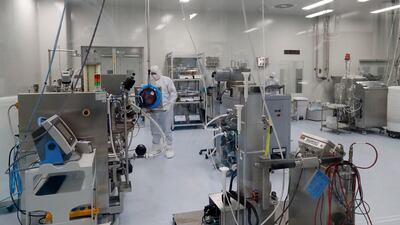
Sputnik V is developed by the Gamaleya Research Institute of Epidemiology and Microbiology in co-ordination with the Russian Defence Ministry. It is tested at Russia's biotechnology company Biocad in Strelna, outside Saint Petersburg. EPA -
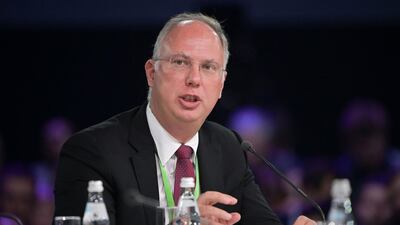
Kirill Dmitriev expects vaccines to be mixed in an attempt to boost dose numbers and tackle new strains. Sputnik / AFP -

A vial of the Sputnik V Covid-19 vaccine. Data published in The Lancet showed the vaccine is safe, and provides strong immunogenicity. Bloomberg -
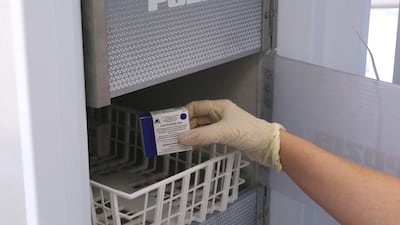
A health worker removes a box containing vials of the Sputnik V Covid-19 vaccine, developed by the Gamaleya National Research Center for Epidemiology and Microbiology, and the Russian Direct Investment Fund. Bloomberg -
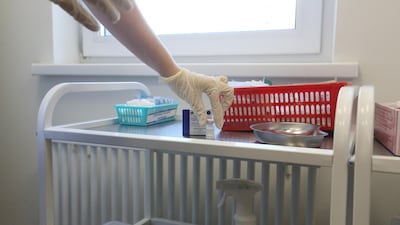
Sputnik V was initially registered for use in Russia in August 2020, making it the first registered Covid-19 vaccine out of 165 being developed across the world. Bloomberg


RDIF partnered last week with Stelis Biopharma, a division of India's Bengaluru-based Strides Pharma, to produce at least 200 million doses of Sputnik.
The company on Friday said it would begin supplies from the third quarter of this year.
“We will also work with RDIF to increase the availability of the vaccine beyond our initial commitments,” said Arun Kumar, founder of the Strides Group.
Gland Pharma, based in Hyderabad city, earlier said it would supply up to 252 million doses of Sputnik V, with delivery expected to begin from the fourth quarter of this year.
India’s Hetero, also based in Hyderabad, signed a deal in November to produce more than 100 million doses of the vaccine.
Other countries producing Sputnik are China, Brazil and South Korea.
The vaccine is administered in two doses given 21 days apart.
Vials can be stored in conventional refrigerators between 2°C and 8°C, making it easier to transport since it does not need cold-chain infrastructure.
Priced at less than $10 per shot, the vaccine is named after the first Soviet space satellite, the Sputnik-1 launched in 1957, and developed by the Gamaleya Research Institute in Moscow.
India has so far approved two vaccines – the Oxford-Astra Zeneca jab produced by the Serum Institute of India and Covaxin, a homegrown vaccine produced by Bharat Biotech. India's drug regulator has asked for more data from the Sputnik V developers.

