• A protester (R) wears a face shield with an image of Victoria's state premier Daniel Andrews on it as speaks to police during an anti-lockdown rally in Melbourne, as the city continues to enforce strict lockdown measure to battle a second wave of COVID-19 coronavirus infections. AFP
    A protester (R) wears a face shield with an image of Victoria's state premier Daniel Andrews on it as speaks to police during an anti-lockdown rally in Melbourne, as the city continues to enforce strict lockdown measure to battle a second wave of COVID-19 coronavirus infections. AFP
  • Cast members wear personal protective equipment as they prepare backstage during the drama "Retrograde Man" in Wuhan, Hubei province, China. The drama, paying tribute to medical staff, portrays a doctor's rescue of coronavirus patients during the lockdown in Wuhan. As there have been no recorded cases of community transmissions since May, life for residents is gradually returning to normal. Getty Images
    Cast members wear personal protective equipment as they prepare backstage during the drama "Retrograde Man" in Wuhan, Hubei province, China. The drama, paying tribute to medical staff, portrays a doctor's rescue of coronavirus patients during the lockdown in Wuhan. As there have been no recorded cases of community transmissions since May, life for residents is gradually returning to normal. Getty Images
  • Medical workers deliver deliver cupcakes to patients infected by the COVID-19 to celebrate new year's day of 2013 on Ethiopian calendar, at the makeshift hospital installed inside Millenium Hall, one of the country's largest event centers, in Addis Ababa, Ethiopia. AFP
    Medical workers deliver deliver cupcakes to patients infected by the COVID-19 to celebrate new year's day of 2013 on Ethiopian calendar, at the makeshift hospital installed inside Millenium Hall, one of the country's largest event centers, in Addis Ababa, Ethiopia. AFP
  • A medical worker brushes the hair of a patient affected with COVID-19 in a Marseille hospital, southern France. As the Marseille region has become France's latest virus hotspot, hospitals are re-activating emergency measures in place when the pandemic first hit to ensure they're able to handle growing new cases. AP Photo
    A medical worker brushes the hair of a patient affected with COVID-19 in a Marseille hospital, southern France. As the Marseille region has become France's latest virus hotspot, hospitals are re-activating emergency measures in place when the pandemic first hit to ensure they're able to handle growing new cases. AP Photo
  • An Indian woman wearing white protective gear mourns after taking a glimpse of her husband's body, a victim of COVID 19, at a cremation ground in Gauhati, India. India reported another record spike of 95,735 new coronavirus infections in the past 24 hours as the virus spreads beyond its major cities. The ministry said the surge in new infections is due to ramping of daily testing that exceeds 1 million now. However, experts caution that India’s outbreak is entering a more dangerous phase as the virus spreads to smaller towns and villages. AP Photo
    An Indian woman wearing white protective gear mourns after taking a glimpse of her husband's body, a victim of COVID 19, at a cremation ground in Gauhati, India. India reported another record spike of 95,735 new coronavirus infections in the past 24 hours as the virus spreads beyond its major cities. The ministry said the surge in new infections is due to ramping of daily testing that exceeds 1 million now. However, experts caution that India’s outbreak is entering a more dangerous phase as the virus spreads to smaller towns and villages. AP Photo
  • People watch as police stand guard in front of the Shrine of Remembrance during an anti-lockdown rally in Melbourne, as the city continues to enforce strict lockdown measure to battle a second wave of COVID-19 coronavirus infections. AFP
    People watch as police stand guard in front of the Shrine of Remembrance during an anti-lockdown rally in Melbourne, as the city continues to enforce strict lockdown measure to battle a second wave of COVID-19 coronavirus infections. AFP
  • A man is detained by police during an anti-lockdown rally in Melbourne, Australia. Anti-lockdown protesters organised a "freedom walk" to demonstrate against Melbourne's current Stage 4 COVID-19 restrictions. While organisers claim the gathering is legal, Victoria police said they would be monitoring protest activity, with anyone considered to be breaching the Chief Health Officer's directives liable for a fine of $1652. Metropolitan Melbourne remains under stage 4 lockdown restrictions, with people only allowed to leave home to give or receive care, shopping for food and essential items, daily exercise and work while an overnight curfew from 8pm to 5am is also in place. The majority of retail businesses are also closed. Other Victorian regions are in stage 3 lockdown. The restrictions, which came into effect from 2 August, were introduced by the Victorian government as health authorities work to reduce community COVID-19 transmissions across the state. Getty Images
    A man is detained by police during an anti-lockdown rally in Melbourne, Australia. Anti-lockdown protesters organised a "freedom walk" to demonstrate against Melbourne's current Stage 4 COVID-19 restrictions. While organisers claim the gathering is legal, Victoria police said they would be monitoring protest activity, with anyone considered to be breaching the Chief Health Officer's directives liable for a fine of $1652. Metropolitan Melbourne remains under stage 4 lockdown restrictions, with people only allowed to leave home to give or receive care, shopping for food and essential items, daily exercise and work while an overnight curfew from 8pm to 5am is also in place. The majority of retail businesses are also closed. Other Victorian regions are in stage 3 lockdown. The restrictions, which came into effect from 2 August, were introduced by the Victorian government as health authorities work to reduce community COVID-19 transmissions across the state. Getty Images
  • An elderly couple wearing face masks to protect against the coronavirus walks at a public park in Beijing. Even as China has largely controlled the outbreak, the coronavirus is still surging across other parts of the world. AP Photo
    An elderly couple wearing face masks to protect against the coronavirus walks at a public park in Beijing. Even as China has largely controlled the outbreak, the coronavirus is still surging across other parts of the world. AP Photo
  • A city worker holds a dog at the animal city shelter in Rio de Janeiro, Brazil. After seeing the number of adoptions go down to zero in the beginning of the new coronavirus pandemic, the Rio city shelter is celebrating the success of their Pet Delivery program. Now, administrators running animal shelter are offering pets through a virtual system that allows prospective owners to browse online and, after choosing a pet, the shelter brings the animal to their homes, bathed, spayed and with all inoculations. AP Photo
    A city worker holds a dog at the animal city shelter in Rio de Janeiro, Brazil. After seeing the number of adoptions go down to zero in the beginning of the new coronavirus pandemic, the Rio city shelter is celebrating the success of their Pet Delivery program. Now, administrators running animal shelter are offering pets through a virtual system that allows prospective owners to browse online and, after choosing a pet, the shelter brings the animal to their homes, bathed, spayed and with all inoculations. AP Photo
  • A member of staff checks the temperature of theatregoers as a precaution against the transmission of the novel coronavirus upon their arrival ahead of a performance of Sleepless the Musical at the Troubadour Wembley Park Theatre in London. At the Troubadour, in Wembley Park, northwest London, on Thursday night, theatre-goers had their temperatures taken and were told to wear face masks throughout the performance. Most British theatres are have not reopened following the coronavirus lockdown but the pop-up venue has been able to adapt to social distancing rules. Its 1,200 capacity has been cut to 400 seats, and a one-way route has been put in place along with hand-washing and disinfecting facilities. Audiences complied and didn't seem to mind. AFP
    A member of staff checks the temperature of theatregoers as a precaution against the transmission of the novel coronavirus upon their arrival ahead of a performance of Sleepless the Musical at the Troubadour Wembley Park Theatre in London. At the Troubadour, in Wembley Park, northwest London, on Thursday night, theatre-goers had their temperatures taken and were told to wear face masks throughout the performance. Most British theatres are have not reopened following the coronavirus lockdown but the pop-up venue has been able to adapt to social distancing rules. Its 1,200 capacity has been cut to 400 seats, and a one-way route has been put in place along with hand-washing and disinfecting facilities. Audiences complied and didn't seem to mind. AFP
  • A member of the "Bora Testar" or Let's Test project, interviews resident Marina Almeida, in the Paraisopolis neighborhood of Sao Paulo, Brazil. The project plans to test up to 600 people for COVID-19 in the low income neighborhood, and to expand to other vulnerable communities in the country, financed by crowdfunding and donations. AP Photo
    A member of the "Bora Testar" or Let's Test project, interviews resident Marina Almeida, in the Paraisopolis neighborhood of Sao Paulo, Brazil. The project plans to test up to 600 people for COVID-19 in the low income neighborhood, and to expand to other vulnerable communities in the country, financed by crowdfunding and donations. AP Photo
  • Maria Hernandez, 38, (top, L) embraces her aunt through a transparent curtain at a Hogar Jardin de Los Abuelitos nursing home as a nurse watches them, in San Salvador, amid the new coronavirus pandemic. According to geriatrician Luis Bermudes, the use of a kind of curtain that allows the elderly guests to be hugged by their relatives without the risk of being infected from COVID-19 is a measure to avoid depression and anxiety. AFP
    Maria Hernandez, 38, (top, L) embraces her aunt through a transparent curtain at a Hogar Jardin de Los Abuelitos nursing home as a nurse watches them, in San Salvador, amid the new coronavirus pandemic. According to geriatrician Luis Bermudes, the use of a kind of curtain that allows the elderly guests to be hugged by their relatives without the risk of being infected from COVID-19 is a measure to avoid depression and anxiety. AFP

Coronavirus: Immunity may only last for months, major study finds


Gillian Duncan
  • English
  • Arabic

Immunity to Covid-19 may only last for a matter of months, raising the prospect of a potential vaccine having to be administered more than once a year.

A large-scale study carried out by Imperial College London, involving 365,000 people, showed antibody levels dropped by a quarter in three months.

Researchers said the results could point to a decline in the immunity of the population, leading to a heightened risk of reinfection.

They stressed that those who have had a confirmed Covid-19 infection should take precautions to protect themselves from contracting it again.

Antibodies produced by the immune system are a crucial line of defence against viruses.

“Our study shows that over time there is a reduction in the proportion of people testing positive for antibodies,” said Professor Paul Elliott, director of the programme at Imperial College London, which carried out the study.

“Testing positive for antibodies does not mean you are immune to Covid-19. It remains unclear what level of immunity antibodies provide, or for how long this immunity lasts.”

The findings build on previous research, which has also found evidence of waning antibodies.

One recent study from researchers at the University of Montreal showed antibody levels in the blood "drop rapidly" after infection.

The Imperial College study involved finger-prick blood tests to check for evidence of past infection in more than 365,000 people.

The tests are randomly and routinely sent to adult volunteers to be carried out at home.

There were 17,576 positive results recorded in three rounds of testing during the study.

Antibody prevalence dropped from 6 per cent, to 4.8 per cent and then 4.4 per cent during the three month period.

The decline in antibodies was seen in all areas of the country and across all age groups, except healthcare workers.

Researchers said that may suggest they received repeated or higher initial exposure to the virus, mounting a stronger immune response.

Studies have shown asymptomatic infections of Covid-19 tend to produce low, and in some cases, even undetectable antibodies, while those who suffer more symptoms mount a stronger immune response.

Higher antibodies appear to last longer.

Among age groups, the smallest drop was seen in the youngest age group, age 18 to 24, while the largest decline was seen in the oldest age group, 75 and above, who have weaker immune systems.

  • A cyclist passes a model of a dhow in Bur Dubai. Chris Whiteoak / The National
    A cyclist passes a model of a dhow in Bur Dubai. Chris Whiteoak / The National
  • A Dubai stallholder at work. Chris Whiteoak / The National
    A Dubai stallholder at work. Chris Whiteoak / The National
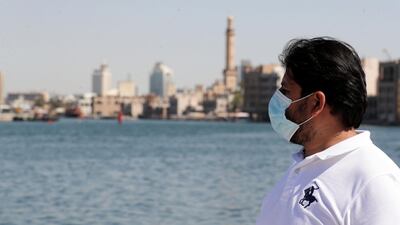
  • A pedestrian looks over the water in Bur Dubai. Chris Whiteoak / The National
    A pedestrian looks over the water in Bur Dubai. Chris Whiteoak / The National
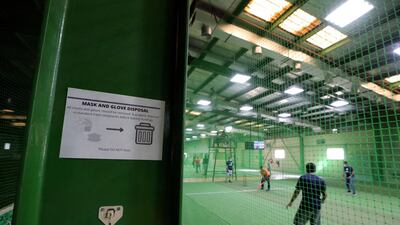
  • People play cricket at a sports area in Al Quoz, Dubai. Chris Whiteoak / The National
    People play cricket at a sports area in Al Quoz, Dubai. Chris Whiteoak / The National
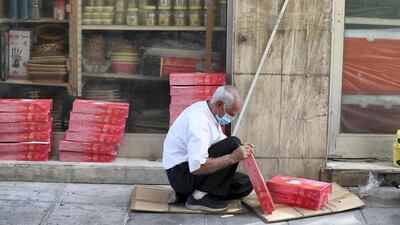
  • A trader sorts out his stock at a Dubai market. Chris Whiteoak / The National
    A trader sorts out his stock at a Dubai market. Chris Whiteoak / The National
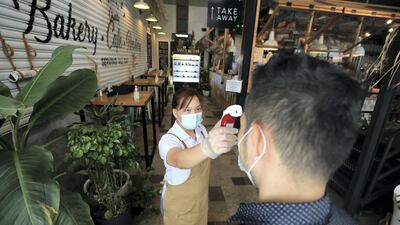
  • A staff member at a bakery performs a temperature check in Downtown, Dubai. Chris Whiteoak / The National
    A staff member at a bakery performs a temperature check in Downtown, Dubai. Chris Whiteoak / The National
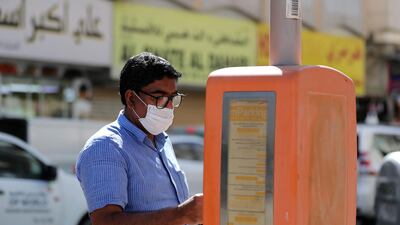
  • A motorist pays for his parking in Bur Dubai. Chris Whiteoak / The National
    A motorist pays for his parking in Bur Dubai. Chris Whiteoak / The National
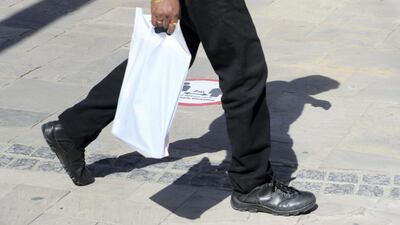
  • A passer by walks near a safe distance sign in Bur Dubai. Chris Whiteoak / The National
    A passer by walks near a safe distance sign in Bur Dubai. Chris Whiteoak / The National
  • The head coach at Front Foot sports cricket academy disinfects the stumps in Al Quoz, Dubai. Chris Whiteoak / The National
    The head coach at Front Foot sports cricket academy disinfects the stumps in Al Quoz, Dubai. Chris Whiteoak / The National

There have been a handful of reinfections of Covid-19 recorded so far.

It is not known how often they occur as experts have said they are likely to be an underestimate, as it requires virus lineages to be sequenced each time, which is not routinely done.

Of the four reinfections cases studied by researchers, symptoms were worse in two patients, suggesting no clear pattern.

Experts have said if SARS-Cov-2, which causes Covid-19, follows the same pattern as other coronaviruses, reinfections will become common.

Research has shown it is possible to catch a cold caused by the same strain months later as immunity fades quickly.

In one study from Kenya in 2018, almost 30 per cent of those who caught one variant of a coronavirus experienced a second reinfection. Around 10 per cent caught it a third time and one person was infected four times.

A number of reinfections occurred only three months after the first bout, and in multiple cases the viral load actually increased, “revealing ineffective protective immune responses after initial exposure”.