


India will tap into electoral data and rely on healthcare centres that immunise millions of children as it prepares for the start of a mammoth Covid-19 vaccination campaign on Saturday.
The numbers involved in the vital public health initiative are staggering.
Described as the world’s largest inoculation campaign, the country has an ambitious target of vaccinating 300 million people – more than 20 per cent of its population – by July.
Police are escorting lorries carrying vaccine vials stored in temperature-controlled units across the country.
India is at a critical juncture: the second most populous nation of nearly 1.4 billion people also has the world’s second-highest number of Covid-19 infections – more than 10 million cases with in excess of 150,000 deaths.
The Indian state of Kerala, which won global praise for keeping the coronavirus death toll low in the early stages of the pandemic, now has the country's highest number of active cases.
Hospitals there will receives vaccine supplies on Wednesday
Technology and electoral records will be used to track those to be vaccinated
-
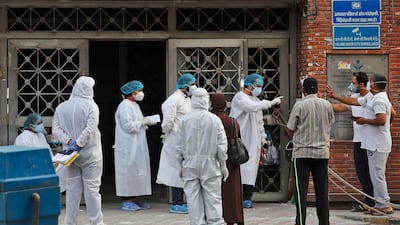
Health workers talk to attendants of a patient at a hospital meant for treating COVID-19 patients in New Delhi, India. AP -
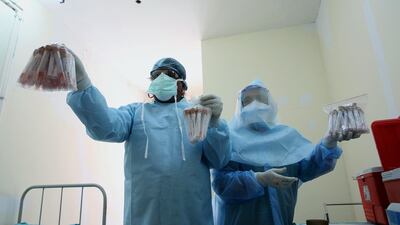
An Indian doctor displays collected samples before conducting COVID-19 routine testing at a hospital in Bangalore, India. EPA -

Members of the Mira Bhayander Municipal Corporation (MBMC) fire brigade spray disinfectant at residential areas during the coronavirus emergency lockdown in Mira Road near Mumbai. EPA -
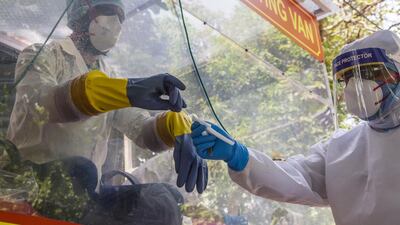
An Indian health official gives a nasal swab to his colleague inside a COVID-19 mobile testing van before collecting samples from people, as India remains under an unprecedented extended lockdown. Getty -
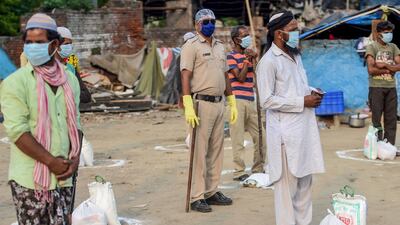
People stand inside marked circles maintaining social distancing to get groceries distributed by police personnel during a government-imposed nationwide lockdown in Faridabad. AFP -
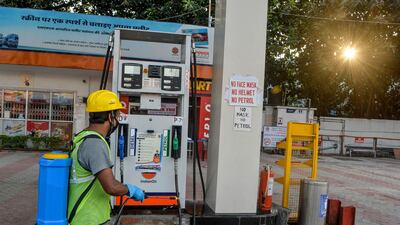
A worker sprays disinfectant on a gas station during a government-imposed nationwide lockdown as a preventive measure against the Covid-19 coronavirus, in Siliguri. AFP -
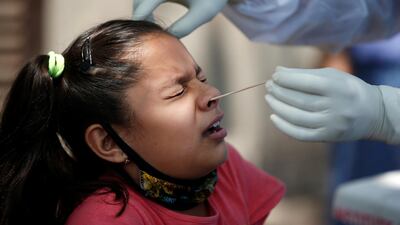
A girl reacts as a doctor wearing protective gloves takes a swab from her to test for the coronavirus disease at a residential area in Ahmedabad, India, Reuters -

President of Tejendra Swaha Sahai Sakhi Mandal women's association, Varshaben Mali checks the quality of facemasks made for Ahmedabad Municipal Corporation. AFP -

Indian paramilitary soldiers patrol a closed wholesale market in the old quarters of Delhi during a nation wide lockdown to control the spread of the coronavirus in New Delhi, India. AP -
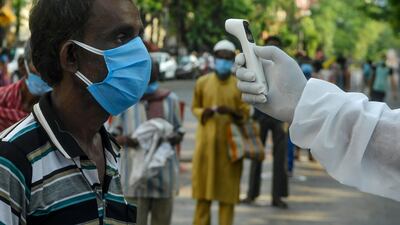
A man gets his body temperature checked as he queues to receive relief material during a lockdown in Kolkata. AFP -
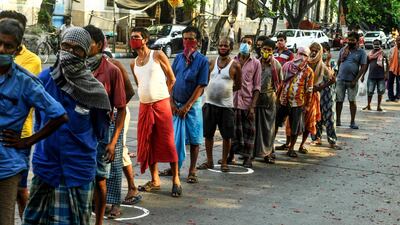
People queue to receive relief material during a government-imposed nationwide lockdown, Kolkata. AFP -

A man cleans his hands with sanitiser before collecting relief material during a government-imposed nationwide lockdown, in Kolkata. AFP


Dr Amar Fettle, who oversees public health emergencies in Kerala, said verification checks would be similar to when citizens enter a polling station to cast their vote during elections.
The latest electoral roll for federal and state elections will be used to identify senior citizens in the countrywide vaccine programme.
"The system will work like a polling booth during voting because when you go to vote for elections, your identity is checked and only then are you given the green signal to vote," he told The National.
“It will be the same with the vaccines. There will be a list of people at each centre. Everything will be cross matched with the CoWin app system to certify them like in a polling booth.”
A federal government CoWin app will manage the massive exercise. Healthcare workers are in the priority group.
More than 400,000 medics in Kerala are among 10 million in the public and private medical sector registered for the first phase of inoculation.
Frontline staff including police, civil defence and sanitation workers are next in line, followed by citizens aged 60 plus, patients with co-morbidities including heart ailments and diabetes and those over 50.
The app has not yet been opened up to the general public.
The country’s universal immunisation policy, called the world’s largest public health programme by Unicef, will provide a strong base for the campaign.
About 27 million newborns are administered vaccines for polio, measles, diphtheria and other childhood diseases in India every year. In addition, about 100 million children between one to five years are given booster doses and 30 million pregnant mothers receive a tetanus shot.
“We will use the centres where we administer vaccine doses to children every year,” Dr Fettle said.
“Before the vaccination, there will be pre-checks for other illness and discussions if people have any questions. They will be kept in a waiting area to be watched for immediate adverse reaction for 30 minutes.”
India prepares to make significant inroads in Covid-19 fight

Prime Minister Narendra Modi tweeted that on January 16, India will take a “landmark step forward”.
With two days to go, states are receiving supplies by air and road of Covishield – developed by AstraZeneca with the University of Oxford – from the western headquarters of the Serum Institute of India, the largest vaccine maker in the world.
The company sold 100 million doses to the Indian government at a special price of 200 rupees (less than $3). It will later be priced at 1,000 rupees a dose on the market.
There have been three dry runs across the country to assess transport and delivery bottlenecks before Saturday’s launch.
Apart from Covishield, a home-grown vaccine called Covaxin, produced by Indian drug maker Bharat Biotech, has received emergency-use approval from the Drug Controller General.
Safety concerns as logistical challenges lie ahead
-
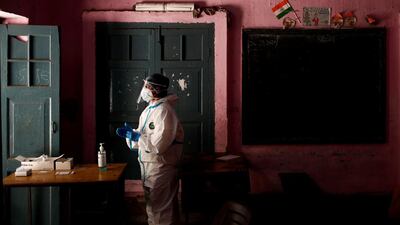
A medical worker waits for the next person to get tested at a school turned into a centre to conduct tests for coronavirus in New Delhi, India. Reuters -
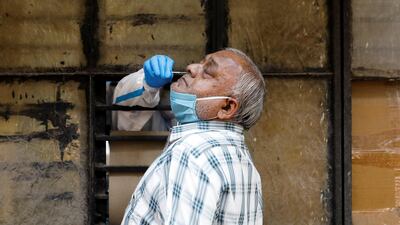
A medical worker collects a sample from a man at a school turned into a centre in New Delhi. Reuters -
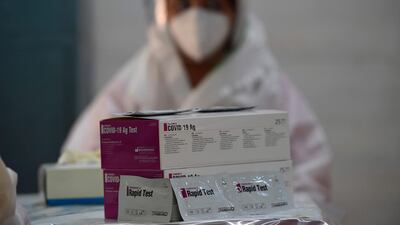
A medical worker waits for people to be tested with rapid antigen test (RAT) for the Covid-19 coronavirus in New Delhi. AFP -
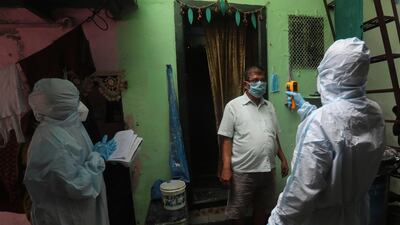
A doctor checks the temperature of a man during a free medical camp in Dharavi, one of Asia's largest slums, in Mumbai. AP -
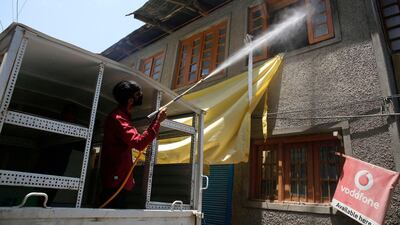
A government municipal worker sprays disinfectant in area during a funeral in Srinagar. EPA -
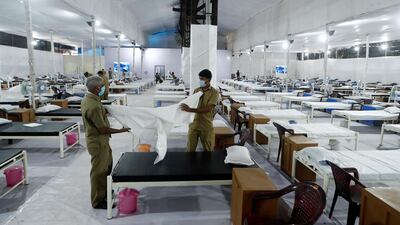
Workers prepare a bed at a recently constructed quarantine facility for patients diagnosed with the Covid-19 in Mumbai. Reuters -

A Hindu devotee performs rituals in Mumbai. AP -
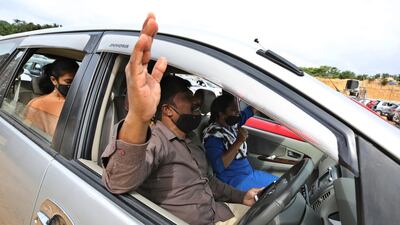
Faithful attend a drive-in mass in an open area of Bethel AG Church as part of maintaining social distancing to prevent the spread of coronavirus in Bengaluru. AP -
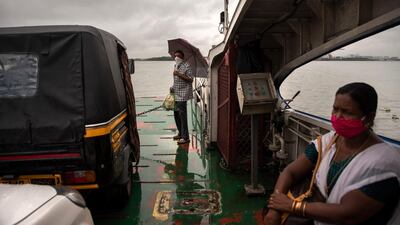
Commuters travel in a ferry during rain in Kochi, Kerala state. AP -
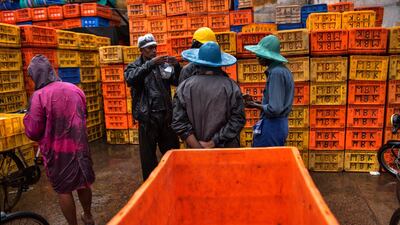
A man prepares to wear his mask as fish vendors chat on a rainy day in Kochi, Kerala state. AP -
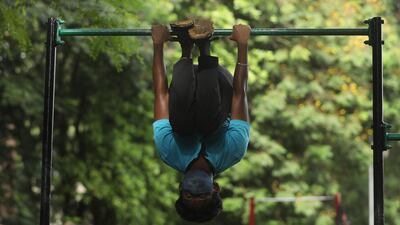
A boy exercises at a park after a few restrictions were relaxed during a lockdown in Mumbai. Reuters -
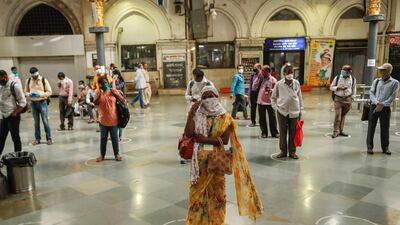
Commuters stand inside circles to maintain social distancing as they wait to board a train at a railway station after some restrictions were lifted in Mumbai. Reuters -
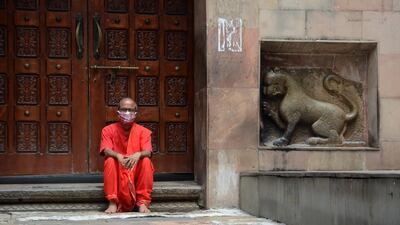
The President of Kamakhya Temple Committee in front of the main entrance gate of Kamakhya temple. AFP


The regulator said the vaccine was safe and approved for restricted use as part of a clinical trial.
But there is concern about rushed approvals since the regulator took the decision without publishing information about its efficacy.
There are also doubts about effective delivery in remote rural areas, staff constraints in smaller states, gaps in logistics and cold-chain management.
The government has expressed confidence in 29,000 cold-chain points where vaccines will be maintained at the recommended temperature.
Large states such as Maharashtra, Kerala and Tamil Nadu say they are well-equipped with walk-in freezers and ice-lined refrigerators.
Transparency is vital as authorities face 'extraordinary undertaking'
Satyajit Rath, a professor at the Indian Institute of Science Education and Research in western Pune city, is calling for transparency.
“We really have no independent data available about how good is the cold storage,” he said.
“Government numbers on many healthcare related matters have turned out to be more optimistic than real, so one worries.
“It’s also entirely unclear how reliable connectivity is in rural India for an app based vaccination to be efficient.
“It would make me happier if the government acknowledged there may be problems and put in place a transparent monitoring system to identify glitches. This is not for the purpose of laying blame but so we work on fixing it.”
Prof Rath described the first-phase plans as an “extraordinary undertaking” given the childhood public health vaccination programme that is carried out over the course of a year.
T. Sundararaman, co-ordinator of the New Delhi-based People's Health Movement, that works with grass-roots activists and academics, said staffing in state centres should be raised to prevent delays in other child immunisation programmes.
“When primary healthcare systems are under-resourced and understaffed, the ability to deliver a vaccine is seriously compromised and this is the real danger,” he said.
“They may push ahead with the Covid vaccination without increasing staff and infrastructure, which means other primary care will suffer. A system needs to be put in place that will deliver without displacing essential child immunisation work.”
The numbers behind India's push to overcome Covid-19
- 300 million Indians to be vaccinated against Covid-19 by July;
- 10 million doctors, nurses, healthcare staff first to be inoculated. Twenty million frontline workers will follow;
- 270 million people over the age of 50 or with serious health conditions will then be vaccinated;
- 5.6 million doses of Oxford-AstraZeneca's Covishield being distributed by the Serum Institute of India;
- 56 million doses will be supplied by the company next month;
- 2-8°C is the temperature the vials must be maintained at;
- 100 million doses of Covishield sold to Indian government;
- 200 rupees (less than $3) is a special price for the first batch to India;
- 1,000 rupees ($13) will be the retail price;
- 70 to 80 million doses is Serum Institute's manufacturing capacity per month;
- 1.36 billion was India's population in mid-2019;
- 10 million Covid-19 case numbers crossed in India;
- 151,000 lives lost due to Covid-19;
- 27 million newborns get immunisation shots annually in public health programme;
- 100 million children between 1-5 years of age receive booster doses;
- 30 million pregnant women get the tetanus vaccination every year

