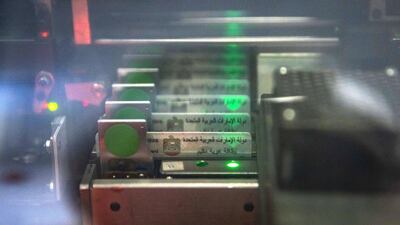

Residents renewing their Emirates IDs can use a digital copy of their card until they receive the new printed version, authorities said on Thursday.
The Federal Authority for Identity and Citizenship said its system was being upgraded to produce the next generation of printed cards and passports.
The digital copy, which is an identical version of the card, is available on the ICA UAE Smart app, which can be downloaded for free from the Apple and Android stores.
"The electronic version can be used via QR Code scanning technology, to enable immediate reading of the card. It is automatically generated when entering the customer’s document wallet in the smart application," said the ICA in a statement released on Wam.
"This process helps service authorities to verify the effectiveness of the issued card in case the printed card is not available."
Services and businesses that require Emirates ID cards have been made aware of the move and instructed to accept the digital version, said the ICA.
People can also download a digital copy of their Emirates ID by signing into the UAE Pass app.
Professors who got the UAE golden visa - in pictures
-
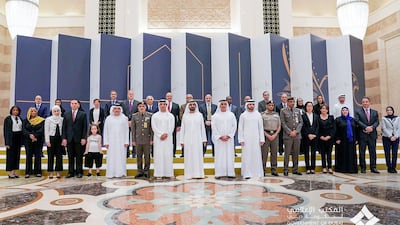
Residents receive special visas at a special ceremony in Abu Dhabi in 2019 attended by Sheikh Mohammed bin Rashid, Sheikh Hamdan bin Mohammed, Sheikh Saif bin Zayed and Sheikh Mansour bin Zayed. Prof Afaf Kamal Eldin (second left), Prof Ghaleb Husseini (fourth from left) and Prof Hassan Arafat (second right) received golden visas. Courtesy: Dubai Media Office -
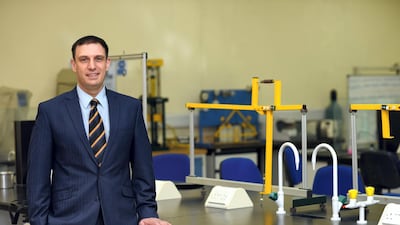
Prof Ghaleb Husseini, a professor of chemical engineering at the American University of Sharjah. He is among the first group of 20 academics granted the golden or long-term visa for the UAE. Prof Husseini’s work includes creating nanocarriers or capsules to transport chemotherapy directly to the site of a cancerous tumour so the patient does not suffer side effects. Courtesy: Prof Ghaleb Husseini -
Prof Ghaleb Husseini teaches chemical engineering at the American University of Sharjah. He is among the first group of 20 academics granted the golden or long-term visa for the UAE. Prof Husseini’s work includes creating nanocarriers or capsules that will transport chemotherapy directly to the site of a cancerous tumour so the patient does not suffer side effects. Courtesy: Prof Ghaleb Husseini -
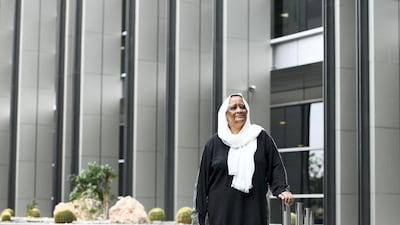
Prof Afaf Kamal Eldin teaches food science at the United Arab Emirates University in Al Ain. She was granted long-term residency and feels closely connected to the UAE and its culture. Khushnum Bhandari for The National -
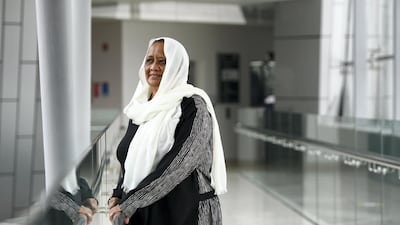
Prof Afaf Kamal Eldin teaches food science at the United Arab Emirates University in Al Ain. She was granted long-term residency and feels closely connected to the UAE and its culture. Khushnum Bhandari for The National -
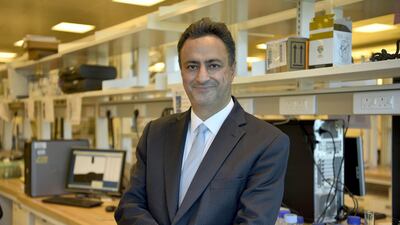
Prof Hassan Arafat teaches chemical engineering at Khalifa University in Abu Dhabi since 2010. Courtesy: Prof Hassan Arafat -

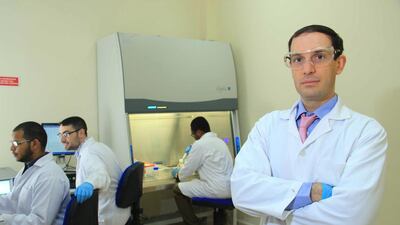
Prof Hassan Arafat, a director at the Centre for Membrane and Advanced Water Technology at Khalifa University in Abu Dhabi, has received UAE citizenship. Here, Prof Arafat is in the laboratory where his research work involves using nanomaterials in the desalination process with the goal of making it cheaper and environmentally friendly. Courtesy: Prof Hassan Arafat



