Close to six million tonnes of food is now produced in the UAE each year, reflecting a growing shift away from a dependence on imported goods.
The food and beverage industry has become the nation’s third largest in terms of manufacturing, with 5.96 million tonnes of food supplied by 568 factories.
Almost half of that production, 2.3 million tonnes, is considered essential and is placing less reliance on imported goods.
Government ministers sitting on the Emirates Food Security Council said food production could grow even further during times of crisis like the coronavirus pandemic.
“The food and beverage industry is one of the most important manufacturing sectors in the country,” said Suhail Al Mazrouei, Minister of Energy and Industry.
“It is key for achieving food security and self-sufficiency in basic commodities.
“Small and medium-sized national factories account for the overwhelming majority of the sector and provide local and regional markets with a variety of primary and secondary products.
“Many major international brands have set up factories in the UAE, taking it as a regional centre for their manufacturing and supply activities.”
Ministers said the flexibility demonstrated by food factories to keep up with demand during the coronavirus outbreak sent a positive message on the nation’s future food security.
Food and beverage manufacturing currently accounts for 30 per cent of total investments and employs 10 per cent of all workers in the UAE industrial sector.
Yields are set to grow further by using technology-enabled production methods such as vertical farms and hydroponic growing techniques.
That aims to increase production of essential foods by 15 per cent by 2021 under the National Food Security Strategy.
Essential items at the core of production include dairy products, cooking oil, dates, fresh poultry, fish and seafood.
Factories in the UAE also produce sugar, tea, pepper, eggs, baby food, wheat, rice, coffee and fresh meat.
The UAE is currently ranked 31st in the Global Food Security Index, created by The Economist Intelligence Unit. It aims to be among the top 10 countries by 2021.
Of the 568 food and beverage factories operating throughout the UAE, 40 are in Abu Dhabi, 315 in Dubai, 77 in Sharjah, 72 in Ajman, 34 in Umm Al Quwain, 23 in Ras Al Khaimah and seven in Fujairah.
Officials said maximum production can top 16.3 million tonnes a year, if required.
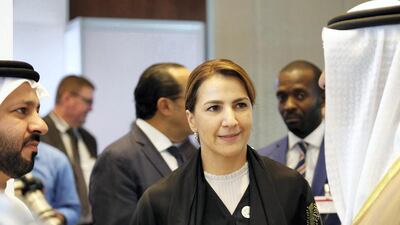
“These production capacity figures reflect the strength of the food processing sector and our ability to triple production if needed,” said Mariam Al Mheiri, Minister of State for Food Security.
“In the coming period we will be striving to enhance the capacities of these factories with various technological capabilities and enable them to diversify the production of products.”
Duringva media briefing last week, Omar Bushahab, head of Dubai Food Security Committee, said the emirate has sufficient essential food stocks to last for more than a year.
He said there is 13 months worth of wheat and stocks of rice to last a further eight months.

Our legal consultant
Name: Hassan Mohsen Elhais
Position: legal consultant with Al Rowaad Advocates and Legal Consultants.
The Florida Project
Director: Sean Baker
Starring: Bria Vinaite, Brooklynn Prince, Willem Dafoe
Four stars
The five pillars of Islam
Revival
Eminem
Interscope
The specs
Engine: 2-litre 4-cylinder and 3.6-litre 6-cylinder
Power: 220 and 280 horsepower
Torque: 350 and 360Nm
Transmission: eight-speed automatic
Price: from Dh136,521 VAT and Dh166,464 VAT
On sale: now
The%20Iron%20Claw
%3Cp%3E%3Cstrong%3EDirector%3A%3C%2Fstrong%3E%20Sean%20Durkin%C2%A0%3C%2Fp%3E%0A%3Cp%3E%3Cstrong%3EStarring%3A%3C%2Fstrong%3E%20Zac%20Efron%2C%20Jeremy%20Allen%20White%2C%20Harris%20Dickinson%2C%20Maura%20Tierney%2C%20Holt%20McCallany%2C%20Lily%20James%3C%2Fp%3E%0A%3Cp%3E%3Cstrong%3ERating%3A%3C%2Fstrong%3E%204%2F5%3C%2Fp%3E%0A
Ten tax points to be aware of in 2026
1. Domestic VAT refund amendments: request your refund within five years
If a business does not apply for the refund on time, they lose their credit.
2. E-invoicing in the UAE
Businesses should continue preparing for the implementation of e-invoicing in the UAE, with 2026 a preparation and transition period ahead of phased mandatory adoption.
3. More tax audits
Tax authorities are increasingly using data already available across multiple filings to identify audit risks.
4. More beneficial VAT and excise tax penalty regime
Tax disputes are expected to become more frequent and more structured, with clearer administrative objection and appeal processes. The UAE has adopted a new penalty regime for VAT and excise disputes, which now mirrors the penalty regime for corporate tax.
5. Greater emphasis on statutory audit
There is a greater need for the accuracy of financial statements. The International Financial Reporting Standards standards need to be strictly adhered to and, as a result, the quality of the audits will need to increase.
6. Further transfer pricing enforcement
Transfer pricing enforcement, which refers to the practice of establishing prices for internal transactions between related entities, is expected to broaden in scope. The UAE will shortly open the possibility to negotiate advance pricing agreements, or essentially rulings for transfer pricing purposes.
7. Limited time periods for audits
Recent amendments also introduce a default five-year limitation period for tax audits and assessments, subject to specific statutory exceptions. While the standard audit and assessment period is five years, this may be extended to up to 15 years in cases involving fraud or tax evasion.
8. Pillar 2 implementation
Many multinational groups will begin to feel the practical effect of the Domestic Minimum Top-Up Tax (DMTT), the UAE's implementation of the OECD’s global minimum tax under Pillar 2. While the rules apply for financial years starting on or after January 1, 2025, it is 2026 that marks the transition to an operational phase.
9. Reduced compliance obligations for imported goods and services
Businesses that apply the reverse-charge mechanism for VAT purposes in the UAE may benefit from reduced compliance obligations.
10. Substance and CbC reporting focus
Tax authorities are expected to continue strengthening the enforcement of economic substance and Country-by-Country (CbC) reporting frameworks. In the UAE, these regimes are increasingly being used as risk-assessment tools, providing tax authorities with a comprehensive view of multinational groups’ global footprints and enabling them to assess whether profits are aligned with real economic activity.
Contributed by Thomas Vanhee and Hend Rashwan, Aurifer
Company profile
Name: Tharb
Started: December 2016
Founder: Eisa Alsubousi
Based: Abu Dhabi
Sector: Luxury leather goods
Initial investment: Dh150,000 from personal savings
Groom and Two Brides
Director: Elie Semaan
Starring: Abdullah Boushehri, Laila Abdallah, Lulwa Almulla
Rating: 3/5
Adele: The Stories Behind The Songs
Caroline Sullivan
Carlton Books
The%20National%20selections
%3Cp%3E%3Cspan%20style%3D%22font-size%3A%2014px%3B%22%3E6pm%3A%20Go%20Soldier%20Go%3Cbr%3E6.35pm%3A%20Man%20Of%20Promise%3Cbr%3E7.10pm%3A%20Withering%3Cbr%3E7.45pm%3A%20Mawj%3Cbr%3E8.20pm%3A%20Falling%20Shadow%3Cbr%3E8.55pm%3A%20Law%20Of%20Peace%3Cbr%3E9.30pm%3A%20Naval%20Power%3Cbr%3E10.05pm%3A%20The%20Attorney%3C%2Fspan%3E%3C%2Fp%3E%0A
MATCH INFO
West Ham United 2 (Antonio 73', Ogbonna 90 5')
Tottenham Hotspur 3 (Son 36', Moura 42', Kane 49')
