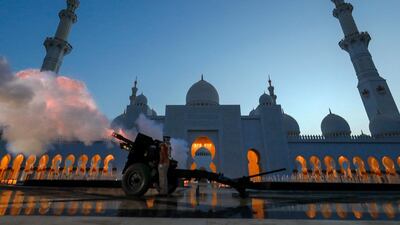
• A cannon is fired at Sheikh Zayed Grand Mosque, Abu Dhabi, to mark the beginning of iftar in 2020. Victor Besa / The National
    A cannon is fired at Sheikh Zayed Grand Mosque, Abu Dhabi, to mark the beginning of iftar in 2020. Victor Besa / The National
  • A Ramadan decoration at one of the bridges on Sheikh Maktoum bin Rashid Street in Ajman. Pawan Singh / The National
    A Ramadan decoration at one of the bridges on Sheikh Maktoum bin Rashid Street in Ajman. Pawan Singh / The National
  • Hundreds of packets of cooked food provided by Guru Nanak Darbar Sikh temple in Jebel Ali for the needy are distributed by Markaz volunteers before iftar at the Naif area of Deira, Dubai. Pawan Singh / The National
    Hundreds of packets of cooked food provided by Guru Nanak Darbar Sikh temple in Jebel Ali for the needy are distributed by Markaz volunteers before iftar at the Naif area of Deira, Dubai. Pawan Singh / The National
  • Volunteers in Fujairah prepare food to be handed out at iftar. Antonie Robertson / The National
    Volunteers in Fujairah prepare food to be handed out at iftar. Antonie Robertson / The National
  • Ramadan decorations on the Corniche, Abu Dhabi, at sunset. Chris Whiteoak / The National
    Ramadan decorations on the Corniche, Abu Dhabi, at sunset. Chris Whiteoak / The National
  • A cannon is fired to mark the breaking of the Ramadan fast at Qasr Al Hosn, Abu Dhabi's oldest standing building. Victor Besa / The National
    A cannon is fired to mark the breaking of the Ramadan fast at Qasr Al Hosn, Abu Dhabi's oldest standing building. Victor Besa / The National
  • Ramadan decorations on the Corniche, Abu Dhabi. Chris Whiteoak / The National
    Ramadan decorations on the Corniche, Abu Dhabi. Chris Whiteoak / The National
  • A woman checks out a Ramadan promotional stand at Carrefour in Yas Mall, Abu Dhabi. Victor Besa / The National
    A woman checks out a Ramadan promotional stand at Carrefour in Yas Mall, Abu Dhabi. Victor Besa / The National
  • Ramadan lamps for sale at the Dhow Harbour and Al Mina Souq, Abu Dhabi. Victor Besa / The National
    Ramadan lamps for sale at the Dhow Harbour and Al Mina Souq, Abu Dhabi. Victor Besa / The National
  • Ramadan decorations in Abu Dhabi. Chris Whiteoak / The National
    Ramadan decorations in Abu Dhabi. Chris Whiteoak / The National
  • The sun sets behind Al Rustmani Mosque in Jebel Ali, Dubai, on the day before Ramadan. Chris Whiteoak / The National
    The sun sets behind Al Rustmani Mosque in Jebel Ali, Dubai, on the day before Ramadan. Chris Whiteoak / The National
  • Ramadan decoration at one of the bridges on Sheikh Maktoum bin Rashid Street in Ajman. Pawan Singh / The National
    Ramadan decoration at one of the bridges on Sheikh Maktoum bin Rashid Street in Ajman. Pawan Singh / The National
  • Ramadan lights on the Corniche in Abu Dhabi. Victor Besa / The National
    Ramadan lights on the Corniche in Abu Dhabi. Victor Besa / The National
  • Ramadan decorations at the Spinneys in Al Barsha, Dubai. Pawan Singh / The National
    Ramadan decorations at the Spinneys in Al Barsha, Dubai. Pawan Singh / The National
  • A Ramadan date shopper at the Abu Dhabi Dates Market at Mina Zayed. Victor Besa / The National
    A Ramadan date shopper at the Abu Dhabi Dates Market at Mina Zayed. Victor Besa / The National
  • Ramadan decorations inside Al Fateh Plaza at the Dhow Harbour and Al Mina Souq, Abu Dhabi. Victor Besa / The National
    Ramadan decorations inside Al Fateh Plaza at the Dhow Harbour and Al Mina Souq, Abu Dhabi. Victor Besa / The National

Ramadan 2021 in UAE: how the holy month will be different this year


Gillian Duncan
  • English
  • Arabic

Muslims will celebrate the second Ramadan of the coronavirus pandemic in only a few weeks’ time.

The holy month this year will be different to the last, although both fall under the cloud of Covid-19.

In 2020, Ramadan began early in the pandemic, when strict rules were in place to protect the public.

Gatherings were not allowed, compelling people to pray at home instead of with others at mosques, which were closed to restrict the spread of the virus.

Muslims instead relied on technology to maintain a sense of togetherness.

With mosques open, celebrations will be different this year, but precautions remain.

So what will Ramadan be like this year?

The National explains.

When is Ramadan expected to begin?

Most probably on April 12, but the date depends on the sighting of the Moon because the Islamic calendar is based on the lunar cycle.

The start of the month is announced once a country’s Moon-sighting committee spots the new crescent.

Ramadan is the ninth month and will last either 29 or 30 days, until the next new moon is seen.

Will mosques be open?

Yes.

Last year, mosques were closed during Ramadan, and Friday prayers resumed in November, long after places of worship reopened.

This year, they will remain open during the holy month, but must be sanitised before and after prayers.

Taraweeh prayers, which are held after isha and counted among Muslims' key optional prayers (sunnah) during Ramadan, will be conducted under the safety measures already announced, including capacity limits and mandatory masks.

Worshippers must also take their own prayer mats and copies of the Quran, and follow social-distancing protocols.

To prevent the spread of coronavirus, large gatherings are not permitted, so there will be no iftar tents or banquets outside mosques, or anywhere else.

Copies of the Quran should not be distributed. It should be read digitally instead.

DUBAI, UNITED ARAB EMIRATES. 1 MARCH 2021. Ali Ibn Abi Talib Mosque on Ali Bin Abi Taleb Street in Bur Dubai. Photo: Reem Mohammed / The National Reporter: Kelly

Can different families celebrate iftar together, as they did before the pandemic?

No, they should not.

On Tuesday, authorities said people should share iftar and suhoor only with others in their own household, rather than gather with extended relatives or groups of friends.

Wider family meet-ups should not be held, and food must not be exchanged between households.

Majlis should also be avoided, and all big gatherings related to Ramadan will be banned.

In previous years, mosques and wealthy families in the UAE erected tents or set up outdoor areas to distribute free iftar meals.

That will not happen this year.

Meals can be distributed only in labour accommodation.

Those who are interested in donating iftar dishes to workers should contact the manager of the housing and a restaurant to arrange the distribution of packed meals.

Restaurants cannot distribute food in or outside the premises.

Intensive inspection campaigns will be conducted during Ramadan and authorities said action will be taken against offenders.

Many low-income workers rely on mosques and these personal tents for meals. Last year, charities delivered food to the homes of people in need instead.

With supermarkets open full time, families will be able to stock up on supplies before Ramadan as usual.

Tents serving iftar and suhoor were a common feature of Ramadan until last year, when they were not permitted to open.

Dubai's Islamic authority cancelled all permits for Ramadan tents in the emirate this year to prevent gatherings.

On Tuesday, federal authorities confirmed communal tents were also banned elsewhere.

In the last 10 days of Ramadan, the situation will be reassessed and restrictions may be eased.

Elderly people and those with chronic diseases that place them at greater risk should continue to avoid public places.

Masks must be worn outside the home at all times.

Sheikh Zayed Grand Mosque after Ramadan in 2018. There will be no iftar tents this year under precautions to prevent the spread of Covid-19. Victor Besa / The National

What about supermarkets, malls and restaurants?

They will remain open during the day.

Restaurants will also remain open throughout the day during Ramadan, for dine-in guests as well as food deliveries.

A Moreish Sweets saleswoman holds a crescent-shaped Ramadan treat at Al Raha Mall, Abu Dhabi, on May 18, 2020. Victor Besa / The National

Will the rules differ depending on the emirate?

Quite possibly.

Crisis authorities in Sharjah, Dubai and Ajman had cancelled Ramadan tents before the federal restrictions were announced on Tuesday.

Sharjah said the distribution of iftar meals was also banned, and can be undertaken only by registered charities. It said inspections will be carried out to ensure compliance.

In Ajman, meals will also be distributed only by charities, this process will be overseen by Ajman Charitable Activities and Endowments Co-ordination Council.

Dubai’s Islamic Affairs and Charitable Activities Department announced the cancellation of Ramadan tents this month to prevent large gatherings.

The best of Ramadan around the world

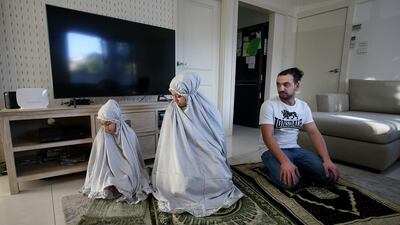
  • Jamil Kaydee, Niina Kaydee and daughter Amelia during afternoon prayer, known as Asr, at their home in Sydney, Australia. Getty Images
    Jamil Kaydee, Niina Kaydee and daughter Amelia during afternoon prayer, known as Asr, at their home in Sydney, Australia. Getty Images
  • An aerial view shows the deserted Grand Mosque in Makkah on the first day of Ramadan. AFP
    An aerial view shows the deserted Grand Mosque in Makkah on the first day of Ramadan. AFP
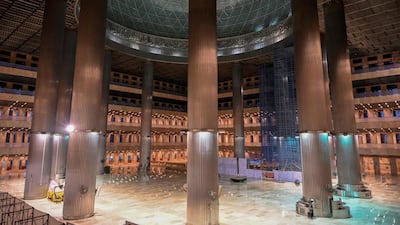
  • A deserted Istiqlal Grand Mosque in Jakarta on the first day of Ramadan. AFP
    A deserted Istiqlal Grand Mosque in Jakarta on the first day of Ramadan. AFP
  • Ramadan is an opportunity to learn something new and reflect. EPA
    Ramadan is an opportunity to learn something new and reflect. EPA
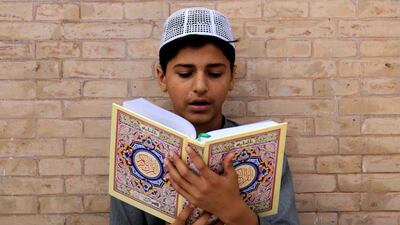
  • Children read the Quran at a Mosque in Herat, Afghanistan. EPA
    Children read the Quran at a Mosque in Herat, Afghanistan. EPA
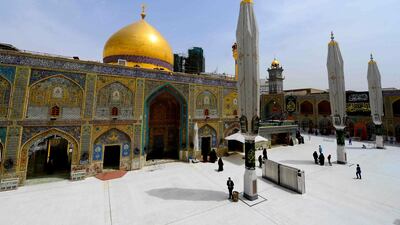
  • People visit the Imam Ali mosque in the central Iraqi city of Najaf, during the Muslim holy month of Ramadan amid the novel coronavirus pandemic crisis. AFP
    People visit the Imam Ali mosque in the central Iraqi city of Najaf, during the Muslim holy month of Ramadan amid the novel coronavirus pandemic crisis. AFP
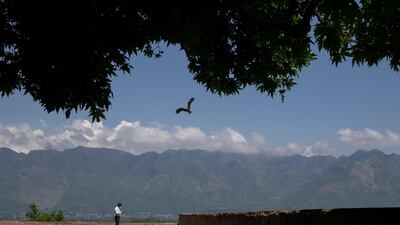
  • A Kashmiri Muslim checks his cell phone after praying outside a closed Muslim shrine in Srinagar. AP Photo
    A Kashmiri Muslim checks his cell phone after praying outside a closed Muslim shrine in Srinagar. AP Photo
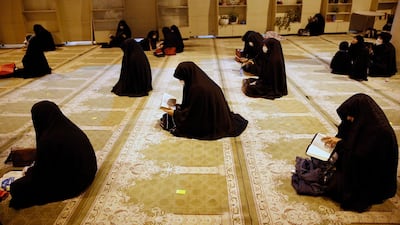
  • Iranian women wearing face masks pray during a religious ceremony called Laylat Al Qadr in a mosque at the Tehran's university, in Tehran. EPA
    Iranian women wearing face masks pray during a religious ceremony called Laylat Al Qadr in a mosque at the Tehran's university, in Tehran. EPA
  • Displaced Syrian family break their fast together for the sunset iftar meal during Muslim holy fasting month of Ramadan. AFP
    Displaced Syrian family break their fast together for the sunset iftar meal during Muslim holy fasting month of Ramadan. AFP
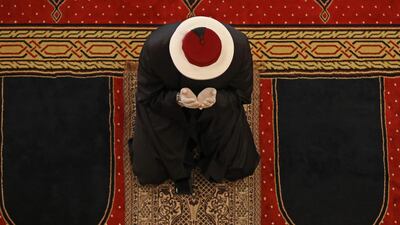
  • A Sunni cleric wearing protective protective gloves, prays at the Mohammed Al-Amin Mosque in Beirut. AFP
    A Sunni cleric wearing protective protective gloves, prays at the Mohammed Al-Amin Mosque in Beirut. AFP
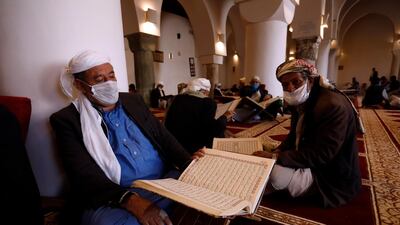
  • People wearing protective face masks read verses from the Quran in Sanaa, Yemen. EPA
    People wearing protective face masks read verses from the Quran in Sanaa, Yemen. EPA
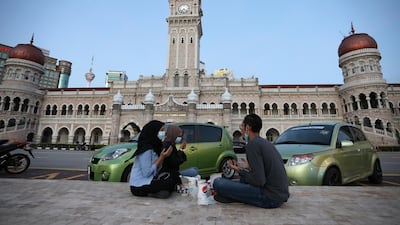
  • Muslims pray before breaking their fast in Kuala Lumpur, Malaysia. REUTERS
    Muslims pray before breaking their fast in Kuala Lumpur, Malaysia. REUTERS
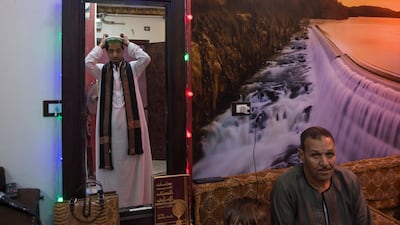
  • A Muslim singer wears his sufi clothing before singing Islamic songs at his home in Cairo, Egypt. EPA
    A Muslim singer wears his sufi clothing before singing Islamic songs at his home in Cairo, Egypt. EPA
  • Volunteers clothed in personal protection equipment prepare iftar meals in Ankara, Turkey. AFP
    Volunteers clothed in personal protection equipment prepare iftar meals in Ankara, Turkey. AFP
  • A canon is fired at the Sheikh Zayed Grand Mosque to mark the beginning of iftar. Victor Besa / The National
    A canon is fired at the Sheikh Zayed Grand Mosque to mark the beginning of iftar. Victor Besa / The National
The five pillars of Islam

1. Fasting 

2. Prayer 

3. Hajj 

4. Shahada 

5. Zakat