
Humanitarian organisations are feeling the pressure like never before as they try to help millions of people whose lives have been turned upside down because of the Covid-19 outbreak.
In the UAE, a number of groups are working towards providing relief to people who have lost their jobs, cannot afford medical treatments or an education.
However, these firms are also experiencing their own challenges as they work amid a pandemic.
The National has spoken to three humanitarian organisations based in Dubai that are playing crucial roles in the ongoing situation.
They are part of the Mohammed bin Rashid Al Maktoum Global Initiatives, a Dubai government project that focuses on helping different areas of society.
Unprecedented rise in foreign aid demand
As the world’s largest humanitarian logistics centre, the International Humanitarian City (IHC) facilitates the first response to a crisis at a global level.
Since the beginning of the year, the group has dispatched more than 365 shipments to more than 100 countries around the world.
Supplies packed into 278 shipments were sent to deal with Covid-19 cases, majority of which were carried out by the World Health Organisation's Dubai outreach.
“When the emergency started, the IHC members had some of their stock items ready,” said Bouran Najem, head of the operations.
“The simple reason behind that are the lessons learnt from Ebola, Sars and other previous emergencies, which recommended and suggested prioritising personal protective equipment and other similar protective items.
“This enabled response to the very first wave of demands in late 2019.”

Since the beginning of the year, the charity has recorded about 30 per cent increase in shipments as compared to the same time last year.
The number of stocks by IHC members has also jumped by 45 per cent.
With an increase in demand, they were faced with challenges like the suspension of passenger flights and the scarcity of storage space.
They created a kitting centre and a chain of refrigerated cells to bolster storage space.
“The challenges on the supply chain is a consequence of the passenger aircraft grounded and the limited capacity of the cargo companies,” said Ms Najem.
The group opted for chartered flights to meet the rising demand.
Sponsoring urgent medical treatments
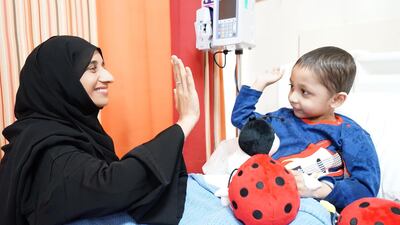
Al Jalila Foundation helps UAE residents who cannot afford treatments for life-threatening illnesses.
With a large number of people facing unemployment and salary cuts because of the Covid-19 impact, many of them no longer had the means to pay for their treatments.
From the start of the year to May 21, the foundation has supported the treatment of 100 people, including 60 children, with medical bills reaching Dh7 million.
Ayesha Shahdad, head of Al Jalila’s patient treatment programme A’awen, explained how a 35-year-old Nigerian expat undergoing kidney dialysis became one of the beneficiaries after her husband lost job during the coronavirus-enforced lockdown.

“She used to be fine financially because her husband was employed and he, along with some family and friends, were paying for her treatment,” she said.
“This year, her husband’s company temporarily closed because it was located in Al Ras, which was the area that was put into lockdown by authorities for the sterilisation programme.”
With no income or other means to pay for her dialysis, Al Jalila stepped forward.
Ms Shahdad said they have received 500 applications since the beginning of the year, which is a significant increase from previous years.
Many patients have listed financial struggles caused by the pandemic as a reason they cannot afford treatments.
Helping blue-collar workers during Ramadan
The Mohammed bin Rashid Al Maktoum Humanitarian and Charity Establishment (MBRCH) has helped low-income workers in the UAE during the pandemic.
The organisation has helped 16,250 workers since the start of the outbreak in the country.
Mohammed Ahmed Alhammadi, executive of relief and foreign aid at the charity, said they had distributed 379,250 meals to 15,150 workers by the end of Ramadan.
However, there were challenges that the volunteers and officers faced as they tried to help thousands who were in need.
“We faced challenges as the crowds of workers pushed through once the food arrived, which compromised the safety guidelines and rules of social distancing to avoid the spread of the virus,” said Mr Alhammadi.

“However, with proper management, supervision, co-ordination and awareness, we were able to facilitate an effective food distribution process at the camps.”
He said another challenge was to ensure that meals and food supplies catered to different tastes and cultures of the workers.
The charity also provided protective gear to enable social distancing at labour camps and distributed blankets and pillows to more than 500 workers.
“Through providing assistance, we aim to alleviate the suffering of those most affected by the Covid-19 outbreak,” said Mr Alhammadi.
“We seek to reduce the pandemic’s negative social and economic repercussions on the most vulnerable segments of the society by safeguarding their lives and easing their financial burden, especially among workers who are most in need of support at this time.”
The charity’s post-Ramadan plan will focus on supporting medical efforts and front-line workers in the country, besides providing necessary aid to low-income groups.

