


A Dubai company has launched an ambitious project to use drone technology to plant one million ghaf tree seeds across the UAE in an effort to combat climate change.
Fuel-delivery company Cafu is behind the project that will send out drones to plant the ghaf tree seeds by firing them into the ground at a speed of 288 kilometres per hour.
A senior figure from the company said the two-year strategy would involve swarms of drones launching the seeds into the ground from a height of 10 metres.
The company has already completed the first two rounds of the programme with drone seeding taking place in the Mleiha Desert, Sharjah.
“The key benefit we hope to create is to discover a new way to plant trees in a cost-effective way,” said Cafu general manager Antonio Al Asmar.
“We want to show that planting seeds by drone technology is a much more efficient method than using hundreds of people to do the same task.”
The drones fire a custom-made “seedball” into the surface of the desert, using pneumatic power to ensure they are embedded at least 1 centimetre in the ground.
Mr Al Asmar said he hoped the project could be adopted by other countries over time, if successful.
He was unable to give an exact cost of the project but estimated it would run to “hundreds of thousands of dirhams” at the very least.
“If we can make it work here in the desert environment, there is no limit to where we can make it work,” said Mr Al Asmar.
“For now, though, we want to prove it works here and then take it to other areas. I see a lot of potential for it. There is a lot of time-consuming manual labour involved in the agricultural industry that could be made much more efficient.”
A commitment to combating climate change

Mr Al Asmar said it was right that, as a fossil fuel company, it works to negate the impact of its industry on the environment.
“We are absolutely committed to tackling climate change and this is our way of contributing,” he said.
“People might see the Cafu project as being cynical when we are delivering fuel in a truck but what we offer actually helps the environment.
“Our model is more efficient than cars going to the gas station: one vehicle filling 200 cars is better than 200 cars going and filling at the gas station.”
The company’s founder and chief executive said the drone project was in keeping with its ethos to promote sustainable practices.
“Our motivation, since the time we launched in 2018, has been to set convenience in motion to make life better for our customers and residents, not just through our services, but through our ethos and values,” said Rashid Al Ghurair, founder of Cafu.
“The Ghaf Tree Project, which forms the central pillar of our sustainability deal, is very close to my heart and I am happy to see the impact we are making on the UAE through this project.”
Life on an organic farm in Sharjah
-
-

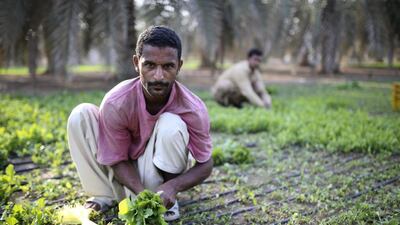
“We owned the farm and the animals ourselves; I grew up on the farm. We didn’t use chemicals at all, but there was nothing at that time to certify us as organic. We applied later, and got it and turned the farm into a business,” says Al Owais. -

The farm keeps chickens for their eggs, 60 sheep and goats, and one cow, which he uses to get his daily fix of fresh milk and to make cheese. -
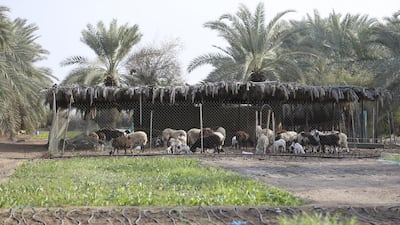
“The driver goes every day to get the fresh milk. The animals are a hobby for me. I know people living here for more than 10 years, and they have meat at my house and they say it’s the best meat here,” says Al Owais. -
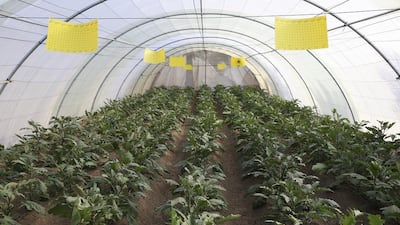
The larger farm is 4.65 hectares in Al Dhaid, employing 50 staff, and the smaller is 2.5 hectares in Al Zubair. They yield more than 100 kilograms of produce per day during the busiest periods. There are 35 greenhouses on the site, most of them protecting cucumbers. -
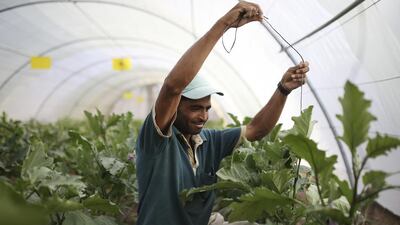
“We get our vegetables tested by the Government,” Al Owais explains. “They have their own labs and they tell us for how long the food will last. Every year, we renew the certificate and the farm is tested; the sand, the fertiliser, the food.” -

“I can see now that it’s changing,” Al Owais says. “Day by day, they are getting it. There are 25 farms in Abu Dhabi, but they sell very little in Abu Dhabi; they sell it all in Dubai. More than 50 per cent of our stuff goes to Dubai. Every day, three cars go to Dubai and one goes to Sharjah and Ajman.”



