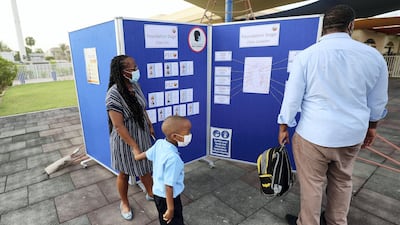
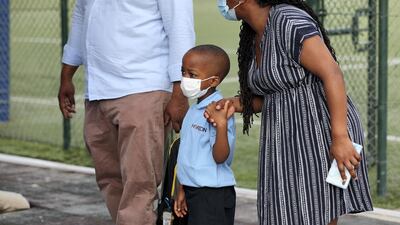
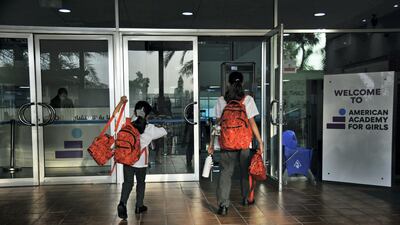
UAE schools may continue with a form of blended learning in the next academic year because of the coronavirus pandemic, Hussain Al Hammadi, Minister for Education, said.
He said he firmly hoped to see all pupils back in class in September 2021 – but that it was too early to be sure.
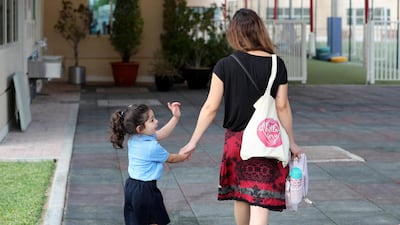
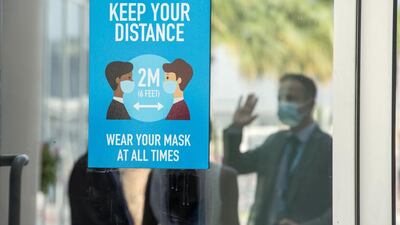
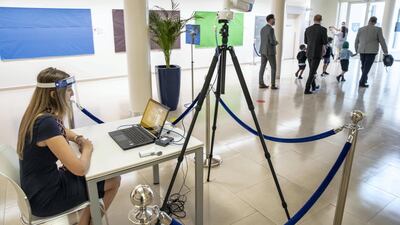
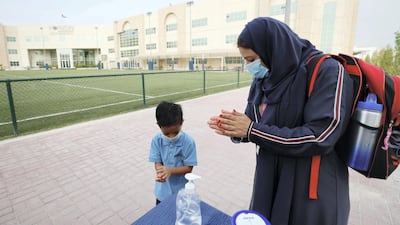
At present, most government-run schools are closed, while private school operators are running a mix of online learning and in-class teaching.
The expectation is we will be back to normal. But you are aware with this pandemic nothing is for sure
But the model for next year is expected to be the closest to normality since February 2020, when the pandemic disrupted global education.
"Next year, hopefully, we are back to normal, but it's still too early to call," he told The National.
"The expectation is we will be back to normal. But you are aware, with this pandemic, nothing is for sure.
"For now, we have some schools selecting physical attendance. And parents can choose [whether to send their children], since we are still in pandemic."
A major vaccine drive means 52 per cent of the population is protected against coronavirus. Much of the remainder is forecast to be inoculated by the autumn.
Mr Al Hammadi said despite the disruption during the pandemic, teachers, parents and the country's leaders had ensured pupils continued their education.
A Ministry of Education representative said that the decision would be based on the pandemic situation later this year.
"The nature of school attendance in the next academic year depends on the health conditions," it said.
"We cannot determine or predict now how it is going to be. The matter is subject to following the health developments one step at a time.
"The decision will surely be in the interest of our students and teaching staff."
Earlier, on Abu Dhabi's Al Emarat TV, he said many schools were investing in e-learning, digital whiteboards and video conferencing when the pandemic hit.
But there was still a major push required in March and April last year when the scale of coronavirus became clear.
"So the groundwork was there but was implanted in schools," he said.
"When Covid happened, the leadership [made decisions] for the safety of the students and teachers and for a safer environment and for the continuation of education."
At present, all schools in the Northern Emirates are closed after surges in several areas.
In Dubai, private school head teachers have the authority to operate a mix of distance learningand in-class lessons.
Many schools continue to run a blend of e-learning and have pupils in some days. Isolated outbreaks in recent months led several to close and reopen, in consultation with the authorities.
In Abu Dhabi, some schools operate a mix of in-person learning and home studies, and some are back full-time.
INDIA'S%20TOP%20INFLUENCERS
%3Cp%3E%3Cstrong%3EBhuvan%20Bam%3C%2Fstrong%3E%3Cbr%3E%3Ca%20href%3D%22https%3A%2F%2Fwww.instagram.com%2Fbhuvan.bam22%2F%3Fhl%3Den%22%20target%3D%22_self%22%3EInstagram%3C%2Fa%3E%20followers%3A%2016.1%20million%3Cbr%3EBhuvan%20Bam%20is%20a%2029-year-old%20comedian%20and%20actor%20from%20Delhi%2C%20who%20started%20out%20with%20YouTube%20channel%2C%20%E2%80%9CBB%20Ki%20Vines%E2%80%9D%20in%202015%2C%20which%20propelled%20the%20social%20media%20star%20into%20the%20limelight%20and%20made%20him%20sought-after%20among%20brands.%3Cbr%3E%3Cstrong%3EKusha%20Kapila%3C%2Fstrong%3E%3Cbr%3E%3Ca%20href%3D%22https%3A%2F%2Fwww.instagram.com%2Fkushakapila%2F%3Fhl%3Den%22%20target%3D%22_self%22%3EInstagram%3C%2Fa%3E%20followers%3A%203.1%20million%3Cbr%3EKusha%20Kapila%20is%20a%20fashion%20editor%20and%20actress%2C%20who%20has%20collaborated%20with%20brands%20including%20Google.%20She%20focuses%20on%20sharing%20light-hearted%20content%20and%20insights%20into%20her%20life%20as%20a%20rising%20celebrity.%3Cbr%3E%3Cstrong%3EDiipa%20Khosla%3C%2Fstrong%3E%3Cbr%3E%3Ca%20href%3D%22https%3A%2F%2Fwww.instagram.com%2Fdiipakhosla%2F%3Fhl%3Den%22%20target%3D%22_self%22%3EInstagram%3C%2Fa%3E%20followers%3A%201.8%20million%3Cbr%3EDiipa%20Khosla%20started%20out%20as%20a%20social%20media%20manager%20before%20branching%20out%20to%20become%20one%20of%20India's%20biggest%20fashion%20influencers%2C%20with%20collaborations%20including%20MAC%20Cosmetics.%3Cbr%3E%3Cstrong%3EKomal%20Pandey%3Cbr%3E%3C%2Fstrong%3E%3Ca%20href%3D%22https%3A%2F%2Fwww.instagram.com%2Fkomalpandeyofficial%2F%3Fhl%3Den%22%20target%3D%22_self%22%3EInstagram%3C%2Fa%3E%20followers%3A%201.8%20million%3Cbr%3EKomal%20Pandey%20is%20a%20fashion%20influencer%20who%20has%20partnered%20with%20more%20than%20100%20brands%2C%20including%20Olay%20and%20smartphone%20brand%20Vivo%20India.%3Cbr%3E%3Cstrong%3ENikhil%20Sharma%3C%2Fstrong%3E%3Cbr%3E%3Ca%20href%3D%22https%3A%2F%2Fwww.instagram.com%2Fnikkkhil%2F%3Fhl%3Den%22%20target%3D%22_self%22%3EInstagram%3C%2Fa%3E%20followers%3A%201.4%20million%3Cbr%3ENikhil%20Sharma%20from%20Mumbai%20began%20his%20online%20career%20through%20vlogs%20about%20his%20motorcycle%20trips.%20He%20has%20become%20a%20lifestyle%20influencer%20and%20has%20created%20his%20own%20clothing%20line.%3Cbr%3E%3Cem%3ESource%3A%20Hireinfluence%2C%20various%3C%2Fem%3E%3Cbr%3E%3C%2Fp%3E%0A
Avatar: Fire and Ash
Director: James Cameron
Starring: Sam Worthington, Sigourney Weaver, Zoe Saldana
Rating: 4.5/5
Honeymoonish
%3Cp%3E%3Cstrong%3EDirector%3A%3C%2Fstrong%3E%20Elie%20El%20Samaan%3C%2Fp%3E%0A%3Cp%3E%3Cstrong%3EStarring%3A%20%3C%2Fstrong%3ENour%20Al%20Ghandour%2C%20Mahmoud%20Boushahri%3C%2Fp%3E%0A%3Cp%3E%3Cstrong%3ERating%3A%3C%2Fstrong%3E%203%2F5%3C%2Fp%3E%0A
Company%20Profile
%3Cp%3E%3Cstrong%3ECompany%20name%3A%3C%2Fstrong%3E%20Cargoz%3Cbr%3E%3Cstrong%3EDate%20started%3A%3C%2Fstrong%3E%20January%202022%3Cbr%3E%3Cstrong%3EFounders%3A%3C%2Fstrong%3E%20Premlal%20Pullisserry%20and%20Lijo%20Antony%3Cbr%3E%3Cstrong%3EBased%3A%3C%2Fstrong%3E%20Dubai%3Cbr%3E%3Cstrong%3ENumber%20of%20staff%3A%3C%2Fstrong%3E%2030%3Cbr%3E%3Cstrong%3EInvestment%20stage%3A%3C%2Fstrong%3E%20Seed%3C%2Fp%3E%0A
COMPANY%20PROFILE
%3Cp%3E%3Cstrong%3ECompany%20name%3A%3C%2Fstrong%3E%20Sav%3Cbr%3E%3Cstrong%3EStarted%3A%3C%2Fstrong%3E%202021%3Cbr%3E%3Cstrong%3EFounder%3A%3C%2Fstrong%3E%20Purvi%20Munot%3Cbr%3E%3Cstrong%3EBased%3A%3C%2Fstrong%3E%20Dubai%3Cbr%3E%3Cstrong%3EIndustry%3A%3C%2Fstrong%3E%20FinTech%3Cbr%3E%3Cstrong%3EFunding%3A%3C%2Fstrong%3E%20%24750%2C000%20as%20of%20March%202023%3Cbr%3E%3Cstrong%3EInvestors%3A%3C%2Fstrong%3E%20Angel%20investors%3C%2Fp%3E%0A
COMPANY%20PROFILE
%3Cp%3E%3Cstrong%3ECompany%3A%3C%2Fstrong%3E%20Vault%3Cbr%3E%3Cstrong%3EStarted%3A%20%3C%2Fstrong%3EJune%202023%3Cbr%3E%3Cstrong%3ECo-founders%3A%20%3C%2Fstrong%3EBilal%20Abou-Diab%20and%20Sami%20Abdul%20Hadi%3Cbr%3E%3Cstrong%3EBased%3A%20%3C%2Fstrong%3EAbu%20Dhabi%3Cbr%3E%3Cstrong%3ELicensed%20by%3A%3C%2Fstrong%3E%20Abu%20Dhabi%20Global%20Market%3Cbr%3E%3Cstrong%3EIndustry%3A%20%3C%2Fstrong%3EInvestment%20and%20wealth%20advisory%3Cbr%3E%3Cstrong%3EFunding%3A%20%3C%2Fstrong%3E%241%20million%3Cbr%3E%3Cstrong%3EInvestors%3A%20%3C%2Fstrong%3EOutliers%20VC%20and%20angel%20investors%3Cbr%3E%3Cstrong%3ENumber%20of%20employees%3A%20%3C%2Fstrong%3E14%3Cbr%3E%3C%2Fp%3E%0A
Mercer, the investment consulting arm of US services company Marsh & McLennan, expects its wealth division to at least double its assets under management (AUM) in the Middle East as wealth in the region continues to grow despite economic headwinds, a company official said.
Mercer Wealth, which globally has $160 billion in AUM, plans to boost its AUM in the region to $2-$3bn in the next 2-3 years from the present $1bn, said Yasir AbuShaban, a Dubai-based principal with Mercer Wealth.
“Within the next two to three years, we are looking at reaching $2 to $3 billion as a conservative estimate and we do see an opportunity to do so,” said Mr AbuShaban.
Mercer does not directly make investments, but allocates clients’ money they have discretion to, to professional asset managers. They also provide advice to clients.
“We have buying power. We can negotiate on their (client’s) behalf with asset managers to provide them lower fees than they otherwise would have to get on their own,” he added.
Mercer Wealth’s clients include sovereign wealth funds, family offices, and insurance companies among others.
From its office in Dubai, Mercer also looks after Africa, India and Turkey, where they also see opportunity for growth.
Wealth creation in Middle East and Africa (MEA) grew 8.5 per cent to $8.1 trillion last year from $7.5tn in 2015, higher than last year’s global average of 6 per cent and the second-highest growth in a region after Asia-Pacific which grew 9.9 per cent, according to consultancy Boston Consulting Group (BCG). In the region, where wealth grew just 1.9 per cent in 2015 compared with 2014, a pickup in oil prices has helped in wealth generation.
BCG is forecasting MEA wealth will rise to $12tn by 2021, growing at an annual average of 8 per cent.
Drivers of wealth generation in the region will be split evenly between new wealth creation and growth of performance of existing assets, according to BCG.
Another general trend in the region is clients’ looking for a comprehensive approach to investing, according to Mr AbuShaban.
“Institutional investors or some of the families are seeing a slowdown in the available capital they have to invest and in that sense they are looking at optimizing the way they manage their portfolios and making sure they are not investing haphazardly and different parts of their investment are working together,” said Mr AbuShaban.
Some clients also have a higher appetite for risk, given the low interest-rate environment that does not provide enough yield for some institutional investors. These clients are keen to invest in illiquid assets, such as private equity and infrastructure.
“What we have seen is a desire for higher returns in what has been a low-return environment specifically in various fixed income or bonds,” he said.
“In this environment, we have seen a de facto increase in the risk that clients are taking in things like illiquid investments, private equity investments, infrastructure and private debt, those kind of investments were higher illiquidity results in incrementally higher returns.”
The Abu Dhabi Investment Authority, one of the largest sovereign wealth funds, said in its 2016 report that has gradually increased its exposure in direct private equity and private credit transactions, mainly in Asian markets and especially in China and India. The authority’s private equity department focused on structured equities owing to “their defensive characteristics.”