

The UAE had to drastically upgrade its internet speed and coverage to ensure all 1.2 million pupils and students could continue their education online when Covid-19 broke out.
When cases of the coronavirus slowly began to rise, the government acted quickly and instated distance learning for schools and universities.
It was March 4 and the UAE had 27 confirmed cases of Covid-19.
The UAE was well prepared for distance learning because smart-learning initiatives have been in place since 2012, the Minister of Education, Hussain Al Hammadi, said on Saturday.
The Mohammed bin Rashid Smart Learning Initiative was established eight years earlier and offered pupils the option to study using devices.
It gave the country a solid base from which to build a wide-scale model.
"We really invested a lot a long time ago in all these infrastructure requirements to enable us to continue educating in different scenarios," Mr Al Hammadi said during a panel discussion titled "Pushing the limits in the healthcare, telecoms and education sectors: bent, but not broken?" at the Global Manufacturing and Industrialisation Summit.
"We had 1.2 million-plus students in the general education that we had to shift, within two weeks, to this platform for full 100 per cent learning.
"We had never taught this big a number through distance learning. We had to upgrade internet speed by almost 100 per cent.”
The country did this by developing a satellite operations centre to ensure pupils across the country had access to the internet at all times.
Free satellite services were set up so pupils in remote areas of the emirate could also continue their education.
It made “a big difference in our education system", Mr Al Hammadi said.
The ministry also set up online seminars presented by well-known artists and athletes, to motivate pupils and students to study.
"We wanted to keep the kids engaged. we wanted them to have sports, exercise, art competitions," Mr Al Hammadi said.
Locally known musicians and athletes spoke to large groups of pupils in video conferences.
"This was very positive. We were not able to do in the past,” Mr Al Hammadi said.
Despite the quick migration to e-learning, he said Covid-19 showed that more needed to be done.
“We are still not doing enough," he said. "The current foundation is not as strong as we might think.
"According to the International Telecommunication Union [a UN agency], just under half of the world's population is still offline and has no access to digital technologies.
"Children in remote areas have been unable to join online classes during the pandemic."
Schools reopen across the UAE:
-
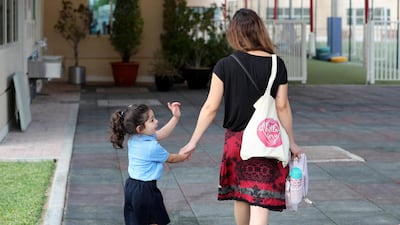
Parents see off their children off to classes for the first time since March in August 2020. Chris Whiteoak / The National -

Naividh Pillai, aged 3, looks a little bewildered as he arrives for his first day at Gems Wellington Academy with sister Alaikha and parents Meera and Deepesh. Antonie Robertson / The National -
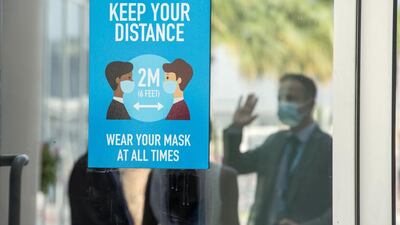
Gems Wellington Academy in Al Khail opens for the start of the school year. Antonie Robertson/The National -
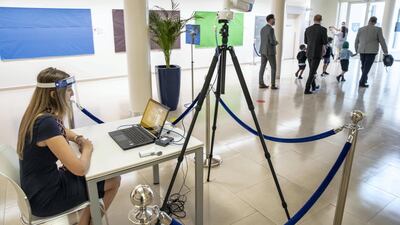
Gems Wellington Academy in Al Khail opens for the start of the school year. Thermal monitors at the entrance scan people for signs of fever or high temperature. Antonie Robertson/The National -
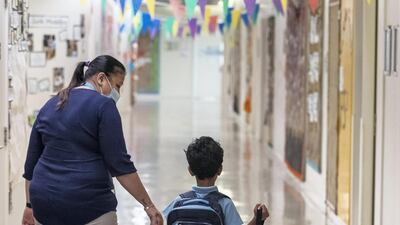
Gems Wellington Academy in Al Khail opens for the start of the school year. Antonie Robertson / The National -

A pupil wearing a colourful face shield arrives at Horizon International School in Dubai on Sunday. Chris Whiteoak / The National -
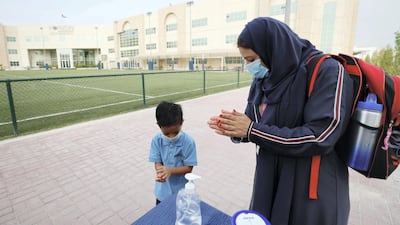
A mother helps her son sanitise his hands as he arrives at Horizon school. Chris Whiteoak / The National -
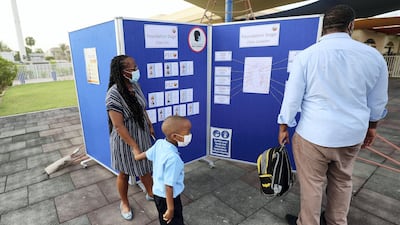
Children arrive for school at Horizon International School in Dubai. Chris Whiteoak / The National -
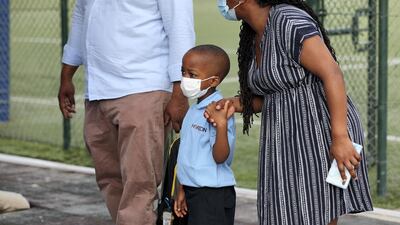
Children arrive for school at Horizon International School in Dubai. Chris Whiteoak / The National -
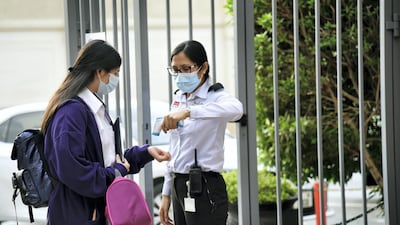
A pupil gets her temperature checked at the entrance of Al Mizhar American Academy. Shruti Jain for The National -
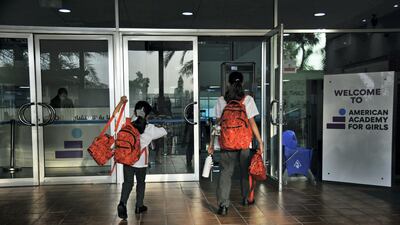
Pupils return to Al Mizhar American Academy in Dubai. Shruti Jain for The National -
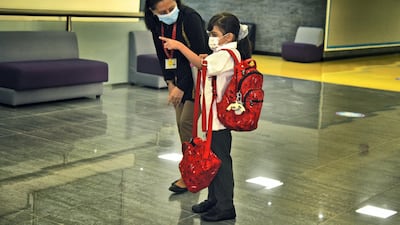
A staff member assists a pupil as Al Mizhar American Academy. Shruti Jain for The National -
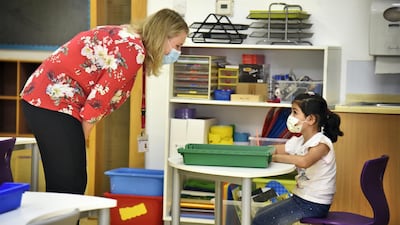
Tarryn Patel, a homeroom teacher from South Africa, attends to her grade 1 pupil at Al Mizhar American Academy. Shruti Jain for The National -
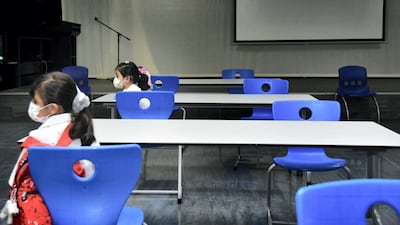
Pupils are spaced apart at the cafetaria at Al Mizhar American Academy. Shruti Jain for The National



