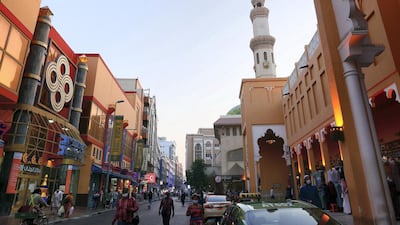
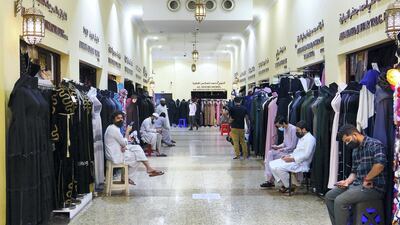
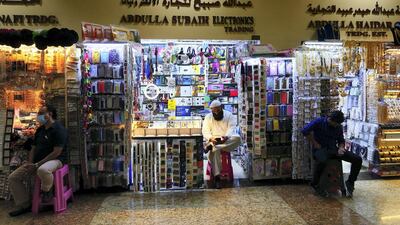
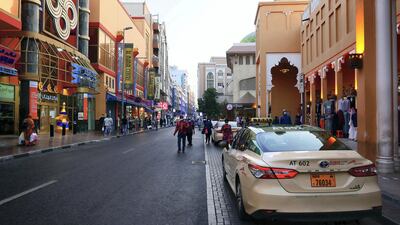
• Dubai Police are looking to replace dolly carts used by porters in the Naif neighbourhood with licensed vehicles to prevent theft and accidents. All photos by Antonie Robertson / The National
    Dubai Police are looking to replace dolly carts used by porters in the Naif neighbourhood with licensed vehicles to prevent theft and accidents. All photos by Antonie Robertson / The National
  • Col Omar Moosa Ashoor, the deputy head of Naif police station, says some porters overstay their work visas. A few of them also steal a box or two from the goods they ferry.
    Col Omar Moosa Ashoor, the deputy head of Naif police station, says some porters overstay their work visas. A few of them also steal a box or two from the goods they ferry.
  • A porter loads a big box on a cart in Deira on June 22.
    A porter loads a big box on a cart in Deira on June 22.
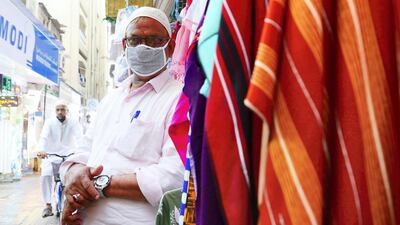
  • Mohammed Naseem, a spice shop keeper, says he always keeps a record of goods that he gives to the porter.
    Mohammed Naseem, a spice shop keeper, says he always keeps a record of goods that he gives to the porter.
  • A porter pushes a trolley in Deira on June 22.
    A porter pushes a trolley in Deira on June 22.
  • Some shop owners find Dh30 porter service affordable.
    Some shop owners find Dh30 porter service affordable.
  • A bikers unit was launched by Dubai Police about five years ago to reduce incidents caused by porters.
    A bikers unit was launched by Dubai Police about five years ago to reduce incidents caused by porters.

Dubai Police to replace street porter carts with 'Uber-style' pick-ups in anti-theft campaign


  • English
  • Arabic

Hundreds of traditional dolly carts used by porters in one of the oldest districts of Dubai are to be replaced by small, modern, Uber-style pick-up trucks.

Dubai Police said the carts would be taken off the streets of Naif, and shoppers would soon be able to use licensed vehicles ordered through a mobile app.

The move will help to regulate the work of porters and prevent theft and accidents in the area, officials said.

Police recently employed new tactics to eradicate crime in the neighbourhood, including the recent introduction of a plainclothes police unit.

Some men overstaying their visas work as porters. They sometimes steal a box or two from goods they are carrying, thinking no one will notice

Hundreds of shops selling goods such as spices, carpets and clothing are spread across Naif, and many owners use the services of porters for as little as Dh30 ($8).

"Some men overstaying their visas work as porters. They sometimes steal a box or two from goods they are carrying, thinking no one will notice," said Col Omar Ashour, deputy head of Naif police station.

“The proposal suggests replacing carts with vehicles that look like small pick-up trucks that can be ordered through a dedicated app.

"Each will have to be registered and carry a number plate to help track its route."

Crime is rare in Dubai, Abu Dhabi and Sharjah – three of the 10 safest cities in the world – but police said that, inevitably, opportunistic thefts happen.

A Dubai Police bike unit was launched about five years ago to reduce incidents involving porters.

Authorities handled 354 cases of theft and accidents in the area in the first three months of this year, compared with 676 last year.

“Random moving of goods on dolly carts has caused congestion, accidents and thefts, but since we launched our bikers unit, these problems dropped significantly,” Col Ashour said.

  • On April 26, it will be one year since the Covid-19 lockdown in Naif, one of Dubai's oldest districts, was lifted. 'The National' visited the neighbourhood to see how residents and businesses are faring. All photos by Pawan Singh / The National
    On April 26, it will be one year since the Covid-19 lockdown in Naif, one of Dubai's oldest districts, was lifted. 'The National' visited the neighbourhood to see how residents and businesses are faring. All photos by Pawan Singh / The National
  • Residents were under strict stay-home orders from March 31 until April 26 of last year to control the spread of Covid-19. Authorities carried out mass testing and a sanitisation operation in the area
    Residents were under strict stay-home orders from March 31 until April 26 of last year to control the spread of Covid-19. Authorities carried out mass testing and a sanitisation operation in the area
  • Shop owners said their businesses would pick up once more tourists start visiting the area. Naif is one of the oldest commercial districts of Dubai and used to be packed with tourists before the pandemic
    Shop owners said their businesses would pick up once more tourists start visiting the area. Naif is one of the oldest commercial districts of Dubai and used to be packed with tourists before the pandemic
  • Now, the streets mostly consist of local residents
    Now, the streets mostly consist of local residents
  • Fawaz Bello, from Nigeria, was one of the thousands of people affected by the lockdown last year. He lives and works in the area and said life is slowly returning to normal for him
    Fawaz Bello, from Nigeria, was one of the thousands of people affected by the lockdown last year. He lives and works in the area and said life is slowly returning to normal for him
  • Businesses that have been operating for a long time in Naif are fairing well through a loyal local customer base. The Khan Shoes Repairing and Polishing store has been in the area since 1971. Amanullah Khan, pictured, said they are managing to keep their business afloat through long-time local customers who support them
    Businesses that have been operating for a long time in Naif are fairing well through a loyal local customer base. The Khan Shoes Repairing and Polishing store has been in the area since 1971. Amanullah Khan, pictured, said they are managing to keep their business afloat through long-time local customers who support them
  • However, newer businesses in the area are waiting for a tourist influx to increase sales. Moidu Parlat bought his shop four months ago and is trying hard to make ends meet, as business is slow
    However, newer businesses in the area are waiting for a tourist influx to increase sales. Moidu Parlat bought his shop four months ago and is trying hard to make ends meet, as business is slow
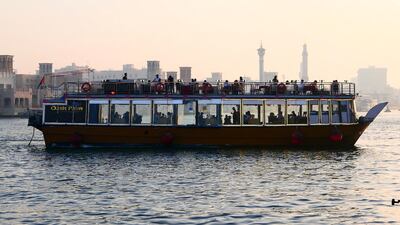
  • Across the road from streets packed with hundreds of shops, there is a waterway in Naif where large dhow and small abra owners operate their businesses. Owners of dhows are attracting customers with attractive deals on dinner cruises
    Across the road from streets packed with hundreds of shops, there is a waterway in Naif where large dhow and small abra owners operate their businesses. Owners of dhows are attracting customers with attractive deals on dinner cruises
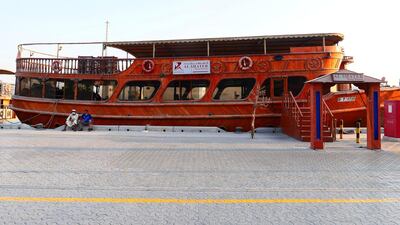
  • Another large dhow in Naif
    Another large dhow in Naif
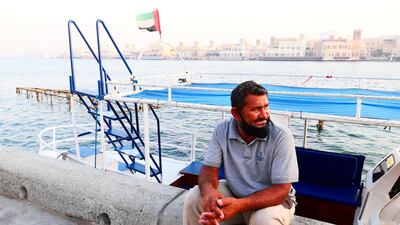
  • Small boat owners, however, are still trying to get back on their feet. Mohammed Akram is seen here waiting for customers who would want to use his boat for a sightseeing trip
    Small boat owners, however, are still trying to get back on their feet. Mohammed Akram is seen here waiting for customers who would want to use his boat for a sightseeing trip

“We have seen a remarkable decline in the number of all types of reports, from 3,223 between January and March last year to 1,877 the same period this year."

The police also launched its Compass Team, which has 17 undercover officers in Naif to monitor the area.

Col Ashour said the team had helped to reduce the level of petty crime, including theft, by 75 per cent.

A six-member team to study trends and suggest solutions was also formed.

“This team examines reports to figure out reasons behind crimes, then comes up with ways to reduce them,” Col Ashour said.

“For example, the team examined reports about thefts from shops. They narrowed down the reasons behind these thefts to shops hiring people on visit visas.”

An awareness campaign was launched with help from the infiltrators department after the team reported their findings.

The new vehicles will look something like this. Courtesy: Kaiyun Motors

The drive educated shop owners about the dangers of hiring illegal workers and also helped to reduce crime.

Shop owners in the neighbourhood said they were now more vigilant regarding illegal porters.

Mohammed Naseem, a salesman at a spice shop, said he always asked for a receipt from a porter.

“We always write down everything we are handing over to the porter and we each keep a copy, so we know what is being delivered,” he said.

"There are a few cases where some porters steal one little thing, but the ones who have been working here for many years are well reputed and their services are used by many shops. It's some of the newer ones who started working recently or a few years ago who steal."

Rouf Teecey, who has worked as a salesman in the area since 2006, said “most porters are reliable”, but there were a few that would have to be monitored.

He said some shop owners started to use licensed delivery services so they could track their goods.

“Many shops use porters because it is very cheap and it gets the job done, but more owners are starting to use licensed delivery companies so they feel more secure,” Mr Teecey said.

“I think if dolly carts get replaced with licensed pick-up trucks, it could offer even more security to shops here and also protect the porters.”

He said the number of workers with expired residence visas had grown slightly since the start of the Covid-19 pandemic.

He said these men started working as porters in the area to earn an income.

“These are some of the newer ones who are stealing one or two things from the goods, but the old ones are well known by many shop owners here,” he said.

Deira mosque is older than the UAE – in pictures 

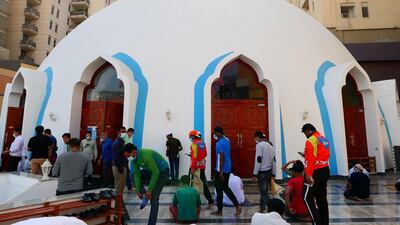
  • The Omar Ali bin Haider mosque has been welcoming workshippers since 1952. Located in the busy district of Deira, the house of worship is one of the oldest buildings in the country. All photos by Pawan Singh / The National
    The Omar Ali bin Haider mosque has been welcoming workshippers since 1952. Located in the busy district of Deira, the house of worship is one of the oldest buildings in the country. All photos by Pawan Singh / The National
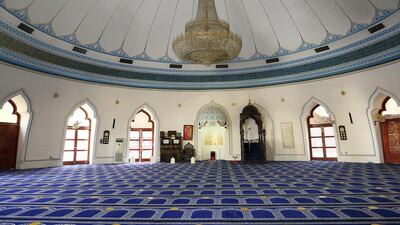
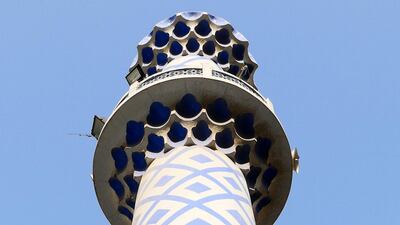
  • The mosque is known for its striking Islamic architecture, with one blue-tiled minaret adjacent to a giant dome that welcomes worshippers within its 465-square metre prayer hall.
    The mosque is known for its striking Islamic architecture, with one blue-tiled minaret adjacent to a giant dome that welcomes worshippers within its 465-square metre prayer hall.
  • Inside, there are Quranic verses scribed across the walls, with an enormous chandelier hanging right in the middle.
    Inside, there are Quranic verses scribed across the walls, with an enormous chandelier hanging right in the middle.
  • The call to prayer is sounded by speakers installed on the minaret
    The call to prayer is sounded by speakers installed on the minaret
  • The mosque was built by the late Omar Ali Bin Haider, an Emirati businessman who was known for his philanthropic work in the centre of Dubai in the 1950s and 1960s
    The mosque was built by the late Omar Ali Bin Haider, an Emirati businessman who was known for his philanthropic work in the centre of Dubai in the 1950s and 1960s
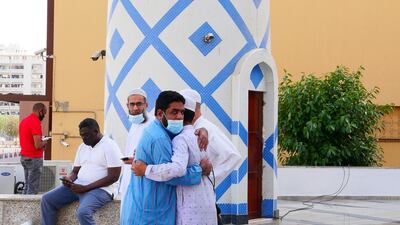
  • Before the Covid-19 pandemic, the house of worship saw hundreds of Muslims gathering for prayers. During Eid it becomes busier than usual, with large crowds of people, dressed up for the Muslim holiday, exchanging greetings and hugs after the Eid prayer. Now, there are socially-distanced prayers being carried out, with other Covid-19 precautionary measures also in place
    Before the Covid-19 pandemic, the house of worship saw hundreds of Muslims gathering for prayers. During Eid it becomes busier than usual, with large crowds of people, dressed up for the Muslim holiday, exchanging greetings and hugs after the Eid prayer. Now, there are socially-distanced prayers being carried out, with other Covid-19 precautionary measures also in place
  • The mosque was renovated in 1984 by Mr Haider's son, Mohammed Omar
    The mosque was renovated in 1984 by Mr Haider's son, Mohammed Omar
Company%20profile
%3Cp%3E%3Cstrong%3ECompany%20name%3A%20%3C%2Fstrong%3EHakbah%0D%3Cbr%3E%3Cstrong%3EStarted%3A%20%3C%2Fstrong%3E2018%0D%3Cbr%3E%3Cstrong%3EFounder%3A%20%3C%2Fstrong%3ENaif%20AbuSaida%0D%3Cbr%3E%3Cstrong%3EBased%3A%20%3C%2Fstrong%3ESaudi%20Arabia%0D%3Cbr%3E%3Cstrong%3ESector%3A%20%3C%2Fstrong%3EFinTech%0D%3Cbr%3E%3Cstrong%3ECurrent%20number%20of%20staff%3A%20%3C%2Fstrong%3E22%20%0D%3Cbr%3E%3Cstrong%3EInitial%20investment%3A%20%3C%2Fstrong%3E%24200%2C000%0D%3Cbr%3E%3Cstrong%3EInvestment%20stage%3A%20%3C%2Fstrong%3Epre-Series%20A%0D%3Cbr%3E%3Cstrong%3EInvestors%3A%20%3C%2Fstrong%3EGlobal%20Ventures%20and%20Aditum%20Investment%20Management%0D%3Cbr%3E%3Cbr%3E%3C%2Fp%3E%0A
Libya's Gold

UN Panel of Experts found regime secretly sold a fifth of the country's gold reserves. 

The panel’s 2017 report followed a trail to West Africa where large sums of cash and gold were hidden by Abdullah Al Senussi, Qaddafi’s former intelligence chief, in 2011.

Cases filled with cash that was said to amount to $560m in 100 dollar notes, that was kept by a group of Libyans in Ouagadougou, Burkina Faso.

A second stash was said to have been held in Accra, Ghana, inside boxes at the local offices of an international human rights organisation based in France.

Teri%20Baaton%20Mein%20Aisa%20Uljha%20Jiya
%3Cp%3E%3Cstrong%3EDirectors%3A%3C%2Fstrong%3E%20Amit%20Joshi%20and%20Aradhana%20Sah%3C%2Fp%3E%0A%3Cp%3E%3Cstrong%3ECast%3A%3C%2Fstrong%3E%20Shahid%20Kapoor%2C%20Kriti%20Sanon%2C%20Dharmendra%2C%20Dimple%20Kapadia%2C%20Rakesh%20Bedi%3C%2Fp%3E%0A%3Cp%3E%3Cstrong%3ERating%3A%3C%2Fstrong%3E%204%2F5%3C%2Fp%3E%0A

Mercer, the investment consulting arm of US services company Marsh & McLennan, expects its wealth division to at least double its assets under management (AUM) in the Middle East as wealth in the region continues to grow despite economic headwinds, a company official said.

Mercer Wealth, which globally has $160 billion in AUM, plans to boost its AUM in the region to $2-$3bn in the next 2-3 years from the present $1bn, said Yasir AbuShaban, a Dubai-based principal with Mercer Wealth.

Within the next two to three years, we are looking at reaching $2 to $3 billion as a conservative estimate and we do see an opportunity to do so,” said Mr AbuShaban.

Mercer does not directly make investments, but allocates clients’ money they have discretion to, to professional asset managers. They also provide advice to clients.

“We have buying power. We can negotiate on their (client’s) behalf with asset managers to provide them lower fees than they otherwise would have to get on their own,” he added.

Mercer Wealth’s clients include sovereign wealth funds, family offices, and insurance companies among others.

From its office in Dubai, Mercer also looks after Africa, India and Turkey, where they also see opportunity for growth.

Wealth creation in Middle East and Africa (MEA) grew 8.5 per cent to $8.1 trillion last year from $7.5tn in 2015, higher than last year’s global average of 6 per cent and the second-highest growth in a region after Asia-Pacific which grew 9.9 per cent, according to consultancy Boston Consulting Group (BCG). In the region, where wealth grew just 1.9 per cent in 2015 compared with 2014, a pickup in oil prices has helped in wealth generation.

BCG is forecasting MEA wealth will rise to $12tn by 2021, growing at an annual average of 8 per cent.

Drivers of wealth generation in the region will be split evenly between new wealth creation and growth of performance of existing assets, according to BCG.

Another general trend in the region is clients’ looking for a comprehensive approach to investing, according to Mr AbuShaban.

“Institutional investors or some of the families are seeing a slowdown in the available capital they have to invest and in that sense they are looking at optimizing the way they manage their portfolios and making sure they are not investing haphazardly and different parts of their investment are working together,” said Mr AbuShaban.

Some clients also have a higher appetite for risk, given the low interest-rate environment that does not provide enough yield for some institutional investors. These clients are keen to invest in illiquid assets, such as private equity and infrastructure.

“What we have seen is a desire for higher returns in what has been a low-return environment specifically in various fixed income or bonds,” he said.

“In this environment, we have seen a de facto increase in the risk that clients are taking in things like illiquid investments, private equity investments, infrastructure and private debt, those kind of investments were higher illiquidity results in incrementally higher returns.”

The Abu Dhabi Investment Authority, one of the largest sovereign wealth funds, said in its 2016 report that has gradually increased its exposure in direct private equity and private credit transactions, mainly in Asian markets and especially in China and India. The authority’s private equity department focused on structured equities owing to “their defensive characteristics.”

PROFILE OF SWVL

Started: April 2017

Founders: Mostafa Kandil, Ahmed Sabbah and Mahmoud Nouh

Based: Cairo, Egypt

Sector: transport

Size: 450 employees

Investment: approximately $80 million

Investors include: Dubai’s Beco Capital, US’s Endeavor Catalyst, China’s MSA, Egypt’s Sawari Ventures, Sweden’s Vostok New Ventures, Property Finder CEO Michael Lahyani