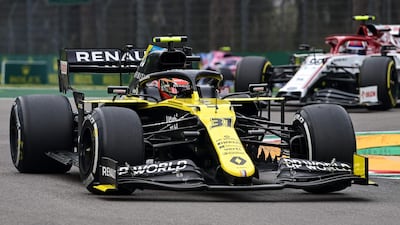
Mick Schumacher is headed for Abu Dhabi and - you can be in no doubt - Formula One.
You heard it right: not seven-time champion Michael Schumacher, of course, but the next generation of the famous motorsporting name, who, as it turns out, is a chip off the old block.
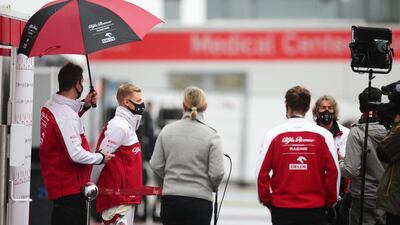
The son of the seven-time F1 world champion and Ferrari racer was supposed to make his own debut at the Eifel Grand Prix first practice in Germany last month.
Taking his F1 bow on the track where his father was deified would have been more than perfect. But life’s not like that, is it?
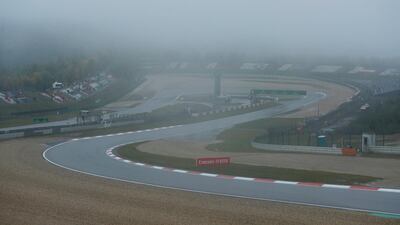
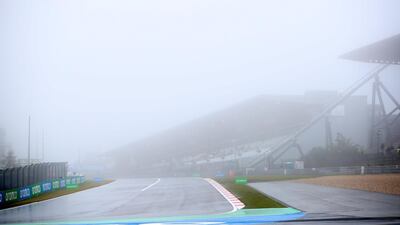
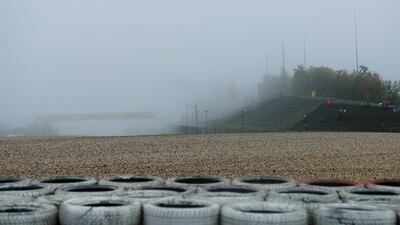
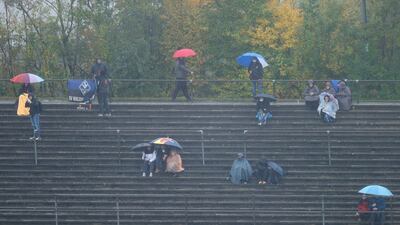
Nurburgring is notorious for the low fog, clinging wet clouds, plunging temperatures and weather that rolls off the Eiffel mountains and falls like a lake.
If the opening race in Melbourne in the glorious Australian sunshine, is the high point of every season, muddy Nurburgring is usually the low.
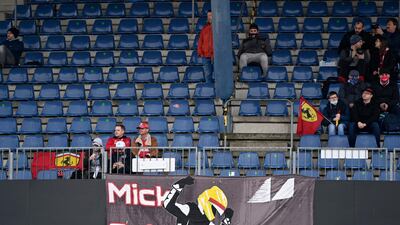
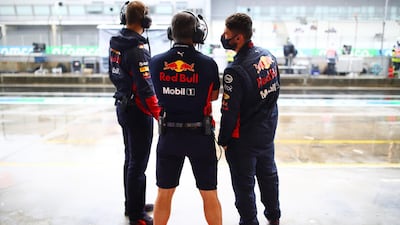
This year was no different. Weather so bad F1 cars were not allowed to run. Despite his exhaustive preparations, Schumacher Mark II was robbed of his chance.
And the calendar is so intensive, track time so precious, Ferrari say the next opportunity is Yas Marina Circuit, on December 11, for the season-ending Etihad Airways Abu Dhabi Grand Prix.
Given Ferrari is partially owned by Mubadala, Abu Dhabi’s sovereign wealth fund and sponsored by national airline Etihad Airways, the date is hardly surprising.
Those who have followed my writings will know that much as I wouldn’t wish his current plight on my worst enemy I was no particular fan of Schumacher senior as a racer.
Remarkable driver he may have been but my feeling is that he may well have been able to win on talent and application alone but all too often resorted to dirty tactics (let’s call it that rather than something more damning).
That he also had one-sided contracts so the only driver on the grid with an equal chance - his teammate - was contractually barred from racing him, is shameful.
___________________________
Fog ends Mick Schumacher's F1 debut
___________________________
I interviewed Schumacher a couple of times and despite our press conference run-ins he was nothing less than professional. Actually very likeable. Of course he had an agenda because this was at the height of his battles with Damon Hill and he wanted to get in the Williams driver’s head through the British press.
When I publicly asked him after Ferrari’s 2002 Austrian Grand Prix debacle if he wanted to win because he was the best driver or the one with the best contract my interview privileges were summarily revoked and never returned.
And I’ve always viewed parking his Ferrari on a blind hairpin, in an effort to win the 2006 Monaco GP, nothing less than dastardly.
All that said, I would love to see his 21-year-old son crack F1. His dad was no monster, he just let ruthless ambition get the better of him. The signs are that this Schumacher has the tools and is prepared to do it the right way.
He has risen through the ranks of the Ferrari Academy on merit even if his name gave him a leg up.
In an interview with formula1.com, Mick said: “[I was] trying to have as much freedom for myself as possible. It gave me the opportunity to grow on my own and understand how to be a normal kid.”
His move through the formula, even today, is methodical and calculated when he could easily have taken short cuts.
“If you take your time to go into the detail, to learn things right, in the long-term it will work out better than if you rush things,” he added.
He was runner-up in the German and Italian F4 series, clinched the European F3 title and now heads the F2 championship by 22 points with four rounds to go.
That the race cars, unlike F1, all have the same chassis, engine and tyres and are, ostensibly, utterly equal, speak volumes for Schumacher’s talent.
But the spanner in the works came just last week when Alfa Romeo re-signed former world champion Kimi Raikkonen and Antonio Giovinazzi.
That leaves two seats at English-based Haas, with one likely to go to Russian billionaire’s son Nikita Mazepin.
So Schumacher is battling to win the final F1 feeder series - with equal equipment - against another Ferrari Academy racer, Britain's Callum Illiot, and a place on the 2021 F1 grid the likely prize.
For most that would be the ultimate goal but the truth is that for Schumacher junior the battle will only just be beginning. Having the legendary Michael Schumacher as a father cuts both ways.

Guide to intelligent investing
Investing success often hinges on discipline and perspective. As markets fluctuate, remember these guiding principles:
- Stay invested: Time in the market, not timing the market, is critical to long-term gains.
- Rational thinking: Breathe and avoid emotional decision-making; let logic and planning guide your actions.
- Strategic patience: Understand why you’re investing and allow time for your strategies to unfold.
Avatar: Fire and Ash
Director: James Cameron
Starring: Sam Worthington, Sigourney Weaver, Zoe Saldana
Rating: 4.5/5
Who's who in Yemen conflict
Houthis: Iran-backed rebels who occupy Sanaa and run unrecognised government
Yemeni government: Exiled government in Aden led by eight-member Presidential Leadership Council
Southern Transitional Council: Faction in Yemeni government that seeks autonomy for the south
Habrish 'rebels': Tribal-backed forces feuding with STC over control of oil in government territory
SPECS
Engine: 4-litre V8 twin-turbo
Power: 630hp
Torque: 850Nm
Transmission: 8-speed Tiptronic automatic
Price: From Dh599,000
On sale: Now
HEADLINE HERE
- I would recommend writing out the text in the body
- And then copy into this box
- It can be as long as you link
- But I recommend you use the bullet point function (see red square)
- Or try to keep the word count down
- Be wary of other embeds lengthy fact boxes could crash into
- That's about it
History's medical milestones
1799 - First small pox vaccine administered
1846 - First public demonstration of anaesthesia in surgery
1861 - Louis Pasteur published his germ theory which proved that bacteria caused diseases
1895 - Discovery of x-rays
1923 - Heart valve surgery performed successfully for first time
1928 - Alexander Fleming discovers penicillin
1953 - Structure of DNA discovered
1952 - First organ transplant - a kidney - takes place
1954 - Clinical trials of birth control pill
1979 - MRI, or magnetic resonance imaging, scanned used to diagnose illness and injury.
1998 - The first adult live-donor liver transplant is carried out
'Cheb%20Khaled'
%3Cp%3E%3Cstrong%3EArtist%3A%20%3C%2Fstrong%3EKhaled%3Cbr%3E%3Cstrong%3ELabel%3A%20%3C%2Fstrong%3EBelieve%3Cbr%3E%3Cstrong%3ERating%3A%3C%2Fstrong%3E%204%2F5%3C%2Fp%3E%0A
The%20US%20Congress%2C%20explained
%3Cp%3E-%20US%20Congress%20is%20divided%20into%20two%20chambers%3A%20the%20House%20of%20Representatives%20and%20Senate%3C%2Fp%3E%0A%3Cp%3E-%20435%20members%20make%20up%20the%20House%2C%20and%20100%20in%20the%20Senate%3C%2Fp%3E%0A%3Cp%3E-%20A%20party%20needs%20control%20of%20218%20seats%20to%20have%20a%20majority%20in%20the%20House%3C%2Fp%3E%0A%3Cp%3E-%20In%20the%20Senate%2C%20a%20party%20needs%20to%20hold%2051%20seats%20for%20control%3C%2Fp%3E%0A%3Cp%3E-%20In%20the%20event%20of%20a%2050-50%20split%2C%20the%20vice%20president's%20party%20retains%20power%20in%20the%20Senate%3C%2Fp%3E%0A
Ten tax points to be aware of in 2026
1. Domestic VAT refund amendments: request your refund within five years
If a business does not apply for the refund on time, they lose their credit.
2. E-invoicing in the UAE
Businesses should continue preparing for the implementation of e-invoicing in the UAE, with 2026 a preparation and transition period ahead of phased mandatory adoption.
3. More tax audits
Tax authorities are increasingly using data already available across multiple filings to identify audit risks.
4. More beneficial VAT and excise tax penalty regime
Tax disputes are expected to become more frequent and more structured, with clearer administrative objection and appeal processes. The UAE has adopted a new penalty regime for VAT and excise disputes, which now mirrors the penalty regime for corporate tax.
5. Greater emphasis on statutory audit
There is a greater need for the accuracy of financial statements. The International Financial Reporting Standards standards need to be strictly adhered to and, as a result, the quality of the audits will need to increase.
6. Further transfer pricing enforcement
Transfer pricing enforcement, which refers to the practice of establishing prices for internal transactions between related entities, is expected to broaden in scope. The UAE will shortly open the possibility to negotiate advance pricing agreements, or essentially rulings for transfer pricing purposes.
7. Limited time periods for audits
Recent amendments also introduce a default five-year limitation period for tax audits and assessments, subject to specific statutory exceptions. While the standard audit and assessment period is five years, this may be extended to up to 15 years in cases involving fraud or tax evasion.
8. Pillar 2 implementation
Many multinational groups will begin to feel the practical effect of the Domestic Minimum Top-Up Tax (DMTT), the UAE's implementation of the OECD’s global minimum tax under Pillar 2. While the rules apply for financial years starting on or after January 1, 2025, it is 2026 that marks the transition to an operational phase.
9. Reduced compliance obligations for imported goods and services
Businesses that apply the reverse-charge mechanism for VAT purposes in the UAE may benefit from reduced compliance obligations.
10. Substance and CbC reporting focus
Tax authorities are expected to continue strengthening the enforcement of economic substance and Country-by-Country (CbC) reporting frameworks. In the UAE, these regimes are increasingly being used as risk-assessment tools, providing tax authorities with a comprehensive view of multinational groups’ global footprints and enabling them to assess whether profits are aligned with real economic activity.
Contributed by Thomas Vanhee and Hend Rashwan, Aurifer
Mercer, the investment consulting arm of US services company Marsh & McLennan, expects its wealth division to at least double its assets under management (AUM) in the Middle East as wealth in the region continues to grow despite economic headwinds, a company official said.
Mercer Wealth, which globally has $160 billion in AUM, plans to boost its AUM in the region to $2-$3bn in the next 2-3 years from the present $1bn, said Yasir AbuShaban, a Dubai-based principal with Mercer Wealth.
“Within the next two to three years, we are looking at reaching $2 to $3 billion as a conservative estimate and we do see an opportunity to do so,” said Mr AbuShaban.
Mercer does not directly make investments, but allocates clients’ money they have discretion to, to professional asset managers. They also provide advice to clients.
“We have buying power. We can negotiate on their (client’s) behalf with asset managers to provide them lower fees than they otherwise would have to get on their own,” he added.
Mercer Wealth’s clients include sovereign wealth funds, family offices, and insurance companies among others.
From its office in Dubai, Mercer also looks after Africa, India and Turkey, where they also see opportunity for growth.
Wealth creation in Middle East and Africa (MEA) grew 8.5 per cent to $8.1 trillion last year from $7.5tn in 2015, higher than last year’s global average of 6 per cent and the second-highest growth in a region after Asia-Pacific which grew 9.9 per cent, according to consultancy Boston Consulting Group (BCG). In the region, where wealth grew just 1.9 per cent in 2015 compared with 2014, a pickup in oil prices has helped in wealth generation.
BCG is forecasting MEA wealth will rise to $12tn by 2021, growing at an annual average of 8 per cent.
Drivers of wealth generation in the region will be split evenly between new wealth creation and growth of performance of existing assets, according to BCG.
Another general trend in the region is clients’ looking for a comprehensive approach to investing, according to Mr AbuShaban.
“Institutional investors or some of the families are seeing a slowdown in the available capital they have to invest and in that sense they are looking at optimizing the way they manage their portfolios and making sure they are not investing haphazardly and different parts of their investment are working together,” said Mr AbuShaban.
Some clients also have a higher appetite for risk, given the low interest-rate environment that does not provide enough yield for some institutional investors. These clients are keen to invest in illiquid assets, such as private equity and infrastructure.
“What we have seen is a desire for higher returns in what has been a low-return environment specifically in various fixed income or bonds,” he said.
“In this environment, we have seen a de facto increase in the risk that clients are taking in things like illiquid investments, private equity investments, infrastructure and private debt, those kind of investments were higher illiquidity results in incrementally higher returns.”
The Abu Dhabi Investment Authority, one of the largest sovereign wealth funds, said in its 2016 report that has gradually increased its exposure in direct private equity and private credit transactions, mainly in Asian markets and especially in China and India. The authority’s private equity department focused on structured equities owing to “their defensive characteristics.”
Living in...
This article is part of a guide on where to live in the UAE. Our reporters will profile some of the country’s most desirable districts, provide an estimate of rental prices and introduce you to some of the residents who call each area home.