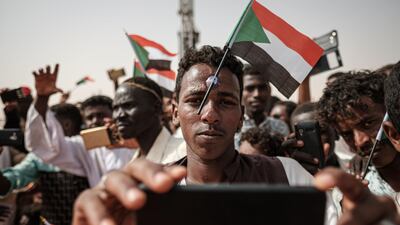
Global news events were increasingly covered by the use of technology even before coronavirus hampered foreign press from reaching them. AFP

'Your Zoom correspondent': how Covid-19 will change journalism


  • English
  • Arabic

“You know, maybe we don’t ever have to travel again to get a story.”

A fellow foreign correspondent who was previously based in the Middle East and Africa, and now lives in Europe, recently shared this thought with me over lunch, as he told me how he spent six hours on a zoom call with someone for a story that takes place in Thailand.

Last week, I was part of a British literary festival that took place over Zoom. This kind of event is the new normal, as the great global literary festivals like Hay, Brooklyn Books, Jaipur or the Palestine Literary Festival are affected by the coronavirus pandemic.

It felt a little strange, at first, to face a large audience over video conference, but after the first few questions it was fine. We are adapting this new world because, frankly, we have to.

One of the questions was about how foreign correspondents would continue to work in the present climate, with countries locked down and borders sealed. Where foreign reporting once involved risk (especially in war zones) or annoying bureaucratic paperwork (e.g. visas and press cards), today reporting from abroad may mean getting infected with a virus.

One of the panellists, an editor from a major British newspaper, noted that fewer reporters would now be sent overseas, as budgets are shrinking drastically.

Practically speaking, it is going to be difficult for newsrooms to go back to the “old-school” model of reporting. Air travel, when it does begin to open up, will be risky and expensive. More editors will be unwilling to send journalists into the field now that we have all seen how three months of working via Zoom or Skype has yielded pretty impressive results.

Those who are used to reporting abroad will not get the same colour or atmosphere that comes from operating on the ground, but for the most part, they will probably get the exact same quotes.

If this is the future, there are both positive and negative repercussions on the media landscape. If we start living in a world where we do not have objective eyes and ears on the ground to witness world events – for instance, Minnesota burning or protests in Hong Kong – how will we know what is really happening?

French freelance reporter Pierre Torres talks to an AFP journalist based at AFP's Middle East and North Africa headquarters in Nicosia, Cyprus, via Skype direct from the Syrian northern city of Aleppo on July 30, 2012. AFP

All of this, however, can also open up an interesting, viable alternative to the old model. The people the foreign press often refer to somewhat patronisingly as “fixers”, who are usually local reporters crucial in helping us to get our jobs done, might at last have receive well-deserved attention.

I am on the international board of an NGO called the Institute of War and Peace Reporting, founded during the Balkan Wars in the 1990s by Anthony Borden, then a young reporter in the field. The aim is to support and train local journalists in war zones. We help them to thrive and to keep safe, training them in how to deliver credible stories from places like Aleppo or Baghdad.

Technology makes this possible. When I started out as a foreign correspondent 30 years ago, my main challenge was to find a way to get my story back to London or New York – sometimes having to bribe someone for a satellite telephone over which I could dictate my copy. Now you just need a mobile phone to Zoom into headquarters a thousand miles away.

You can Google information that I used to have to knock on doors to get, and you can shoot video from your mobile.

Fewer reporters may be sent overseas, as budgets are shrinking drastically

Of course, in the era of “fake news”, there is a major challenge in ensuring that the local reporters we work with are nonpartisan. Getting the most accurate version of a story is not easy when the person reporting it is from a community under siege. But objectivity is possible. After all, developed countries rely on local reporters to tell local stories without worrying too much about bias.

Then again, it is also difficult if you are working from places with forces that actively obstruct the truth from emerging. Nevertheless, many local reporters are indeed aware of this, and work twice as hard to uphold the ideals of credible journalism. It is also worth pointing out that the list of such places seems to be getting ever longer, arguably growing even to include places like the United States.

I recently had a conversation with a young reporter whose family came from the Balkans. She related how, in the 1990s, she resented foreign reporters coming to her country to tell the story of her people.

“It’s not your story to tell,” she said to me, and I had to agree, although it is worth noting that the work me and my colleagues did in those days did play a significant role in shifting worldviews and policies towards those wars.

I have had similar conversations with writers from the Middle East who have felt that foreigners cannot fully understand the region’s nuances, and therefore have a limited ability to write about them.

These are viewpoints worth listening to. In a few months, I will begin a UN-funded project training local reporters in Iraq, Yemen and Syria on the use of narrative nonfiction to tell the stories of the wars taking place in their countries.

The first lesson I teach will be about objectivity, and I am thinking hard about how to present this. How, after all, do you describe your own country, hometown, city or even family coming under a hail of bombs in a nonpartisan manner?

Covid-19 has changed nearly every aspect of our lives, economically and socially. Now, it is even going to change the way we report the news. Perhaps that is not necessarily a bad thing. Perhaps it is time to pass the baton to a new breed of reporters to tell the story of their own countries with compassion, empathy and pragmatism.

Truth-telling, after all, does not always have to come from foreign reporters. It can come from local people who are seeing, hearing and feeling the news in real time – not just from the other side of a Zoom call.

 Janine di Giovanni is a Senior Fellow at Yale’s Jackson  Institute for Global Affairs

Who's who in Yemen conflict

Houthis: Iran-backed rebels who occupy Sanaa and run unrecognised government

Yemeni government: Exiled government in Aden led by eight-member Presidential Leadership Council

Southern Transitional Council: Faction in Yemeni government that seeks autonomy for the south

Habrish 'rebels': Tribal-backed forces feuding with STC over control of oil in government territory

Squid Game season two

Director: Hwang Dong-hyuk 

Stars:  Lee Jung-jae, Wi Ha-joon and Lee Byung-hun

Rating: 4.5/5

THE NEW BATCH'S FOCUS SECTORS

AiFlux – renewables, oil and gas

DevisionX – manufacturing

Event Gates – security and manufacturing

Farmdar – agriculture

Farmin – smart cities

Greener Crop – agriculture

Ipera.ai – space digitisation

Lune Technologies – fibre-optics

Monak – delivery

NutzenTech – environment

Nybl – machine learning

Occicor – shelf management

Olymon Solutions – smart automation

Pivony – user-generated data

PowerDev – energy big data

Sav – finance

Searover – renewables

Swftbox – delivery

Trade Capital Partners – FinTech

Valorafutbol – sports and entertainment

Workfam – employee engagement

THE SPECS

Engine: 4.4-litre V8

Transmission: Automatic

Power: 530bhp 

Torque: 750Nm 

Price: Dh535,000

On sale: Now

UPI facts

More than 2.2 million Indian tourists arrived in UAE in 2023
More than 3.5 million Indians reside in UAE
Indian tourists can make purchases in UAE using rupee accounts in India through QR-code-based UPI real-time payment systems
Indian residents in UAE can use their non-resident NRO and NRE accounts held in Indian banks linked to a UAE mobile number for UPI transactions

LOS ANGELES GALAXY 2 MANCHESTER UNITED 5

Galaxy: Dos Santos (79', 88')
United: Rashford (2', 20'), Fellaini (26'), Mkhitaryan (67'), Martial (72')

Groom and Two Brides

Director: Elie Semaan

Starring: Abdullah Boushehri, Laila Abdallah, Lulwa Almulla

Rating: 3/5

MATCH INFO

Uefa Champions League semi-finals, first leg
Liverpool v Roma

When: April 24, 10.45pm kick-off (UAE)
Where: Anfield, Liverpool
Live: BeIN Sports HD
Second leg: May 2, Stadio Olimpico, Rome

While you're here ...

Damien McElroy: What happens to Brexit?

Con Coughlin: Could the virus break the EU?

Andrea Matteo Fontana: Europe to emerge stronger

The%20Kitchen
%3Cp%3E%3Cstrong%3EDirector%3A%C2%A0%3C%2Fstrong%3EDaniel%20Kaluuya%2C%20Kibwe%20Tavares%3C%2Fp%3E%0A%3Cp%3E%3Cstrong%3EStars%3A%C2%A0%3C%2Fstrong%3EKane%20Robinson%2C%20Jedaiah%20Bannerman%2C%20Hope%20Ikpoku%20Jnr%2C%20Fiona%20Marr%3C%2Fp%3E%0A%3Cp%3E%3Cstrong%3ERating%3A%3C%2Fstrong%3E%203%2F5%C2%A0%3C%2Fp%3E%0A
MOUNTAINHEAD REVIEW

Starring: Ramy Youssef, Steve Carell, Jason Schwartzman

Director: Jesse Armstrong

Rating: 3.5/5

UAE v IRELAND

All matches start at 10am, and will be played in Abu Dhabi

1st ODI, Friday, January 8

2nd ODI, Sunday, January 10

3rd ODI, Tuesday, January 12

4th ODI, Thursday, January 14

Results
%3Cp%3EStage%204%3A%0D%3Cbr%3E1.%20Juan%20Sebastian%20Molano%20(COL)%20Team%20UAE%20Emirates%20%E2%80%93%203hrs%2050min%2001sec%0D%3Cbr%3E2.%20Olav%20Kooij%20(NED)%20Jumbo-Visma%20%E2%80%93%20ST%0D%3Cbr%3E3.%20Sam%20Welsford%20(AUS)%20Team%20DSM)%20%E2%80%93%20ST%0D%3Cbr%3EGeneral%20Classification%3A%0D%3Cbr%3E1.%20Remco%20Evenepoel%20(BEL)%20Soudal%20Quick-Step%0D%3Cbr%3E2.%20Lucas%20Plapp%20(AUS)%20Ineos%20Grenaders%20%E2%80%93%207%E2%80%B3%0D%3Cbr%3E3.%20Pello%20Bilbao%20(ESP)%20Bahrain%20Victorious%20%E2%80%93%2011%E2%80%B3%3C%2Fp%3E%0A
How to apply for a drone permit
  • Individuals must register on UAE Drone app or website using their UAE Pass
  • Add all their personal details, including name, nationality, passport number, Emiratis ID, email and phone number
  • Upload the training certificate from a centre accredited by the GCAA
  • Submit their request
What are the regulations?
  • Fly it within visual line of sight
  • Never over populated areas
  • Ensure maximum flying height of 400 feet (122 metres) above ground level is not crossed
  • Users must avoid flying over restricted areas listed on the UAE Drone app
  • Only fly the drone during the day, and never at night
  • Should have a live feed of the drone flight
  • Drones must weigh 5 kg or less
Generation Start-up: Awok company profile

Started: 2013

Founder: Ulugbek Yuldashev

Sector: e-commerce

Size: 600 plus

Stage: still in talks with VCs

Principal Investors: self-financed by founder

COMPANY%20PROFILE%20
%3Cp%3EName%3A%20DarDoc%3Cbr%3EBased%3A%20Abu%20Dhabi%3Cbr%3EFounders%3A%20Samer%20Masri%2C%20Keswin%20Suresh%3Cbr%3ESector%3A%20HealthTech%3Cbr%3ETotal%20funding%3A%20%24800%2C000%3Cbr%3EInvestors%3A%20Flat6Labs%2C%20angel%20investors%20%2B%20Incubated%20by%20Hub71%2C%20Abu%20Dhabi's%20Department%20of%20Health%3Cbr%3ENumber%20of%20employees%3A%2010%3C%2Fp%3E%0A
Dubai World Cup draw

1. Gunnevera

2. Capezzano

3. North America

4. Audible

5. Seeking The Soul

6. Pavel

7. Gronkowski

8. Axelrod

9. New Trails

10. Yoshida

11. K T Brave

12. Thunder Snow

13. Dolkong 

Specs

Engine: Duel electric motors
Power: 659hp
Torque: 1075Nm
On sale: Available for pre-order now
Price: On request

Porsche Taycan Turbo specs

Engine: Two permanent-magnet synchronous AC motors

Transmission: two-speed

Power: 671hp

Torque: 1050Nm

Range: 450km

Price: Dh601,800

On sale: now

Dr Amal Khalid Alias revealed a recent case of a woman with daughters, who specifically wanted a boy.

A semen analysis of the father showed abnormal sperm so the couple required IVF.

Out of 21 eggs collected, six were unused leaving 15 suitable for IVF.

A specific procedure was used, called intracytoplasmic sperm injection where a single sperm cell is inserted into the egg.

On day three of the process, 14 embryos were biopsied for gender selection.

The next day, a pre-implantation genetic report revealed four normal male embryos, three female and seven abnormal samples.

Day five of the treatment saw two male embryos transferred to the patient.

The woman recorded a positive pregnancy test two weeks later. 

Company%20Profile
%3Cp%3E%3Cstrong%3EName%3A%3C%2Fstrong%3E%20Neo%20Mobility%3Cbr%3E%3Cstrong%3EStarted%3A%3C%2Fstrong%3E%20February%202023%3Cbr%3E%3Cstrong%3ECo-founders%3A%3C%2Fstrong%3E%20Abhishek%20Shah%20and%20Anish%20Garg%3Cbr%3E%3Cstrong%3EBased%3A%3C%2Fstrong%3E%20Dubai%3Cbr%3E%3Cstrong%3EIndustry%3A%3C%2Fstrong%3E%20Logistics%3Cbr%3E%3Cstrong%3EFunding%3A%3C%2Fstrong%3E%20%2410%20million%3Cbr%3E%3Cstrong%3EInvestors%3A%3C%2Fstrong%3E%20Delta%20Corp%2C%20Pyse%20Sustainability%20Fund%2C%20angel%20investors%3C%2Fp%3E%0A
