• Ahmad al-Asmar, 84, and his wife Nouzat Awada, 79, perform Friday prayers inside their home as mosques are closed over concerns of the spread of coronavirus disease (COVID-19) in Sidon, Lebanon. Reuters
    Ahmad al-Asmar, 84, and his wife Nouzat Awada, 79, perform Friday prayers inside their home as mosques are closed over concerns of the spread of coronavirus disease (COVID-19) in Sidon, Lebanon. Reuters
  • A woman on her balcony reaches out to catch a rose delivered to her via a drone on Mother's day, in the Lebanese coastal city of Jounieh, north of the capital Beirut as people remain indoors in an effort to limit the spread of the novel coronavirus. Three young Lebanese came up with the idea of delivering roses attached to drones, offered to mothers by their children as a surprise gift. The funds collected from this initiative will be donated to the Lebanese Red Cross to help fight against the CIVID-19 pandemic. AFP
    A woman on her balcony reaches out to catch a rose delivered to her via a drone on Mother's day, in the Lebanese coastal city of Jounieh, north of the capital Beirut as people remain indoors in an effort to limit the spread of the novel coronavirus. Three young Lebanese came up with the idea of delivering roses attached to drones, offered to mothers by their children as a surprise gift. The funds collected from this initiative will be donated to the Lebanese Red Cross to help fight against the CIVID-19 pandemic. AFP
  • A woman on her balcony reaches out to catch a rose delivered to her via a drone on Mother's day, in the Lebanese coastal city of Jounieh, north of the capital Beirut, as people remain indoors in an effort to limit the spread of the novel coronavirus. Three young Lebanese came up with the idea of delivering roses attached to drones, offered to mothers by their children as a surprise gift. The funds collected from this initiative will be donated to the Lebanese Red Cross to help fight against the CIVID-19 pandemic. AFP
    A woman on her balcony reaches out to catch a rose delivered to her via a drone on Mother's day, in the Lebanese coastal city of Jounieh, north of the capital Beirut, as people remain indoors in an effort to limit the spread of the novel coronavirus. Three young Lebanese came up with the idea of delivering roses attached to drones, offered to mothers by their children as a surprise gift. The funds collected from this initiative will be donated to the Lebanese Red Cross to help fight against the CIVID-19 pandemic. AFP
  • A Lebanese policeman fines a man for violating lockdown rules in Beirut's Hamra street. AFP
    A Lebanese policeman fines a man for violating lockdown rules in Beirut's Hamra street. AFP
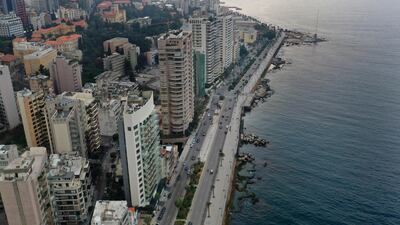
  • An aerial view of the Achrafiyeh district of Lebanon's capital Beirut is seen as streets empty to minimise social contact as part of efforts against COVID-19 coronavirus disease. AFP
    An aerial view of the Achrafiyeh district of Lebanon's capital Beirut is seen as streets empty to minimise social contact as part of efforts against COVID-19 coronavirus disease. AFP
  • A woman standing on her balcony, reaches out to catch a rose delivered to her via a drone on Mother's day, in the Lebanese coastal city of Jounieh, north of the capital Beirut, as people remain indoors in an effort to limit the spread of the novel coronavirus. In a quiet Lebanese town under lockdown over the novel coronavirus, a drone buzzed towards a balcony on Saturday to deliver a red rose to a mother grinning in surprise. The COVID-19 pandemic may have put a damper on Mother's Day this year, but three students have come up with a novel service to celebrate the occasion without flouting social distancing restrictions. AFP
    A woman standing on her balcony, reaches out to catch a rose delivered to her via a drone on Mother's day, in the Lebanese coastal city of Jounieh, north of the capital Beirut, as people remain indoors in an effort to limit the spread of the novel coronavirus. In a quiet Lebanese town under lockdown over the novel coronavirus, a drone buzzed towards a balcony on Saturday to deliver a red rose to a mother grinning in surprise. The COVID-19 pandemic may have put a damper on Mother's Day this year, but three students have come up with a novel service to celebrate the occasion without flouting social distancing restrictions. AFP
  • Young men prepare roses to be delivered via drone to women on Mother's day, in Haret Sakher near the coastal city of Jounieh, north of the capital Beirut. AFP
    Young men prepare roses to be delivered via drone to women on Mother's day, in Haret Sakher near the coastal city of Jounieh, north of the capital Beirut. AFP
  • A woman who just received a rose delivered to her via a drone on Mother's day, thanks her daughter with a kiss, in the coastal city of Jounieh, north of the capital Beirut. AFP
    A woman who just received a rose delivered to her via a drone on Mother's day, thanks her daughter with a kiss, in the coastal city of Jounieh, north of the capital Beirut. AFP
  • Young men prepare roses to be delivered via drone to women on Mother's day, in Haret Sakher near the coastal city of Jounieh, north of the capital Beirut, as people remain indoors in an effort to limit the spread of the novel coronavirus. Three young Lebanese came up with the idea of delivering roses attached to drones, offered to mothers by their children as a surprise gift. The funds collected from this initiative will be donated to the Lebanese Red Cross to help fight against the CIVID-19 pandemic. AFP
    Young men prepare roses to be delivered via drone to women on Mother's day, in Haret Sakher near the coastal city of Jounieh, north of the capital Beirut, as people remain indoors in an effort to limit the spread of the novel coronavirus. Three young Lebanese came up with the idea of delivering roses attached to drones, offered to mothers by their children as a surprise gift. The funds collected from this initiative will be donated to the Lebanese Red Cross to help fight against the CIVID-19 pandemic. AFP
  • A man wears a tear gas mask to help protect himself from the new coronavirus as he walks at Beirut's seaside corniche, or waterfront promenade, along the Mediterranean Sea, which is almost empty of residents and tourists in Beirut, Lebanon. For most people, the new coronavirus causes only mild or moderate symptoms, such as fever and cough. For some, especially older adults and people with existing health problems, it can cause more severe illness, including pneumonia. AP Photo
    A man wears a tear gas mask to help protect himself from the new coronavirus as he walks at Beirut's seaside corniche, or waterfront promenade, along the Mediterranean Sea, which is almost empty of residents and tourists in Beirut, Lebanon. For most people, the new coronavirus causes only mild or moderate symptoms, such as fever and cough. For some, especially older adults and people with existing health problems, it can cause more severe illness, including pneumonia. AP Photo
  • A view of closed shops as part of the preventive measures against the ongoing coronavirus pandemic at Nejmeh square in Sidon (Saida), Lebanon. According to reports, Lebanon registered 163 cases from the COVID-19 disease caused by the SARS-CoV-2 coronavirus. EPA
    A view of closed shops as part of the preventive measures against the ongoing coronavirus pandemic at Nejmeh square in Sidon (Saida), Lebanon. According to reports, Lebanon registered 163 cases from the COVID-19 disease caused by the SARS-CoV-2 coronavirus. EPA
  • A view of a closed Sidon port as part of the preventive measures against the ongoing coronavirus pandemic, in Sidon (Saida), Lebanon. According to reports, Lebanon registered 163 cases from the COVID-19 disease caused by the SARS-CoV-2 coronavirus. EPA
    A view of a closed Sidon port as part of the preventive measures against the ongoing coronavirus pandemic, in Sidon (Saida), Lebanon. According to reports, Lebanon registered 163 cases from the COVID-19 disease caused by the SARS-CoV-2 coronavirus. EPA

Lebanon: coronavirus is showing corrupt elites the scale of the damage they have caused


  • English
  • Arabic

Lebanon is a country that has received little attention during the Covid-19 crisis. As of Monday, the country officially had over 250 coronavirus cases, with four confirmed fatalities. People in Beirut estimate the real number of infections to be four to five times that number, and the government’s decision to deploy the army to prevent people from violating quarantine rules reinforces that view.

For now, the disease still appears to be under control. However, the fear is that if things were to get out of hand, the public health system would be overwhelmed. What makes Lebanon more vulnerable than many other places is that the country is going through a major economic crisis. The state is bankrupt and its ability to withstand a long lockdown, or to import material to address the health emergency, is limited.

The shutdown, which began in mid-March and involves people remaining at home while most commerce is suspended, will also have severe consequences for a county that cannot afford to be idle. In the past five months, Lebanon’s economy has been in free fall, with banks reacting by severely limiting withdrawals or transfers abroad. This has forced many businesses to close, leaving tens of thousands unemployed.

The downward slide began last October, when demonstrations took place against the corruption of the political class and increasingly stringent economic measures. As protests continued, banks introduced de facto capital controls in the realisation that the angry mood had undermined the system the state had set up to finance its ballooning public debt. Many refer to it as a Ponzi scheme that has come to an end. Banks had offered interest rates on deposits that were much higher than the global average, paying these off by attracting new deposits into the system. With confidence gone, the banks feared account holders would rush to withdraw money, leading to the banking system’s collapse.

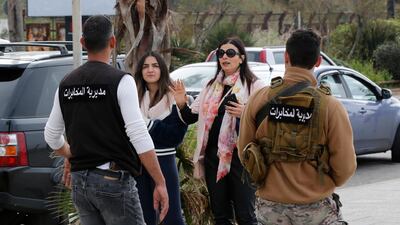
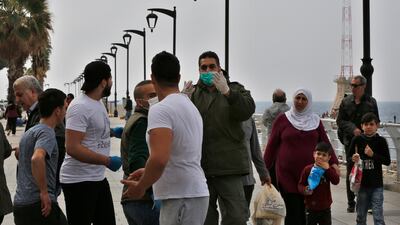
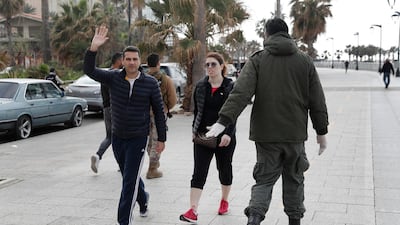
  • Lebanese intelligence officers, foreground, order people to leave the corniche, or waterfront promenade, along the Mediterranean Sea, as the country's top security council and the government were meeting over the spread of coronavirus, in Beirut, Lebanon. AP Photo
    Lebanese intelligence officers, foreground, order people to leave the corniche, or waterfront promenade, along the Mediterranean Sea, as the country's top security council and the government were meeting over the spread of coronavirus, in Beirut, Lebanon. AP Photo
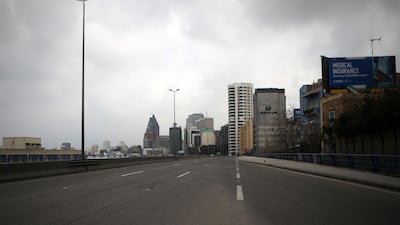
  • A highway leading to Lebanese capital Beirut, remains deserted after measures were taken in a bid to stem the spread of the coronavirus Covid-19. AFP
    A highway leading to Lebanese capital Beirut, remains deserted after measures were taken in a bid to stem the spread of the coronavirus Covid-19. AFP
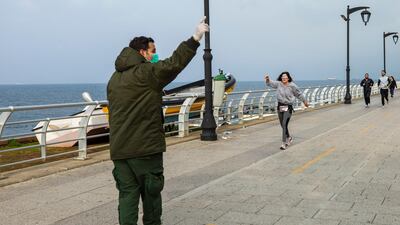
  • A municipal policeman, left, orders people to evacuate the corniche, or waterfront promenade, along the Mediterranean Sea in Beirut. AP Photo
    A municipal policeman, left, orders people to evacuate the corniche, or waterfront promenade, along the Mediterranean Sea in Beirut. AP Photo
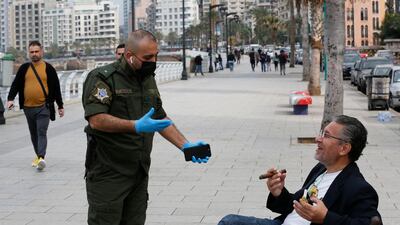
  • A municipal police officer, left, orders a man to leave the corniche, or waterfront promenade, along the Mediterranean Sea in Beirut. AP Photo
    A municipal police officer, left, orders a man to leave the corniche, or waterfront promenade, along the Mediterranean Sea in Beirut. AP Photo
  • A municipal policeman, center, orders people to leave the waterfront promenade, along the Mediterranean Sea in Beirut. AP Photo
    A municipal policeman, center, orders people to leave the waterfront promenade, along the Mediterranean Sea in Beirut. AP Photo
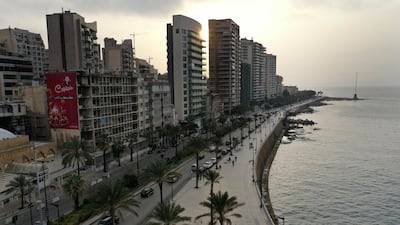
  • Beirut's waterfront promenade, along the Mediterranean Sea, is mostly empty after municipal policemen ordered people to leave in Beirut. AP Photo
    Beirut's waterfront promenade, along the Mediterranean Sea, is mostly empty after municipal policemen ordered people to leave in Beirut. AP Photo
  • Beirut's waterfront promenade, along the Mediterranean Sea, is mostly empty after municipal policemen ordered people to leave in Beirut. AP Photo
    Beirut's waterfront promenade, along the Mediterranean Sea, is mostly empty after municipal policemen ordered people to leave in Beirut. AP Photo
  • A municipal policeman, right, orders people to leave the waterfront promenade, along the Mediterranean Sea in Beirut. AP Photo
    A municipal policeman, right, orders people to leave the waterfront promenade, along the Mediterranean Sea in Beirut. AP Photo
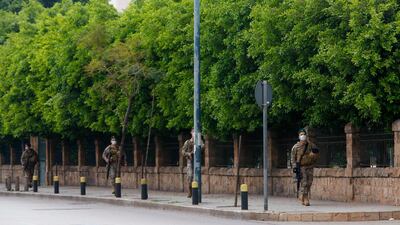
  • Lebanese army soldiers, wearing protective face masks, patrol a street in the capital Beirut. AFP
    Lebanese army soldiers, wearing protective face masks, patrol a street in the capital Beirut. AFP
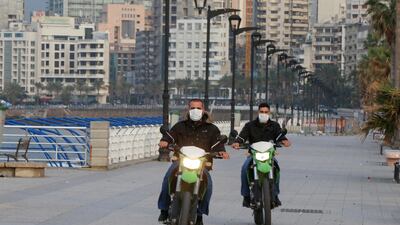
  • Police members wear face masks as they ride on motorbikes at Beirut's seaside Corniche as Lebanon declared a medical state of emergency. REUTERS
    Police members wear face masks as they ride on motorbikes at Beirut's seaside Corniche as Lebanon declared a medical state of emergency. REUTERS
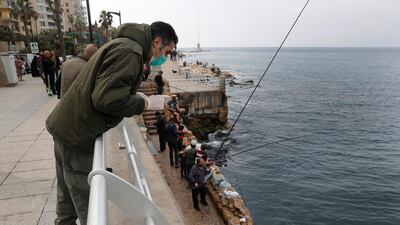
  • A municipal policeman, orders fishermen to leave the corniche, or waterfront promenade, along the Mediterranean Sea in Beirut. AP Photo
    A municipal policeman, orders fishermen to leave the corniche, or waterfront promenade, along the Mediterranean Sea in Beirut. AP Photo
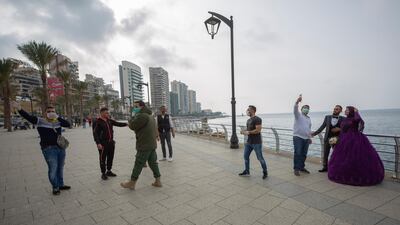
  • A bride and groom, right, take a selfie as Municipal policemen order them to evacuate the corniche, or waterfront promenade in Beirut. AP Photo
    A bride and groom, right, take a selfie as Municipal policemen order them to evacuate the corniche, or waterfront promenade in Beirut. AP Photo
  • Gouraud street in the usually busy neighbourhood of Gemayzeh, famous for its bustling restaurants and bars in the Lebanese capital Beirut, remains deserted after measures were taken in a bid to stem the spread of the coronavirus Covid-19. AFP
    Gouraud street in the usually busy neighbourhood of Gemayzeh, famous for its bustling restaurants and bars in the Lebanese capital Beirut, remains deserted after measures were taken in a bid to stem the spread of the coronavirus Covid-19. AFP

Foreign assistance to Lebanon has been conditional upon the introduction of reforms. Yet the country’s political class has resisted this, as it would reduce their share of the rents they are extracting from the state. Indeed, Hezbollah was one of the parties initially opposed to a bailout from the International Monetary Fund. The party feared that this would cut into its own revenues, while also weakening the political class it has propped up to solidify its position in the country.

Many Lebanese would also welcome seeing the political class cornered by an outside actor into introducing necessary reforms

In recent weeks, however, Hezbollah had walked back its resistance to IMF funding, understanding that Lebanon has no other source of hard currency available to help it out of its predicament. For a country whose foreign currency reserves have reached alarmingly low levels, and that imports most of its food and medicine as well as all of its fuel, refusing an IMF bailout would be suicidal.

The Covid-19 pandemic makes recourse to the IMF even more probable, limiting the latitude of politicians to sideline economic reform. Because of the freezing of economic activity since October, and particularly since the coronavirus outbreak, the state’s revenues have fallen precipitously. This will ensure a larger budget deficit than the government had anticipated, requiring drastic spending cuts the politicians would have preferred to avoid, or delay.

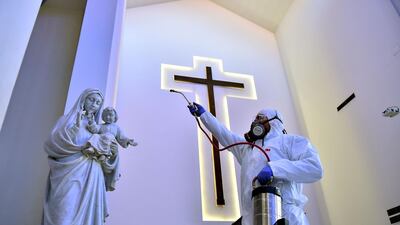
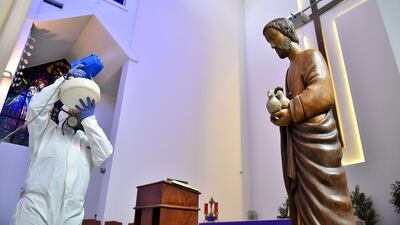
  • Sanitary workers disinfect a church in Beirut. AFP
    Sanitary workers disinfect a church in Beirut. AFP
  • Lebanon's health minister said hospitals were ready to deal with any further spread of the novel coronavirus Covid-19 in the country. AFP
    Lebanon's health minister said hospitals were ready to deal with any further spread of the novel coronavirus Covid-19 in the country. AFP
  • Sanitary workers disinfect a church in Beirut. AFP
    Sanitary workers disinfect a church in Beirut. AFP
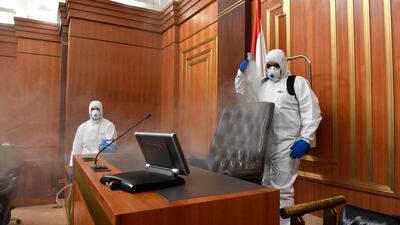
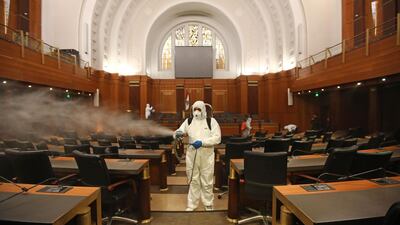
  • Sanitary workers disinfect the desks and chairs of the Lebanese Parliament in central Beirut. AFP
    Sanitary workers disinfect the desks and chairs of the Lebanese Parliament in central Beirut. AFP
  • A Lebanese Health Ministry official said on Tuesday that a man has died from the coronavirus, marking the first known death from the Covid-19 illness in the country. Lebanese Parliament Media Office
    A Lebanese Health Ministry official said on Tuesday that a man has died from the coronavirus, marking the first known death from the Covid-19 illness in the country. Lebanese Parliament Media Office
  • Sanitary workers disinfect the desks and chairs of the Lebanese Parliament in central Beirut. AFP
    Sanitary workers disinfect the desks and chairs of the Lebanese Parliament in central Beirut. AFP
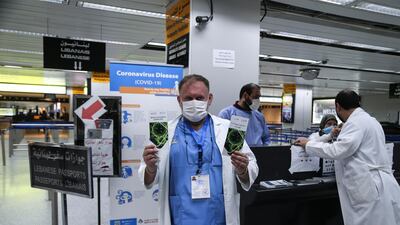
  • Lebanese doctor holds awareness brochures on coronavirus to be distributed on arriving passengers at Rafic Hariri international airport in Beirut. EPA
    Lebanese doctor holds awareness brochures on coronavirus to be distributed on arriving passengers at Rafic Hariri international airport in Beirut. EPA
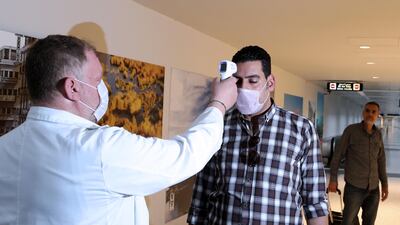
  • A Lebanese doctor checks the temperature of a passenger as a precautionary measure against the coronavirus, upon his arrival at the Rafic Hariri International Airport in Beirut. EPA
    A Lebanese doctor checks the temperature of a passenger as a precautionary measure against the coronavirus, upon his arrival at the Rafic Hariri International Airport in Beirut. EPA

These cuts will impose painful trade-offs on the state. More importantly, they will place the politicians in a dilemma. On the one hand, spending cuts will mean that more people suffer, making resistance to the IMF and its menu of austerity easier. On the other hand, it would make a recourse to the organisation to help Lebanon manage its debt even more urgent, with politicians less able to prevent it.

The reality is that many Lebanese are of two minds about the IMF. While they do not want the burden of reform to be placed upon their shoulder, many would welcome the international organisation providing liquidity to help revive the economy and reduce unemployment. They would also welcome seeing the political class cornered by an outside actor into introducing necessary reforms, such as in the highly corrupt, expensive, and inefficient electricity sector for instance.

In addition, the increased expenses from treating the coronavirus outbreak – which may include importing medicine, equipment and other necessities from the international market – could run down foreign reserves more rapidly than expected. This would also increase pressure on the state to go to the IMF.

Yet the international economic environment is something of which the Lebanese should be wary. Most countries will suffer from the aftershocks of Covid-19. This means that international interest in Lebanon’s well-being – never high in the first place – may disappear. In other words, the country will have to show seriousness if it wants to compete for IMF assistance against a rapidly expanding field of countries in distress. To be blunt, today Lebanon is a priority to no one but the Lebanese.

It may be dawning on Lebanon’s politicians that the system they plundered so recklessly for decades is falling victim to Covid-19. The unsustainable nature of that system was evident months ago, but the virus may have just made the efforts of the political class to keep it alive all but impossible. When a system is rotten to the core, a complete rebirth is often the only remedy to resolve things.

Michael Young is editor of Diwan, the blog of the Carnegie Middle East programme, in Beirut