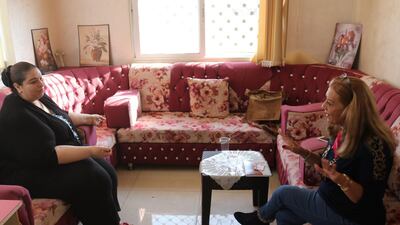

During this tumultuous year, many outstanding female politicians have demonstrated their gift for leadership in their own countries and on the world stage. In the Middle East, a whole generation of them has seen its position strengthened.
A record 364 Jordanian women are running in the country’s parliamentary elections, which are taking place today. This is a 44 per cent increase from the last elections, in 2016. Three all-women electoral lists have been formed and the number of female candidates far exceeds the minimum number of seats allocated for women by a legal quota.
In Egypt, meanwhile, Parliament approved in June an amendment to the constitution that allocates 25 per cent of all seats to women.
In the immediate term, quotas are a crucial step in guaranteeing better female representation, advancing the rights of women and ensuring that their voices are heard. But allocations must translate into action, lest they risk becoming tokenistic. Iran, for instance, prides itself on empowering women to take an active role in the workforce. In a statement in September, an Iranian official publicly affirmed that there is no legal impediment to a woman running for president in next year’s elections. But in a country where female representatives account for a mere six per cent of seats in Parliament, such a feat appears unlikely.
In much of the region, women who aspire to high office are targeted for harassment, if not by authorities then by private citizens. A Jordanian study published last week revealed that one in three female candidates for the parliamentary elections said they were targeted by cyberbullies. This trend is as evident across the Middle East as it is in the wider world. Women continue to pay a heavy price for speaking out and being in the public eye. Last month Reporters Without Borders condemned an online hate campaign directed at three Lebanese female journalists.
Embedding representation in law and encouraging the public and private sectors to give women a voice is key to empowering them in the long run. That strategy is familiar in the UAE, where it has bolstered female representation and women's rights with great success. According to the World Economic Forum's latest Global Gender Gap report, the UAE is the leading country when it comes to gender equality in the region.
Fifty per cent of the UAE's Federal National Council are women. Total parity has become mandatory following a 2018 presidential decree. The Emirates has also issued landmark decisions to advance equality in the workplace. In September, a presidential decree was issued to ensure that women are granted equal pay for equal work.
It is time for the region to move past gender stereotypes, and strive towards parity. Recent developments indicate that many countries in the Middle East are moving in the right direction. But there is undoubtedly a long way to go, both in terms of the region’s culture and its statistics on representation and pay. But each advancement is hugely significant, for the sake of millions of women and young girls in the region who must believe, for everyone’s benefit, that they can have a seat at the table of power.

