The UAE's Hope Probe is estimated to be 30 days away from reaching Mars. The scope of its mission makes it one of the most important in recent years and a major scientific achievement. After a year that has buffeted the world with bad news – and a less-than-hopeful start to 2021 – the probe's mission offers a reminder to humanity to pause and look up.
Covid-19 emerged early last year. Not long afterwards, much of the world was in lockdown. People were glued to government press conferences detailing spiralling infection and death rates. There were glimmers of positivity, pinned especially on the possibility that vaccines would liberate us from restrictions on movement. The first vaccines have been realised earlier that expected, with multiple countries releasing jabs at an unprecedented rate. This was a seminal achievement that will go down in history. However, the world is not out of the woods yet, as we increasingly discover the huge logistical challenges of inoculating people.
Last year, therefore, was not one in which we looked much to the far future. Instead, the world was preoccupied with the daily challenge of remaining level in such difficult times and bracing for tomorrow.
The probe's mission offers a reminder to humanity to pause and look up
But beyond tomorrow, foundations are being laid for better days. In the GCC, this includes last week's signing of the Al Ula statement, carving a path for normal relations with Qatar and re-establishing unity in the Gulf.
Further afield, the Hope Probe reminds us that even as the world is at a standstill, humanity is still breaking new ground in astonishing ways. The mission's primary objective is to capture data on Mars's atmosphere over a two-year period, taking the first photo of the entire planet in history.
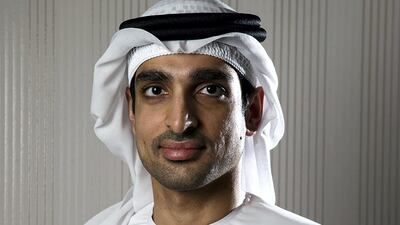
Omran Sharaf, Emirates Mars Mission director. Photo: Emirates Mars Mission
Sarah Al Amiri, the UAE's Minister of State for Advanced Sciences, is playing an important role in space exploration. Photo: Emirates Mars Mission
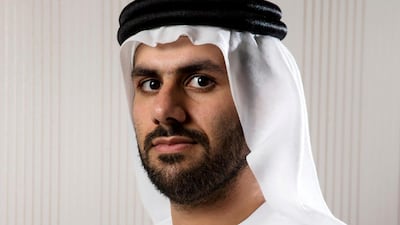
Omar Al Shehhi, lead of integration and testing of the Hoep spacecraft. Photo: Emirates Mars Mission
Mohammed Wali, deputy project manager of the launch team. Courtesy: Emirates Mars Mission
This riveting process has already racked up some astonishing numbers. The spacecraft has travelled a total distance of almost 500 million kilometres. The technical challenge is huge, and a testament to the ambition of the 200-strong team of Emirati engineers behind the project. To illustrate just one part of the challenge, the probe will imminently need to reduce its speed from 121,000 km per hour to 18,000 kph in just half an hour, burning a huge amount of fuel as it enters the planet's atmosphere.
Sheikh Mohammed bin Rashid, Prime Minister of the UAE and Ruler of Dubai, said in November that the project means that the nation is now a culture that prioritises science in shaping its future. In terms of the wider Arab world, if successful, the mission makes the UAE the first country in the region to explore a planet.
In 1969, when Nasa published photos taken by Neil Armstrong and Buzz Aldrin of the Earth from the surface of the Moon, a wave of emotion swept the globe. People saw how small our planet is in the greater scheme of things.
If this year continues to challenge us as 2020 did, perhaps we could turn to the new generation of space explorers in 2021 who are pushing the boundaries of human excellence, giving us source a of hope above and beyond what we know today.

It is considered to be the US' most superior missile defence system.
Production:
It was first created in 2008.
Speed:
THAAD missiles can travel at over Mach 8, so fast that it is hypersonic.
Abilities:
THAAD is designed to take out projectiles, namely ballistic missiles, as they are on their downward trajectory towards their target, otherwise known as the "terminal phase".
Purpose:
To protect high-value strategic sites, such as airfields or population centres.
Range:
THAAD can target projectiles both inside and outside of the Earth's atmosphere, at an altitude of 93 miles above the Earth's surface.
Creators:
Lockheed Martin was originally granted the contract to develop the system in 1992. Defence company Raytheon sub-contracts to develop other major parts of the system, such as ground-based radar.
UAE and THAAD:
In 2011, the UAE became the first country outside of the US to buy two THAAD missile defence systems. It then deployed them in 2016, becoming the first Gulf country to do so.
World Cup warm-up fixtures
Friday, May 24:
Pakistan v Afghanistan (Bristol)
Sri Lanka v South Africa (Cardiff)
Saturday, May 25
England v Australia (Southampton)
India v New Zealand (The Oval, London)
Sunday, May 26
South Africa v West Indies (Bristol)
Pakistan v Bangladesh (Cardiff)
Monday, May 27
Australia v Sri Lanka (Southampton)
England v Afghanistan (The Oval, London)
Tuesday, May 28
West Indies v New Zealand (Bristol)
Bangladesh v India (Cardiff)
Springsteen: Deliver Me from Nowhere
Director: Scott Cooper
Starring: Jeremy Allen White, Odessa Young, Jeremy Strong
Micro-retirement is not a recognised concept or employment status under Federal Decree Law No. 33 of 2021 on the Regulation of Labour Relations (as amended) (UAE Labour Law). As such, it reflects a voluntary work-life balance practice, rather than a recognised legal employment category, according to Dilini Loku, senior associate for law firm Gateley Middle East.
“Some companies may offer formal sabbatical policies or career break programmes; however, beyond such arrangements, there is no automatic right or statutory entitlement to extended breaks,” she explains.
“Any leave taken beyond statutory entitlements, such as annual leave, is typically regarded as unpaid leave in accordance with Article 33 of the UAE Labour Law. While employees may legally take unpaid leave, such requests are subject to the employer’s discretion and require approval.”
If an employee resigns to pursue micro-retirement, the employment contract is terminated, and the employer is under no legal obligation to rehire the employee in the future unless specific contractual agreements are in place (such as return-to-work arrangements), which are generally uncommon, Ms Loku adds.
Lt Gen Erik Petersen, deputy chief of programs, US Army, has argued it took a “three decade holiday” on modernising tanks.
“There clearly remains a significant armoured heavy ground manoeuvre threat in this world and maintaining a world class armoured force is absolutely vital,” the general said in London last week.
“We are developing next generation capabilities to compete with and deter adversaries to prevent opportunism or miscalculation, and, if necessary, defeat any foe decisively.”
Exhchange traded funds are bought and sold like shares, but operate as index-tracking funds, passively following their chosen indices, such as the S&P 500, FTSE 100 and the FTSE All World, plus a vast range of smaller exchanges and commodities, such as gold, silver, copper sugar, coffee and oil.
ETFs have zero upfront fees and annual charges as low as 0.07 per cent a year, which means you get to keep more of your returns, as actively managed funds can charge as much as 1.5 per cent a year.
There are thousands to choose from, with the five biggest providers BlackRock’s iShares range, Vanguard, State Street Global Advisors SPDR ETFs, Deutsche Bank AWM X-trackers and Invesco PowerShares.
Sheikh Mohamed bin Zayed, Crown Prince of Abu Dhabi and Deputy Supreme Commander of the Armed Forces, established Edge in 2019.
It brought together 25 state-owned and independent companies specialising in weapons systems, cyber protection and electronic warfare.
Edge has an annual revenue of $5 billion and employs more than 12,000 people.
Some of the companies include Nimr, a maker of armoured vehicles, Caracal, which manufactures guns and ammunitions company, Lahab
Mercer, the investment consulting arm of US services company Marsh & McLennan, expects its wealth division to at least double its assets under management (AUM) in the Middle East as wealth in the region continues to grow despite economic headwinds, a company official said.
Mercer Wealth, which globally has $160 billion in AUM, plans to boost its AUM in the region to $2-$3bn in the next 2-3 years from the present $1bn, said Yasir AbuShaban, a Dubai-based principal with Mercer Wealth.
“Within the next two to three years, we are looking at reaching $2 to $3 billion as a conservative estimate and we do see an opportunity to do so,” said Mr AbuShaban.
Mercer does not directly make investments, but allocates clients’ money they have discretion to, to professional asset managers. They also provide advice to clients.
“We have buying power. We can negotiate on their (client’s) behalf with asset managers to provide them lower fees than they otherwise would have to get on their own,” he added.
Mercer Wealth’s clients include sovereign wealth funds, family offices, and insurance companies among others.
From its office in Dubai, Mercer also looks after Africa, India and Turkey, where they also see opportunity for growth.
Wealth creation in Middle East and Africa (MEA) grew 8.5 per cent to $8.1 trillion last year from $7.5tn in 2015, higher than last year’s global average of 6 per cent and the second-highest growth in a region after Asia-Pacific which grew 9.9 per cent, according to consultancy Boston Consulting Group (BCG). In the region, where wealth grew just 1.9 per cent in 2015 compared with 2014, a pickup in oil prices has helped in wealth generation.
BCG is forecasting MEA wealth will rise to $12tn by 2021, growing at an annual average of 8 per cent.
Drivers of wealth generation in the region will be split evenly between new wealth creation and growth of performance of existing assets, according to BCG.
Another general trend in the region is clients’ looking for a comprehensive approach to investing, according to Mr AbuShaban.
“Institutional investors or some of the families are seeing a slowdown in the available capital they have to invest and in that sense they are looking at optimizing the way they manage their portfolios and making sure they are not investing haphazardly and different parts of their investment are working together,” said Mr AbuShaban.
Some clients also have a higher appetite for risk, given the low interest-rate environment that does not provide enough yield for some institutional investors. These clients are keen to invest in illiquid assets, such as private equity and infrastructure.
“What we have seen is a desire for higher returns in what has been a low-return environment specifically in various fixed income or bonds,” he said.
“In this environment, we have seen a de facto increase in the risk that clients are taking in things like illiquid investments, private equity investments, infrastructure and private debt, those kind of investments were higher illiquidity results in incrementally higher returns.”
The Abu Dhabi Investment Authority, one of the largest sovereign wealth funds, said in its 2016 report that has gradually increased its exposure in direct private equity and private credit transactions, mainly in Asian markets and especially in China and India. The authority’s private equity department focused on structured equities owing to “their defensive characteristics.”
Pay varies significantly depending on the school, its rating and the curriculum. Here's a rough guide as of January 2021:
- top end schools tend to pay Dh16,000-17,000 a month - plus a monthly housing allowance of up to Dh6,000. These tend to be British curriculum schools rated 'outstanding' or 'very good', followed by American schools
- average salary across curriculums and skill levels is about Dh10,000, recruiters say
- it is becoming more common for schools to provide accommodation, sometimes in an apartment block with other teachers, rather than hand teachers a cash housing allowance
- some strong performing schools have cut back on salaries since the pandemic began, sometimes offering Dh16,000 including the housing allowance, which reflects the slump in rental costs, and sheer demand for jobs
- maths and science teachers are most in demand and some schools will pay up to Dh3,000 more than other teachers in recognition of their technical skills
- at the other end of the market, teachers in some Indian schools, where fees are lower and competition among applicants is intense, can be paid as low as Dh3,000 per month
- in Indian schools, it has also become common for teachers to share residential accommodation, living in a block with colleagues
How to vote
Canadians living in the UAE can register to vote online and be added to the International Register of Electors.
They'll then be sent a special ballot voting kit by mail either to their address, the Consulate General of Canada to the UAE in Dubai or The Embassy of Canada in Abu Dhabi
Registered voters mark the ballot with their choice and must send it back by 6pm Eastern time on October 21 (2am next Friday)
The specs
Engine: Long-range single or dual motor with 200kW or 400kW battery
Power: 268bhp / 536bhp
Torque: 343Nm / 686Nm
Transmission: Single-speed automatic
Max touring range: 620km / 590km
Price: From Dh250,000 (estimated)
On sale: Later this year
MATCH INFO
Chelsea 3 (Abraham 11', 17', 74')
Luton Town 1 (Clark 30')
Man of the match Abraham (Chelsea)
The specs
Engine: 1.5-litre 4-cylinder petrol
Power: 154bhp
Torque: 250Nm
Transmission: 7-speed automatic with 8-speed sports option
Price: From Dh79,600
On sale: Now
Results
6.30pm: Mazrat Al Ruwayah – Group 2 (PA) $36,000 (Dirt) 1,600m, Winner: RB Money To Burn, Tadhg O’Shea (jockey), Eric Lemartinel (trainer)
7.05pm: Handicap (TB) $68,000 (Turf) 2,410m, Winner: Star Safari, William Buick, Charlie Appleby
7.40pm: Meydan Trophy – Conditions (TB) $50,000 (T) 1,900m, Winner: Secret Protector, William Buick, Charlie Appleby
8.15pm: Al Maktoum Challenge Round 2 - Group 2 (TB) $293,000 (D) 1,900m, Winner: Salute The Soldier, Adrie de Vries, Fawzi Nass
8.50pm: Al Rashidiya – Group 2 (TB) $163,000 (T) 1,800m, Winner: Zakouski, William Buick, Charlie Appleby