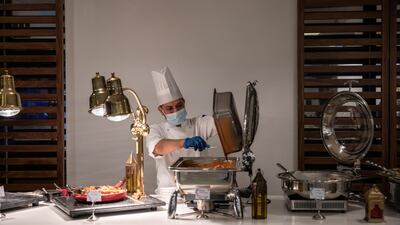

During Ramadan, food is never far from the mind. Indeed, that is part of the discipline the holy month imparts in those who choose to fast. Around the Middle East, families gather nightly to share the iftar meal with loved ones, a ritual made more difficult by the ongoing coronavirus pandemic.
It is made more difficult still by the fact that food prices have steadily risen in recent months in parts of the Arab world, reaching levels unseen in years. A monthly price index compiled by the UN’s Food and Agriculture Organisation reports that global food prices rose by two per cent in March, compared to February. This marked the 10th consecutive monthly rise, to the highest point since June 2014.
There is a myriad of factors underlying the current food inflation phenomenon, from a surge in demand caused by the pandemic to a rebalancing in food commodity markets in China to unseasonal weather patterns in South America. But in the Arab world, where most countries are net importers of food, particularly staples such as grains, the effects are particularly severe.
The present situation is not nearly as dire as what was experienced in 2008-2012, when soaring food prices contributed to socioeconomic unrest in much of the region. But the trend is still worrying, especially for poorer countries, and it exacerbates the wider economic turmoil that some of them are currently experiencing.
-
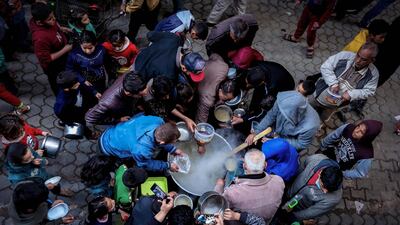
Palestinian Walid al-Hattab, widely known as 'the chef to the poor', distributes soup to people in need in Gaza City during Ramadan. AFP -
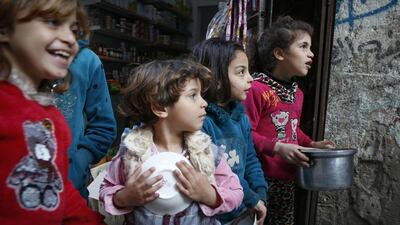
Girls in Gaza City wait to receive soup distributed by Palestinian Walid al-Hattab, out of shot, during Ramadan. AFP -
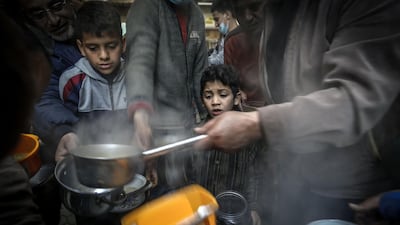
Children wait for Walid al-Hattab to serve soup to people in need in Gaza City. AFP -
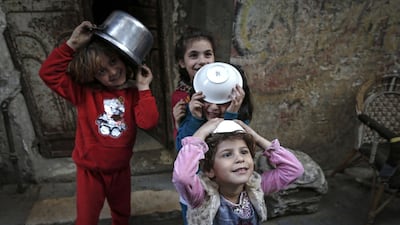
Girls queue up to collect soup from Walid al-Hattab. AFP -
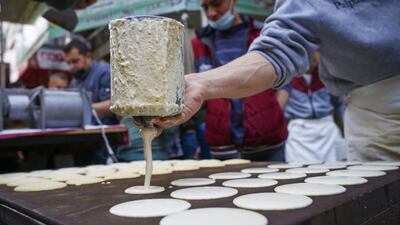
In Gaza City, Palestinian vendors prepare traditional sweets known as qatayef, a dumpling filled with cream or nuts, during a fasting month affected by the coronavirus pandemic. AFP -
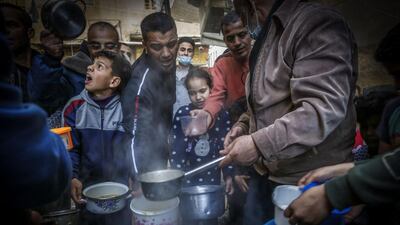
Gaza City residents gather round as Palestinian Walid al-Hattab serves up soup during the coronavirus-affected Ramadan. AFP -
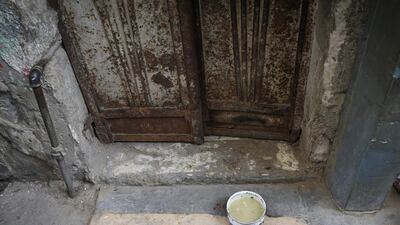
Palestinian Walid al-Hattab's soups are gratefully received by households in need in Gaza City during Ramadan. AFP


Syria, which has already seen its civil war lead to the collapse of its currency, is under tremendous inflationary pressure. Many wealthy Syrians previously kept their savings in dollar accounts in Beirut, but even these stores of wealth have evaporated as a result of Lebanon’s unprecedented economic crisis, which has led to devastating levels of inflation and strict capital controls there. The American University of Beirut’s “Fattoush Index”, which is named after a popular salad dish and measures the cost of its ingredients, found that prices have doubled in the past year. The cost of an iftar meal for a family of five is thought to have risen to 1.5 million Lebanese pounds, which is more than double Lebanon’s minimum wage.
Meanwhile, in Iraq, the government has been forced to devalue the national currency by 23 per cent against the dollar, causing food prices to rise further. As The National reported this month, many supermarkets in Baghdad are empty of shoppers, as families forego Ramadan meals in an effort to scrimp and save.
It does not help that many food suppliers have seized on elevated demand during the pandemic to increase their own profit margins by pushing up prices. In the Gulf, policymakers have responded with legally mandated price reductions or caps. In the UAE, the government announced reductions on 30,000 food items during Ramadan. But these policy tools are only viable in countries where governance, economic strategy and the rule of law are stable. Elsewhere in the Middle East, only dramatic structural reform will ensure that future Ramadans can be enjoyed by everyone regardless of their social or economic status, in the true spirit of the holy month.

