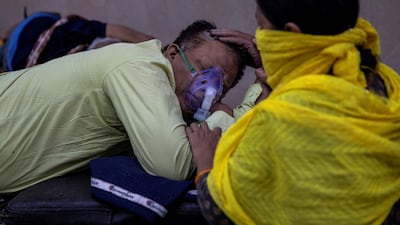
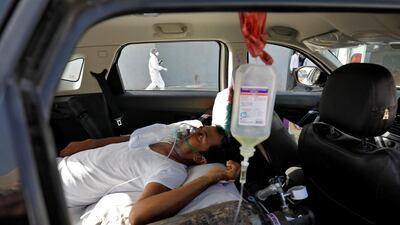
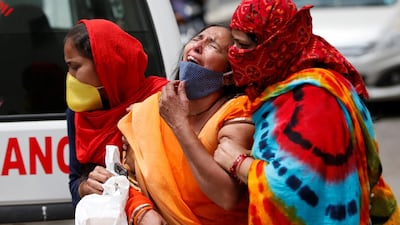
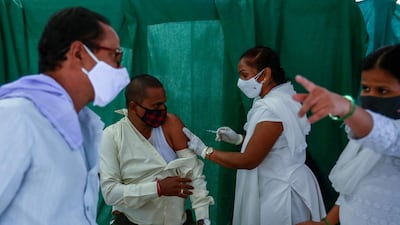
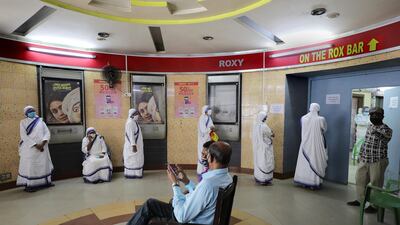
The numbers are grim. In the 24 hours to Sunday morning, India reported almost 350,000 new coronavirus cases, setting a record for the most Covid-19 infections for a fourth consecutive day. More than 2,000 lives were lost during this time, bringing the total national death toll to 190,000. As of Sunday, nearly 17 million residents have reportedly contracted the virus.
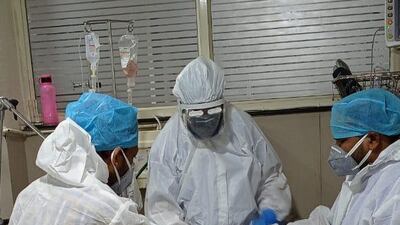
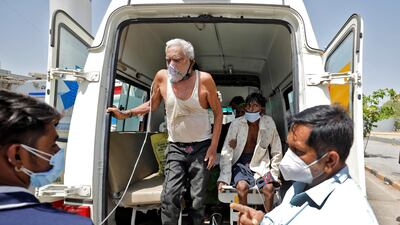
Behind these cold statistics are individual human beings, as is often pointed out. And it is impossible not to be moved by any of their stories: of those who suffer, have suffered or died; of their near and dear ones who have tried to get them much-needed medical attention; of medical professionals and other frontline workers who have risked their own lives in order to save those of others.
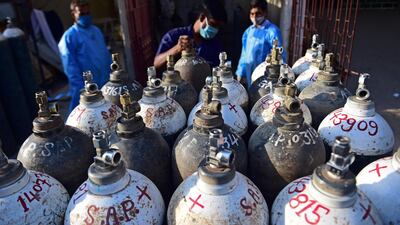
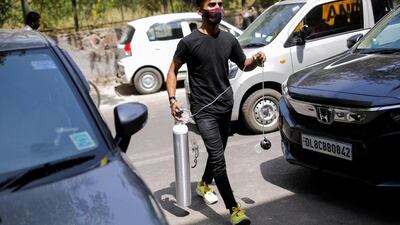
The deaths of 13 Covid-19 patients in a hospital fire in Mumbai on Friday tragically encapsulates a larger story, of the ailing healthcare infrastructure in many Indian cities. Hospitals have found themselves unable to take in more patients, faced by a shortage of beds, equipment, manpower and even medical oxygen. The country's pharmaceutical industry, which has been at the forefront of global vaccine production, is now struggling to deliver under the enormous pressure at home. And even as the various organs of government, civil society and the private sector urgently offer whatever help they can provide, warnings from frontline doctors that the surge is only the "tip of the iceberg" portend something more calamitous.
To some extent, what has happened in India could happen anywhere. Earlier in this pandemic, healthcare systems in countries like Italy and Brazil were completely overwhelmed. In the past year, it has become clear that a global effort and strict measures are needed to combat this pandemic and save lives.
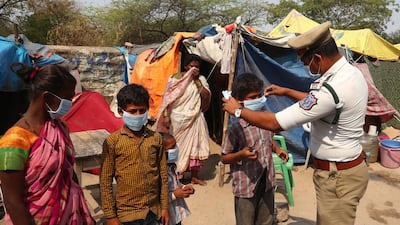
Optimism in the course of progress fighting the pandemic always carries the danger of complacency. India escaped last year's first wave largely unscathed, due in part to an effective lockdown. In absolute terms, the country is implementing the world's largest Covid-19 inoculation drive, with 127 million doses already given. Thus some government officials, politicians and the public dropped their guard. Election campaigns, with large crowds, have been held in a handful of states. Religious festivals and various social gatherings, where people were seen without masks, became superspreaders. Health authorities, meanwhile, did not anticipate a need to stock up on medical oxygen and vaccines for a second wave that many experts have pointed out was all but inevitable.
Amid the chaos, the international community is rightly rallying around India. Saudi Arabia is sending liquid oxygen; the UAE and Singapore are in talks to export oxygen tankers; Germany has offered oxygen generation plants. Members of US Congress, meanwhile, are pressing their government to support India's proposal at the World Trade Organisation to grant a waiver from intellectual property rights protections to Covid-19 vaccines, therapeutics and related technologies.
Even India's so-called adversaries are pitching in. Pakistan, with which it has fought three wars, is offering to send ambulances and volunteers. China, with which it is embroiled in a border dispute, is offering technological support.
Undoubtedly, there are lessons to be learnt from the Indian example and its current devastating surge. But now is the time for solidarity with India and its people.
Time and again, this pandemic has shown how inter-connected and inter-dependent the world really is. Despite the efforts by some nations to go it alone, no one country can solve all of its problems by itself.
Juvenile arthritis
Along with doctors, families and teachers can help pick up cases of arthritis in children.
Most types of childhood arthritis are known as juvenile idiopathic arthritis. JIA causes pain and inflammation in one or more joints for at least six weeks.
Dr Betina Rogalski said "The younger the child the more difficult it into pick up the symptoms. If the child is small, it may just be a bit grumpy or pull its leg a way or not feel like walking,” she said.
According to The National Institute of Arthritis and Musculoskeletal and Skin Diseases in US, the most common symptoms of juvenile arthritis are joint swelling, pain, and stiffness that doesn’t go away. Usually it affects the knees, hands, and feet, and it’s worse in the morning or after a nap.
Limping in the morning because of a stiff knee, excessive clumsiness, having a high fever and skin rash are other symptoms. Children may also have swelling in lymph nodes in the neck and other parts of the body.
Arthritis in children can cause eye inflammation and growth problems and can cause bones and joints to grow unevenly.
In the UK, about 15,000 children and young people are affected by arthritis.
The specs
Engine: 2.0-litre 4-cyl turbo
Power: 247hp at 6,500rpm
Torque: 370Nm from 1,500-3,500rpm
Transmission: 10-speed auto
Fuel consumption: 7.8L/100km
Price: from Dh94,900
On sale: now
India squads
Test squad against Afghanistan: Rahane (c), Dhawan, Vijay, Rahul, Pujara, Karun, Saha, Ashwin, Jadeja, Kuldeep, Umesh, Shami, Pandya, Ishant, Thakur.
T20 squad against Ireland and England: Kohli (c), Dhawan, Rohit, Rahul, Raina, Pandey, Dhoni, Karthik, Chahal, Kuldeep, Sundar, Bhuvneshwar, Bumrah, Pandya, Kaul, Umesh.
ODI squad against England: Kohli (c), Dhawan, Rohit, Rahul, Shreyas, Rayudu, Dhoni, Karthik, Chahal, Kuldeep, Sundar, Bhuvneshwar, Bumrah, Pandya, Kaul, Umesh
'Jurassic%20World%20Dominion'
%3Cp%3EDirector%3A%20Colin%20Trevorrow%3C%2Fp%3E%0A%3Cp%3EStars%3A%20Sam%20Neill%2C%20Laura%20Dern%2C%20Jeff%20Goldblum%2C%20Bryce%20Dallas%20Howard%2C%20Chris%20Pratt%3C%2Fp%3E%0A%3Cp%3ERating%3A%204%2F5%3C%2Fp%3E%0A
Nepotism is the name of the game
Salman Khan’s father, Salim Khan, is one of Bollywood’s most legendary screenwriters. Through his partnership with co-writer Javed Akhtar, Salim is credited with having paved the path for the Indian film industry’s blockbuster format in the 1970s. Something his son now rules the roost of. More importantly, the Salim-Javed duo also created the persona of the “angry young man” for Bollywood megastar Amitabh Bachchan in the 1970s, reflecting the angst of the average Indian. In choosing to be the ordinary man’s “hero” as opposed to a thespian in new Bollywood, Salman Khan remains tightly linked to his father’s oeuvre. Thanks dad.
COMPANY%20PROFILE
%3Cp%3E%3Cstrong%3EName%3A%20%3C%2Fstrong%3EEjari%3Cbr%3E%3Cstrong%3EBased%3A%20%3C%2Fstrong%3ERiyadh%2C%20Saudi%20Arabia%3Cbr%3E%3Cstrong%3EFounders%3A%20%3C%2Fstrong%3EYazeed%20Al%20Shamsi%2C%20Fahad%20Albedah%2C%20Mohammed%20Alkhelewy%20and%20Khalid%20Almunif%3Cbr%3E%3Cstrong%3ESector%3A%20%3C%2Fstrong%3EPropTech%3Cbr%3E%3Cstrong%3ETotal%20funding%3A%20%3C%2Fstrong%3E%241%20million%3Cbr%3E%3Cstrong%3EInvestors%3A%20%3C%2Fstrong%3ESanabil%20500%20Mena%2C%20Hambro%20Perks'%20Oryx%20Fund%20and%20angel%20investors%3Cbr%3E%3Cstrong%3ENumber%20of%20employees%3A%20%3C%2Fstrong%3E8%3C%2Fp%3E%0A
Score
New Zealand 266 for 9 in 50 overs
Pakistan 219 all out in 47.2 overs
New Zealand win by 47 runs
New Zealand lead three-match ODI series 1-0
Next match: Zayed Cricket Stadium, Abu Dhabi, Friday
MATCH DETAILS
Manchester United 3
Greenwood (21), Martial (33), Rashford (49)
Partizan Belgrade 0
UAE currency: the story behind the money in your pockets
TOUCH RULES
Touch is derived from rugby league. Teams consist of up to 14 players with a maximum of six on the field at any time.
Teams can make as many substitutions as they want during the 40 minute matches.
Similar to rugby league, the attacking team has six attempts - or touches - before possession changes over.
A touch is any contact between the player with the ball and a defender, and must be with minimum force.
After a touch the player performs a “roll-ball” - similar to the play-the-ball in league - stepping over or rolling the ball between the feet.
At the roll-ball, the defenders have to retreat a minimum of five metres.
A touchdown is scored when an attacking player places the ball on or over the score-line.
Secret Nation: The Hidden Armenians of Turkey
Avedis Hadjian, (IB Tauris)
UAE central contracts
Full time contracts
Rohan Mustafa, Ahmed Raza, Mohammed Usman, Chirag Suri, Mohammed Boota, Sultan Ahmed, Zahoor Khan, Junaid Siddique, Waheed Ahmed, Zawar Farid
Part time contracts
Aryan Lakra, Ansh Tandon, Karthik Meiyappan, Rahul Bhatia, Alishan Sharafu, CP Rizwaan, Basil Hameed, Matiullah, Fahad Nawaz, Sanchit Sharma
Ten tax points to be aware of in 2026
1. Domestic VAT refund amendments: request your refund within five years
If a business does not apply for the refund on time, they lose their credit.
2. E-invoicing in the UAE
Businesses should continue preparing for the implementation of e-invoicing in the UAE, with 2026 a preparation and transition period ahead of phased mandatory adoption.
3. More tax audits
Tax authorities are increasingly using data already available across multiple filings to identify audit risks.
4. More beneficial VAT and excise tax penalty regime
Tax disputes are expected to become more frequent and more structured, with clearer administrative objection and appeal processes. The UAE has adopted a new penalty regime for VAT and excise disputes, which now mirrors the penalty regime for corporate tax.
5. Greater emphasis on statutory audit
There is a greater need for the accuracy of financial statements. The International Financial Reporting Standards standards need to be strictly adhered to and, as a result, the quality of the audits will need to increase.
6. Further transfer pricing enforcement
Transfer pricing enforcement, which refers to the practice of establishing prices for internal transactions between related entities, is expected to broaden in scope. The UAE will shortly open the possibility to negotiate advance pricing agreements, or essentially rulings for transfer pricing purposes.
7. Limited time periods for audits
Recent amendments also introduce a default five-year limitation period for tax audits and assessments, subject to specific statutory exceptions. While the standard audit and assessment period is five years, this may be extended to up to 15 years in cases involving fraud or tax evasion.
8. Pillar 2 implementation
Many multinational groups will begin to feel the practical effect of the Domestic Minimum Top-Up Tax (DMTT), the UAE's implementation of the OECD’s global minimum tax under Pillar 2. While the rules apply for financial years starting on or after January 1, 2025, it is 2026 that marks the transition to an operational phase.
9. Reduced compliance obligations for imported goods and services
Businesses that apply the reverse-charge mechanism for VAT purposes in the UAE may benefit from reduced compliance obligations.
10. Substance and CbC reporting focus
Tax authorities are expected to continue strengthening the enforcement of economic substance and Country-by-Country (CbC) reporting frameworks. In the UAE, these regimes are increasingly being used as risk-assessment tools, providing tax authorities with a comprehensive view of multinational groups’ global footprints and enabling them to assess whether profits are aligned with real economic activity.
Contributed by Thomas Vanhee and Hend Rashwan, Aurifer
FIXTURES
All kick-off times UAE ( 4 GMT)
Friday
Sevilla v Levante (midnight)
Saturday
Athletic Bilbao v Real Sociedad (7.15pm)
Eibar v Valencia (9.30pm)
Atletico Madrid v Alaves (11.45pm)
Sunday
Girona v Getafe (3pm)
Celta Vigo v Villarreal (7.15pm)
Las Palmas v Espanyol (9.30pm)
Barcelona v Deportivo la Coruna (11.45pm)
Monday
Malaga v Real Betis (midnight)
More on Quran memorisation:
The Beach Bum
Director: Harmony Korine
Stars: Matthew McConaughey, Isla Fisher, Snoop Dogg
Two stars
THE BIO
Born: Mukalla, Yemen, 1979
Education: UAE University, Al Ain
Family: Married with two daughters: Asayel, 7, and Sara, 6
Favourite piece of music: Horse Dance by Naseer Shamma
Favourite book: Science and geology
Favourite place to travel to: Washington DC
Best advice you’ve ever been given: If you have a dream, you have to believe it, then you will see it.
More from Neighbourhood Watch
Normcore explained
Something of a fashion anomaly, normcore is essentially a celebration of the unremarkable. The term was first popularised by an article in New York magazine in 2014 and has been dubbed “ugly”, “bland’ and "anti-style" by fashion writers. It’s hallmarks are comfort, a lack of pretentiousness and neutrality – it is a trend for those who would rather not stand out from the crowd. For the most part, the style is unisex, favouring loose silhouettes, thrift-shop threads, baseball caps and boyish trainers. It is important to note that normcore is not synonymous with cheapness or low quality; there are high-fashion brands, including Parisian label Vetements, that specialise in this style. Embraced by fashion-forward street-style stars around the globe, it’s uptake in the UAE has been relatively slow.
Chef Nobu's advice for eating sushi
“One mistake people always make is adding extra wasabi. There is no need for this, because it should already be there between the rice and the fish.
“When eating nigiri, you must dip the fish – not the rice – in soy sauce, otherwise the rice will collapse. Also, don’t use too much soy sauce or it will make you thirsty. For sushi rolls, dip a little of the rice-covered roll lightly in soy sauce and eat in one bite.
“Chopsticks are acceptable, but really, I recommend using your fingers for sushi. Do use chopsticks for sashimi, though.
“The ginger should be eaten separately as a palette cleanser and used to clear the mouth when switching between different pieces of fish.”