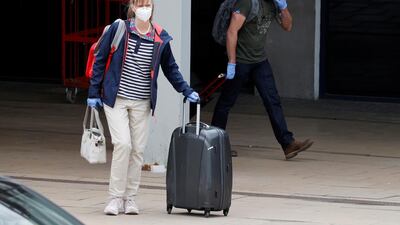

As some countries begin to loosen restrictions on movement and the air travel industry prepares to resume some activity over the summer, the debate around safe travel in times of coronavirus is all the more pressing. Last week, the International Air Transport Association signaled support for passengers wearing masks on flights, but it backtracked on leaving middle seats empty on aircrafts. Iata’s chief economist Brian Pearce says that most airlines would be unable to generate revenue if a third of all sets are left empty in their aircrafts.
The coronavirus pandemic continues, and looks set to send the travel sector, along with many other sectors, into a new era of temperature checks and physical distancing.
Travel restrictions rolled out since March have taken an immense toll on airlines, with American carriers forced to reduce their capacity by almost 60 per cent and ground half of their fleet. The imperative to make up for these losses is a matter of survival.
While prospective travelers may be thrilled to be able to reconnect with their families or return home after months of lockdown, many have expressed concern that the resumption of flights may come at the expense of passenger and crew health. Here in the UAE, airports and airlines have led the way in taking safety precautions and assuring passengers but this is not the case around the world.
Widely shared video footage of a packed Beirut-bound flight from London, in which many passengers were not wearing masks and were unable to abide by physical distancing rules, caused outrage in Lebanon, especially as travellers had paid a high fare in the belief that many seats would remain empty out of precaution. A US carrier has also come under fire for overcharging passengers who had reserved a spot next to an empty seat. Emirates, meanwhile, has introduced physical distancing and banned print magazines on all its flights.
Airliners have resorted to a wide range of practices to balance between generating revenue and protecting passengers, but the variation in approaches risks dampening the overall confidence of would-be travellers further. Airports around the world, too, appear no closer to establishing uniform, universal best practices. While temperature checks have become mandatory in most airports, testing prior to boarding is not. Even in cases where passengers get tested before departure, as has been trialled on certain flights in the UAE, and physical distancing and masks are mandatory on the aircraft, the screening process upon arrival continues to vary widely by country. The UK has only now, nearly two months after its lockdown began, announced that passengers will need to quarantine upon arrival, a practice that has been in place in the UAE for several weeks now.
The disparities in public health practices, if it continues, will heighten the sense of fear and diminish trust among the air travel industry’s employees, passengers and investors alike. This is all the more concerning for an industry in which trust and safety are paramount. Global co-operation, and a clear set of international guidelines for all stages of air travel, from the check-in desk to the baggage claim and every part of the journey in between, have to be put in place around the world. The coronavirus is highly contagious. It has managed to spread from a single city in central China to virtually all countries in the world in a matter of months. While it may seem like airports and airlines have to choose between accepting that reality and saving their businesses, that is a false choice. If we want to take to the skies once again, we must first come to grips with what’s happening on the ground.

