


Three years ago, The National reported from a sweltering Baghdad, where millions of Iraqis were struggling through a suffocating heatwave. “It’s like Iraq is facing the open doors of hell,” Samir Mohammed Khalid said at the time. “We can’t stay indoors because of the electricity outages and a lack of drinking water, and we can’t go shopping. In both cases, you are being tortured.” According to new research published this week, Iraq and many other countries in the Middle East seem set for more of the same.
Scientists from Australia’s Monash University, China’s Shandong University and the London School of Hygiene and Tropical Medicine found that the Middle East has been hit the hardest by a rise in global heatwave deaths over the past three decades. Lebanon and Syria are among the countries where the rate of excess deaths due to extreme heat has jumped sharply. When these results are viewed in conjunction with other important findings – a report released last August by the international charity Oxfam found that heatwaves in this region will rise by 16 per cent – it is clear that unavoidable change is upon us.
These facts must shake the public and private sectors out of any lingering complacency and dissuade us all of the misapprehension that heatwaves are merely uncomfortable or just periodic problems that affect only limited communities. Instead, heatwaves of increasing intensity and duration present a multifaceted challenge to states, because they exacerbate a range of problems, from water supplies to urban development. Vulnerable people such as children, the sick or the elderly, are particularly affected.
Furthermore, as summer temperatures rise to extreme levels, productivity dips and economic output falls. Heatwaves strain hospitals and emergency services, diverting important resources. Crucially, soaring temperatures hit agriculture significantly, leading to food shortages, price hikes and economic losses.
Extreme heat also damages countries’ infrastructure, requiring expensive repairs to avoid disruption to vital transportation and supply chains. As people rely more on air conditioning – if they are lucky enough to have regular electricity – the power grid faces extra pressure and energy prices go up, something that is especially destabilising in lower-income Mena states.
-
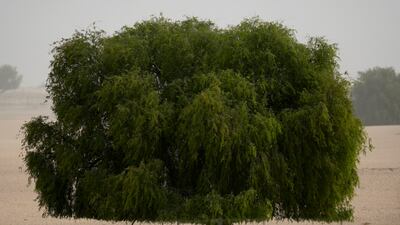
An Arabian oryx takes refuge in the shade of a tree during a dusty hot day at a conservation area in Dubai. AP -

People cool off by swimming on Dubai's coast. AP -
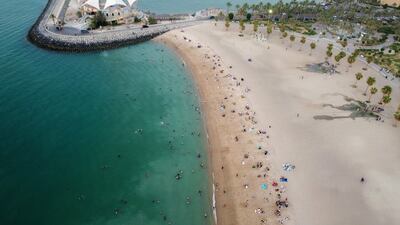
People at the beach trying to escape the heat in Kuwait City. AFP -

A man cools off under an open-air shower in Baghdad. AP -

A man takes a block of ice out of an ice factory in Basra. AFP -

A boy dives into a river in the village of Albu Mustafa, near Hilla in central Iraq. AFP -
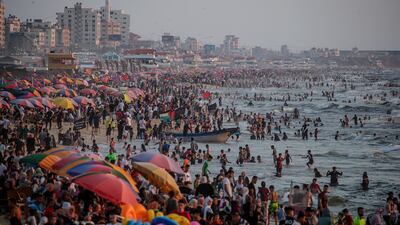
Palestinians spend time at the beach in Gaza City. EPA -

An Egyptian teen jumps into the water of the Nile on the outskirts of Cairo. EPA -
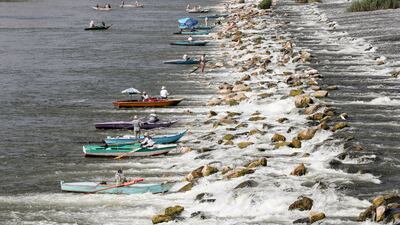
People row on the Nile during hot weather in the Qanater, on the outskirts of Cairo. EPA -

Libyans jet ski off the coast of Tripoli. AFP -
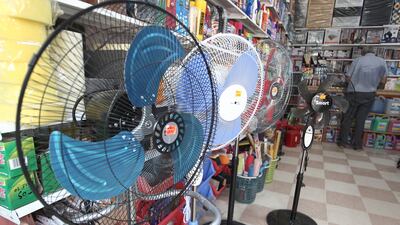
Fans in a general store in Algiers where the temperatures rose up to 30 degrees Celsius. AP -
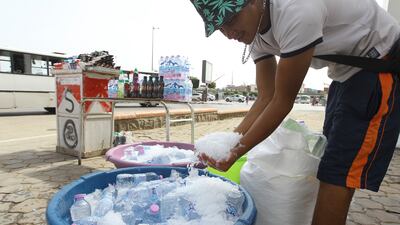
A street seller puts some ice on bottles of water in Algiers. AP Photo -

A child plays in a public fountain in Algiers. AP


The experts quoted in this latest report have called for “localised adaptation planning and risk management across all government levels”. They are right to do so, but how can such action take place in countries such as Lebanon, Yemen or Syria where a lack of effective governance remains a major stumbling block?
And yet, there are reasons to be hopeful. Low-cost solutions to extreme heat exist, such as planting more trees for carbon capture or using heat-reflecting materials and shading. Smart urban planning and building design also offer plausible solutions. An example of this can be seen in Egypt, where green architects ECOnsult designed accommodation for tea farm workers in the country’s Western Desert region using traditional knowledge and porous limestone and sandstone that lets air flow through the walls.
But more comprehensive solutions such as developing heat-resistant crops, improving irrigation or increasing electricity capacity to meet the demand for air conditioning all require serious, long-term investment. This is a challenge for national governments, regional bodies and international donors or lenders to address, not in the future, but now. Recognising heatwaves for the security challenge that they are – and not just as a seasonal nuisance – is the first step on that journey.

