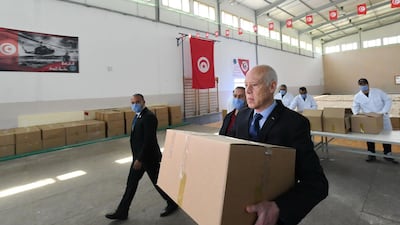
The appointment of Tunisian Prime Minister Hichem Mechichi has surprised many in the country. EPA

Will Tunisia's new dawn be another false one?


  • English
  • Arabic

As a new government begins its term in Tunisia, the leadership faces a potent combination of challenges that have the potential to derail some of the progress made since January 2011, when the country began its transition to democratic rule. From an economy wracked by the Covid-19 pandemic, to growing political polarisation, to persistent corruption, Tunisia's political future remains uncertain.

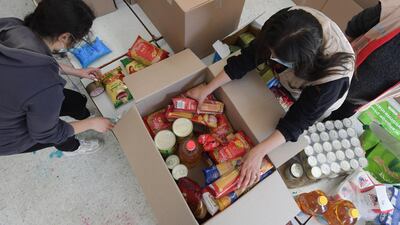
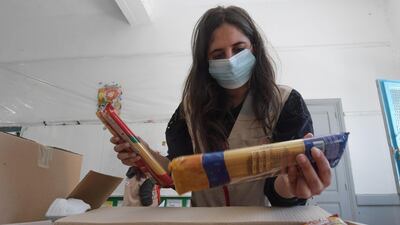
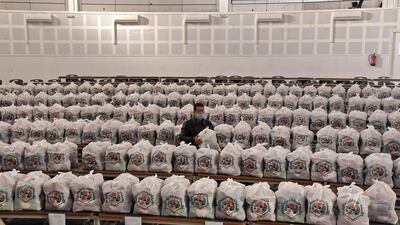
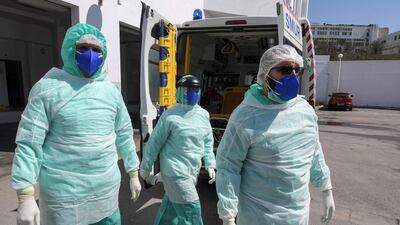
Tunisia has fared relatively well during the pandemic, initiating severe lockdown measures early on that helped keep the number of cases down. While the country has seen an uptick in cases following the reopening of the land, air and sea borders on June 27, the number of cases (more than 8,000 cases and at least 129 deaths as of Thursday) remains low compared to other Mediterranean countries. But the damage Covid-19 has brought to Tunisia is far greater than the disease casualties. Rather, the pandemic has left Tunisia with an unemployment rate of 20 per cent, GDP growth rate expected to decline by 7 per cent this year and a tourism industry a shambles.

Even prior to the pandemic, Tunisia’s economy was fragile and had just started showing signs of positive growth, with some of the best economic figures since the 2010-2011 uprisings. But the pandemic has spoiled much of the good news, making it imperative that the new government prioritise reform aimed at addressing economic growth and levelling the playing field for the country’s traditionally marginalised interior and southern regions, which have suffered disproportionately during the pandemic.

On September 2, the Tunisian parliament approved Prime Minister Hichem Mechichi's government. This is the 12th government since 2011 and the third attempt at government formation since the October 2019 elections that brought this parliament into power. Habib Jemli, who was tasked by the largest party in Parliament, the Islamist Ennahda, to form a government, failed to secure enough votes to move forward. His successor, Elyes Fakhfakh, was chosen by President Kais Saied in January and secured a vote of confidence in his government the following month, leaving the country without a functioning cabinet for four months. But Mr Fakhfakh's government was short-lived, and he was forced out by the President in July.

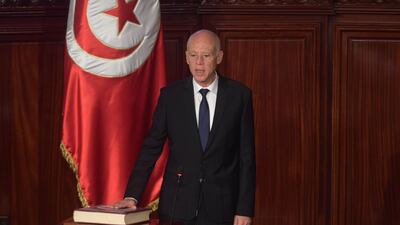
Mr Saied's choice of Mr Mechichi as Prime Minister surprised many within the political establishment, as he was not one of the candidates put forth by a political party. And while he had some previous governing experience, his most important quality seems to be that of his close ties to Mr Saied. Mr Mechichi is one of Mr Saied's advisers and had served, briefly, as interior minister in the previous government. His appointment signalled that Mr Saied is looking to tighten his control over the government and siphon power away from Ennahda, the controlling party within government, from whom the President has grown increasingly distant over the past few months.

And Mr Mechichi’s choices seem to have echoed his own selection. Rather than cobbling together a government representing various party interests, he chose to arrange a “technocratic” government, with ministers selected based on their technical skills, instead of political affiliation. While some ministers come from the bureaucracy, others are Saied loyalists, including some of the most high-profile posts. The Minister of Interior, for example, is a private lawyer who had served as a campaign co-ordinator for Mr Saied. The Minister of Defence is a former law professor, like Mr Saied. And the Minister of Foreign Affairs is one of his former diplomatic advisers.

Mr Mechichi’s decision to de-politicise the government could be a smart move.  Mr Fakhfakh’s government failed, in part, due to growing polarisation. The October 2019 elections brought a whopping 31 parties into parliament, with the two largest parties – Ennahda and Qalb Tounes – holding only 24 and 18 per cent of seats, respectively. This reflects both the high amount of dissatisfaction of the public with the political establishment, particularly traditional parties, and the growing political polarisation within the country.

One trend that is both a result of and contributes to the weakness of political parties is the phenomenon of party tourism, where political figures jump from one party to another in order to stay in power. Additionally, parties tend to quickly shift their alliances, making it difficult to discern what a party actually stands for. For example, Ennahda and Qalb Tounes, which entered 2020 as political foes, with Ennahda vociferously condemning Qalb Tounes for its ties to corruption, have now turned into allies, united by their shared animosity toward President Saied.

The political landscape has also suffered from growing polarisation, which has manifested itself in sometimes violent interactions between politicians within the halls of parliament. Some of the most vicious attacks have been lobbied between the Karama Party, a conservative Islamist party pushing for a larger role of religion within the state, and Abir Moussi’s Free Destourian Party, made up largely of supporters of the former regime, who are fed up with the democratic transition. While the fight is often framed as a secularist-Islamist divide, the reality is far more complex, with fights over religion as well as the Tunisian identity and deeper social issues.

People attend the unemployment protests as they gather to mark the celebration for eighth anniversary of the revolution at Bouazizi Square in Sidi Bouzid in 2018. Getty Images

Regardless of the cause, the polarisation and fractured political landscape have made governing difficult and led to little likelihood that parliament or the government will be able to come to agreement on the issues necessary to fix the socio-economic problems that are plaguing the country.

Another major issue facing Tunisia today is the persistence of corruption – one of the key causes of the uprisings. While the country has made tremendous strides in dismantling the mafia-like structures that dominated the Ben Ali era, corruption has become democratised and many of the practices that allowed corruption to flourish have yet to change. The sole issue on which Mr Saied campaigned in the presidential race was fighting corruption. Thus, he has taken a particularly strong interest in this issue. And Mr Fakhfakh was brought down by corruption allegations, despite winning praise from Tunisians for his handling of the pandemic.

The Fakhfakh affair spiralled into a larger contest between him and the National Anti-Corruption Body. In what many saw as a retaliatory measure, Mr Fakhfakh fired its head, Chawki Tabib, who initially refused to leave his post, citing impropriety in his dismissal. Mr Mechichi and his government will need to work closely with the new head, Imed Boukhris, to keep the anti-corruption fight moving forward. This is an issue that Mr Saied continues to watch closely.  Most recently, he established of his own committee to fight corruption and recover stolen assets. The committee will be houseed under the presidency, despite corruption falling clearly under the mandate of the prime minister, signalling that even with his close ties to Mr Mechichi, he wants to maintain strict control over the anti-corruption agenda.

Ennahda supporters celebrate in Tunis after their party claimed victory in last year's parliamentary election. Tunisian politics has become deeply polarised. Reuters

Tunisia is embarking on a critical period. December will mark the 10th anniversary of the revolution and will shine a spotlight on the country's successes – and failures – of the past decade. As the second decade of transition begins, there are several signs of hope. First, the continued pride Tunisians, particularly youth, have in their country's accomplishments and dedication to the principles of the revolution shows that the public will not easily turn its back on the democratic transition. Second, despite its challenges, Tunisia continues to serve as a beacon of hope for people across the Arab world, both as a haven for freedom of speech and expression and a potent and living symbol that democracy can flourish in the Arab world.

However, passion, pride and hope are not sufficient to sustain a transition or boost the economy. Rather, Tunisia's new leaders should figure out a way to put politics aside and take on the difficult tasks necessary to thrust their country into the next decade as a healthy democracy.

Sarah Yerkes is a senior fellow in Carnegie’s Middle East Programme

Pakistan v New Zealand Test series

Pakistan: Sarfraz (c), Hafeez, Imam, Azhar, Sohail, Shafiq, Azam, Saad, Yasir, Asif, Abbas, Hassan, Afridi, Ashraf, Hamza

New Zealand: Williamson (c), Blundell, Boult, De Grandhomme, Henry, Latham, Nicholls, Ajaz, Raval, Sodhi, Somerville, Southee, Taylor, Wagner

Umpires: Bruce Oxerford (AUS) and Ian Gould (ENG); TV umpire: Paul Reiffel (AUS); Match referee: David Boon (AUS)

Tickets and schedule: Entry is free for all spectators. Gates open at 9am. Play commences at 10am

Profile

Co-founders of the company: Vilhelm Hedberg and Ravi Bhusari

Launch year: In 2016 ekar launched and signed an agreement with Etihad Airways in Abu Dhabi. In January 2017 ekar launched in Dubai in a partnership with the RTA.

Number of employees: Over 50

Financing stage: Series B currently being finalised

Investors: Series A - Audacia Capital 

Sector of operation: Transport

Stats at a glance:

Cost: 1.05 billion pounds (Dh 4.8 billion)

Number in service: 6

Complement 191 (space for up to 285)

Top speed: over 32 knots

Range: Over 7,000 nautical miles

Length 152.4 m

Displacement: 8,700 tonnes

Beam:   21.2 m

Draught: 7.4 m

UAE currency: the story behind the money in your pockets
Results:

Women:

1. Rhiannan Iffland (AUS) 322.95 points
2. Lysanne Richard (CAN) 285.75
3. Ellie Smart (USA) 277.70

Men:

1. Gary Hunt (GBR) 431.55
2. Constantin Popovici (ROU) 424.65
3. Oleksiy Prygorov (UKR) 392.30

The biog

Favourite hobby: I love to sing but I don’t get to sing as much nowadays sadly.

Favourite book: Anything by Sidney Sheldon.

Favourite movie: The Exorcist 2. It is a big thing in our family to sit around together and watch horror movies, I love watching them.

Favourite holiday destination: The favourite place I have been to is Florence, it is a beautiful city. My dream though has always been to visit Cyprus, I really want to go there.

Three ways to boost your credit score

Marwan Lutfi says the core fundamentals that drive better payment behaviour and can improve your credit score are:

1. Make sure you make your payments on time;

2. Limit the number of products you borrow on: the more loans and credit cards you have, the more it will affect your credit score;

3. Don't max out all your debts: how much you maximise those credit facilities will have an impact. If you have five credit cards and utilise 90 per cent of that credit, it will negatively affect your score.

Key facilities
  • Olympic-size swimming pool with a split bulkhead for multi-use configurations, including water polo and 50m/25m training lanes
  • Premier League-standard football pitch
  • 400m Olympic running track
  • NBA-spec basketball court with auditorium
  • 600-seat auditorium
  • Spaces for historical and cultural exploration
  • An elevated football field that doubles as a helipad
  • Specialist robotics and science laboratories
  • AR and VR-enabled learning centres
  • Disruption Lab and Research Centre for developing entrepreneurial skills
RESULT

Esperance de Tunis 1 Guadalajara 1 
(Esperance won 6-5 on penalties)
Esperance: Belaili 38’
Guadalajara: Sandoval 5’

'Cheb%20Khaled'
%3Cp%3E%3Cstrong%3EArtist%3A%20%3C%2Fstrong%3EKhaled%3Cbr%3E%3Cstrong%3ELabel%3A%20%3C%2Fstrong%3EBelieve%3Cbr%3E%3Cstrong%3ERating%3A%3C%2Fstrong%3E%204%2F5%3C%2Fp%3E%0A
Step by step

2070km to run

38 days

273,600 calories consumed

28kg of fruit

40kg of vegetables

45 pairs of running shoes

1 yoga matt

1 oxygen chamber

Takreem Awards winners 2021

Corporate Leadership: Carl Bistany (Lebanon)

Cultural Excellence: Hoor Al Qasimi (UAE)

Environmental Development and Sustainability: Bkerzay (Lebanon)

Environmental Development and Sustainability: Raya Ani (Iraq)

Humanitarian and Civic Services: Women’s Programs Association (Lebanon)

Humanitarian and Civic Services: Osamah Al Thini (Libya)

Excellence in Education: World Innovation Summit for Education (WISE) (Qatar)

Outstanding Arab Woman: Balghis Badri (Sudan)

Scientific and Technological Achievement: Mohamed Slim Alouini (KSA)

Young Entrepreneur: Omar Itani (Lebanon)

Lifetime Achievement: Suad Al Amiry (Palestine)

Tips%20for%20travelling%20while%20needing%20dialysis
%3Cul%3E%0A%3Cli%3EInform%20your%20doctor%20about%20your%20plans.%C2%A0%3C%2Fli%3E%0A%3Cli%3EAsk%20about%20your%20treatment%20so%20you%20know%20how%20it%20works.%C2%A0%3C%2Fli%3E%0A%3Cli%3EPay%20attention%20to%20your%20health%20if%20you%20travel%20to%20a%20hot%20destination.%C2%A0%3C%2Fli%3E%0A%3Cli%3EPlan%20your%20trip%20well.%C2%A0%3C%2Fli%3E%0A%3C%2Ful%3E%0A
The specs: 2018 Nissan 370Z Nismo

The specs: 2018 Nissan 370Z Nismo
Price, base / as tested: Dh182,178
Engine: 3.7-litre V6
Power: 350hp @ 7,400rpm
Torque: 374Nm @ 5,200rpm
Transmission: Seven-speed automatic
​​​​​​​Fuel consumption, combined: 10.5L / 100km

Match info

Uefa Champions League Group F

Manchester City v Hoffenheim, midnight (Wednesday, UAE)

The%20specs
%3Cp%3E%3Cstrong%3EPowertrain%3A%20%3C%2Fstrong%3ESingle%20electric%20motor%0D%3Cbr%3E%3Cstrong%3EPower%3A%20%3C%2Fstrong%3E201hp%0D%3Cbr%3E%3Cstrong%3ETorque%3A%20%3C%2Fstrong%3E310Nm%0D%3Cbr%3E%3Cstrong%3ETransmission%3A%20%3C%2Fstrong%3ESingle-speed%20auto%0D%3Cbr%3E%3Cstrong%3EBattery%3A%20%3C%2Fstrong%3E53kWh%20lithium-ion%20battery%20pack%20(GS%20base%20model)%3B%2070kWh%20battery%20pack%20(GF)%0D%3Cbr%3E%3Cstrong%3ETouring%20range%3A%20%3C%2Fstrong%3E350km%20(GS)%3B%20480km%20(GF)%0D%3Cbr%3E%3Cstrong%3EPrice%3A%20%3C%2Fstrong%3EFrom%20Dh129%2C900%20(GS)%3B%20Dh149%2C000%20(GF)%0D%3Cbr%3E%3Cstrong%3EOn%20sale%3A%3C%2Fstrong%3E%20Now%3C%2Fp%3E%0A
What can you do?

Document everything immediately; including dates, times, locations and witnesses

Seek professional advice from a legal expert

You can report an incident to HR or an immediate supervisor

You can use the Ministry of Human Resources and Emiratisation’s dedicated hotline

In criminal cases, you can contact the police for additional support

RESULTS

1.30pm Handicap (PA) Dh 50,000 (Dirt) 1,400m

Winner AF Almomayaz, Hugo Lebouc (jockey), Ali Rashid Al Raihe (trainer)

2pm Handicap (TB) Dh 84,000 (D) 1,400m

Winner Karaginsky, Tadhg O’Shea, Satish Seemar.

2.30pm Maiden (TB) Dh 60,000 (D) 1,200m

Winner Sadeedd, Ryan Curatolo, Nicholas Bachalard.

3pm Conditions (TB) Dh 100,000 (D) 1,950m

Winner Blue Sovereign, Clement Lecoeuvre, Erwan Charpy.

3.30pm Handicap (TB) Dh 76,000 (D) 1,800m

Winner Tailor’s Row, Royston Ffrench, Salem bin Ghadayer.

4pm Maiden (TB) Dh 60,000 (D) 1,600m

Winner Bladesmith, Tadhg O’Shea, Satish Seemar.

4.30pm Handicap (TB) Dh 68,000 (D) 1,000m

Winner Shanaghai City, Fabrice Veron, Rashed Bouresly.

Mercer, the investment consulting arm of US services company Marsh & McLennan, expects its wealth division to at least double its assets under management (AUM) in the Middle East as wealth in the region continues to grow despite economic headwinds, a company official said.

Mercer Wealth, which globally has $160 billion in AUM, plans to boost its AUM in the region to $2-$3bn in the next 2-3 years from the present $1bn, said Yasir AbuShaban, a Dubai-based principal with Mercer Wealth.

Within the next two to three years, we are looking at reaching $2 to $3 billion as a conservative estimate and we do see an opportunity to do so,” said Mr AbuShaban.

Mercer does not directly make investments, but allocates clients’ money they have discretion to, to professional asset managers. They also provide advice to clients.

“We have buying power. We can negotiate on their (client’s) behalf with asset managers to provide them lower fees than they otherwise would have to get on their own,” he added.

Mercer Wealth’s clients include sovereign wealth funds, family offices, and insurance companies among others.

From its office in Dubai, Mercer also looks after Africa, India and Turkey, where they also see opportunity for growth.

Wealth creation in Middle East and Africa (MEA) grew 8.5 per cent to $8.1 trillion last year from $7.5tn in 2015, higher than last year’s global average of 6 per cent and the second-highest growth in a region after Asia-Pacific which grew 9.9 per cent, according to consultancy Boston Consulting Group (BCG). In the region, where wealth grew just 1.9 per cent in 2015 compared with 2014, a pickup in oil prices has helped in wealth generation.

BCG is forecasting MEA wealth will rise to $12tn by 2021, growing at an annual average of 8 per cent.

Drivers of wealth generation in the region will be split evenly between new wealth creation and growth of performance of existing assets, according to BCG.

Another general trend in the region is clients’ looking for a comprehensive approach to investing, according to Mr AbuShaban.

“Institutional investors or some of the families are seeing a slowdown in the available capital they have to invest and in that sense they are looking at optimizing the way they manage their portfolios and making sure they are not investing haphazardly and different parts of their investment are working together,” said Mr AbuShaban.

Some clients also have a higher appetite for risk, given the low interest-rate environment that does not provide enough yield for some institutional investors. These clients are keen to invest in illiquid assets, such as private equity and infrastructure.

“What we have seen is a desire for higher returns in what has been a low-return environment specifically in various fixed income or bonds,” he said.

“In this environment, we have seen a de facto increase in the risk that clients are taking in things like illiquid investments, private equity investments, infrastructure and private debt, those kind of investments were higher illiquidity results in incrementally higher returns.”

The Abu Dhabi Investment Authority, one of the largest sovereign wealth funds, said in its 2016 report that has gradually increased its exposure in direct private equity and private credit transactions, mainly in Asian markets and especially in China and India. The authority’s private equity department focused on structured equities owing to “their defensive characteristics.”

First-round leaderbaord

-5 C Conners (Can)

-3 B Koepka (US), K Bradley (US), V Hovland (Nor), A Wise (US), S Horsfield (Eng), C Davis (Aus);

-2 C Morikawa (US), M Laird (Sco), C Tringale (US)

Selected others: -1 P Casey (Eng), R Fowler (US), T Hatton (Eng)

Level B DeChambeau (US), J Rose (Eng) 

1 L Westwood (Eng), J Spieth (US)

3 R McIlroy (NI)

4 D Johnson (US)

Results

6.30pm Al Maktoum Challenge Round-3 Group 1 (PA) US$100,000 (Dirt) 2,000m, Winner Bandar, Fernando Jara (jockey), Majed Al Jahouri (trainer).

7.05pm Meydan Classic Listed (TB) $175,000 (Turf) 1,600m, ​​​​​​​Winner Well Of Wisdom, William Buick, Charlie Appleby.

7.40pm Handicap (TB) $135,000 (T) 2,000m, ​​​​​​​Winner Star Safari, Mickael Barzalona, Charlie Appleby.

8.15pm Handicap (TB) $135,000 (D) 1,600m, Winner Moqarrar, Fabrice Veron, Erwan Charpy.

8.50pm Nad Al Sheba Trophy Group 2 (TB) $300,000 (T) 2,810m, Winner Secret Advisor, William Buick, Charlie Appleby.

9.25pm Curlin Stakes Listed (TB) $175,000 (D) 2,000m, ​​​​​​​Winner Parsimony, William Buick, Doug O’Neill.

10pm Handicap (TB) $135,000 (T) 2,000m, Winner Simsir, Ronan Whelan, Michael Halford.

10.35pm Handicap (TB) $175,000 (T) 1,400m, ​​​​​​​Winner Velorum, Mickael Barzalona, Charlie Appleby.


The Bio

Hometown: Bogota, Colombia
Favourite place to relax in UAE: the desert around Al Mleiha in Sharjah or the eastern mangroves in Abu Dhabi
The one book everyone should read: 100 Years of Solitude by Gabriel Garcia Marquez. It will make your mind fly
Favourite documentary: Chasing Coral by Jeff Orlowski. It's a good reality check about one of the most valued ecosystems for humanity

Our legal consultant

Name: Dr Hassan Mohsen Elhais

Position: legal consultant with Al Rowaad Advocates and Legal Consultants.