


Early this month, Afghanistan’s electricity sector took three major hits after blasts crippled transmission towers in Kabul’s Chimtala area and Charikar city in Parwan province. The next day in Charikar, explosives detonated at the site killed one official and injured four more employees from the country’s state electricity company, Da Afghanistan Breshna Sherkat (Dabs), as they were making repairs.
Attacks on Afghanistan’s electricity infrastructure have been on the rise since the US-Taliban peace deal was signed on February 29. Late last month, Kabul and much of eastern Afghanistan were sent into blackout conditions when militants detonated an improvised explosive device at a transmission tower near the capital.
As the Afghan government struggles to contain the spread of coronavirus, the resurgence in violence has exacerbated its inability to ensure hospitals and households have access to critical resources like electricity and drinking water.
Last month, Dabs spokesman Wahidullah Tawhidi expressed alarm at not only the financial losses incurred by the attacks, but also the significant toll on Afghans’ access to healthcare and education in the wake of Covid-19.
As if the Taliban’s long history of sabotaging transmission towers and cutting power lines were not enough to expose Afghanistan’s failure to secure its electricity infrastructure, Covid-19 has shed new light on these vulnerabilities. Solutions like the Ministry of Public Health’s development of a Covid-19 information app and the Ministry of Education’s provision of online educational resources are proving largely ineffective for a population stuck in the dark.
Hospitals, prisons, and medical centres that struggle in non-Covid times are now stretched thin by the dual threat of Covid-19 and Taliban violence in response to the Afghan government’s inability to meet demands.
Part of the problem of ensuring electricity access lies in the country’s reliance on long-distance transmission systems. The history of local, regional and international development of Afghanistan’s electricity infrastructure has been disproportionately focused on long-distance and cross-border projects prone to theft, sabotage, and high rates of electricity loss due to the difficulties of repairing ageing infrastructure in territory controlled by the Taliban and other armed groups.
Distributed energy resources have the potential to improve energy security and resilience in the wake of attacks on long-distance transmission networks and crises like Covid-19 that dramatically shift patterns of electricity demand.
Certain forms of distributed energy – like diesel generators – are already in use as a back-up power supply for hospitals, schools and households throughout Afghanistan and much of the developing world.

Despite the myriad threats that energy companies face developing projects in Afghanistan, one local company has revolutionised the commercialisation and deployment of distributed energy systems.
Bayat Power, a Kabul-based oil and gas company, built a modular gas-fired power plant – the country’s first gas power plant in 40 years – and brought it online in the country’s gas-rich northern region in November of last year. Kamal Gawri, chief financial officer of Bayat Power, noted at the Atlantic Council Global Energy Forum this January that power projects in Afghanistan often fail because they are too large, complex and slow to generate revenue. Bayat avoided the fate of other power projects by keeping the project small and pitching the government a five-year rather than a 20-year power purchase agreement (PPA).
Bayat set an example for capitalising on Afghanistan’s variable natural resources. While Jowzjan province proved to be an ideal location for a gas plant, the country’s rich topography presents a high rate of exploitable renewable capacity: about 23,000 megawatts (MW) of hydroelectric in northeastern Afghanistan; 220,000MW of solar in the southern provinces; and 66,700MW of wind in the southwest near the Iranian border. While the country’s costs per kilowatt hour (kWh) are currently above the global average for these technologies, they are expected to drop as new renewable energy projects are implemented.
-
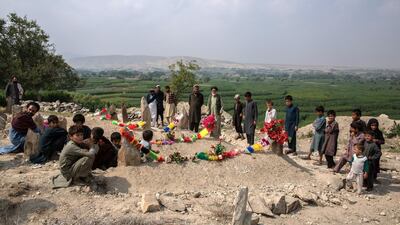
Families sit by the graves of relatives killed in a US drone strike on September 19, 2019, in Javari village in Afghanistan's Nangarhar province. Photos by Stefanie Glinski for The National -
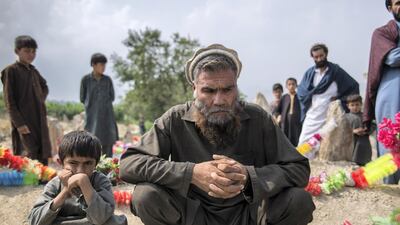
Rahat Gul, 45, sits before the grave of his son Khyber with Lal Agha, Khyber's 8-year-old son. -
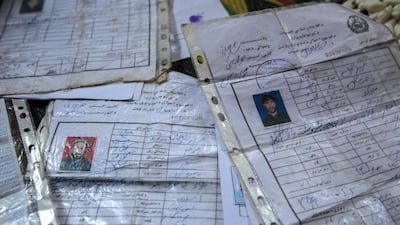
The ID documents of the seven people from Javari village who were killed in the US drone strike. -

Lal Agha sits by the grave of his father Khyber, 25, who was working as a pine nut collector when he was killed in a US drone strike. -
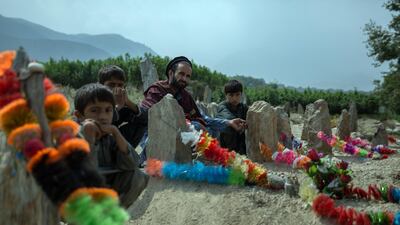
The families of Javari village have decorated the graves of the relatives with bright garlands. -

Rahat Gul sits with his grandchildren and neighbours as they look at the ID documents of those killed. -
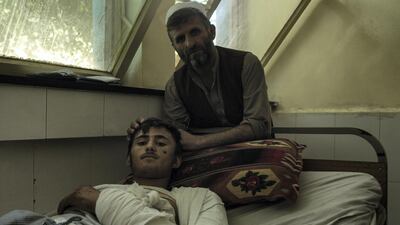
Erfan Kamal, 18, lies in a hospital bed in Jalalabad, capital of Nangarhar province, with a fractured skull and burns on his arms and feet from the drone strike. His father, Mohammed Hassan, 40, sits by his side. -
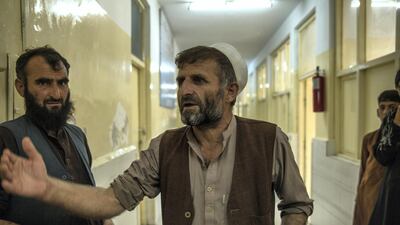
"How can we receive justice?" asks Mohammed Hassan, whose son needs treatment his family cannot afford for injures suffered in the US drone strike.


The Covid-19 pandemic presents an opportunity – if not a critical need – to shift the priorities in building and reforming Afghanistan’s electricity sector. Local, regional and international projects to develop the sector should take note of existing frameworks – such as the rural renewables initiative co-managed by the Ministry of Energy and Water’s Renewable Energy Department and Ministry of Rural Rehabilitation, and the National Solidarity Program’s surprisingly successful rural electrification program – to build out the country’s network of distributed energy resources.
Such efforts are not a cure-all for Afghanistan’s severe electricity woes but could at least marginally improve the ability of Afghan households, hospitals and schools to weather crises ranging from global pandemics to localised violence and extreme weather events.
Emily Burlinghaus is the assistant director of the Atlantic Council’s Global Energy Centre in Washington, DC

