Whatever the "known unknowns" of coronavirus are today, we in the UK have something to concede. Throughout this pandemic, we have sometimes been guilty of thinking that the West is best. People have often looked to the UK, Europe and the US for best practice, but in the management of the pandemic we can and must learn from others.
Covid-19 has revealed that other regions in the world have managed the pandemic more decisively, from countries in the Gulf such as the UAE and Bahrain to small islands in the Caribbean like St Kitts and Nevis. Now perhaps is the time for the West to acknowledge that it cannot always lead the way.
As a former minister for the Middle East and North Africa in the UK, I have kept in touch with countries in the Gulf region, and have been impressed by how many of them have been able to respond swiftly, robustly and creatively. Perhaps this is because they have previous experience, with the Sars and Mers outbreaks a few years ago.
-

Sanitation workers from Tadweer get ready to disinfect the streets of Abu Dhabi. Victor Besa / The National -
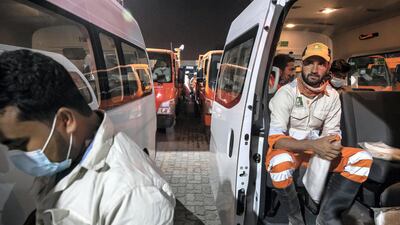
Sharjah municipal staff prepare to disinfect the streets of the emirate. Antonie Robertson / The National -
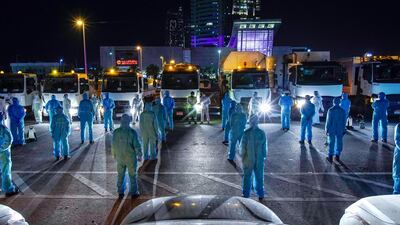
Tadweer workers get ready to disinfect the roads in Abu Dhabi. The nationwide sterilisation drive started on March 26. Victor Besa / The National -
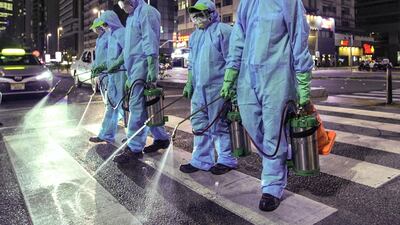
Sanitation workers from Tadweer spray the pedestrian crossing on Hamdan and Fatima bint Mubarak Street. Victor Besa / The National -
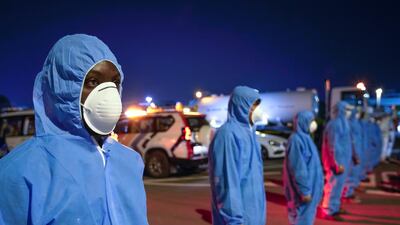
Tadweer workers prepare to disinfect the streets of Abu Dhabi. Victor Besa / The National -

Sanitation workers from Tadweer prepare to set off and sterilise the streets of Abu Dhabi. Victor Besa / The National -
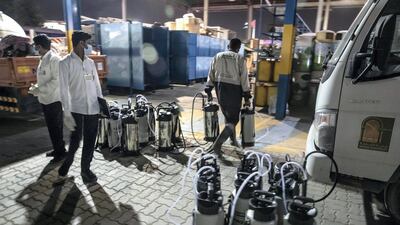
Spray canisters are prepared ahead of a disinfection drive in Sharjah. Antonie Robertson / The National -

Sanitation workers sterilising streets in Abu Dhabi. Victor Besa/The National -
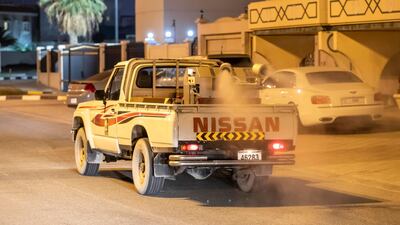
Sharjah municipal staff disinfect the streets of the emirate. Antonie Robertson / The National -
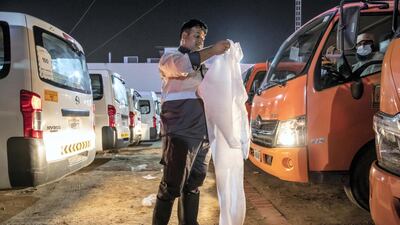
Sharjah municipal staff prepare to disinfect the emirate's streets. Antonie Robertson / The National -
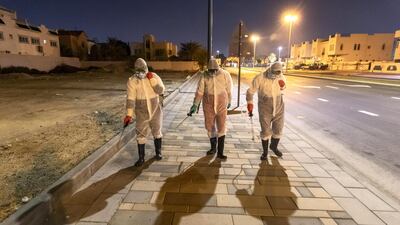
Sharjah municipal staff disinfect the emirate's streets. Antonie Robertson / The National -
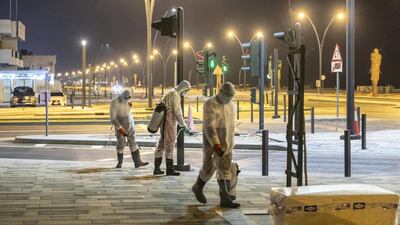
Sharjah municipal staff disinfect the streets of the emirate. Antonie Robertson / The National


At the time of writing, the UAE, Bahrain, Kuwait, Saudi Arabia and Oman have all seen no more than one per cent of their confirmed cases result in death. Compare this with the global average (established by the World Health Organisation in March as 3.4 per cent), and to other countries that have fared less well, such as the US, the UK and Italy: 6, 14.4 and 14 per cent respectively.
Britain and other G7 economies can learn from the Gulf. They moved quickly and decisively, with countries including the UAE and Saudi Arabia instituting a night curfew as disinfection efforts took place. Education across the region was quickly moved online, while Bahrain took rapid action in grounding flights until quarantine facilities were in place. When I visited the Kingdom in early March, I was surprised at the precautions in the airport that unfortunately were not mirrored on my return at Heathrow, London. By the end of March, almost every GCC member country had suspended international passenger flights.
They were also quick to implement tests. The UAE and Bahrain rank sixth and seventh in the world respectively for testing per million, with the former rolling out a smart helmet for use by specialist police that can accurately check a person's temperature and analyse findings. They also took tough decisions during Ramadan when traditionally a lot of people travel to family, gather in larger groups and embark on religious pilgrimages.
-
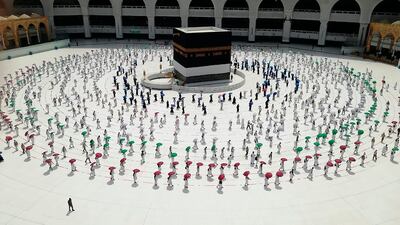
Hundreds of pilgrims circle the Kaaba at the Grand Mosque, as they keep social distancing to protect themselves against the spread of the coronavirus during Hajj in Makkah, Saudi Arabia. AP Photo -

Pilgrims circle around the Kaaba at the Masjidil Haram, Islam's holiest site, during the Tawaf Al Qudum (Tawaf of Arrival) on the first day of Hajj 2020. EPA -
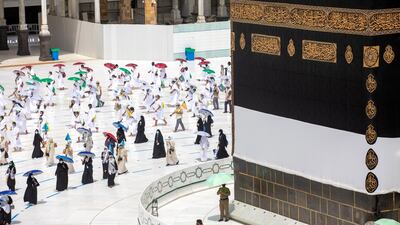
Pilgrims circle around the Kaaba at the Masjidil Haram, Islam's holiest site, during the Tawaf Al Qudum (Tawaf of Arrival) on the first day of Hajj 2020. EPA -
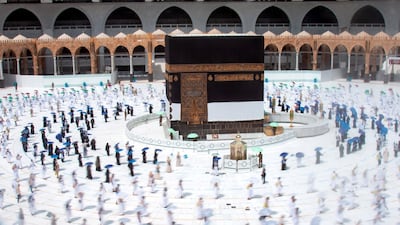
Pilgrims circle around the Kaaba at the Masjidil Haram, Islam's holiest site, during the Tawaf Al Qudum (Tawaf of Arrival) on the first day of Hajj 2020. EPA -
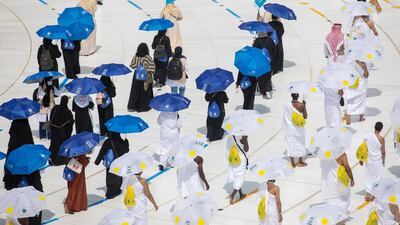
Pilgrims circle around the Kaaba at the Masjidil Haram, Islam's holiest site, during the Tawaf Al Qudum (Tawaf of Arrival) on the first day of Hajj 2020. EPA -
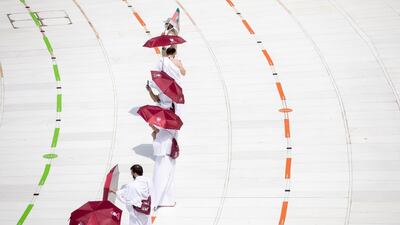
Pilgrims circle around the Kaaba at the Masjidil Haram, Islam's holiest site, during the Tawaf Al Qudum (Tawaf of Arrival) on the first day of Hajj 2020. EPA -
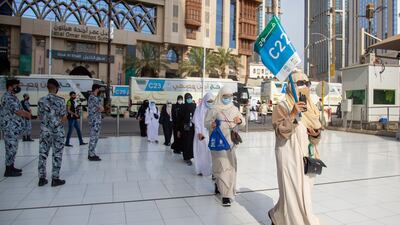
Ppilgrims maintaining social distance as they walk at the Masjidil Haram, Islam's holiest site, during the Tawaf Al-Qudum (Tawaf of Arrival) on the first day of Hajj 2020, in Mecca, Saudi Arabia. EPA -
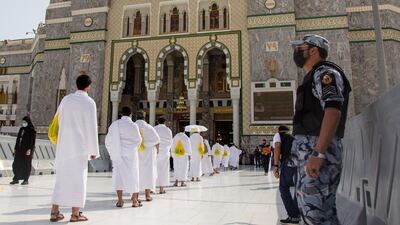
Security personnel stands guard near pilgrims maintaining social distance as they walk at the Masjidil Haram, Islam's holiest site, during the Tawaf Al-Qudum (Tawaf of Arrival) on the first day of Hajj 2020, in Mecca, Saudi Arabia. EPA -
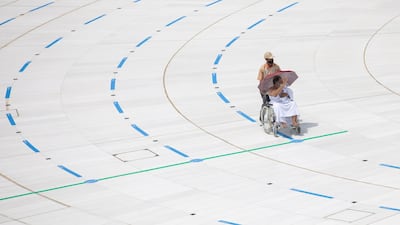
A pilgrim circling around the Kaaba at the Masjidil Haram, Islam's holiest site, during the Tawaf Al-Qudum (Tawaf of Arrival) on the first day of Hajj 2020, in Mecca, Saudi Arabia. EPA -
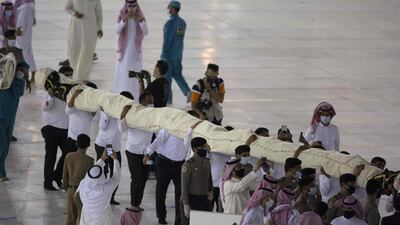
Saudi labourers carry the new Kiswa, the protective cover that engulfs the Kaaba, made from black silk and gold thread and embroidered with Koran verses in Saudi Arabia's holy city of Mecca. AFP -
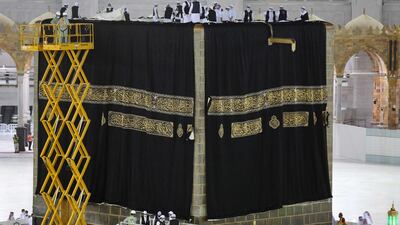
Saudi labourers put the new Kiswa, the protective cover that engulfs the Kaaba, made from black silk and gold thread and embroidered with Koran verses in Saudi Arabia's holy city of Mecca. AFP -
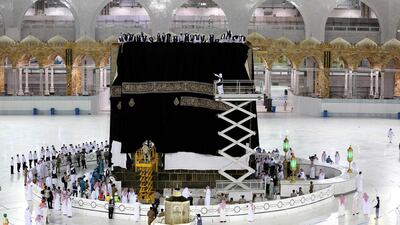
Saudi labourers put the new Kiswa, the protective cover that engulfs the Kaaba, made from black silk and gold thread and embroidered with Koran verses in Saudi Arabia's holy city of Mecca. AFP -
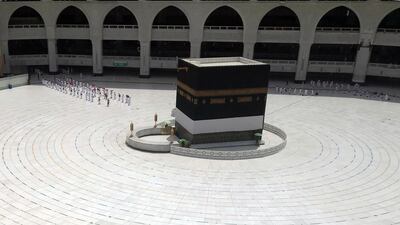
Muslim pilgrims line up after they circumambulate around the Kaaba. AP Photo -
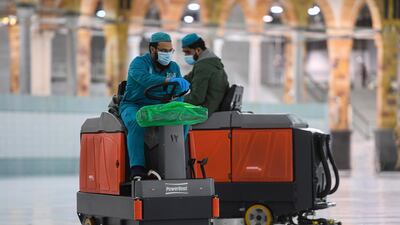
In this photo released by the Saudi Media Ministry, workers polish the white marble floors surrounding the Kaaba. AP -
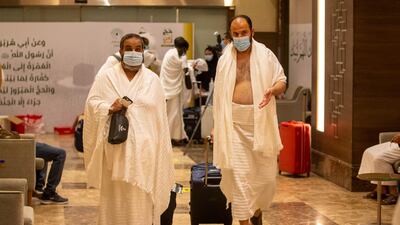
Muslim pilgrims pull their luggage as they wear protective masks heading to the Meeqaat. REUTERS -
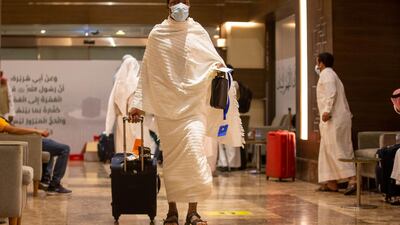
A muslim pilgrim pulls his luggage along in Makkah. REUTERS -
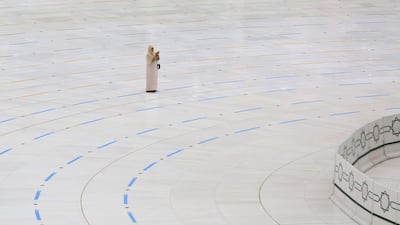
A mask-clad woman stands on a ring delineating where worshippers will move around the Kaaba. AFP -
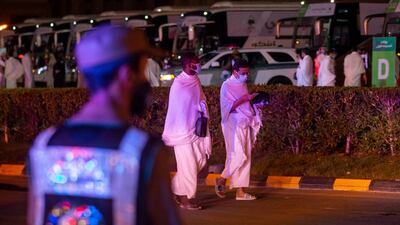
Muslim pilgrims wear protective masks heading to the Meeqaat to hold the intention of the Hajj pilgrimage. REUTERS -
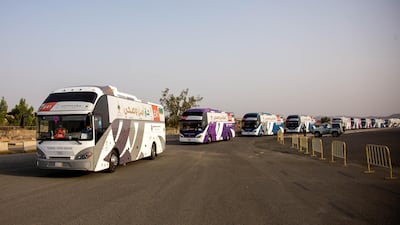
Buses transport pilgrims to Makkah. REUTERS -
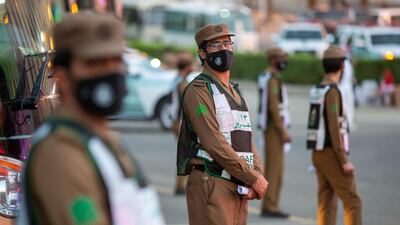
Security officers wear protective masks. REUTERS -

Muslim pilgrims perform Tawaf. Reuters -
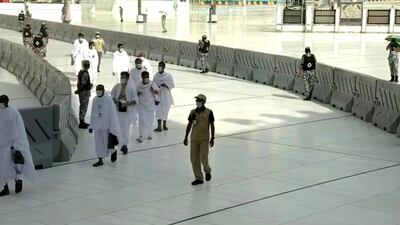
Muslim pilgrims perform Tawaf. Reuters -
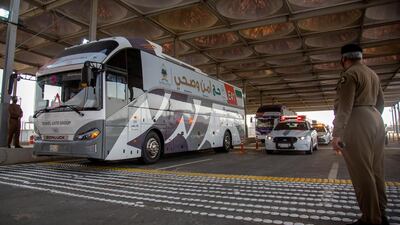
Security officer stands next to a bus that transports pilgrims heading to the Meeqaat to hold the intention of the Hajj. Reuters


Saudi Arabia took the unprecedented decision to close prayer access to Makkah and Madinah and is effectively implementing a restricted Hajj. Meanwhile in Bahrain, public buses have cleverly been converted into testing centres, and one in three people have downloaded the BeAware app, which warns if close contact has been had with a case. Bahrain has also become the first country in the world to offer Covid-19 test results by WhatsApp and Facebook Messenger.
But it is not just in dealing with the medical aspects of the outbreak where we can learn from each other. Recognising now that economic recovery is key, what else might we take note of?
Progress to digitalisation needs to proceed at pace. The speed of broadband, which was correctly a feature of the British Prime Minister Boris Johnson’s successful election platform, is key to the belief that Gulf economies can weather the storm.

Rapid digitalisation has meant that governments and the private sector have been able to continue working remotely and virtually with minimal disruption.
The UAE has been actively promoting the use of online platforms, while lifting restrictions on internet and certain social apps. Across the GCC, citizens have been able to receive regular updates and critical information across all communication channels, from government websites to their smartphones.
Public-private partnerships have also played a role. Bahrain’s Cloud-First Policy enabled the rapid roll out of cloud-based education for thousands of Bahraini schoolchildren in collaboration with Amazon Web Services, which has its first and only Middle Eastern data centre in Bahrain.
We can and should learn from all countries employing best practice. But we must also ensure that we work collectively. The worldwide scramble for PPE that we saw affecting the UK at its height, and the fear yet to be fully dispelled that any vaccine might be jealously and exclusively used are just two examples of what might hold back the sort of worldwide arrangements that will be critical for when the virus returns and mortality rates could be much higher.

The WHO may have questions to answer – but, frankly, who doesn’t? – and a political blame game will simply send those with answers into retreat. That would mean the possibility of never knowing what really happened and if that is the case we will pay the price in lives lost in the future.
Amongst all the suggestions being offered to hard-pressed governments, may I make two simple pleas: learn from anyone with experience to offer, and work collectively, not exclusively, to ensure we all stay safe. We are already armed with some findings. We know that this virus does not discriminate between types of government, and that leaders cannot simply wish it away with rhetoric. What we also know is that a state’s previous experience, rather than table-top exercises, counts for a lot, and that consequential decisive actions have, to date, been most successful.
Here in the UK, we may be an island – Brexit has also helped to turn us inwards – but in times of crisis we know we are stronger when we work beyond our borders. We need a global response, but not just one made up of the largest western economies. Every country needs to learn from each other – this is not a case of West knows best.
Every nation has a stake in this global crisis, and we should seek out best practice wherever we find it.
Alistair Burt is a British politician and a former minister of state for the Middle East

