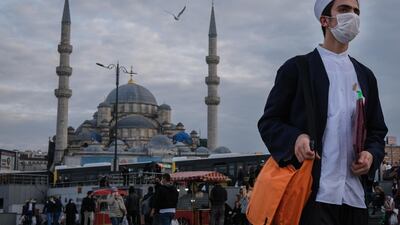

For two Turkish teachers living in exile in Iraq, the plan seemed simple enough: travel from Iraq to Rava-Ruska, Ukraine, along the Polish border and, under the cover of New Year’s celebrations, slip undetected into the sanctuary of the EU.
Somehow, Salih Fidan and Samet Gure were found out and foiled by Ukrainian authorities while attempting to cross into Poland. Detained, they agreed to accept their crime of attempted illegal border crossing and return to Iraq. But after being transferred to Kyiv’s Boryspil airport, they were waiting for their flight to Erbil when Turkish officials grabbed them and whisked them to Turkey instead.
A decade ago, the movement led by Turkish cleric Fethullah Gulen was among the world’s most influential religious organisations. Some 4 million members generated a billion dollars in revenue via Turkey-based media outlets, well-connected businesses and thousands of schools around the world, including 120 in the US. The movement also had its hands on the levers of power, with countless members in key roles in the Turkish military, police, judiciary and foreign office.
Today, that’s all in ruins. Ties between Mr Gulen, who lives in self-imposed exile in the US, and Turkish President Recep Tayyip Erdogan and his ruling Justice and Development Party (AKP) had already been in decline for a few years when a handful of Gulen-linked military officers launched a coup attempt in Turkey on the night of July 15, 2016.
After defeating the putsch, in which citizens clashed with rebels in the streets and more than 250 people died, Mr Erdogan began an unprecedented crackdown. Within Turkey, more than half a million Turkish citizens were investigated for Gulen links; 150,000 were fired from their jobs and nearly 100,000 were arrested.
Beyond Turkey’s borders, Ankara embarked on a global witch hunt, requesting the extradition of more than 800 suspected Gulenists. Mr Fidan and Mr Gure are the latest examples; Turkish prosecutors claim they were deported from Ukraine for suspected ties to the Gulen movement. Human rights groups view these actions as illegal rendition and point to more than 100 similar incidents in 27 countries, which often end in interrogation and torture.
Tens of thousands of suspected Gulenists have fled Turkey in recent years, with most ending up in EU states like Germany and Sweden. Along with the US, which has repeatedly refused Mr Gulen’s extradition, the EU has denied Turkey’s requests, while countries like Iraq are often pressured to co-operate.
Back home, Mr Erdogan leveraged the post-coup surge of patriotic support to vastly increase his powers under a new presidential system and silence other perceived foes – charging, prosecuting and jailing countless leftists, activists, journalists and Kurdish leaders for dubious crimes.
“This uprising is a gift from God,” Turkey’s leader said before the coup had even been defeated.
Incoming US president Joe Biden might say the same of last week’s storming of the Capitol, an event that many, from journalists to Illinois Governor J B Pritzker, have described as an attempted coup led by current President Donald Trump.
-
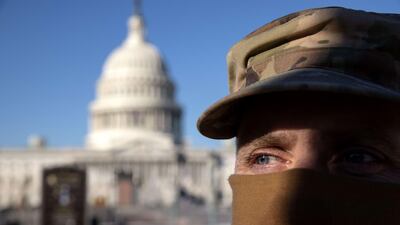
A member of the National Guard stands outside the east side of the US Capitol on January 7, 2021, in Washington. Getty Images/AFP -
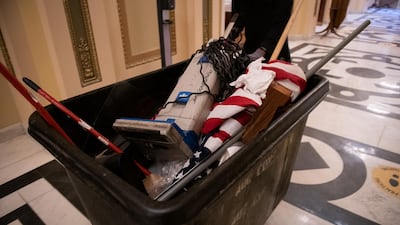
A worker pushes a trash bin at the US Capitol building in Washington. Bloomberg -

Workers clear trash from the East Front of the US Capitol building in Washington. Bloomberg -
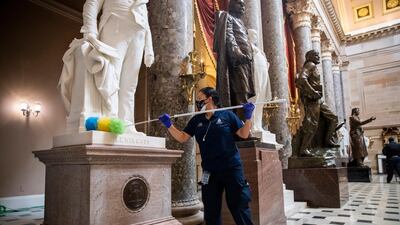
A cleaning crew dusts residue from the pedestals of the statues in Statuary Hall inside the US Capitol in Washington. EPA -
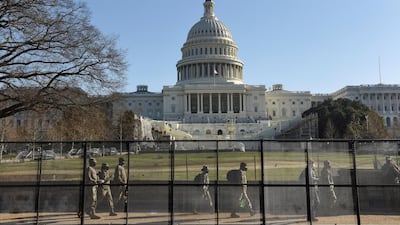
National Guard members walk behind a fence installed in front of the US Capitol, a day after supporters of Donald Trump stormed the building. Reuters -
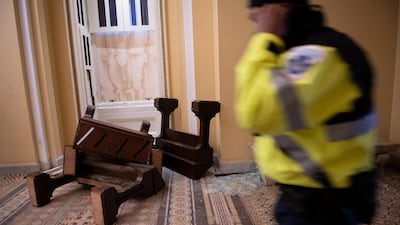
A US Capitol police officer passes in front broken furniture and shattered glass at the Capitol building. Bloomberg -
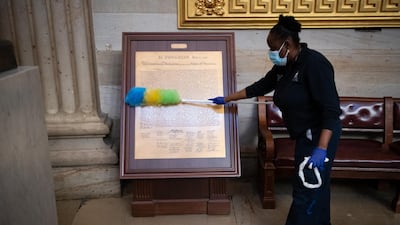
A worker cleans a copy of the Declaration of Independence at the US Capitol building. Bloomberg -
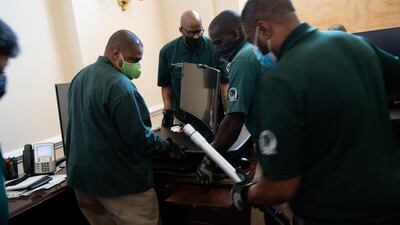
Workers clean an office at the US Capitol building. Bloomberg -
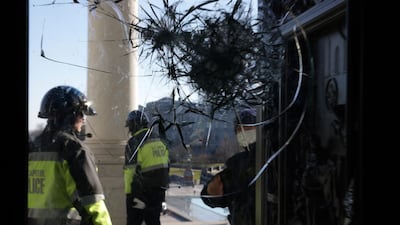
Members of US Capitol Police inspect a damaged entrance of the Capitol. Getty Images/AFP -
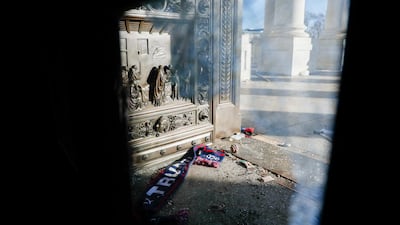
Shattered reinforced glass and debris litter the east steps in the US Capitol in Washington. EPA


At a rally on Wednesday, Mr Trump urged his supporters to keep fighting the result of the November election, and again called on Vice President Mike Pence to halt Congress’ official counting of electoral votes. Mr Trump’s personal lawyer, Rudolph Guiliani, called for “trial by combat”.
As the President’s role became clear, the ground shifted. Two Cabinet secretaries resigned to protest his “unconscionable” behaviour, as did several top national security advisers. The FBI launched an investigation and the Justice Department said it would not rule out pressing charges against Mr Trump.
Thursday evening, Mr Biden got the holiday gift he’d been waiting for. In a two-minute video, Mr Trump called the Capitol assault a “heinous attack” and publicly acknowledged his opponent’s victory for the first time. “My focus now turns to ensuring a smooth, orderly and seamless transition of power,” the President said.
In less than 48 hours, Mr Biden went from a President-elect facing significant challenges to his transition and his electoral victory to a brave defender of democracy with bipartisan support and, following Tuesday’s Senate runoff vote in Georgia, Democratic control of both the House and the Senate.
The left has smelled blood, calling for Donald Trump’s removal and arguing that anybody who amplified his views in the days before the Capitol rampage should be seen as a terrorist and removed or charged with treason. US publisher Simon & Schuster cancelled the planned publication of a book by Senator Josh Hawley, a supporter of Mr Trump. The firm said it “cannot support Senator Hawley after his role in what became a dangerous threat to our democracy.” Similarly, the Houston Chronicle called on another Trump ally, Senator Ted Cruz, to resign.
Neither senator made any public call for violence or an assault on the Capitol, but both did repeatedly support Mr Trump’s call to challenge the electoral result and issued fundraising calls during Wednesday's rampage. Distasteful, sure, perhaps worthy of investigation, but at this fraught moment, encouraging the left’s proclivity for knee-jerk cancellation has the potential to lead US democracy down a dark road.
After all, it was not the coup attempt that crushed Turkish democracy, but the response. In the years prior, Mr Erdogan had undoubtedly embraced some measure of authoritarianism – witness the 2013 Gezi Park protests. But the June 2015, election in which the main pro-Kurdish party cleared the electoral hurdle to enter Parliament, underscored Turkey’s continued commitment to pluralism.
In the years since its leader has trashed all democratic norms and pointed Turkey toward despotism. Just last week reports emerged that Turkish authorities have been stopping travellers at airport immigration, reviewing their recent social media activity and barring them from travel if they find anything problematic. Turkey is as polarised as it has been in decades, and Mr Erdogan faces his worst-ever poll numbers.
Mr Biden campaigned on unity and bipartisanship, but now finds himself in charge of “a party angrily bent on impeaching President Trump, forcing the resignation of [Republican] senators and making Republicans pay”, as the Washington Post put it. American liberals may be fantasising right now of Trump as the next Gulen – eking out his last days in exile as the movement that brought him to power is crushed. But following a legitimate challenge to democracy, it is not the defeated that need to be convinced to accept dissent, but the victorious.
Some sliver of the Gulen movement was likely treasonous and deserved prosecution, just as some measure of Trumpists are far-right extremists who sought to undermine the electoral process and should face justice. But the vast majority of Gulenists and Trumpists are not putschists, just normal people who seek security and stability like the rest of us.
What happened in Washington last week was less a coup than a sign of a sore loser with influence, and deeply problematic, even racist, American policing. Yet as with Turkey, the government’s response will shape the road ahead. The perpetrators should be held to account. But the pitchforks should be kept in the shed. American democracy is too important to the world for its politics to be based on anger and vendetta.
David Lepeska is a Turkish and Eastern Mediterranean affairs columnist for The National

