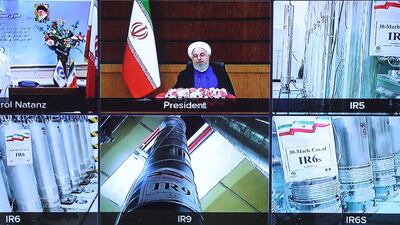

Last week's attack on Iran's Natanz nuclear facility, which the regime blames Israel for carrying out, has cast a cloud over the fate of the ongoing nuclear negotiations in Vienna. The talks, being held with the purpose of reviving the 2015 nuclear deal between Tehran and the world's major powers, could end either in a peaceful breakthrough or military confrontation.
Tehran's response so far – including from Supreme Leader Ayatollah Ali Khamenei – suggests that its need for international sanctions to be lifted is of higher priority than its temptation to retaliate. This is not the first time Iran has swallowed its pride and delayed its own calls for a proportionate response, as was evidenced following the US assassination of Qassem Suleimani, one of its military commanders, last year. However, it isn't just the negotiations to revive the nuclear deal – called the Joint Comprehensive Plan of Action, or JCPOA – that eventually hangs in the balance. The nature, execution and timing of the retaliation for the Natanz attack could eventually shape Iran's presidential election in June and the question of war and peace in the region in the coming months.
Israel is suspected for attacking the Natanz facility allegedly because it seeks to curtail Iran's nuclear weapons programme. And if Iran does decide to take "revenge" on a country it considers to be its ideological foe, the question will be if such a retaliation will be direct, or whether it will implicate other countries through its proxies, led by Hezbollah in Lebanon?
-
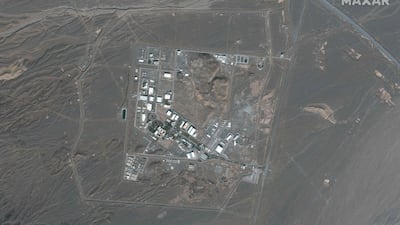
An overview of Iran's Natanz nuclear facility, south of the capital Tehran. Maxar Technologies / AFP -
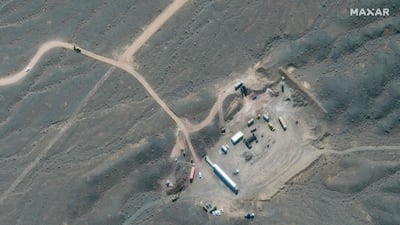
An overview of Iran's Natanz nuclear facility, south of the capital Tehran. Maxar Technologies / AFP -
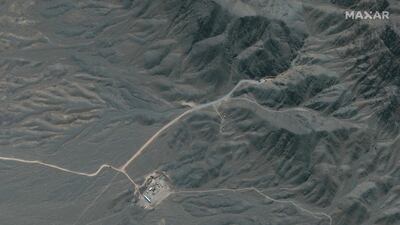
An overview of Iran's Natanz nuclear facility, south of the capital Tehran. Maxar Technologies / AFP -
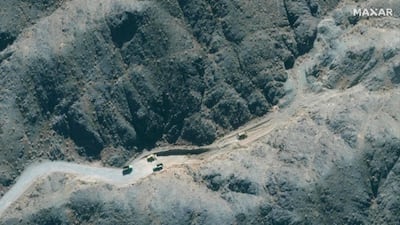
An overview of Iran's Natanz nuclear facility, south of the capital Tehran. Maxar Technologies / AFP


If the Iranian regime sees the Vienna talks as more likely to further its interests – especially if it backed down from retaliation – then the possibility of a grand bargain remains, despite the high level of tensions between both regional and international powers.
The resumption of talks amid secrecy, in the aftermath of the Natanz attack, carries implications. One is that Washington-Tehran dialogue, even if indirect, has not stopped despite Iranian suspicions that the Biden administration had been briefed about the alleged Israeli attack on the enrichment facility before it was carried out.
For both sides, the priority is to agree the terms for reviving the JCPOA. Naturally, the posturing taking place necessitates raising the ceiling and a game of tug of war. This is given the importance assigned to the goal of restricting Iran’s nuclear capabilities, in return for lifting crippling economic sanctions that have paralysed the regime’s agenda. Today, the two sides are talking of “synchronising” the two issues, instead of squabbling over who goes first.
The rhythm and substance of the nuclear talks could determine which way Mr Khamenei will go. He may either order the Islamic Revolutionary Guard Corps (IRGC) to carry out retaliation strikes in the region, which could amount to a setback for the so-called moderates in the election. Alternatively, he may keep the political heat on low, thereby giving the moderates a fighting chance in the polls, the purpose of which would be to use them – should they succeed in the election – as a much-needed facade while dealing with the international community in the future. This may be immaterial in the grand scheme of things, given that it is the IRGC that will continue to shape Iran’s foreign policy.
If given the go-ahead to strike, the IRGC could consider several options, including stepping up attacks on Israeli vessels, carrying out cyberattacks on its defence systems, conducting operations through Hezbollah in southern Lebanon, which shares a border with Israel, and targeting its embassies around the world.
With the Natanz attack seen as an act of aggression, Tehran has declared its intention to raise the level of uranium enrichment from 20 to 60 and even 90 per cent needed for a bomb, if the negotiations fail. This would give Iran nuclear capabilities ready to be activated militarily. If these threats materialise, the spectre of war could also return and engender a military confrontation. In such a scenario, Israel will not be alone, with the Biden administration obligated to provide support.
Alternatively, if Tehran decides to wage a limited proxy war – including by using Lebanon as a pawn – none of the global powers will rush in to salvage the situation. Lebanon, after all, is not a priority for them.
The Natanz attack has got some JCPOA signatories worried.
It seems to have limited Russia’s leverage over Iran, its ally. For a while, Moscow has sought to contain Israel-Iran tensions. But at this juncture, it does not want to complicate its relations with Tehran and may end up accommodating whatever decision the latter adopts. At the same time, reviving JCPOA is also in Russia’s interests and Moscow is trying to convince Tehran not to increase uranium enrichment. Iran’s other ally, China, has also called for talks to continue, as have the Europeans.
Complicating the Vienna talks are the fraying relations between some signatories.
The Biden administration's equation with Kremlin, in particular, is deteriorating rapidly. Mutual sanctions and the expulsion of diplomats have raised tensions, despite the leaders of the two countries speaking to each other – and despite Washington's call for a US-Russia summit in June or July. Washington imposed sanctions on Moscow in response to its alleged meddling in the 2020 US presidential election and its suspected role in major cyberattacks inside that country.
Moscow views sanctions on Russian treasury bonds as a declaration of economic war, given how much they could exacerbate the country's domestic debt, curtail its access to foreign currency, and complicate financial transactions with Europe, Canada and Japan. A furious Kremlin will, therefore, consider its own series of retaliations, which could include weapon sales to Iran in contravention of more US sanctions. It has also sent troops to its border with Ukraine, a development that has put Nato, a security alliance the US is an integral part of, on alert.
Amid all this drama, really, who can tell with absolute certainty what will happen in Vienna.
Raghida Dergham is the founder and executive chairwoman of the Beirut Institute and a columnist for The National

