The culture wars show no sign of abating. The latest to be condemned by hardline progressive youth is Adolph Reed, a black, Marxist professor who was due to give a speech to the New York chapter of the Democratic Socialists of America, but was disinvited because he believes that left-wingers currently concentrate too much on race at the expense of class.
This prompted outrage from a group within the chapter, who said that to give Mr Reed a platform would be “reactionary, class reductionist and at best tone deaf”. And that was that, for a man whom the Harvard academic Cornel West – who is also black – describes as “the greatest democratic theorist of his generation”.
We have to do better than this. We have to continue to be able to speak to each other. It is surely not beyond us to agree with the prominent black British educator Katharine Birbalsingh, who insists that "there is a middle way".
Adolph Reed Jr has been disinvited from an event because he believes that left-wingers currently concentrate too much on race at the expense of class. Eric Sucar for The University of Pennsylvania
“Strive to have a complex understanding of race, the state, education etc. Think outside the box!” she tweeted recently. That would be both possible and positive.
For older liberals who value free speech more than the “right” to be safe from offensive or hurtful ideas can acknowledge that it is useful to talk much more about institutional racism and unconscious bias, the long-term effects of the Atlantic slave trade, and police actions that disproportionately affect black people. And the woke side could think a bit more about the gains we all make by being confronted with opinions we disagree with and possibly find objectionable or even distressing; not least in challenging, and in the process maybe strengthening, our convictions.
But for any progress to be made I believe we need the return of two concepts that have gone curiously missing in the increasingly divisive arguments: forgiveness and redemption.
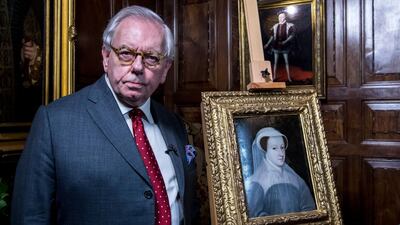
Here it is instructive to look at the case of Dr David Starkey. An eminent scholar of English Tudor history, Dr Starkey also long had a lucrative sideline as a professional provocateur on TV and radio that led him to be known as “the rudest man in Britain”. Both careers came to an abrupt halt, however, after he gave an online interview last month. While discussing the Black Lives Matter movement with his host, Dr Starkey, who is white, said: “Slavery was not genocide, otherwise there wouldn’t be so many damn blacks in Africa or in Britain, would there?”
Dr Starkey was arguably correct that, however abominable it was, the slave trade did not meet traditional definitions of genocide. The “damn blacks”, though, well and truly sunk him. Almost immediately he was dropped by both his past and present publishers, and he resigned or was sacked from positions at Cambridge and Canterbury Christ Church universities, from fellowships and board positions, had an honorary degree revoked and had a medal from a historical society withdrawn.
Since then he has been almost literally “cancelled”. He has, as he said, lost “every distinction and honour acquired in a long career". I have not read one word of sympathy – not defence – for a man who was a household name for at least 20 years. He has apologised abjectly, of course, but it appears that no one wants to hear from him ever again. Dr David Starkey has become a non-person.
I find this deeply troubling for a number of reasons. Firstly, if he is a racist – and Ms Birbalsingh, who knows him, thinks he is (she still likes him) – we ought to ask why. Dr Starkey is not some asinine thug. He is highly intelligent. On purely rational grounds, how could he hold such a prejudice? He could not possibly defend it intellectually if debated by his peers. Wouldn’t exposing racism for the groundless bigotry that it is be a worthwhile exercise?
The late Russian composer Dmitri Shostakovich experienced ostracism during the Stalinist terror in the 1930s. Getty Images
In the Stalinist era, Dmitri Shostakovich at least had a concert. There will be no lecture or TV programme from David Starkey
Secondly, and more importantly, how have we reached a point at which a sitting US President has boasted of committing crimes – sexually harassing women – and suffer no consequences from his own party, yet an admired historian and famous pundit can destroy his whole role in public life with two words? They were extremely abhorrent, yes: but is there no possibility for Dr Starkey to be forgiven? I have met and interviewed him, and do not think he is evil. Have we become so cruel that there can be no path to repentance and redemption for him?
The white British thinker Douglas Murray wrote about this issue in his 2019 book The Madness of Crowds : "What is a decent interval of time between an error and forgiveness? Does anybody know? Is anybody interested in working it out?"
There are as yet no answers, and if we have discarded these concepts entirely, that does not strike me as either a Christian or a Muslim response to sin: for both are religions of mercy. This is the judgement of the communist commissar; or actually even worse. It reminds me of the ostracism experienced by one Russian composer during the Stalinist terror in the 1930s, during which the following notice appeared in a newspaper: "Today there will be a concert by enemy of the people Dmitri Shostakovich." The musician was near suicidal with fear at the time; but at least he had a concert. There will be no lecture or TV programme from "enemy of the people" David Starkey.
The New York Times columnist Bret Stephens wrote that the late John Lewis 'saw humanity even in those who refused to see humanity in him'. AFP
This cannot be right. There has to be a road back. We have to allow people to change, and we must be able to disagree in a more civil manner. There is a way, which was expressed movingly by the white conservative New York Times columnist Bret Stephens, after the death of the great black American civil rights leader and congressman John Lewis last month.
Mr Lewis received heartfelt tributes from both left and right, wrote Mr Stephens, “because he operated from convictions of radical love. He saw humanity even in those who refused to see humanity in him".
Radical love: we could do with some of that. And if that is too much to ask, we must at least try to see the humanity in one another, our ideological foes as well as our friends. If we cannot do that, then I'm afraid all hope is lost.
Sholto Byrnes is a commentator and consultant in Kuala Lumpur and a corresponding fellow of the Erasmus Forum

Dubai is on a mission to record good air quality for 90 per cent of the year – up from 86 per cent annually today – by 2021.
The municipality plans to have seven mobile air-monitoring stations by 2020 to capture more accurate data in hourly and daily trends of pollution.
These will be on the Palm Jumeirah, Al Qusais, Muhaisnah, Rashidiyah, Al Wasl, Al Quoz and Dubai Investment Park.
“It will allow real-time responding for emergency cases,” said Khaldoon Al Daraji, first environment safety officer at the municipality.
“We’re in a good position except for the cases that are out of our hands, such as sandstorms.
“Sandstorms are our main concern because the UAE is just a receiver.
“The hotspots are Iran, Saudi Arabia and southern Iraq, but we’re working hard with the region to reduce the cycle of sandstorm generation.”
Mr Al Daraji said monitoring as it stood covered 47 per cent of Dubai.
There are 12 fixed stations in the emirate, but Dubai also receives information from monitors belonging to other entities.
“There are 25 stations in total,” Mr Al Daraji said.
“We added new technology and equipment used for the first time for the detection of heavy metals.
“A hundred parameters can be detected but we want to expand it to make sure that the data captured can allow a baseline study in some areas to ensure they are well positioned.”
Emirates flies from Dubai to Funchal via Lisbon, with a connecting flight with Air Portugal. Economy class returns cost from Dh3,845 return including taxes.
The trip
The WalkMe app can be downloaded from the usual sources. If you don’t fancy doing the trip yourself, then Explore offers an eight-day levada trails tour from Dh3,050, not including flights.
The hotel
There isn’t another hotel anywhere in Madeira that matches the history and luxury of the Belmond Reid's Palace in Funchal. Doubles from Dh1,400 per night including taxes.
Timeline
2012-2015
The company offers payments/bribes to win key contracts in the Middle East
May 2017
The UK SFO officially opens investigation into Petrofac’s use of agents, corruption, and potential bribery to secure contracts
September 2021
Petrofac pleads guilty to seven counts of failing to prevent bribery under the UK Bribery Act
October 2021
Court fines Petrofac £77 million for bribery. Former executive receives a two-year suspended sentence
December 2024
Petrofac enters into comprehensive restructuring to strengthen the financial position of the group
May 2025
The High Court of England and Wales approves the company’s restructuring plan
July 2025
The Court of Appeal issues a judgment challenging parts of the restructuring plan
August 2025
Petrofac issues a business update to execute the restructuring and confirms it will appeal the Court of Appeal decision
October 2025
Petrofac loses a major TenneT offshore wind contract worth €13 billion. Holding company files for administration in the UK. Petrofac delisted from the London Stock Exchange
November 2025
180 Petrofac employees laid off in the UAE
Sam Smith
Where: du Arena, Abu Dhabi
When: Saturday November 24
Rating: 4/5
The alternatives
• Founded in 2014, Telr is a payment aggregator and gateway with an office in Silicon Oasis. It’s e-commerce entry plan costs Dh349 monthly (plus VAT). QR codes direct customers to an online payment page and merchants can generate payments through messaging apps.
• Business Bay’s Pallapay claims 40,000-plus active merchants who can invoice customers and receive payment by card. Fees range from 1.99 per cent plus Dh1 per transaction depending on payment method and location, such as online or via UAE mobile.
• Tap started in May 2013 in Kuwait, allowing Middle East businesses to bill, accept, receive and make payments online “easier, faster and smoother” via goSell and goCollect. It supports more than 10,000 merchants. Monthly fees range from US$65-100, plus card charges of 2.75-3.75 per cent and Dh1.2 per sale.
• 2checkout’s “all-in-one payment gateway and merchant account” accepts payments in 200-plus markets for 2.4-3.9 per cent, plus a Dh1.2-Dh1.8 currency conversion charge. The US provider processes online shop and mobile transactions and has 17,000-plus active digital commerce users.
• PayPal is probably the best-known online goods payment method - usually used for eBay purchases - but can be used to receive funds, providing everyone’s signed up. Costs from 2.9 per cent plus Dh1.2 per transaction.
Adapt your business model. Make changes that are future-proof to the new normal
Make sure you have an online presence
Open communication with suppliers, especially if they are international. Look for local suppliers to avoid delivery delays
Open communication with customers to see how they are coping and be flexible about extending terms, etc
Courtesy: Craig Moore, founder and CEO of Beehive, which provides term finance and working capital finance to SMEs. Only SMEs that have been trading for two years are eligible for funding from Beehive.
The biog
Name: Shamsa Hassan Safar
Nationality: Emirati
Education: Degree in emergency medical services at Higher Colleges of Technology
Favourite book: Between two hearts- Arabic novels
Favourite music: Mohammed Abdu and modern Arabic songs
Favourite way to spend time off: Family visits and spending time with friends
Need to know
When: October 17 until November 10
Cost: Entry is free but some events require prior registration
Where: Various locations including National Theatre (Abu Dhabi), Abu Dhabi Cultural Center, Zayed University Promenade, Beach Rotana (Abu Dhabi), Vox Cinemas at Yas Mall, Sharjah Youth Center
What: The Korea Festival will feature art exhibitions, a B-boy dance show, a mini K-pop concert, traditional dance and music performances, food tastings, a beauty seminar, and more.
Mercer, the investment consulting arm of US services company Marsh & McLennan, expects its wealth division to at least double its assets under management (AUM) in the Middle East as wealth in the region continues to grow despite economic headwinds, a company official said.
Mercer Wealth, which globally has $160 billion in AUM, plans to boost its AUM in the region to $2-$3bn in the next 2-3 years from the present $1bn, said Yasir AbuShaban, a Dubai-based principal with Mercer Wealth.
“Within the next two to three years, we are looking at reaching $2 to $3 billion as a conservative estimate and we do see an opportunity to do so,” said Mr AbuShaban.
Mercer does not directly make investments, but allocates clients’ money they have discretion to, to professional asset managers. They also provide advice to clients.
“We have buying power. We can negotiate on their (client’s) behalf with asset managers to provide them lower fees than they otherwise would have to get on their own,” he added.
Mercer Wealth’s clients include sovereign wealth funds, family offices, and insurance companies among others.
From its office in Dubai, Mercer also looks after Africa, India and Turkey, where they also see opportunity for growth.
Wealth creation in Middle East and Africa (MEA) grew 8.5 per cent to $8.1 trillion last year from $7.5tn in 2015, higher than last year’s global average of 6 per cent and the second-highest growth in a region after Asia-Pacific which grew 9.9 per cent, according to consultancy Boston Consulting Group (BCG). In the region, where wealth grew just 1.9 per cent in 2015 compared with 2014, a pickup in oil prices has helped in wealth generation.
BCG is forecasting MEA wealth will rise to $12tn by 2021, growing at an annual average of 8 per cent.
Drivers of wealth generation in the region will be split evenly between new wealth creation and growth of performance of existing assets, according to BCG.
Another general trend in the region is clients’ looking for a comprehensive approach to investing, according to Mr AbuShaban.
“Institutional investors or some of the families are seeing a slowdown in the available capital they have to invest and in that sense they are looking at optimizing the way they manage their portfolios and making sure they are not investing haphazardly and different parts of their investment are working together,” said Mr AbuShaban.
Some clients also have a higher appetite for risk, given the low interest-rate environment that does not provide enough yield for some institutional investors. These clients are keen to invest in illiquid assets, such as private equity and infrastructure.
“What we have seen is a desire for higher returns in what has been a low-return environment specifically in various fixed income or bonds,” he said.
“In this environment, we have seen a de facto increase in the risk that clients are taking in things like illiquid investments, private equity investments, infrastructure and private debt, those kind of investments were higher illiquidity results in incrementally higher returns.”
The Abu Dhabi Investment Authority, one of the largest sovereign wealth funds, said in its 2016 report that has gradually increased its exposure in direct private equity and private credit transactions, mainly in Asian markets and especially in China and India. The authority’s private equity department focused on structured equities owing to “their defensive characteristics.”
